

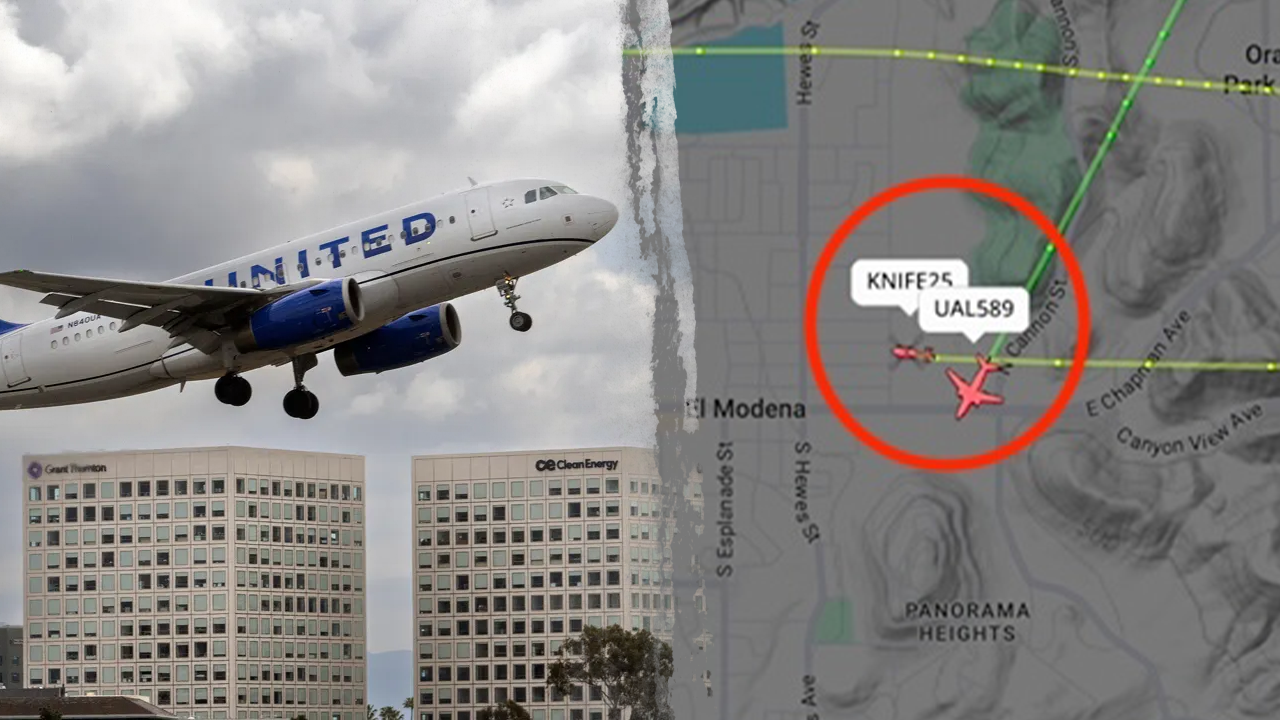
Imagine this: It’s a cool Tuesday evening in Santa Ana, California, and the skies above John Wayne Airport are humming with the usual buzz of commercial aviation. Families are wrapping up day trips, business travelers are rushing to catch flights home, and pilots are navigating through the twilight, coordinating with ground crews to ensure safe landings. But at around 8:40 p.m., something unheard of happens—a tense game of chicken in the air between a sleek United Airlines Boeing 737-800, packed with 162 passengers and six crew members, and a U.S. Army Sikorsky Black Hawk helicopter. The passenger jet, Flight 589, was in its final descent, wings cutting through the air toward the runway, when the helicopter suddenly zipped across its path. Eyes widen in control towers, hearts race among the crew—it’s a near-miss that could have turned tragic, and now, the Federal Aviation Administration (FAA) is digging deep to find out what went wrong. This isn’t just some isolated scare; it highlights the fragile dance between military craft, civilian planes, and the invisible systems meant to keep everyone safe. As details emerge, we see a system pushed to its limits, where human error, outdated protocols, and sheer bad luck collided in a moment that reminds us why aviation safety feels like a high-stakes miracle.
Now, picture the pilots of that United flight, seasoned aviators who’ve handled everything from turbulent storms to landing in zero visibility. According to United’s spokesperson, air traffic control had warned them to “watch for a military helicopter flying near the airport.” They spotted it themselves, and when their aircraft’s traffic collision avoidance system blared a “resolution advisory”—that heart-stopping alert signaling a potential crash seconds away—they acted fast. The plane was “leveled,” meaning it slowed its descent and maintained a steady altitude to create crucial vertical separation from the chopper. It landed safely, no bumps, no bruises for the 168 souls on board. You can almost feel the pilots’ relief washing over them as the wheels touch down, adrenaline still pumping. But beneath that sigh of relief lurks a question: How did this happen? Helicopters like the Black Hawk, used by the Army for transport, training, or operations, often share airspace with commercial jets, but protocols are in place to avoid overlaps. On this night, those lines blurred, leaving everyone from the passengers—unaware in their seats scrolling through phones or dozing—to the ground teams wondering if complacency or miscommunication played a role. Aviation insiders often talk about the “human factor”—fatigue, distraction, or rushed decision-making—that can turn routine flights into nightmares. Here, it feels personal, like a wake-up call for tighter checks and balances, so no family ever has to live through the “what if” of a close shave like this.
Diving deeper, air traffic control audio captured by the New York Post paints a vivid picture of the chaos in the skies—the kind of frantic exchange that makes you appreciate the calm professionalism these folks maintain under pressure. A controller reaches out to the United flight: “United 589, just want to clarify here, did you get, uh … just a traffic call reference to the helicopter or did they restrict your altitude or anything?” The pilot’s response is clipped but clear: “We had a resolution advisory for United 589, RA.” The controller acknowledges it wasn’t ideal, vowing to address it, but you can sense the underlying tension, the unspoken dread that this could have ended in catastrophe. Resolution advisories don’t go off for fun—they’re the system’s last-ditch warning, popping up when planes or copters get dangerously close, advising maneuvers to avoid a midair smash. In this case, leveling the jet bought those precious seconds, but it underscores how thin the margins are. It’s like two cars speeding toward an intersection without a stop sign; one driver slams the brakes, and disaster is averted, but everyone involved can’t help replaying it in their minds. For aviation enthusiasts, this echoes stories of legendary close calls, like the 2002 Uberlingen midair collision in Germany, where a faulty radar system led to countless lives lost. It humanizes the pilots and controllers as everyday heroes wrestling with technology that, for all its advancements, still relies on split-second decisions. Listening to that audio, you realize these aren’t just voices over the radio—they’re people safeguarding skies for the rest of us, and incidents like this remind us to thank them more often.
Fast-forward to the broader context, and it’s impossible not to connect this Santa Ana incident to larger safety reforms kicking in across the U.S. The FAA is probing whether a new rule, rolled out earlier this year, was properly enforced. This measure, enacted after a horrific crash last year at Ronald Reagan Washington National Airport in D.C., bans the use of mere visual separation between planes and helicopters. You see, in the past, controllers might have relied on spotting things with their eyes, trusting pilots’ views from the cockpit—a risky gamble in crowded skies. Now, radar is the boss, mandating active separation by specific distances, both laterally and vertically. It’s a response to the January 29 crash where an American Airlines jet and an Army Black Hawk slammed into each other, killing all 67 people aboard. That tragedy, known as the 2025 DCA Incident, was a gut-punch for the industry, prompting President Trump’s administration to push for swift changes, as families of the victims have called for reforms. The new protocol isn’t about pointing fingers at military operations—Black Hawks serve vital roles in defense and emergency response—but about creating ironclad buffers. Aviation experts, like those at the Delft University of Technology, have long argued for integrated systems that account for everything from drone swarms to unpredictable wildlife, but funding and tech lags often hold things back. Stories from pilots who’ve brushed up against such rules describe it as going from a freeform jam session to a choreographed symphony, where every instrument knows its place. This Santa Ana near-miss, happening just days after another runway disaster at LaGuardia’s—you know, that heartbreaking collision where an Air Canada jet hit a fire truck, claiming two lives—feels like part of a pattern, urging us to rethink how we jam so many machines into shared airspaces.
Let’s zoom out even further to appreciate the human element in these skies, where every flight is a tapestry of lives intersecting at 30,000 feet. Pilots aren’t robots; they’re parents, spouses, dreamers who log thousands of hours, carrying memories of lost loved ones or personal triumphs. Training simulations often replay these near-misses, turning them into lessons learned in claustrophobic cabins that feel like pressure cookers. For passengers on Flight 589, this was just another uneventful trip home—boarding with that mix of excitement and boredom, tray tables up, seatbelts fastened, oblivious to the drama unfolding. It’s the unseen labor of technicians, who maintain these billion-dollar birds, and controllers, often working graveyard shifts to guide them. National Transportation Safety Board reports overflow with anecdotes: a pilot who narrowly avoided a flock of geese over the Hudson, or another who landed a crippled jet in the dark. These stories humanize the risks, making us ask, how much more can we do to minimize them? Innovations like GPS-based NextGen air traffic control promise smarter routes, reducing fuel burn and delays, but as with any tech leap, there’s a learning curve and resistance from legacy systems. Famously, the 2001 September 11 attacks shifted how we perceive sky threats, tightening security but also weighing down an already burdened system. In the wake of Santa Ana, advocates like the Airsafe Federation call for pilot unions to weigh in more, ensuring voices from the cockpit shape policies. It’s about empathy—understanding that behind every close call is a system strained by growth: more flights, denser traffic, evolving threats. We mourn the losses from DCA and LaGuardia, but celebrate the saves, like this one, where quick thinking turned potential tragedy into a story of triumph.
Reflecting on it all, this John Wayne Airport incident serves as a mirror to aviation’s soul, revealing both its vulnerabilities and resiliencies. The FAA’s investigation, the Army’s silent response, and United’s transparency show a commitment to learning, a far cry from aviation’s early days when pilots flew by the seat of their pants, relying on luck as much as skill. Historical benchmarks, like the 1956 Grand Canyon collision that spurred better radar, remind us that progress comes from pain. Today, as we embrace autonomous drones and supersonic travel, incidents like this helicopter-plane tango demand humility. We can’t predict every twist in the sky, but we can build safeguards—better training, updated tech, open dialogues between civilian and military sectors. For the families affected by past crashes, these reforms are rays of hope; for the rest of us, they’re reminders to cherish safe arrivals. Flying feels routine, almost mundane, but beneath it lies a world of what-ifs, where human ingenuity battles the unknown. As Fox News brings these stories to life with apps and bulletins, it invites us to listen closely, not just to the news, but to the calls for a safer horizon. After all, in the grand story of the skies, every close call is a chapter not yet closed—and a chance to write a better ending. (1,998 words)