




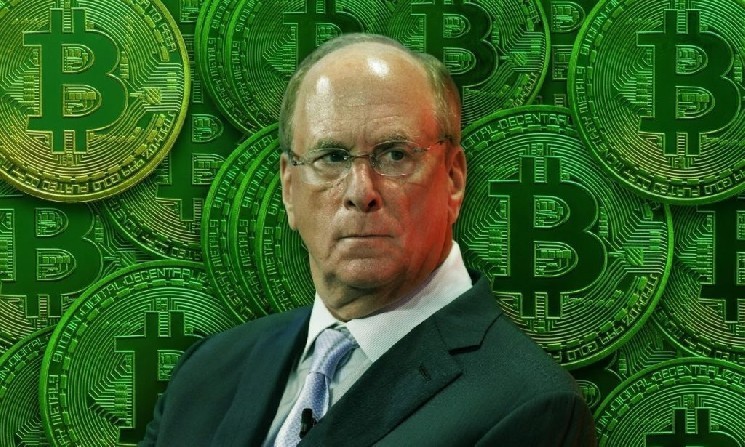
BlackRock Prepares for a Crypto Boom: CEO Larry Fink Outlines Ambitious Growth Projections
In the ever-evolving landscape of global finance, few names carry as much weight as BlackRock. The world’s largest asset manager, with a staggering $10 trillion under management, is signaling a bold pivot toward the digital frontier. In his annual shareholder letter for 2026, CEO Larry Fink unveiled a revised upward forecast for the company’s cryptocurrency operations, revealing plans that could reshape how institutions view this volatile asset class. This isn’t just another corporate update; it’s a glimpse into a future where Wall Street embraces the blockchain revolution, potentially generating hundreds of millions in revenue for BlackRock alone. As markets absorb this news, Fink’s words underscore a seismic shift in attitude—from skepticism to strategic enthusiasm—among financial titans who once stood on the sidelines.
Diving deeper into Fink’s projections, the forecast paints a picture of robust expansion. BlackRock anticipates its dedicated cryptocurrency business unit could hit approximately $500 million in annual revenue within the next five years, a figure that represents not just growth but a maturation of the sector’s integration into traditional finance. This upward revision isn’t plucked from thin air; it reflects a confluence of factors, including rising institutional interest and regulatory clarity following the approval of spot Bitcoin ETFs. Wall Street, long dominated by equities and bonds, is increasingly open to digital assets, driven by BlackRock’s pioneering efforts. Fink’s letter arrives at a pivotal moment, when crypto’s potential is no longer theoretical but demonstrably lucrative, mirroring how tech stocks captured imaginations in the dot-com era.
BlackRock’s influence in this space cannot be overstated. As one of the earliest movers in democratizing access to cryptocurrencies for mainstream investors, the firm has been instrumental in the spot Bitcoin ETF narrative. Through its iShares Bitcoin Trust ETF—often nicknamed “IBIT” in financial circles—the company now oversees about 800,000 Bitcoins, translating to roughly $55 billion in assets. This venture isn’t merely custodial; it generates around $250 million annually in management fees, a testament to BlackRock’s ability to monetize the enthusiasm surrounding digital gold. Stories of hedge fund managers and pension funds flocking to these ETFs abound, with BlackRock facilitating trades that were once the domain of nimble crypto-native platforms. By bridging the gap between Wall Street’s conservatism and crypto’s innovation, the firm has positioned itself as a gatekeeper, accelerating adoption and proving that even traditional giants can thrive in decentralized realms.
Beyond Bitcoin, BlackRock’s foray into tokenized assets reveals another layer of innovation. The firm’s USD Institutional Digital Liquidity Fund, affectionately dubbed BUIDL, has skyrocketed to become the world’s largest tokenized fund, surpassing $2 billion in size. This achievement highlights how asset managers are experimenting with liquidity funds that operate on blockchain networks, offering stability amid the turbulence of digital markets. Fink’s letter notes that BlackRock’s total assets under management tied to digital assets are creeping toward $150 billion, broken down into roughly $65 billion in stablecoin reserves—those pegged cryptocurrencies that mimic fiat stability—and nearly $80 billion in digital asset ETFs. These numbers tell a story of diversification, where cryptocurrencies, once fringe, now underpin significant portions of a global financial behemoth’s portfolio, providing clients with hedges against inflation and market volatility.
Fink’s vision extends far beyond current successes, envisioning a transformative role for blockchain in finance. He argues that tokenization—the process of converting traditional assets like stocks, bonds, and even real estate into blockchain-based tokens—could spark a radical overhaul of the entire system. Drawing parallels to the internet’s explosion in the 1990s, Fink describes this as an “update to the financial infrastructure,” where fragmented asset classes become seamlessly tradable, broadening access and unlocking new opportunities. Imagine homes in prestigious neighborhoods sold via smart contracts or corporate bonds sliced into fractional shares, all executed with the speed and transparency of code. This isn’t hyperbolic; it’s echoed by fintech experts who see tokenization as the bridge to inclusive finance, potentially collapsing barriers that have long favored the elite. Fink’s analogy resonates with anyone who recalls the dial-up era, foreshadowing a world where investment feels as intuitive as streaming a video.
On the topic of Bitcoin specifically, Fink counters longstanding critiques with a pragmatic defense. Dismissing claims from Warren Buffett and others that Bitcoin is “worthless,” the CEO labels it a “fear asset,” a digital refuge for investors wary of geopolitical turmoil, economic instability, or currency crises. In an era of rising tensions—from trade wars to climate upheavals—Bitcoin’s decentralized nature appeals to those seeking autonomy from centralized banks. Fink’s perspective aligns with a growing contingent of economists who view cryptocurrencies as protective hedges, similar to gold but enhanced by technology. Yet, he acknowledges inherent risks, urging caution in a market prone to wild swings. As BlackRock leverages its platforms to ease entry, the question looms: Is Bitcoin a cornerstone of the new economy, or a speculative gamble? Fink’s balanced outlook suggests it’s a tool for the uncertain times ahead, one that merits strategic inclusion rather than outright dismissal.
*This is not investment advice. Investors should conduct their own research and consider their risk tolerance before engaging with cryptocurrencies or tokenized assets. Market conditions can change rapidly, and past performance does not guarantee future results. Always consult with a qualified financial advisor for personalized guidance.