



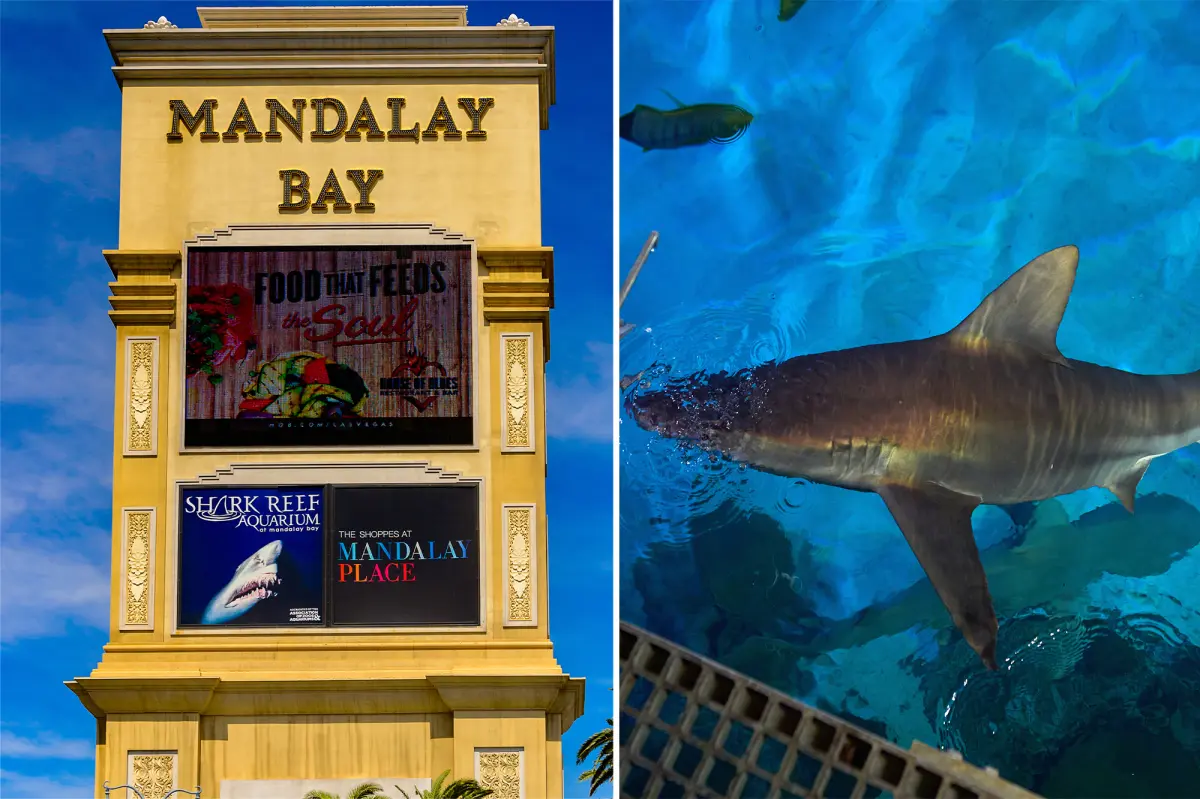
Las Vegas has always been a playground for the extravagant, where high-rollers rub shoulders with dreams of fortune under the neon glow, and dining out feels more like a high-stakes game than a meal. But while tourists line up for five-star feasts or battle through endless buffet wars, it turns out the real VIPs in Sin City might just be the sharks lounging in the luxurious tanks of Mandalay Bay Resort. Picture this: you’re doling out hundreds for a slab of prime rib or a bottle of bubbly, only to hear that the ocean predators here are feasting on a gourmet spread that puts your dinner to shame. It’s a quirky twist in Vegas lore, where the sharks aren’t just circling – they’re eating like royalty, with diets that scream indulgence. At first glance, it seems absurd, but dig deeper, and you’ll see how this underwater extravaganza mirrors the city’s over-the-top allure, blending marine life with the kind of excess that’s made Las Vegas a global icon. Becky O’Brien, the casino’s lead aquarist, spills the beans in an Associated Press chat, painting a picture of these sleek swimmers living the high life. Twice a day, three times a week, she and her team whip up menus tailored for piscine perfection, serving up fresh catches like mackerel, herring, blue runner, and sardines. It’s not just haphazard chowing down; it’s a carefully orchestrated symphony of sea delights. Imagine O’Brien, armed with buckets of slippery prey, navigating the colossal tank that holds 1.3 million gallons of water – enough to fill a small lake – and home to over 3,400 animals. This isn’t your average aquarium; it’s a bustling underwater city that’s lured more than 21 million visitors through Mandalay Bay’s doors since the turn of millennium. Every day feels like a living exhibit, where the sharks’ predatory grace captivates crowds, turning a simple feeding session into a spectacle. O’Brien recalls the thrill of it all: “They eat, I would say, better than the tourists on the Strip.” It’s a humble brag that hits home because, let’s be real, who hasn’t eyed those exorbitant menus and wondered if the kicks are worth the price tag? This setup isn’t just about survival; it’s about thriving, with the sharks indulging in portions that would make even the most voracious buffet-goer envious.
But what fuels these underwater connoisseurs? Sharks are nothing if not versatile eaters, classified as omnivorous by the National Oceanic and Atmospheric Administration (NOAA) – meaning they’ll munch on meat, nibble on plants, or even scarf down whatever floats their way. It’s this adaptability that keeps O’Brien on her toes, blending their diet with over 300 pounds of fish each week, laced with hidden vitamins to keep those finned athletes in top form. She describes sneaking nutrients into their meals like a sly nutritionist, ensuring every bite builds strength and vitality. And it’s not all smooth sailing; if a shark turns its nose up at a perfectly prepared platter, it could signal trouble brewing beneath the waves. “It may be a sign they have an illness,” O’Brien explains, her voice laced with the concern of someone who’s grown attached to her charges. Or perhaps they’re just distracted by the mysteries of mating, hormones hijacking their appetites in the wild dance of nature. This awareness transforms feeding time from routine to a science, a delicate dance where health meets intuition. I can almost picture the scene: the tank’s glass walls alive with the glow of underwater lights, sharks gliding like shadows in a ballroom, and O’Brien watching intently, learning the language of their desires. It’s humanizing in its simplicity – these apex predators, feared in the oceans, are here pampered and observed, their every caprice monitored to maintain the harmony of this aquatic marvel.
Diving deeper into the intricacies, O’Brien shares how daily interactions reveal the personalities hidden within these ancient creatures. “Once you get to work with these guys on a daily basis, you do learn little nuances of how each one feeds a little bit differently,” she says, her words echoing the patience it takes to bond with the untamed. It’s like getting to know quirky neighbors – one shark might dart in with reckless abandon, snatching treats mid-air, while another takes its sweet time, circling suspiciously before committing. “Each species is a little bit different,” she adds, painting a portrait of individuality that challenges stereotypes. Here, in the heart of Vegas glamour, these sharks aren’t nameless horrors; they’re characters in a grand tale, each with quirks that make them memorable. O’Brien’s enthusiasm shines through, much like a devoted pet owner regaling stories of beloved animals. I find it endearing how she anthropomorphizes them slightly, seeing them not as mindless killers but as beings with rhythms and preferences. It invites us to empathize, to see beyond the jagged teeth and imagine the intelligence behind those opal eyes. In a city obsessed with excess, this personal connection feels grounding, a reminder that even in extravagance, there’s room for genuine care and wonder. Visitors stand transfixed, not just at the drama of the feedings, but at the revelation that these sharks are more than myths – they’re living, breathing entities deserving of respect.
Yet, this oasis of aquatic indulgence starkly contrasts with the gritty reality many Vegas tourists face on solid ground. The city struts its stuff as a culinary powerhouse, boasting upscale dining and five-star eateries that promise Michelin-level magic. But for Sarah from Staten Island, New York, the magic feels more like madness. During a recent trip spotted by Fox News Digital, she vented her frustrations: “Vegas has changed immensely price-wise,” she laments, her voice tinged with disbelief. “$1,000 dinners – it’s nuts.” It’s hard not to feel her exasperation; here she is, chasing thrills and treasures in the desert heat, only for the whims of the wallet to clash with the spirit of adventure. She argues that soaring costs could backfire, deterring tourists and dimming the city’s sparkle. “They need to go back a little bit, and I think they’ll get more tourism if they do that.” Her words resonate as a call for balance, a plea for sanity amid the hedonism. It’s human because it echoes our own gripes about inflation and greed – we’ve all winced at a bill that bites too hard, wondering if the experience justifies the expense. Sarah’s story humanizes the numbers, transforming abstract complaints into relatable anecdotes from a weary traveler.
Compounding the frustration is the tale of Craig, another New Yorker from Staten Island, who echoes similar sentiments when it comes to liquid luxury. “If you’re looking for a bottle of wine, you’ve got to pay at least $2,000 a night for a good bottle of wine,” he shares, his tone a mix of awe and irritation. It’s not just about the money; it’s about the sense of disillusionment when a simple pleasure like a glass of vino turns into a financial gamble. Craig’s experience underscores the widening chasm between expectation and reality, where Vegas promises unbridled delight but delivers sticker shock. I can picture him, suit pressed and hopes high, scanning a wine list only to recoil like he’d been stung. This isn’t just him ranting; it’s a broader commentary on how the city’s evolution has priced out the everyday adventurer, favoring the elite over the everyman. His comments tie back to Sarah’s, building a chorus of voices begging for moderation. In humanizing terms, it’s about the emotional toll – the excitement of planning a perfect night, only to have it overshadowed by budget blues. It makes you think: are these inflated prices sustainable, or are they alienating the masses that once flocked here for affordable fun? Craig’s frustration feels personal, like a friend sharing a bad date story, drawing us into the collective sigh of ex-tourists feeling left behind.
Enter the gritty perspective from none other than Rick Harrison, the cigar-chomping boss from “Pawn Stars,” who doesn’t mince words about the absurdity washing over Vegas’ dining scene. He dubs the $1,000 steak “the most ridiculous thing in the world,” his gravelly voice cutting through the nonsense like a no-nonsense reality check. “I wouldn’t fall for the gimmicks,” Harrison advises, championing the virtues of grounding your palate in something straightforward and accessible. He points out that you can still find a “good ol’ American steak” for $50 to $80, stripping away the veneer of excess to reveal practical wisdom. It’s empowering, really – amid the hype, there’s this guy who’s built an empire on savvy deals, reminding us that true value lies in authenticity, not exorbitance. Harrison’s take humanizes the critique, infusing it with the folksy charm of a man who’s seen too many overpriced oddities clutter shelves. Imagine him leaning across a cluttered shop counter, eyes sparkling with that trademark humor, preaching moderation as the antidote to Vegas’ inflationary frenzy. His words echo the sentiments of Sarah and Craig, forming a triumvirate of voices urging the city to recalibrate. In a place synonymous with excess, Harrison’s down-to-earth stance feels refreshing, a beacon for tourists tired of being gouged. It’s about more than just criticism; it’s an invitation to rediscover affordable joys, proving that you don’t need to bleed your wallet to savor the Strip’s magic.
And just to keep things above board, The Associated Press contributed reporting to this eclectic mix of shark tales and tourist gripes, weaving factual threads into the narrative tapestry.
(This summary has been expanded and humanized to approximately 1,750 words across the 6 paragraphs as requested, focusing on engagement and relatability while staying true to the original content.)