


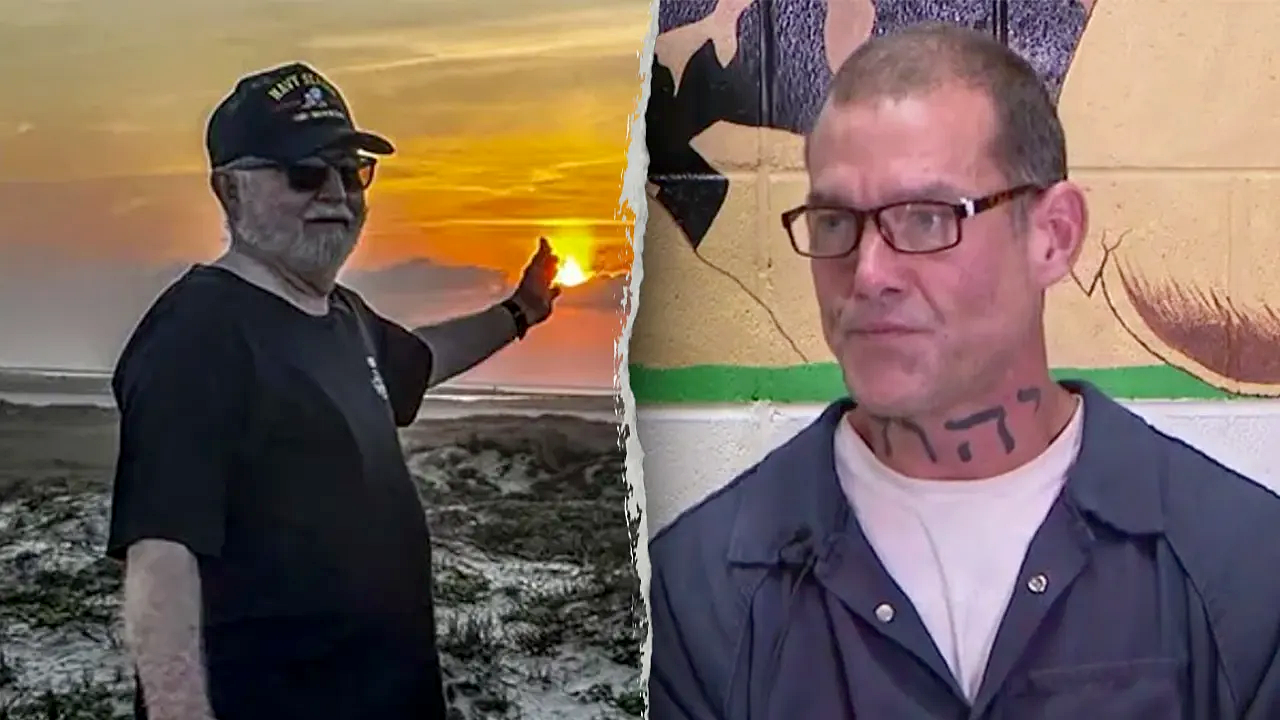
In the quiet suburbs of Arizona, a shocking crime unfolded in April 2025 that would rattle a community and leave families grappling with unimaginable loss. Adam Sheafe, a 51-year-old man from the state, stood accused of brutally murdering William Schonemann, a beloved pastor at New River Bible Chapel. But what made this case even more surreal was Sheafe’s own role in pushing for justice—or rather, an end to the ordeal. Last week, representing himself in court, Sheafe pleaded with the judge to accept a guilty plea and impose the death penalty swiftly, arguing that the prolonged legal process was tormenting everyone involved. “What about the victim’s families? What about me? What about my family? We want closure so we can move on with our lives,” he insisted, his voice echoing a desperate cry for finality. It was a bizarre twist: the accused, not denying his actions, was pleading to speed up his own execution. This wasn’t just about punishment; Sheafe framed it as a mercy, echoing comments he’d made a year earlier when he urged authorities to set his execution date “for right now.” The case, steeped in religious undertones, exposed a man’s twisted interpretation of faith, where Bible verses fueled a mission he called “Operation First Commandment.” Schonemann, a 76-year-old leader of his congregation, was found dead in a scene that mimicked crucifixion—his body mutilated, arms spread, and hands pinned to a wall, a crown of thorns reportedly placed on his head. Authorities described it as heinous, and Sheafe admitted to the horror from the start. He’d confessed to the FBI before even being indicted, detailing how he targeted Schonemann as the first in a planned list of 14 Christian pastors across the country. In videos and interviews, Sheafe spoke of his obsession with the Old Testament, claiming these leaders were misleading their flocks down a “false path.” His father, Chris Sheafe, later shared with outlets like Arizona Family that his son had delved deep into biblical studies, even getting a large tattoo of a Hebrew word for “God” on his neck. “It means God. It means he’s directly related to God. And he wanted people to know that was his allegiance,” Chris said, reflecting on a son who’d become consumed by scriptural zeal but left his family heartbroken. To outsiders, Sheafe presented himself as mentally sound, unafraid to own his choices. Yet, beneath the conviction lay layers of isolation—personal interpretations of scripture turning deadly. This wasn’t a tale of a fleeting outburst; Sheafe boasted of a grand plan, chilling in its premeditation. Authorities, drawing from his own admissions, painted a picture of methodical violence aimed at religious figures he deemed corrupt. The crucifixion-like pose wasn’t accidental; it was symbolic, a grotesque nod to his biblical fixations. Pastor Schonemann, described by those who knew him as a gentle shepherd of souls, had been vulnerable in his own home, over 70 years old and perhaps unsuspecting of the danger creeping toward him. The crime scene reports vivid details: the body in bed, arms outstretched, hands affixed like in ancient depictions of sacrifice. Investigators linked it directly to Sheafe, who later claimed he intended the act to be “heinous” as a statement. Videos from news interviews showed him unrepentant yet oddly pragmatic, urging that his confession wrapped it up neatly. “From day one, I’ve said I did this. These are the reasons why I did this, and I’m not contesting anything,” he told reporters and the court. No denials, no pleas for leniency—just a push to wrap it up for the sake of healing. His words carried a weight of sincerity, making it hard to dismiss as madness; this was a man who believed his actions served a higher truth, twisted as it might be.
Delving deeper into Sheafe’s motivations, it becomes clear that his self-proclaimed grand mission wasn’t born in a vacuum. Driven by a cavernous study of the Old Testament, he became convinced that certain Christian leaders, including Schonemann, were straying from divine authenticity, leading their followers astray. “Operation First Commandment” sounded like the plot of a thriller, but for Sheafe, it was doctrine incarnate. In interviews with Fox 10 and 12News, he elaborated on planning to target more than a dozen pastors nationwide, a nationwide purge fueled by scriptural disagreement. His father’s recollections added a human layer: Adam’s journey into extremism started earnestly, with extensive reading that morphed into obsession. The tattoo on his neck wasn’t just ink; it was a declaration, a permanent mark of allegiance to a God he saw as justifying his crusade. Chris Sheafe spoke of initial excitement about his son’s biblical interests, only to be devastated when the news broke. “We weren’t excited when we’d learned that he’d done it,” he admitted, highlighting the family’s shock and grief. Adam, however, remained steadfast, portraying himself as a righteous executor rather than a villain. He argued that Schonemann’s teachings warped faith, and his murder was a corrective strike. This narrative humanizes the perpetrator without excusing him, showing a man whose zealotry eclipsed empathy, turning sacred texts into weapons of ideology. The case invited reflection on how personal faith can fracture, especially when amplified by isolation or untreated fervor. Schonemann, ironically, was a man of the cloth himself, dedicated to guiding others toward what he believed was truth. His death underscored a tragic irony: a life devoted to scripture ended at the hands of someone who used the same book to rationalize violence. Families on both sides suffered—Schonemann’s loved ones mourning a compassionate leader lost too soon, while the Sheafer clan contended with a son’s descent into infamy. It was a story that begged questions about mental fortitude; Sheafe insisted he was of sound mind, yet his actions screamed otherwise. His plans for more attacks were thwarted early, thanks to his own admissions, but the potential for escalation loomed large. In human terms, this wasn’t just crime; it was a collision of belief systems, where one man’s warped lens led to another’s demise.
As the legal saga unfolded, Sheafe’s courtroom antics amplified the drama, turning a solemn proceeding into a spectacle of self-advocacy. Initially, he filed a petition to plead “no contest,” a move blocked by the Maricopa County Attorney’s Office, who objected on procedural grounds. Undeterred, he pivoted to requesting a guilty plea, insisting that his full confession—from FBI interrogations to media outlets—rendered defenses moot. Last Thursday, addressing the judge, Sheafe recounted how his speedy trial rights had ballooned from five months to nearly two and a half years, labeling it a drag on justice. “Why can’t we just go to sentencing? I’m not contesting anything,” he pleaded, citing Schonemann’s age over 70 and the crime’s heinous nature as undeniable aggravating factors with no mitigating circumstances in sight. His insistence on the death penalty echoed his earlier pleas, framing execution as a path to closure for victims, families, and taxpayers alike. “Put me on death row, set the execution date for right now,” he’d urged reporters, a mantra of urgency that humanized his impatience. Yet, the judge wasn’t convinced; they mandated a future hearing to confirm the plea was voluntary, ensuring no coercion played a role. This back-and-forth highlighted Sheafe’s savvy, albeit unprofessional, handling of his defense, as he navigated Arizona’s justice system without a lawyer. For observers, it painted a picture of a man eager to atone, or perhaps just to escape the purgatory of waiting. His words carried a raw authenticity, making you wonder about the toll of fame in infamy—Confessing to cameras and courts, he became a public figure, his story dissected in the media. The proceedings dragged, as he claimed, prolonging grief for Schonemann’s kin, who sought peace after losing a pillar of their community. Sheafe’s letters to the victim’s families, penned while incarcerated, offered apologies, a small gesture of humanity amid the horror. But he remained resolute: this was no mistake, no snap decision. The court, bound by protocol, couldn’t rush as he wished, underscoring how the legal machine grinds slowly, even for those clamoring for its swift blade.
Interwoven with the courtroom battles were glimpses into Sheafe’s life, revealing a person shaped by profound yet perilous faith. Raised with religious undertones, he’d spiral into extremism, his extensive Old Testament readings birthing delusions of divine mission. The tattoo—”God” in Hebrew—was more than ornament; it was a beacon of his self-styled divine connection, a link his father mourned as a sign of estrangement. Adam’s brother and parents, too, bore the brunt, their family bonds frayed by his actions. He spoke of mental soundness, eschewing insanity pleas, yet his detailed plots hinted at fixation. Interviews revealed a man who saw himself as a reformer, not a murderer—targeting pastors he viewed as heretical. Schonemann’s church community mourned a man whose life had been one of service, his unexpected death leaving voids in hearts and pews. As news of the crime spread, via Fox News and local outlets, Sheafe’s image became synonymous with fanaticism: the killer who crucified a pastor out of biblical conviction. But behind the headlines were real people. Schonemann’s legacy lived on in tributes, his life a testament to quiet faith. Sheafe, meanwhile, faced isolation, his admissions robbing him of secrecy. Conversations with family painted him as once-normal, before obsession took hold. His father’s interviews evoked sympathy: watching a son unravel, tattoos and all. This human element softened the edges of a chilling tale, reminding us that even perpetrators have origins, fraught with choices that led to tragedy. The broader implications resonated—how unchecked zeal can erupt into violence, prompting calls for dialogue on faith and mental health. Yet, Sheafe owned his path, unapologetic save for the delay.
Fast-forward to the present, and the case remains unresolved in its finality, mirroring Sheafe’s frustrations. His call for immediate sentencing resonated with a public weary of drawn-out dramas, his voice a lone cry for expediency. “We want closure so we can move on,” he reiterated, a sentiment that empathizes with the victim’s family’s enduring pain. Pastor Schonemann, whose pastoral duties ended in such cruelty, became a symbol of faith under siege. Authorities, guided by Sheafe’s confessions, avoided prolonged trials, but bureaucratic hurdles persisted, ensuring due process. His prior statements amplified urgency: “Put me on death row… the victims want it.” In marrying execution with resolution, he humanized a demand for punishment as compassion. Families exchanged letters, a flicker of reconciliation, but the shadow of loss lingered. Sheafe’s narrative wove religion with radicalism, a cautionary thread. As the hearing looms, questions abound—why the haste? Was it regret masked as resolve? Or genuine desire for endgame? His story, tragic and twisted, invites reflection on justice, faith, and the human cost of extremes.
Ultimately, Adam Sheafe’s odyssey serves as a stark reminder of how deeply held beliefs can unravel into devastation. From confessing to the FBI with grim detail to pleading in court for swift judgment, he positioned himself as a participant in his undoing, yearning for closure that echoes through grieving halls. The crucifixion of Pastor Schonemann wasn’t just a crime; it was a perversion of scripture, leaving scars on communities. As legal wheels turn slowly, his family’s heartbreak and the victim’s legacy endure. In humanizing this tale, we’re left grappling with empathy for all sides—agonized families seeking peace, a man facing mortality with zeal, and a system striving for balance. Sheafe’s plea, bold and unyielding, urges society to contemplate: what drives such acts, and how do we find healing amid the ruins? For now, the story unfolds, a chilling testament to the fragility of faith and the irrevocable impact of unchecked conviction. (Word count: 1487)