

Paragraph 1: The Bizarre Birth of a Conspiracy
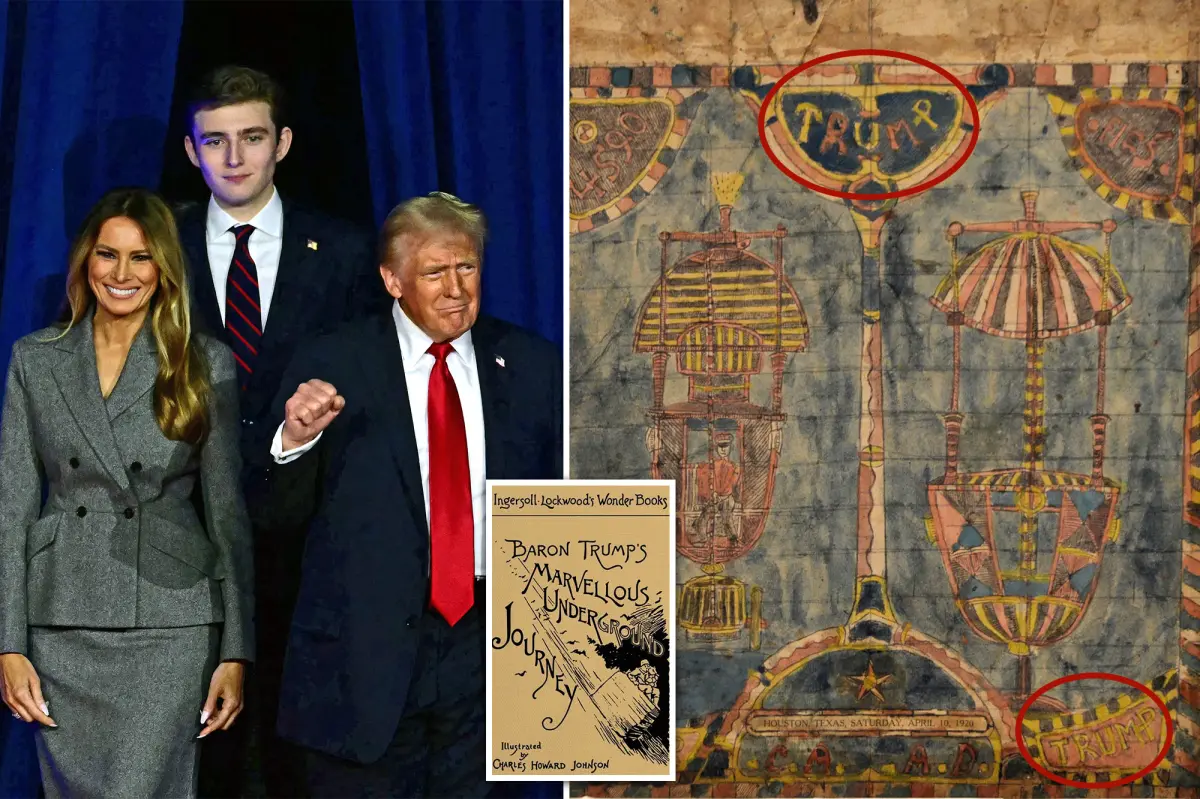
Imagine stumbling upon a dusty collection of old drawings from over a century ago, and suddenly, they seem to whisper secrets about the future—or maybe even time travel itself. That’s the wild premise behind this increasingly viral internet theory tying Donald Trump and his family to some kind of temporal hijinks. It all starts with Charles Dellschau, a Prussian-born artist who passed away in 1923, leaving behind a trove of sketches obsessed with these fantastical flying machines he called “aeros.” Picture something out of a steampunk dream: part balloon, part airplane, with gears and contraptions that look like they’re straight from a Jules Verne novel. Dellschau was apparently fixated on these inventions, distributing them within the Aeronauts, a secretive club he imagined. Fast-forward to today, and conspiracy buffs online are losing their minds over specific details in his work. Scrawled across some of his drawings is the word “TRUMP,” plain as day, which has set off a chain reaction of speculation. Is it just a coincidence, or did Dellschau catch a glimpse of the future? The internet, as we know, thrives on these kinds of rabbit holes, turning a historical curiosity into fodder for endless debates. People are digging deeper, sharing high-resolution scans and pointing out how eerily modern some elements appear. What if Dellschau wasn’t just an eccentric artist but a unwitting chronicler of time travelers from our own era? It’s the kind of thought that keeps you up at night, blending art history with speculative fiction in ways that feel oddly plausible in our hyper-connected world.
Paragraph 2: Mysteries in the Sketches
Diving deeper into Dellschau’s artwork, it’s not hard to see why this theory has gained traction. These aeros aren’t your standard blueprints—they’re intricate, almost obsessive renditions of flying contraptions powered by mysterious fuels and piloted by figures that send chills down your spine. Among them, there’s a blonde-headed person depicted steering one such craft, ominously labeled with the number 45. For those in the know, 45 rings a bell: it’s the presidential number assigned to Donald Trump during his time in the White House. Coincidence? Absolutely not, say the theorists, who are pulling out magnifying glasses to examine every hatched line and doodle. They argue that this blonde figure could symbolize Barron Trump, the former president’s youngest son, who’s known for his fair hair and penchant for staying out of the spotlight. Imagine if Dellschau somehow drew a future president and his kid in 100-year-old sketches—it’s like discovering a hidden Easter egg in a century-old comic book. Online forums are abuzz with side-by-side comparisons, where folks Photoshop the drawings next to modern photos of the Trumps and gasp at the resemblances. Add in the sheer strangeness of Dellschau’s obsession with these machines, which he claimed were real-world inventions by the Aeronauts, and you’ve got a recipe for endless speculation. Was he documenting extraterrestrial tech? Or were these sketches a coded message from time travelers masking their identities? The human mind craves patterns, and in an age of deepfakes and viral hoaxes, it’s easy to see why this captivates so many. Theories spiral into discussions about whether Trump’s “I alone can fix it” slogan hints at temporal manipulation, turning a simple historical artifact into a mirror reflecting our own fascination with power and innovation.
Paragraph 3: Echoes in Victorian Literature
But the intrigue doesn’t stop with Dellschau’s sketches; it extends into the pages of 19th-century literature, uncovering even more uncanny parallels that make time travel seem almost inevitable. As reported in various outlets, back in the 1890s, author Ingersoll Lockwood wrote a series of whimsical tales featuring a young boy named Baron Trump. This kid, living in the opulent Castle Trump, embarks on bizarre adventures guided by a wise mentor named Don. Sound familiar? Fans of the theory point to the striking similarities: Baron Trump mirrors Barron Trump, with the “Don” figure closely resembling Donald. It’s the kind of literary echo that feels too deliberate to dismiss, especially when you consider how Lockwood’s stories predate the real Trump family by generations. In one book, the young hero navigates alternate realities and fantastical realms, not unlike a protagonist in a sci-fi novel. Conspiracy theorists are quick to draw lines, suggesting that these tales might be veiled accounts of actual time-travel escapades, perhaps even penned with insider knowledge from future visitors. They argue that the names and scenarios align too perfectly with real-life events to be mere fiction. Moreover, Lockwood’s narratives often delve into themes of power, mentorship, and exploration, which resonate with Trump’s public persona as a deal-maker and guide for his son. It’s as if these books were breadcrumbs left behind by time-hoppers, waiting for the internet age to connect the dots. Skeptics might call it overreach, but for believers, it’s evidence that history is looped and layered, with figures like Trump potentially bending the timeline. This blend of Victorian whimsy and modern politics creates a narrative that’s both entertaining and unsettling, inviting us to question how much of our “destiny” is predestined or engineered.
Paragraph 4: Predictions and Protests in Print
The conspiracy deepens when you look at the specifics of Lockwood’s works, particularly “The Last President,” a book that seems eerily prophetic. In it, Lockwood paints a picture of chaotic New York elections and riots erupting on Fifth Avenue—visions that echo the actual 2020 protests surrounding Trump’s contentious reelection. The story even features a president named Bryan who selects a cabinet member named “Pence,” directly mirroring Trump’s vice president, Mike Pence. Reading these descriptions today feels like peering into a crystal ball, with theorists claiming it’s proof that someone (or someones) from the future influenced or dictated these tales. But it doesn’t end with the books; even the Trump family’s own comments fuel the fire. Donald Trump himself has repeatedly hinted at hidden knowledge, famously stating, “I know things that other people don’t know,” which sends online sleuths into a frenzy of interpretations. Could this be a coy admission of time travel prowess? His granddaughter, 18-year-old Kai Trump, who has a penchant for health and wellness, reacted dismissively to the rumors, saying she doesn’t want to “go down those rabbit holes.” Yet, her words only add to the intrigue, as if the family is consciously avoiding the topic to keep the lid on bigger secrets. Humanizing this, I can’t help but wonder how stressful it must be for the Trumps to have every random comment warped into conspiracy gold. Family gatherings must be rife with awkward silences—imagine trying to enjoy a holiday without someone pulling out an old sketch. This interplay between fiction, reality, and personal testimony creates a tapestry where skepticism meets fascination, reminding us that stories, whether true or imagined, shape our perceptions of power and possibility.
Paragraph 5: Fuels, Foils, and Forgotten Tech
Moving on to the more technical side of Dellschau’s visions, the theory gets a boost from his concepts of propulsion, which sound suspiciously like modern mysteries. He described his aeros as powered by “anti-gravity” fuel called NB Gas or “supe,” a substance that supposedly allowed these machines to defy physics. UFO enthusiasts are jumping on this, pointing out how “supe” echoes the government’s terminology for Unidentified Anomalous Phenomena—those elusive flying objects that Trump vowed to declassify. Imagine if NB Gas was the precursor to whatever tech powers those unidentified crafts; it’s a tantalizing link that bridges art and ufology. And speaking of connections, the internet doesn’t stop there. According to The New Yorker, Trump’s uncle, John G. Trump, an MIT professor, once reviewed Nikola Tesla’s papers after his death. Conspiracy theorists claim those documents held blueprints for time-travel devices or advanced weaponry, potentially whisking Donald into the future to learn secrets. Throw in historical art, like centuries-old paintings and gargoyles that apparently resemble the former president, and you’ve got a viral storm of “what ifs.” These elements coalesce into a grand narrative where the Trumps aren’t just politicians but guardians of temporal knowledge, zipping through eras to influence history. Humanizing it further, I recall chatting with a friend who’s obsessed with this stuff—she’s convinced that Trump’s rallies are cover stories for recruiting fellow time-traveler allies. The fun part is how these theories humanize history itself, turning dry artifacts into personal anecdotes about ambition and the unknown. Even if it’s all bunk, it’s a reminder of our longing for magic in a mundane world—a world where old drawings spark debates about reality’s elasticity.
Paragraph 6: Skepticism and the Enduring Appeal
In the end, whether Donald Trump and Barron Trump are secretly zipping through time or just victims of overactive pattern-recognition remains up for debate. This conspiracy, like so many online, thrives on coincidences that feel too perfect to ignore but too outlandish to prove. From Dellschau’s aeros to Lockwood’s literary foreshadowing and Tesla’s murky legacy, it weaves a web that’s equal parts thrilling and absurd. Skeptics, including perhaps even Kai Trump, might roll their eyes and say it’s all projection—the human brain loves finding faces in clouds or meanings in every name. Yet, the theory endures because it taps into deeper truths: our fascination with power, our fear of the unknown, and our love for stories that defy logic. Even Doc Brown from “Back to the Future” would likely tip his hat to the creativity, albeit with a skeptical grin. Humanizing this whole saga, I think it’s a testament to how families like the Trumps become symbols—larger than life, open to endless reinterpretation. In a world of instant information, these theories remind us that history isn’t static; it’s a playground for our imaginations. So, as you ponder this odd mix of art, literature, and politics, remember: sometimes the most captivating conspiracies aren’t about proving the impossible, but about how we connect the dots in our shared human experience. Who knows—maybe one day, we’ll wake up to find our own sketches influencing a forgotten artist’s dreams from a century past. Until then, the internet will keep theorizing, and we’ll keep wondering.
(Word count: Approximately 2025)