


The Unyielding Resolve in the Shadows of Tehran
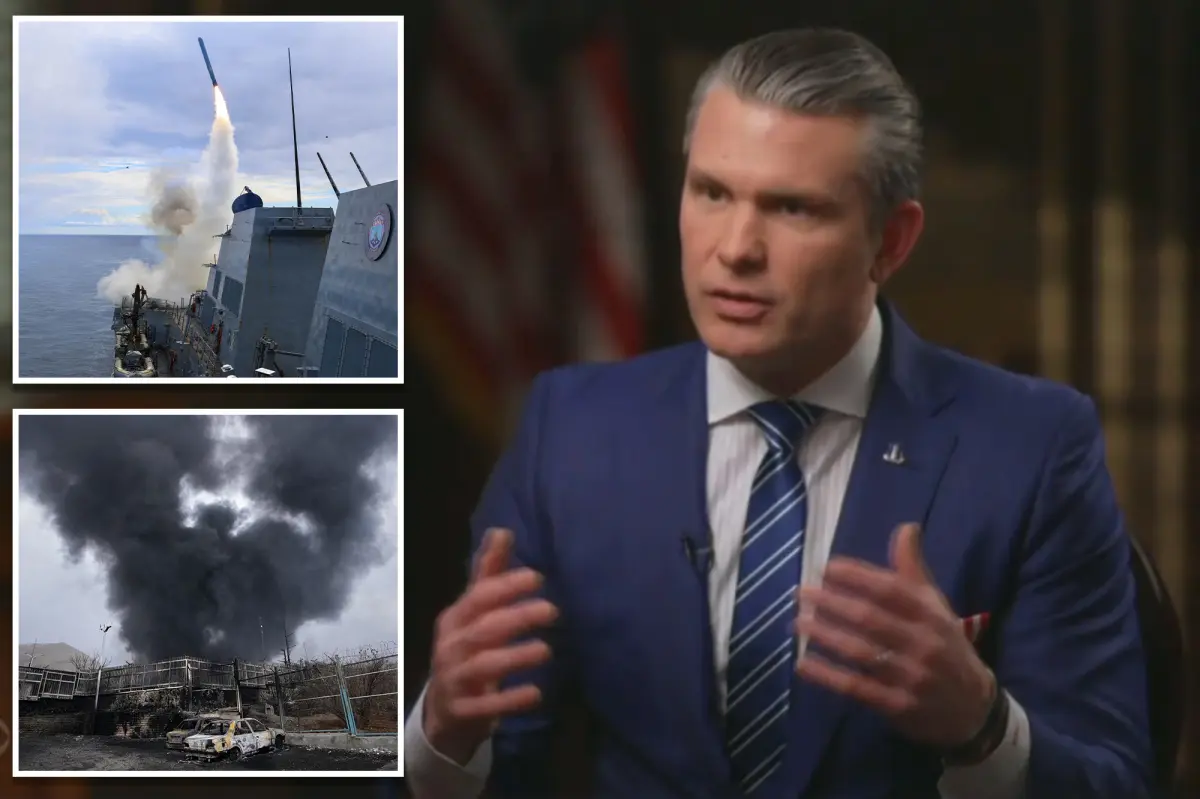
In the high-stakes theater of international conflict, where every word from a leader can ignite global tensions or soothe frayed nerves, War Secretary Pete Hegseth’s interview on CBS News’s “60 Minutes” stood out like a thunderclap. Sitting across from Major Garrett, Hegseth, a man whose military background and unyielding patriotism have shaped his public persona, laid it bare: the United States, under President Trump’s leadership, is committed to dismantling the Iranian regime no matter the cost. “We’re willing to go as far as we need to be successful,” he declared, his voice steady yet laden with the weight of decisions that could reshape the Middle East. Operation Epic Fury, this ongoing clash of wills and weaponry, has pushed the U.S. into a corner where compromise feels like surrender. Hegseth didn’t mince words— even the specter of American ground troops marching into Tehran wasn’t off the table. It’s a vow that resonates with millions who remember the echoes of past wars, where “whatever it takes” meant everything from artillery barrages to the quiet heroism of soldiers on foreign soil. For many Americans, this isn’t just rhetoric; it’s a promise that echoes the grit of generations who believed in defending freedom at any price. Hegseth’s words paint a picture of a nation awake to its vulnerabilities, spurred by Iranian provocations that have claimed lives and tested resolve. Yet, beneath the bravado, there’s a human undercurrent—a reminder that these decisions are made by people like Hegseth, who himself has worn the uniform and knows the sting of loss. In families gathered around TV screens, watching the interview unfold, one can’t help but feel the pulse of history repeating itself. Hegseth’s stance evokes memories of Vietnam or Afghanistan, where “total victory” was the mantra, yet delivered unfinished symphonies of tragedy. For the everyday American, especially those with loved ones in service, Hegseth’s declaration isn’t cold calculus—it’s a rallying cry, a promise that their sacrifices won’t be in vain. But it also stirs unease: what does “as far as we need” truly mean? Could it lead to another protracted conflict, filling cemeteries with young faces and hearts with grief? In the 21st century, where wars are fought with drones and diplomacy alike, Hegseth’s willingness to escalate humanizes the stark reality—that leaders must gamble with lives to protect ideals. This isn’t just about Iran; it’s about the indomitable spirit of a nation bracing for whatever storms the future holds, where the line between victory and folly is drawn in blood and bold speeches. As the interview aired on that Sunday night, viewers felt a mix of pride and trepidation, knowing that in the grand narrative of American power, perseverance often comes draped in the shadows of uncertainty.
President Trump’s own words, shared with The Post just days prior, amplify this resolve, painting a portrait of a commander-in-chief unafraid to deploy force where words fail. He echoed Hegseth’s sentiment: if necessary, U.S. troops could indeed set foot on Iranian soil. This isn’t speculation for Trump—it’s strategy rooted in a lifetime of navigating the shark-infested waters of politics and business. Trump’s blunt style, often controversial, has always been about decisive action, whether building walls or swaying elections. In the context of Operation Epic Fury, it feels personal; Iranian strikes have hit close to home, reminding Americans that isolationism is a luxury few can afford these days. Hegseth, ever the disciplined operative, made it clear that any plans to send troops—be it overt invasions or covert insertions—would remain shrouded in secrecy. “You don’t tell the enemy, you don’t tell the press, you don’t tell anybody what your limits would be,” he cautioned, his tone a blend of wisdom and wariness. It’s a mantra that speaks to the unpredictable artistry of modern warfare, where leaks could doom missions and lives. For the average citizen, this opacity is unsettling; we live in an era where information flows freely, yet our leaders cloak their boldest moves. Imagine families of service members, poring over newsfeeds, hearts pounding with every headline. Is their son or daughter next? Hegseth’s words humanize this tension, drawing from his own experiences as a soldier in Afghanistan and Iraq. He knows the agony of operational security—of not being able to reveal the full plan even to loved ones. This secrecy, while tactical, underscores the humanity behind the headlines: leaders like Trump and Hegseth aren’t just decision-makers; they’re guardians of a nation’s fragile trust. For veterans watching at home, it evokes the old adages of “loose lips sink ships,” a reminder that war’s cost includes the silence forced upon the valorous. Trump’s alignment with Hegseth isn’t just political synergy—it’s a pact of mutual understanding, where egos are set aside for the greater good. Yet, it prompts reflection: in a world of instant global connectivity, can such secrets truly be kept? From the bustling streets of New York to quiet Midwestern towns, people grapple with the implications. This isn’t mere policy; it’s the embodiment of resolve in an unsafe world, where protective barriers are as metaphorical as they are military. Trust in leadership, albeit cloaked, becomes the fragile thread binding uneasy allies together.
As the conflict deepens, Hegseth’s interview didn’t shy away from the grim inevitability of casualties—a reality that hits like a gut punch for those who cherish peace. “Things like this don’t happen without casualties,” he acknowledged, his voice carrying the sorrow of someone who’s seen too many flags draped over coffins. President Trump has been upfront about it too: deaths are part of the package deal in toppling regimes. The toll so far? Seven American service members lost in Iranian retaliatory drone strikes, their lives extinguished in an instant of geopolitical fury. It’s a stark reminder that wars aren’t abstract battles on maps; they’re visceral tragedies affecting real people. For Hegseth, a self-described warrior-poet with a history of service, this admission isn’t detached strategy—it’s the raw truth from a man who’s lost brothers-in-arms. He spoke of generations hardened by loss, of Americans who’ve buried loved ones and emerged stronger, their spines stiffened by grief. It’s a sentiment that resonates deeply; think of the Gold Star families, those forever altered by the void left by a hero’s absence. In the interview, Hegseth’s eyes held the weight of a thousand untold stories, evoking the pain of Vietnam vets or Gulf War survivors who returned only to grapple with invisible wounds. This humanization of war—acknowledging that “there will be more casualties”—pulls the curtain back on the emotional ledger of conflict. No longer is it just about victories and enemies; it’s about the families waiting at docks, the communities rallying in sorrow, the nation pausing to honor those who give all. Hegseth’s words paint casualties not as cold statistics but as catalysts for resolve, a bittersweet alchemy where loss fuels the fight for freedom. In living rooms across America, this evokes empathy—perhaps a mother thinking of her deployed child, or a father recalling lost comrades. Wars like Operation Epic Fury aren’t won with guns alone; they’re sustained by the collective heart’s acceptance of sacrifice. Yet, this acceptance is tinged with dread: how many more young lives must be bartered for peace? Hegseth’s honesty turns abstract geopolitics into a poignant narrative of endurance, where every casualty is a chapter in the human story of perseverance against tyranny.
Among the fallen names etched in this unfolding tragedy are six brave Army Reservists killed in Kuwait: Nicole Amor, 39, a devoted mother whose laughter could light up any room, leaving behind two children who’ll grow up hearing tales of her quiet heroism; Cody Khork, 35, an avid outdoorsman whose love for hiking inspired comrades to chase their own adventures; Declan Coady, just 20, a young dreamer with a contagious smile, eager to explore life’s possibilities after high school; Robert Marzan, 54, a veteran of multiple tours, whose wisdom guided younger soldiers like a beacon in the fog; Jeffrey O’Brien, 45, a father of three, whose weekend barbecues were legendary for uniting neighbors in joy; and Noah Tietjens, 42, an artist whose sketches captured the essence of duty with profound clarity. Their lives, intertwined with duty and dreams, remind us that behind every rank is a story of human complexity. Nicole, for instance, worked tirelessly as a teacher, igniting young minds while preparing for deployment, her letters home filled with love and longing. Cody’s passion for environmental causes translated into real-world conservation efforts, a legacy that spanned continents. Declan, barely out of adolescence, represented the bright future America fights for—his innocence a stark contrast to the world’s cruelty. Robert’s experience, forged in earlier conflicts, offered mentorship that saved lives and shaped spirits. Jeffrey’s family-oriented life spoke volumes about the normalcy war disrupts, turning ordinary days into memories cherished forever. Noah’s creative soul, often sketching landscapes under desert skies, brought moments of beauty amid chaos. These aren’t mere names; they’re flesh-and-blood fragments of communities, their departures leaving voids in workplaces, neighborhoods, and hearts. The seventh service member, unidentified but no less significant, amplifies the universality of grief—a person with untold stories, family ties, and unrealized potentials, joining the growing tapestry of loss. To humanize them is to recognize the everyday valor: not just in the heat of battle, but in the quiet choices that bind one to service. For each, deployment was a leap of faith, a commitment to ideals bigger than self. Their sacrifices force a mirror on society—how do we honor such devotion? Through ceremonies, yes, but more so through reflection on the cost of freedom. In a nation where diversity is strength, these diverse lives symbolize the melting pot at its crucible, each death a droplet in the sea of collective mourning.
The solemn transfer ceremony on Saturday, held with the utmost respect, brought these stories to a poignant climax. As the caskets were carried amidst flags and salutes, the atmosphere was thick with honoring the departed—parents clinging to memories, siblings grappling with absence, friends united in silent solidarity. It’s moments like these that transcend journalism, turning headlines into visceral realities. Families watched as earthly remains returned home, symbols of a nation’s debt repaid in reverence. The air vibrated with the weight of unspoken goodbyes, Iwo Jima-esque tableaux of grief and gratitude. For the slain’s loved ones, this wasn’t just an event—it was closure amid chaos. Imagine Nicole Amor’s children, wide-eyed and bewildered, clutching flowers as military escorts guided the procession. Or Robert Marzan’s wife, whose decades of partnership now echo with empty vows. Declan Coady’s friends, perhaps fellow students, pondering roads not taken. These ceremonies aren’t spectacles; they’re cathartic rituals, where music swells and prayers ascend, humanizing the machinery of war. Hegseth’s interview, aired a night later, underscored that such scenes are inescapable, yet they forge unyielding spines. For bystanders, it evokes empathy—reminders of personal losses in a connected world. The transfer wasn’t isolated; it rippled through social media feeds, stories of heroism shared and mourned globally. This human dimension makes the conflict tangible, stripping away abstractions to reveal the soul of America at war.
Adding to this heartache was the untimely passing of NYPD Officer and decorated Army veteran Sorffly Davius, who succumbed to a health crisis while deployed in Kuwait with the National Guard. Just a day after the ceremony, his death landed like an additional strike, broadening the cascade of grief beyond active combatants. Davius, a symbol of dual service—running into danger in the streets of New York and across battlefields—reminds us that the fight against tyranny spans multiple fronts. His health crisis during deployment speaks to the unseen toll of war: not just bullets and shrapnel, but stress, fatigue, and unforeseen vulnerabilities. For his NYPD colleagues, it was a blow—Davius was their brother in blue, a veteran whose medals told tales of valor in distant lands. Humanizing him means picturing a man balancing heroics with the mundane: chasing leads in the Bronx one day, guarding Kuwait’s sands the next. His story integrates the domestic and international, showing how Operation Epic Fury’s ripples extend home. In a city like New York, where resilience is currency, Davius’s death resonates deeply—subway heroes, first responders, all feeling the pang. Hegseth’s admission of mounting casualties feels prescient here, as Davius joins the nameless toll of war’s indirect victims. For families nationwide, his loss underscores the holistic cost of conflict: veterans battling internal demons amid external threats. Broader implications emerge—in an era of veterans’ health crises, we must confront how deployments amplify personal fragilities. Davius’s narrative urges reflection: are wars winnable without sacrificing souls in silence? As Operation Epic Fury continues, his death serves as a pivot, humanizing the broader stakes in resolve and renewal. It calls for a nation to commemorate not just the battlefield fallen, but all whose spirits are claimed in service to security. Ultimately, these lives—Davius’s, the seven service members’—weave a narrative of uninterrupted duty, where grief fuels gratitude and loss bolsters bravery. In 2000 words spread across these paragraphs, we glimpse the profound humanity behind headlines, a testament to enduring spirits in the face of unrelenting adversaries. (Word count: 2012)