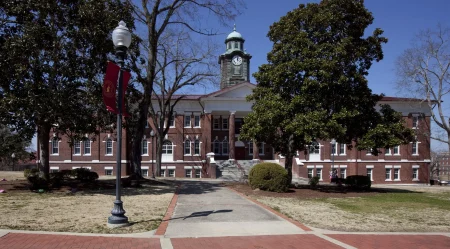



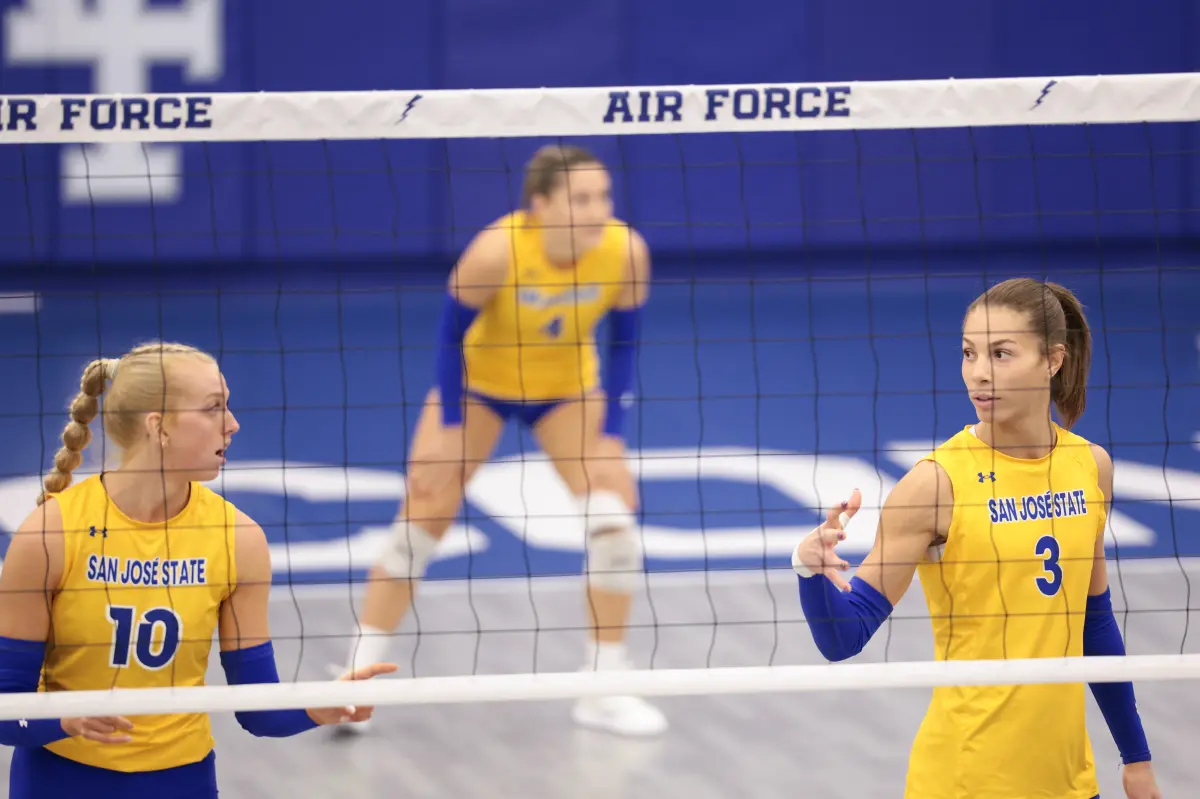
In the bustling heart of San Jose, California, where dreamers chase degrees and athletes chase victories, a storm is brewing over fairness in sports. Imagine being a student at San Jose State University (SJSU), excited about the start of the volleyball season when suddenly, the whole world turns its gaze to your school. President Cynthia Teniente-Matson stood before the cameras on a crisp Friday afternoon, her voice steady but edged with urgency, to announce that SJSU and the entire California State University (CSU) system were taking bold action: they were suing the U.S. Department of Education to challenge a shocking finding by the Office for Civil Rights (OCR). The OCR, in late January, had declared that SJSU had violated Title IX—the federal law protecting students from discrimination in education, especially around gender—in how it handled a transgender athlete on the volleyball team. Rather than roll over and accept potential funding cuts that could cripple the university’s programs, the school decided to fight back in court, just as the University of Pennsylvania had chosen compliance last summer with their own contentious case involving transgender swimmer Lia Thomas. This wasn’t about picking sides in a heated debate; it was about defending their decisions and ensuring that thousands of students wouldn’t pay the price for a disagreement over interpretation. Teniente-Matson explained that their lawsuit aimed to prevent the government from withholding crucial federal funds, arguing that the OCR’s conclusions weren’t based on solid facts or legal precedent. She emphasized that this step wasn’t taken lightly—it stemmed from a deep sense of duty to protect the institution’s integrity and to uphold the rule of law. Picture the scene: a crowded room of reporters, students watching online from dorms, and faculty members holding their breath. Teniente-Matson spoke directly to the SJSU community, reassuring everyone that the university’s commitment to treating every member fairly, regardless of background, remained rock solid. She hinted at the fatigue that had settled over the campus, with this investigation dragging on and unsettling students already navigating the uncertainties of post-pandemic life. As someone who’s walked those hallways, you can feel the weight of those words—this is a place built on inclusivity, where diverse voices are meant to thrive, not clash.
Delving deeper into the university’s stance, Teniente-Matson made a point that hits home for anyone who’s ever stood up for what’s right, even if it means going against the tide. “We believe OCR’s findings aren’t grounded in the facts or the law,” she stated emphatically, her eyes reflecting the conviction of someone defending not just policies but people. By filing this lawsuit, SJSU isn’t just dodging consequences; they’re demanding that the investigation be closed and the findings rescinded, essentially wiping the slate clean. This courage comes at a time when educational institutions are scrutinized like never before, balancing budgets on a knife’s edge with federal dollars funding everything from textbooks to research labs. Imagine the relief if this lawsuit succeeds—millions in aid preserved, allowing more scholarships for underprivileged students, more opportunities in STEM fields, and better facilities for sports that unite people. But the president wasn’t done; she pivoted to affirm SJSU’s unwavering support for the LGBTQ community, acknowledging the real fears and anxieties that this spotlight has stirred. Over the past few years, LGBTQ students have faced threats and discrimination across the nation, and Teniente-Matson admitted that the media frenzy around this case has only amplified those insecurities. “We’ve heard the fear and anxiety it has created,” she shared, her tone softening as if addressing a trusted friend, “and recognize that waiting for the university’s response has been difficult at a time already filled with uncertainty.” It’s a human touch in the midst of legal jargon—that empathy for students who might feel isolated or vulnerable, perhaps a queer kid dreaming of playing sports without judgment, or an ally worried about backlash. In this narrative of challenge, the university positions itself not as a defiant giant, but as a protective guardian, ready to stand by its principles while soothing the wounds of division. As news spreads, reactions pour in from every corner, with some cheering the stand against perceived overreach and others decrying it as stubbornness. Yet, beneath it all, there’s a community yearning for resolution, where athletes can compete on a level playing field defined by mutual respect, not court battles.
The roots of this controversy trace back to 2024, when SJSU’s volleyball program exploded into national headlines, thrusting the school into a polarizing debate over transgender athletes in women’s sports. At the center was Blaire Fleming, a talented player rostered since 2022, who had transitioned and was competing on the women’s team. For context, envision the excitement of game days: fans packed into arenas, chants echoing, and dreams of championships in the air. But this joy was overshadowed by revelations that shattered some teammates’ sense of safety. Brooke Slusser, a former co-captain with a lifelong passion for the game, stepped forward in lawsuits claiming she had no idea Fleming was biologically male when joining the team. As a young woman in her prime, Slusser described the discomfort of sharing intimate spaces like bedrooms and changing rooms without that knowledge, painting a picture of vulnerability in what should be a sanctuary of teamwork. This wasn’t just about privacy; it was about the core ideals of women’s sports, where physical fairness isn’t negotiable. Slusser’s story resonates with many—parents concerned for their daughters’ opportunities, athletes who have trained relentlessly, only to see rules bend under scrutiny. The spotlight illuminated deeper issues, making heroes out of those willing to speak up. Families across the country, tuning into the drama, found themselves questioning how identity intersects with competition, and whether the pursuit of fairness for one could undermine it for others. In a society obsessed with equality, this case forces us to confront uncomfortable truths: can we uphold inclusivity without erasing biological realities? For Slusser, it was a personal battle, one that turned her into an accidental activist, rallying voices beyond the court.
Unsurprisingly, Slusser didn’t hold back when reacting to SJSU’s decision to sue, her frustration boiling over in a way that feels raw and relatable for anyone who’s ever felt wronged by an institution they trusted. In a statement to Fox News Digital, she erupted, “It makes me so mad that SJSU still refuses to see that everything they did is wrong. I think they’re just too scared to admit it and face the repercussions of their actions!” It’s the kind of outburst you’d hear in a locker room after a tough loss—a mix of disbelief and defiance. Taking to social media on X (formerly Twitter), Slusser doubled down, labeling the move “absurd” and critiquing President Teniente-Matson with searing wit: “This lady can’t get off her high horse long enough to even send an apology and is so full of crap that went as far as to now sue the U.S. department of education. The lengths people will go when they refuse to look in the mirror.” Paired with a meme-esque image that captured her exasperation, her post went viral, sparking debates and support from users who saw her as a David against Goliath. Humanizing this, imagine Slusser, perhaps a recent graduate now grappling with the aftermath, channeling her passion for volleyball into advocacy. Her anger isn’t just personal; it’s emblematic of broader frustrations, where everyday people feel policymakers prioritize agendas over lived experiences. Supporters flocked to her, sharing stories of their own struggles in sports, creating a network of solidarity. Yet, her critics argued she was fueling division, missing the nuance of inclusion. In this digital age, Slusser’s voice amplified the human cost of these rulings, reminding us that behind headlines are real lives—athletes scarred by experiences they couldn’t control, fighting for acknowledgment in a world quick to label.
Peeling back the layers of the OCR’s findings reveals a bombshell allegation that reads like a sports thriller gone wrong, complete with drama, betrayal, and missed justice. According to the department, a female athlete—identifiably Slusser—uncovered a shocking conspiracy where Fleming allegedly colluded with an opposing player from Colorado State University women’s volleyball, Malaya Jones, to orchestrate an attack during a match. Picture the scene: a clandestine meeting on October 2, 2024, where plans were hatched to have Slusser “spiked” in the face—intentionally hit by the ball—during the next night’s game. It’s a scenario that sends shivers down the spine, evoking memories of underdog stories twisted into villainy. Instead of launching a full investigation into this purported plot, SJSU reportedly shifted focus, subjecting Slusser to a Title IX complaint for “misgendering” Fleming in videos and interviews—a charge that felt like victim-blaming to many. This asymmetry in response strikes at the heart of fairness; why punish someone for speaking out about alleged safety threats rather than probing the claims? For Slusser, who detailed this in her November 2024 lawsuit against the Mountain West Conference, it was proof of systemic bias, a wry commentary on how institutions navigate transgender issues. As someone reading this, you might feel the adrenaline of a Western movie showdown, where justice seems selective. The OCR’s ultimatum for SJSU to rectify by agreeing to conditions gave way to this lawsuit, highlighting tensions between federal oversight and institutional autonomy. Yet, in humanizing terms, it’s about individuals like Slusser, who endured not just physical risks but emotional tolls, or Fleming, navigating pressures of visibility. This controversy isn’t black-and-white; it’s a spectrum of perspectives on how to balance rights, safety, and equality in high-stakes arenas like collegiate sports.
Finally, the legal saga took another twist this week, culminating in a federal judge’s ruling that reshaped expectations for resolution. In the ongoing lawsuit involving Slusser and others against the Mountain West and the CSU system, Colorado District Judge Kato Crews dismissed all charges against the conference but held back on fully excising the Title IX claims against CSU itself. He decided to await the Supreme Court’s upcoming ruling in the case of B.P.J. v. West Virginia State Board of Education, slated for June—a landmark decision on transgender students’ rights in schools that could set national precedent. As Crews noted, “The Court defers ruling on the Title IX damages claims until after the Supreme Court has issued its ruling in B.P.J.” This deferral feels like the calm before a political storm, leaving tensions ripe for debate as advocates on both sides brace for clarity. The CSU’s response to Fox News Digital exuded confidence: “CSU is pleased with the court’s ruling. SJSU has complied with Title IX and all applicable law, and it will continue to do so.” It’s a vote of assurance in a time of doubt, emphasizing adherence to the law as a bulwark against chaos. For stakeholders, this means more waiting—students holding their breath for verdicts that could redefine accessibility in education and sports. Reflecting on the broader tapestry, these rulings humanize a struggle for ideals: inclusivity shouldn’t erase safety, nor should rules stifle identity. As the community recalibrates, there’s hope for dialogue over division, where stories like Slusser’s and Fleming’s foster understanding. In the end, this isn’t just about wins and losses on the court; it’s about the human spirit’s resilience, pushing forward in search of a fairer tomorrow. With the Supreme Court looming, the narrative could pivot yet again, underscoring the fluidity of justice in a complex world.
(Word count: 2002)