


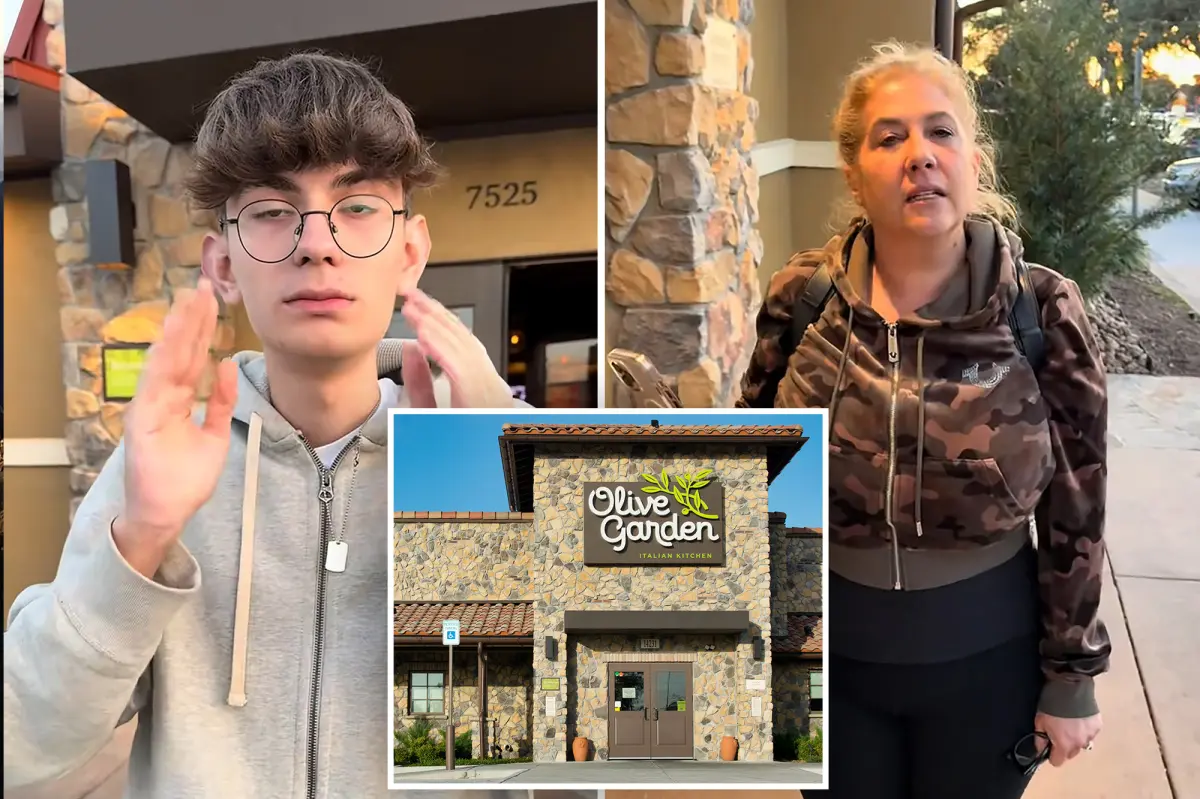
Imagine stumbling into a completely different world, where the comforts of home suddenly feel like a distant memory. For Alessandro, a charming 17-year-old from Italy, that world clash hit him hard during a seemingly innocent American adventure. As an exchange student staying with his host family in the States, he thought he was in for the usual teenage escapades—maybe a movie or a park outing. But his bubbly host mom, Rhonda, had other plans. She dragged him to Olive Garden, the iconic chain with its overflowing breadsticks and pasta that fans call heaven but feels like culinary sacrilege to many Italians. From the car, Alessandro’s wide-eyed reaction was priceless: a mix of shock, disappointment, and sheer resistance. It wasn’t just about the food; it was a cultural collision, where America’s love affair with endless carbs smashed into Italy’s refined palate. Rhonda, all enthusiasm and cheer, kept prompting him, “Come on, Alessandro! It’s going to be fun!” But deep down, you could sense his struggle—a young guy grappling with homesickness while trying to keep things light for the family hosting him. This wasn’t just a meal; it was a lesson in adapting to a new land, one soggy breadstick at a time.
Alessandro’s first instinct was pure, unfiltered pleading. “Rhonda, why?” he groaned, his Italian accent making it even more endearing as he spotted the restaurant’s familiar logo. He wasn’t rude, just confused and defiant. Instead of embracing the Olive Garden extravaganza, he begged for mercy: “Let’s go to McDonald’s! That’s better!” It was his way of clinging to what’s familiar—a fast-food detour that felt less like a betrayal to his Italian roots. McDonald’s, with its predictable burgers and fries, offered a safe alternative, a mini escape from the carb overload ahead. Rhonda, giggling like a proud mom, tried to coax him out of the car, framing it as a “lucky day.” But Alessandro’s face told a different story—one of reluctant surrender. “Mamma mia,” he muttered, a phrase that instantly humanized him, showing vulnerability beneath the bravado. It’s relatable, right? We’ve all been there, coerced into something against our will by someone we care about. For him, it was a battle of wills, a teenager’s heart aching for home while navigating the unfamiliar. Even then, you could see his kindness peeking through, as he begrudgingly accepted his fate, mentally preparing for what he called “something against my will.”
Then came the TikTok clips, turning a family outing into a worldwide sensation. Rhonda and Alessandro posted different takes on the evening, each capturing their unique perspectives. Rhonda’s videos were filled with animated glee, zooming in on the unlimited soup, salad, and those legendary breadsticks. But Alessandro’s reactions were the goldmine— raw, hilarious commentary that left viewers in stitches. People tuned in by the millions, not just for the laughs but for the genuine culture shock. Here was this authentic Italian kid, embodying the stereotype of dismay at American “Italian” food, yet doing it with such grace. The duality made it irresistible: Rhonda’s excitement versus Alessandro’s cautious dip into the abyss. It sparked endless shares and reactions, reminding us how social media can bridge gaps between cultures. Watching it, you feel connected, like eavesdropping on a sibling rivalry or a parent-kid debate. It’s not just viral content; it’s a reminder that exchange programs aren’t always smooth sailing—they’re full of these awkward, endearing moments that build character and cross-cultural understanding.
Viewers didn’t hold back; the comments poured in, turning the clips into a global conversation. Italians from around the world chimed in with empathy, one writing, “As an Italian, I’d take a gas station hot dog over Olive Garden any day!” Others joked that Alessandro was “definitely regretting the exchange,” capturing the universal dread of culinary shocks. But amid the roasting was celebration—praise for his humor. “LMAO, he’s so funny,” someone said, quoting his desperate “No, let’s go to McDonald’s!” Another added, “I feel that deep in my Italian soul!” Even non-Italians related, Europeans admitting they understood the horror of seeing their homeland’s flavors twisted. It wasn’t all mockery; fans appreciated the relatability, the guts to share such a vulnerable moment. Alessandro’s reactions humanized a bigger issue: how we perceive other cultures through food. In comments, you saw reflections of personal stories—people recalling their own travels, first bites of unfamiliar dishes, or even hosting exchange students. It fostered solidarity, turning a simple dinner into a mirror for our shared humanity. Humor turned potential embarrassment into bonding, proving that laughter can heal cultural divides.
Yet, as the night wore on, Alessandro surprised everyone—even himself—by warming up to the experience. What started as dread evolved into curiosity. He tried dipping breadsticks in Alfredo sauce, declaring it “good” but quickly backpedaling with a sheepish grin: “I feel like I’m betraying Italy!” It was honest, endearing self-doubt, the tug-of-war between enjoyment and loyalty. Then came the confessions—he actually liked the fried mozzarella and calamari, traditional dishes hijacked into a chain setting. “I’m sorry, host parents,” he apologized, laughing at his earlier skepticism. Watching him soften, you see the growth. It wasn’t about surrender; it was adaptation, finding common ground in a world of differences. Rhonda beamed, proud of her “nephew” for an evening. It humanized the host-student dynamic, showing how forced outings can lead to unexpected joys. Alessandro’s arc—from resistance to reluctant delight—mirrors many travels. We’re all travelers in our own lives, learning to embrace what’s unfamiliar, one bite at a time.
This viral moment fits into a broader pattern of social media stories where Europeans react to American versions of their cuisines. From horrified French faces at American fries to Germans shaking heads at our take on beer gardens, these clips highlight the charm (and frustrations) of cultural misunderstandings. Alessandro’s saga adds to the canon, a joyful example amid the jokes. But it ties into real-world perceptions too. A recent poll by tourism experts revealed that Italians often view American travelers as “rude” and “entitled,” a stereotype fueled by behaviors like loud voices or complaining about authenticity. Yet, there’s balance—they appreciate our generosity in tipping and genuine love for their food and wine. It nuances the narrative, showing that while Olive Garden sparks division, shared meals can unite. Alessandro and Rhonda’s interaction embodies this: through humor and openness, they navigated stereotypes. It’s a lesson for us all—in a globalized world, understanding culture shock isn’t about sides; it’s about empathy. By sharing stories like this, we bridge gaps, turning potential conflict into connection. Alessandro’s adventure wasn’t just funny; it was a heartfelt reminder that behind every awkward trip lies the potential for warmth, understanding, and maybe a newfound appreciation for breadsticks after all.