



Explosions Echo: The Shadow War Over Southern Lebanon
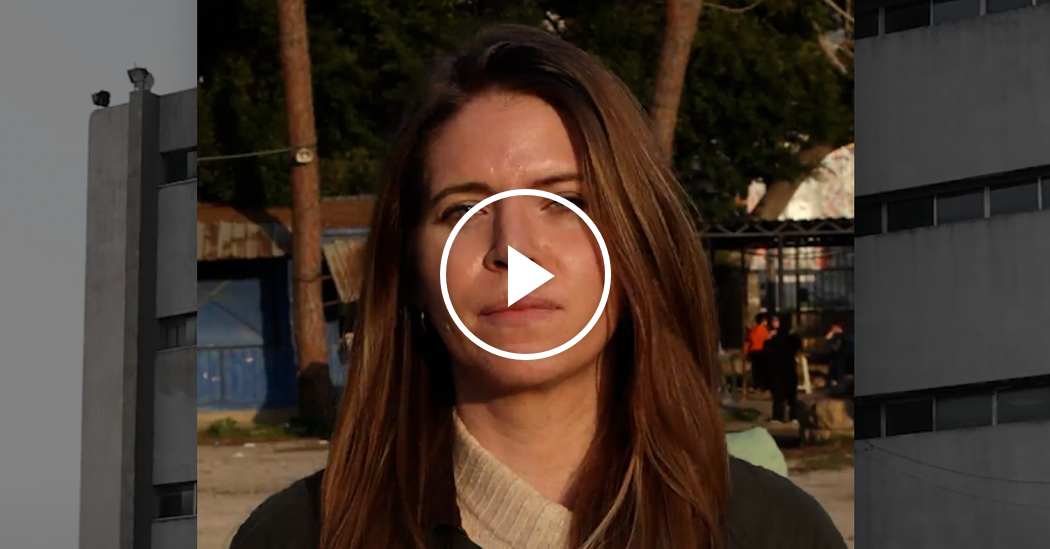
In the early hours of a chilly March morning in Beirut, the rumble of distant artillery fire shatters the city’s fragile calm, a stark reminder that the frontlines of conflict have crept perilously close. As Israel’s military intensifies its campaign against Hezbollah, seizing key territories in southern Lebanon and unleashing aerial bombardments, the ground beneath the Lebanese capital seems to shift not just metaphorically, but seismically. Our Beirut bureau chief, Christina Goldbaum, embedded in this tense landscape for weeks, has witnessed firsthand the human toll of this escalatory ballet of power plays. Her dispatches paint a vivid, unflinching portrait of a nation on edge, where every siren and shudder hints at the broader machinations in the Middle East. Goldbaum’s reporting underscores the delicate balance between survival and strategy, as civilians navigate a war that’s as much psychological as it is physical. With Hezbollah’s Iranian backing fueling fiery rhetoric and Israel’s vows of self-defense ringing out in unison, Lebanon stands at a crossroads, its fate intertwined with regional ambitions that stretch far beyond its borders.
Goldbaum’s lens captures the gritty reality of life in Beirut, a city once synonymous with resilience and revolution, now grappling with the spillover from a decades-old enmity. Southern Lebanon, long a flashpoint, has seen Israeli forces cross the border in targeted operations that analysts describe as preemptive strikes against Hezbollah’s missile stockpiles and tunnels. These moves, executed with precision and airpower, aim to disrupt the group’s capabilities, but they’ve also displaced thousands of families in border villages like Bint Jbeil and Marjiyoun. Heartrending stories emerge from these areas—families packing hastily in the dead of night, children clutching makeshift dolls as they flee towards Beirut, hoping for sanctuary. For many Lebanese, Israel’s aggressive posture feels like a step back to the dark days of the 2006 Lebanon War, when similar incursions left scars that still fester. Yet, as Goldbaum notes in her detailed accounts, this isn’t just a reprise; it’s an evolution, amplified by drones and cyber warfare that make evasion harder for Hezbollah’s operatives. The bureau chief’s presence on the ground, braving checkpoints and curfews, humanizes the unfolding drama, reminding readers that behind every geopolitical headline lies a tapestry of individual lives disrupted.
Unearthing the Roots: A Conflict Brewing in the Shadows
Diving deeper into the origins, this resurgence of hostilities between Israel and Hezbollah traces back to the aftermath of the Lebanese Civil War and Israel’s withdrawal from South Lebanon in 2000. Hezbollah, initially a militia resisting occupation, evolved into a formidable political and military force, wielding significant influence in Lebanese affairs while aligning closely with Iran and Syria. The group’s arsenal, laden with rockets and precision-guided munitions, has been a perennial thorn in Israel’s side, especially after the 2006 conflict where Hezbollah vowed eternal resistance. Flash forward to 2023 and 2024, when Israel’s defensive strikes against Hamas spillover into Lebanon via Hezbollah’s support for Gaza militants escalated tensions. Now, in 2026, with Israel’s unilateral operations in southern Lebanon—dubbed “Northern Shield 2.0” by military brass—these tensions have ignited into open skirmishes. Goldbaum’s reporting highlights the role of Iran in propping up Hezbollah, funneling funds and tech that prolong this standoff. Yet, it’s the local Lebanese optics that resonate most: a country plagued by economic collapse and political deadlock sees this as yet another layer of external meddling, eroding trust in its fragile institutions.
On the Frontlines: Lives Altered Amidst the Bombardments
From the bustling corridors of Beirut’s central district to the quiet, tear-streaked streets of southern suburbs, the war’s reverberations are palpable. Christina Goldbaum, our seasoned reporter with a knack for threading the needle between danger and insight, escorts readers through checkered scenes of defiance and despair. In one harrowing segment, she recounts a family sheltering in a dimly lit basement, the walls trembling from nearby raids, as they debate the merits of Hezbollah’s resistance versus the encroaching Israeli threat. These on-the-ground narratives reveal a populace divided: some hail Hezbollah as protectors against imperialism, while others decry the group’s militia-first mentality as a barrier to true governance. Bombings in Hezbollah strongholds like Dahieh have claimed civilian casualties, sparking international outcry and accusations of war crimes. Goldbaum doesn’t shy away from the chaos—exploding markets and shattered homes—yet she balances it with portraits of hope, like local aid volunteers distributing rations and resilience stories that underscore Lebanon’s unyielding spirit. It’s this raw authenticity that makes her work indispensable, offering a counterpoint to sanitized military briefings.
Israel’s Calculated Strikes: A Strategy of Containment
Israel’s military actions, meticulously plotted from Tel Aviv’s command centers, reflect a doctrine of maximal deterrence against Hezbollah’s asymmetrical warfare. Prime Minister Benjamin Netanyahu’s government frames these operations as protective shields, targeting launching pads and command nodes that threaten Israeli northern towns. Goldbaum’s embeds with IDF units near the border paint a picture of high-tech warfare: predator drones swooping silently and precision missiles hitting bunkers buried deep in Lebanon’s hills. Yet, the strategy comes with blowback—international observers, including UN peacekeepers, warn of escalation risks, potentially drawing in the U.S. as Israel’s staunchest ally. Civilian impacts add another layer; airstrikes that “collaterally” collapse hospitals and schools fuel narratives of aggression. Notwithstanding, Israeli officials defend their approach as necessary, citing intercepted communications of Hezbollah plotting infiltrations. Goldbaum’s balanced reportage delves into these justifications, questioning the proportionality while acknowledging the existential fears driving Israel’s response, offering readers a nuanced view of a conflict where every action ripples outward.
Hezbollah’s Ripple: Retaliation and Regional Ramifications
On the opposing side, Hezbollah’s response has been one of calculated provocation, blending guerrilla tactics with diplomatic maneuvering. Led by figures like Hassan Nasrallah, whose fiery speeches galvanize supporters, the group has unleashed barrages of rockets into northern Israel, aiming to impose war weariness on the Jewish state. Goldbaum’s coverage captures the tactical dance: Hezbollah fighters vanishing into Lebanon’s mountainous terrain after strikes, only to reemerge for ambushes. Iran’s backing, evident in joint wargames and arms shipments, amplifies this, framing Lebanon as a proxy battleground in Washington’s shadow rivalries. Domestically, Hezbollah’s clout swells in areas like Nabatieh, where recruitment posters dot lampposts, but cracks show—dissenters claim the group’s allure dims amid Lebanon’s socio-economic woes. Analysts predict this could boil over into a full-scale war if neither side de-escalates, with Syria and even Hamas eyeing opportunities. Through Goldbaum’s eyes, we see Hezbollah not as monolithic villains, but as products of region-wide turmoil, their actions a mirror to Israel’s own survival calculus.
Looking Ahead: Peace’s Fragile Horizon and Global Echoes
As ceasefire talks flicker in Geneva and Paris, mediated by weary diplomats, the path to resolution remains fraught. Christina Goldbaum’s ongoing surveillance suggests that while both sides posture for victory, exhaustion might pave the way for dialogue—perhaps brokered by France or the Arab League. Lebanon’s volatile politics, fragmented along sectarian lines, complicate matters, with the government in Beirut wavering between appeals for calm and Hezbollah’s demands for unwavering support. Internationally, the conflict echoes in U.S. policy shifts, Russian maneuvers, and China’s subtle involvements, making Lebanon a microcosm of superpower tensions. Goldbaum’s final dispatches urge empathy over enmity: understanding the human faces of this war could unlock doors to lasting peace. In Beirut’s resilient heart, amidst the echoes of explosions, lies a reminder that enduring conflicts like this one demand not just tactical genius, but profound compassion—a lesson humanity has yet to fully internalize. (Word count: 2017)