


The Shattered Illusion of Safe Getaways
Imagine planning the ultimate escape—a shimmering metropolis of luxury, endless shopping, and adventure in the sun. For countless tourists flocking to Dubai, Doha, and other glittering hubs in the Middle East, these destinations promised the perfect blend of relaxation and excitement. But what started as idyllic dream holidays has devolved into heart-pounding nightmares, with the recent escalation of regional tensions turning hoarded travel plans into desperate pleas for safety. Families, couples, and solo adventurers now huddle indoors, peering anxiously through hotel curtains as authorities issue stark warnings to stay away from windows, doors, and open spaces. Social media timelines, once filled with glamorous selfies and beach vibes, are now a chaotic stream of real-time panic—videos of distant booms, shaky updates about evacuations, and tearful messages home. It’s a brutal awakening for those who believed they’d escaped the world’s troubles, only to find conflict raining down uninvited. In Dubai, long touted as a stable oasis amid the Middle East’s storms, the facade has cracked, leaving residents and visitors grappling with an unprecedented reality. Airports and airspaces slam shut, trapping people in a state of limbo, their suitcases unpacked and hopes deferred indefinitely. One can almost feel the collective shock rippling through the expat communities and transient travelers who once reveled in this city’s polished allure. The transition from carefree exploration to survival mode has been dizzying, forcing a reevaluation of what “safe” really means in a world where geopolitics intrudes on personal bliss. As stories pour in from those on the ground, the emotional toll becomes clearer—fear not just for physical safety, but for the loss of normalcy, the unanswered questions about flights home, and the isolation from loved ones back in distant countries. It’s not just a travel mishap; it’s a profound human disruption that highlights how fragile our dreams can be.
Witnessing War from Hotel Rooms
From the confines of their accommodations, tourists have become unwilling eyewitnesses to a crisis unfolding overhead. In Dubai, guests at the five-star Fairmont The Palm hotel watched in horror as debris from an Iranian missile attack on Saturday ignited a fire, flames licking at the structure amid the chaos of war. The airspace above the Persian Gulf hummed with missiles and drones, a spectacle of destruction that no one expected to intrude on their vacation. It was surreal, like something out of a dystopian movie, yet terrifyingly real. Nearby, Dubai’s and Abu Dhabi’s airports bore the brunt of drone debris, claiming at least one life and injuring around a dozen people, according to local reports. Bodies found amid the wreckage underscored the deadly seriousness of the situation, a grim reminder that even the most luxurious gateways aren’t impervious to global enmities. Tourists shared their visceral accounts, describing the ground trembling from intercepted drones and glass rattling from distant explosions. The fear was palpable; heartbeats synchronizing with each rumble, breaths held as uncertainties loomed. For many, this was not just an interruption but a direct confrontation with mortality, turning hotel suites into makeshift bunkers. The media flooded with personal narratives, each infusion of human vulnerability adding layers to the tragedy. Sleep evaded as sirens wailed and advice to shelter in place turned everyday rooms into places of uneasy refuge. The psychological weight was heavier than the physical debris—intruders peering from balconies, children wide-eyed with confusion, adults wrestling with the urge to flee versus the imperative to hide. It humanized the abstraction of conflict, showing how ordinary people, far from the frontlines, suddenly became casualties of a larger war. Resilience flickered in some, but for most, the ordeal etched an indelible scar, rewriting their travel stories from adventures to enduring traumas.
A Dream Deferred: Dubai’s Broken Promise
Dubai’s identity has always been its magnetic draw—a beacon of safety and stability in a region fraught with turmoil. Marketed as an oasis, a playground for the elite where skyscrapers touch the sky and luxury knows no bounds, it lured millions with promises of uninterrupted indulgence. But the current crisis has exposed the fragility of that narrative, shaking tourists and locals alike to their core. Cinzia Bianco, a seasoned analyst on the Persian Gulf at the European Council on Foreign Relations, captured this disillusionment poignantly, tweeting that this might be the emirate’s “ultimate nightmare,” where the very foundation of its allure—being a sanctuary from conflict—lies shattered. There’s no going back, she warned, implying a permanent shift in how the world perceives Dubai, a once-invulnerable haven now vulnerable to the whims of regional powers. Visitors who arrived with wide-eyed wonder now grapple with a sense of betrayal, their trust in this desert gem eroded. The escalation hasn’t been commonplace here; incidents like these buck the trend of Dubai’s insulated prosperity, making the reality sting sharper. Emotional turmoil brews beneath the city’s polished veneer as people confront not just immediate dangers but the erosion of a collective myth. For expatriates who’ve built lives here, the fear runs deeper—a potential uprooting of homes, careers, and the illusion of control. Tourists, meanwhile, question their choices, pondering the culpability of travel brochures that painted a picture of paradise without whispering the risks. It’s a human drama unfolding in real-time, with resilience pitted against irreversible change, forcing a reckoning on what safety truly entails in an interconnected world. The incident reverberates beyond the immediate shock, sparking conversations about geopolitical prudence and the ethics of promoting destinations in volatile areas. Ultimately, it underscores a painful truth: even the most fortified havens can crumble, leaving hearts heavy with belated wisdom.
Personal Horrors: Stories from the Frontlines
Amid the broader chaos, individual voices cut through with raw, intimate despair, painting a vivid picture of lives upended. British bodybuilding champion Sim J Evans captured the surreal dread from her Dubai perch, sharing on Instagram how she and others witnessed buildings quaking from intercepted drones and explosions rattling windows. “This isn’t what I signed up for,” one can imagine her thinking, her athletic poise crumbling under the weight of uncertainty, awaiting a flight to New York that seemed eternally delayed. For her, and countless others, the vacation morphed into a survival stint, each moment stretched by anticipation and fear. Australian travel creator Isabella-Rae Banda recounted a jarring pivot, transitioning from posting videos of boutique clothes in Dubai to sending panicked messages about a bombed building right across from her hotel. The emotional whiplash is palpable—excitement giving way to terror, motherly instincts kicking in as she tried to console her family remotely, all while the world outside erupted in violence. Similarly, Denise Curran from Northern Ireland, vacationing with her family, described trying to venture out for a meal only to be shunted back to their hotel by warnings. Forced to plaster on a brave smile for her children’s sake, she admitted to being “terrified,” with shuttered stores and relentless loud noises amplifying her isolation. Her post, laced with maternal protectiveness, humanizes the ordeal, highlighting how adults shoulder unspoken burdens to shield the young. These accounts aren’t just anecdotes; they’re windows into fractured psyches, where the thrill of discovery collides violently with the terror of the unknown. Social media becomes a lifeline, a digital echo chamber of shared anguish, where strangers bond over fear and forge fleeting communities. The emotional toll manifests in sleepless nights, anxious pacing, and the gnawing dread of “what ifs.” For many, these vacations were meant to be escapes, but instead, they’ve become involuntary crash courses in vulnerability, etching memories that will haunt long after departure.
Communication Failures and Limbo Uncertainty
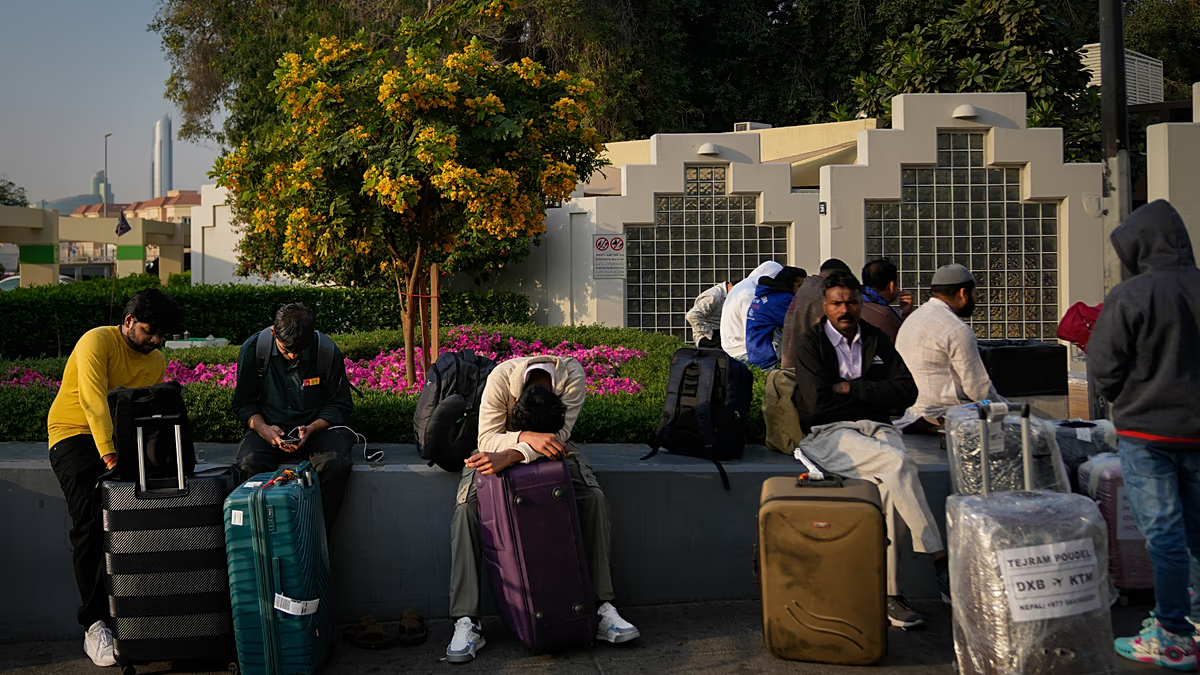
As the crisis deepens, the lack of clear information has compounded the misery, leaving travelers adrift in a sea of uncertainty. Airspaces remain closed for days across the Gulf, grounding hundreds of thousands and suspending their journeys indefinitely. Embassies and airlines have been criticized for patchy responses, with stranded visitors lamenting the absence of guidance or updates. An Italian couple in Dubai vented their frustrations online, describing desperate attempts to reach their embassy without success—”No one’s telling us anything,” they posted, their plans with friends dissolving into anxiety over when they might reunite with loved ones back home. British traveler Ollie Naughton echoed this sentiment from Nottingham, decrying Emirates’ poor communication, which left him clueless about hotel extensions, fee reimbursements, or evacuation timelines. The sense of abandonment is profound; people who paid premiums for dream getaways now scramble for scraps of reassurance, their phones buzzing with worry rather than itineraries. This informational vacuum breeds paranoia, amplifying the physical risks with mental ones—What if flights never resume? How long can we afford this? It’s a human predicament, where the desire for control clashes against bureaucratic inertia, fostering resentment and helplessness. Hotels, though offering solace, can’t bridge the void left by official channels, leaving guests to rely on fragmented news and social media rumors. The limbo isn’t just temporal but emotional, a suspended reality where vacations turn into indefinite stays, relationships strain under pressure, and homesickness crescendeposes a sharp longing for normalcy. In this opaque environment, travelers band together, sharing tips and solidarity, but the underlying frustration lingers, a reminder of how interconnected global events can fracture personal worlds in an instant.
Glimmers of Support Amid the Stranded Masses
Despite the pervasive gloom, pockets of compassion and organization have emerged, offering some relief to the beleaguered travelers. In the UAE, hotels have stepped up, assuring canceled-flight guests of covered accommodations and meals, easing the financial burden during what could be prolonged waits. This generosity transforms tense stays into manageable pauses, allowing visitors to focus on safety rather than spiraling expenses. Similarly, Qatar Airways and Doha’s Hamad International Airport have exemplified proactive care, handing out food coupons and arranging luxurious five-star hotel rooms for stranded passengers, complete with complimentary breakfast, lunch, and dinner. Traveler Ershad Kaleebullah highlighted this silver lining on X, noting the assurances that essentials remain provided as long as the airspace stays shut. These gestures humanize the ordeal, instilling a sense of comfort in an otherwise foreboding situation. Airlines and local entities become unlikely heroes, prioritizing human welfare amid crisis management. While wait times drag on, these measures mitigate desperation, turning hotels into sanctuaries and airports into hubs of support. It’s a testament to resilience in adversity, where goodwill counters the chaos. Travelers, relieved to have meals and shelter secured, can breathe a little easier, their gratitude tempered by an eagerness to return home. The experience, though harrowing, reveals latent kindness in unexpected places, fostering hope that brighter days loom. As evacuation hints arrive, these supports underscore that even in turmoil, communities—official or not—can rally, rebuilding confidence one assurance at a time. In this narrative of disruption, it’s these threads of humanity that weave the path toward eventual recovery, reminding us that amidst conflict, compassion endures. (Word count: 2042)