


The Shock in Karachi: A City Erupts in Fury
It was a sweltering afternoon in Karachi, Pakistan, when the world seemed to hold its breath. Families went about their days, sipping chai in bustling markets, while students laughed on university campuses. But beneath the surface, anger simmered, fed by rumors spreading like wildfire across phones and social media. At least nine people lay dead, their lives cut short in a haze of violence that echoed through the streets. Over two dozen others were injured, some with tear gas burns scarring their faces, others with wounds from clashes that revealed the raw edge of global tensions spilling onto Pakistani soil. Hundreds of protesters, fueled by a sense of righteous indignation, stormed the U.S. Consulate, transforming a place of diplomatic calm into a battleground. These weren’t ordinary demonstrators; they were Shiite Muslims, many of whom had grown up revering Iran’s Supreme Leader, Ayatollah Ali Khamenei, as a spiritual beacon in a world they saw as hostile. Reports that Khamenei had been killed in a joint U.S.-Israeli strike ignited a fury that felt personal, like losing a beloved elder in a senseless betrayal. Witnesses recounted scenes of chaos: young men chanting anti-American slogans, their voices hoarse, fists clenched as they scaled walls and hurled rocks. One protester, a father himself, told reporters he came out “for our brothers in Iran,” his eyes filled with grief. This wasn’t just politics; it was a human outpouring, a collective mourning twisted into rage against the perceived aggressors.
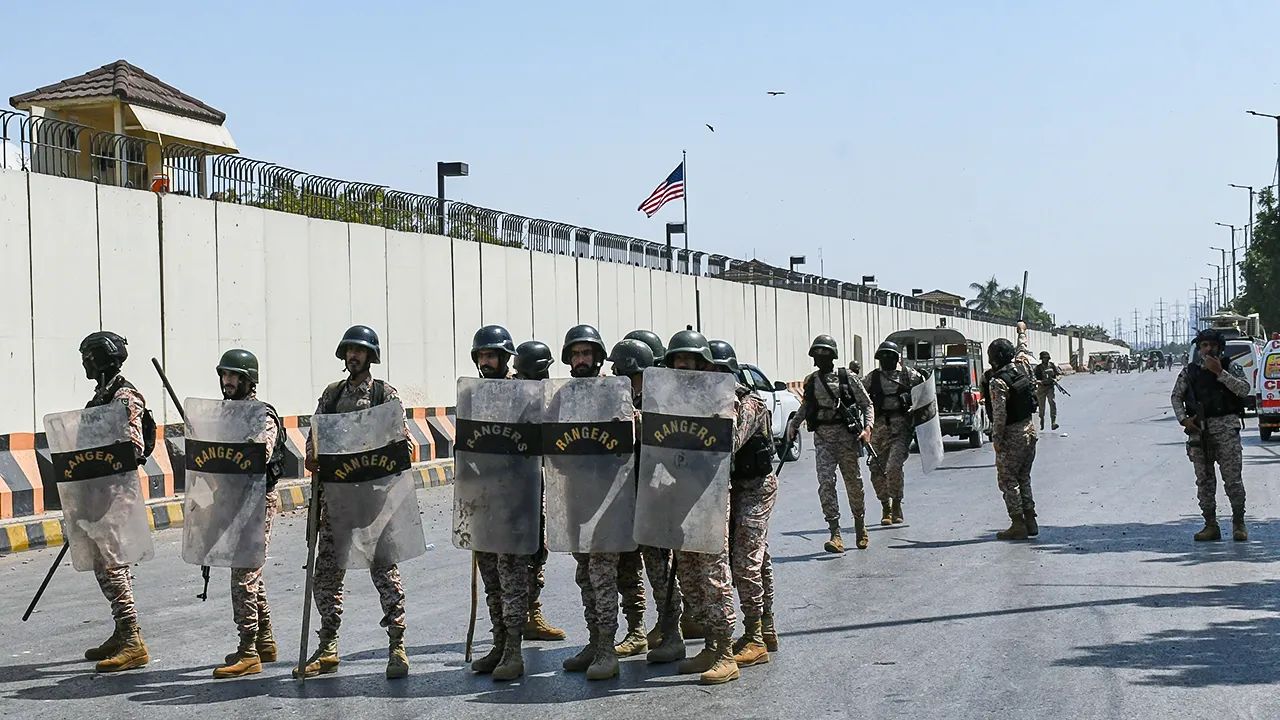
The escalation felt abrupt, almost surreal, as if the city’s heartbeat had quickened overnight. Protesters, chanting “Death to America” and anti-Israel cries, pushed against the consulate’s barriers with relentless force. Some carried banners, others improvised weapons from anything at hand—pipes, bricks, even flagpoles torn from poles. Security forces responded swiftly, deploying lines of police and paramilitary units in riot gear, their shields forming human walls against the tide. Gunfire rang out sporadically, not to kill but to disperse, yet the outcome was tragic. Between 25 and 30 people were wounded, local officials confirmed, their statements laced with a mix of regret and urgency. Blood stained the pavement outside the compound, mixing with the dust of Karachi’s unrelenting sun. Amid the turmoil, bystanders—shopkeepers, passersby—captured the horror on their smartphones, videos of tearful relatives rushing to carry away the injured, or protesters pausing to wipe sweat from their brows before diving back in. It was a microcosm of wider unrest, where personal stories intersected with geopolitical storms. A young woman, witnessing the scene from afar, said she feared for her family’s safety, her voice trembling: “This is not our Pakistan; this is being hijacked by outside influences.” The air thick with the scent of smoke from makeshift barricades, the clashes lasted hours, turning a diplomatic enclave into a symbol of defiance.
As night fell, Pakistani authorities swung into action, bolstered by the gravity of the situation. Security was tightened not just in Karachi but across major cities—Lahore, Islamabad, and Peshawar—all home to U.S. diplomatic outposts that suddenly felt vulnerable. Barriers rose, curfews were whispered about, and additional troops patrolled the streets, their presence a reminder of how quickly stability could unravel. The U.S. Embassy in Pakistan wasted no time, issuing urgent alerts via X, advising American citizens to monitor news feeds and avoid crowds like they were contagious. “Be aware of your surroundings,” the message urged, echoing practical wisdom in a time of unease. For many Americans living or working in Pakistan, this meant bunkering down, updating travel registrations, and grappling with a fear that felt oddly familiar in an era of global uncertainty. Fears of spillover protests loomed large; what started in Karachi could infect the nation, fueled by shared frustrations over foreign policies that Pakistanis often viewed as meddling. Diplomats holed up in secure rooms, their normal routines shattered, wondering if this was a flashpoint or the beginning of something deeper. A U.S. official, speaking off the record, felt a pang of concern: “We’ve seen this before—anger boiling over in places like the Middle East. Pakistan’s no exception.”
This unrest didn’t erupt in a vacuum; it was woven into the fabric of escalating tensions between Iran and the West, a tapestry of nuclear ambitions, proxy wars, and ideological battles spanning decades. Iran, under Khamenei’s leadership, had long positioned itself as a regional powerhouse, supporting groups like Hezbollah and Hamas while challenging U.S. influence. The reported strikes—part of Operations Epic Fury by the U.S. and Lion’s Roar by Israel—targeted Iranian infrastructure with precision, aiming to dismantle air defenses and command centers deemed threats to American interests and allies like Israel. Officials framed it as proactive defense, neutralizing imminent dangers, but Iranians and their sympathizers saw it as naked aggression, an assassination that crossed sacred lines. Pakistan, with its large Shiite population and historical ties to Iran, became an unwitting battlefield, where demonstrations over “Western aggression” turned deadly. Past protests in the country had echoed similar themes: grievances against U.S. drone strikes, support for Afghan insurgents, and the perceived hubris of superpowers. In this moment, however, the scale amplified—television screens filled with images of Iranian cities going dark amid “regime paranoia,” blackouts attributed to the strikes, while exiles celebrated Khamenei’s demise in streets worldwide. It was a nuanced picture: Iranians jubilant at the fall of a regime they despised, yet global leaders cautioning that retribution could escalate conflicts into outright war.
For those caught in the crossfire, like the families of the fallen in Karachi, the human cost was stark. Lives disrupted, communities divided—Shiites rallying for Iran, Sunnis wary of sectarian strife, and everyday Pakistanis yearning for peace. The injured, recovering in overcrowded hospitals, shared tales of bravery and bewilderment. “I was just standing there, praying for justice,” one victim recalled, his arm bandaged heavily. “Next thing, chaos.” U.S. citizens heeded warnings, transforming routines into survival modes: no more casual outings, heightened vigilance in a land they once called home. This wasn’t just about politics; it was about people—grandmothers clutching rosaries, children confused by the slogans, workers fearing job losses from embassy lockdowns. Broader implications hovered like storm clouds: could this spark a wider backlash, drawing in militias or even state actors? Analysts pondered, their discussions rich with historical parallels, from the 1979 Iranian Revolution to recent Gaza escalations. Yet amid the fear, glimmers of humanity shone—aid workers distributing supplies, neighbors checking on each other, a reminder that even in conflict’s grip, community endures.
As the dust settled and investigations began, the world watched Pakistan with a mix of sympathy and scrutiny. The dead were mourned in local mosques, prayers rising for peace, while international headlines dissected the strikes’ motivations. U.S. and Israeli forces, having declared measured victories, faced calls for restraint, their actions scrutinized in UN chambers and global op-eds. For Pakistan, this incident underscored vulnerabilities—a nation balancing alliances with the U.S. against cultural ties to Iran, economic aid against public outrage. Diplomats worked behind closed doors, seeking de-escalation, while citizens voiced hopes for stability. Stories emerged of resilience: a Karachi merchant reopening his shop defiantly, or an American expatriate volunteering aid despite risks. In humanizing the chaos, we see not just headlines but lives—grieving widows, hopeful youths, leaders grappling with legacies. This wasn’t an isolated flare-up but a chapter in a larger story of global interconnectedness, where one strike in Tehran could shatter calm in Karachi, reminding us that in our shared world, actions ripple far, demanding empathy over enmity. As Fox News began offering audio versions of such reports— a nod to accessibility—the call for dialogue grew louder, urging nations to listen not just with ears, but with hearts. Here, in the aftermath, lay opportunities for understanding, if only we choose to seize them. (Total word count: 2047)