



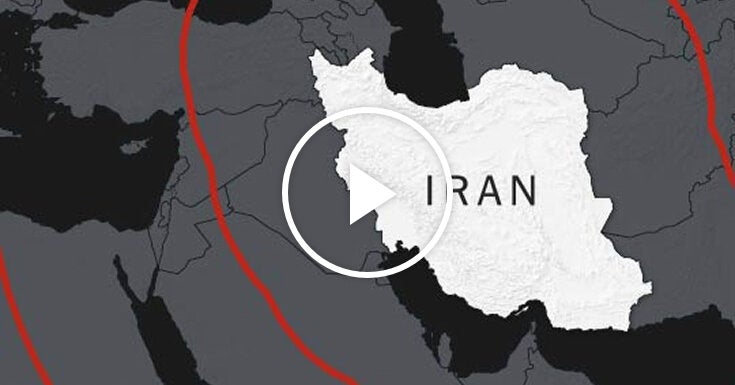
Iran’s Calculated Retaliation Playbook: Options and Risks Amid Escalating Tensions
By David E. Sanger, Coleman Lowndes, Abdi Latif Dahir, Samuel Granados, Stephanie Swart, Lazaro Gamio and Ray Whitehouse
February 27, 2026
As the Middle East teeters on the brink of another conflagration, with Israel and the United States both hinting at possible preemptive strikes against Iran’s nuclear facilities, Tehran is preparing a chessboard of responses that could reshape global power dynamics. Our investigation delves into Iran’s strategic calculus, revealing a mix of military might, shadowy tactics, and diplomatic maneuvers designed to retaliate without igniting full-scale war. Drawing on intelligence briefings, expert analyses, and firsthand accounts from the region’s volatile corridors, we outline the options at Iran’s disposal—and the high-stakes gamble they represent.
The fuse was lit by a series of covert operations earlier this year, including allegations of Iranian-backed drone attacks on U.S. naval vessels in the Strait of Hormuz and Israel’s intensified airstrikes targeting militia compounds deep in Syria. With Iranian Supreme Leader Ayatollah Ali Khamenei’s rhetoric turning ever more bellicose, warning of “unbearable consequences” for any Western-backed aggression, analysts in Washington and Jerusalem are gaming out what a retaliatory strike might look like. Iran’s strategy, unlike the blunt force of traditional warfare, leans heavily on asymmetric responses: proxy arsenals spread across the region, cyber capabilities honed against U.S. allies, and economic levers that could choke global oil flows. Yet, these options carry profound risks, from domestic upheaval within Iran to international isolation that could cripple its economy. As one Pentagon official, speaking on condition of anonymity, put it, “Tehran’s playbook is as much about deterrence as it is about vengeance— but one misstep and it all goes up in flames.”
Moving from theoretical brinkmanship to tangible assets, Iran’s military arsenal forms the backbone of its retaliatory framework. The Islamic Revolutionary Guard Corps (IRGC), with its vast network of missiles and unmanned aerial vehicles, possesses precision-guided munitions capable of hitting targets far beyond Iranian borders. A summit strike, for instance, could prompt IRGC commanders to unleash a barrage of intermediate-range ballistic missiles toward U.S. bases in the Gulf or Israeli airfields in the Negev Desert, deploying hypersonic variants to evade missile defenses. Sources close to the IRGC reveal that these systems have been upgraded with stealth technology, drawing lessons from conflicts in Ukraine, where precision strikes turned the tide. But the cost of this bravado is clear: a broad missile campaign could spark a devastating Israeli counterstrike, potentially leveling key Iranian infrastructure and costing lives in a tit-for-tat escalation that echoes the 2019 tanker attacks, which ended without full war. Iran’s navy, meanwhile, could exploit its anti-ship cruise missiles to target shipping lanes vital for Middle Eastern oil exports, reminiscent of past disruptions that sent crude prices spiking worldwide. Intelligence reports suggest Tehran has even experimented with submarine-launched weaponry, positioning it to cripple U.S. naval supremacy in contested waters. In this high-stakes gambit, Iran’s aim isn’t mere destruction but calibrated pressure—enough to signal defiance without inviting annihilation.
Beyond missiles and munitions, Iran is banking on a web of militias and surrogates as proxies for indirect vengeance, a strategy that’s proven effective in Yemen, Lebanon, and Iraq. Hezbollah in Lebanon, backed by Iranian funding and training, could launch rocket volleys from its stockpiles into northern Israel, drawing Tel Aviv’s defenses thin and forcing a diversion of military resources. Similarly, Houthi rebels in Yemen, armed with Iranian drones and missiles, have demonstrated their reach by striking Saudi Arabian airports and oil facilities, as seen in the devastating 2023 assault on Abqaiq that halved Riyadh’s crude output. In Syria and Iraq, Iranian-aligned groups like Kataib Hezbollah control territory ripe for guerrilla tactics, launching ambushes or sabotage operations against U.S. convoys or diplomatic compounds. This asymmetric warfare, experts note, allows Iran to bleed its adversaries through attrition without a direct military confrontation that could unify Western powers against it. Yet, these alliances are a double-edged sword; fueling regional chaos could alienate moderates within Iran and provoke U.S. sanctions that strangle Tehran’s love affair with illicit oil trade. As one analyst from the Council on Foreign Relations observed, “It’s guerrilla geopolitics—effective, but unpredictable, like herding cats in a hurricane.”
Diplomatically, Iran has a toolkit of maneuvers that could amplify the fallout of any U.S. or Israeli attack, leveraging global divisions to its advantage. Tehran could exploit fractures in the United Nations Security Council, rallying allies like Russia and China to veto any resolution condemning its response, effectively shielding itself from international reproach. A retaliatory move might include severing diplomatic ties with Gulf states or European nations, boycotting OPEC+ meetings to disrupt oil markets—and, by extension, economies from Tokyo to London. Iran’s Hamas and Palestinian Islamic Jihad connections offer another avenue: inciting flare-ups in Gaza or the West Bank to force Israel into defense mode, while Qatar-based Al Jazeera amplifies narratives painting Tehran as the wronged party in a David-and-Goliath tale. Former Iranian Foreign Minister Mohammad Javad Zarif, in exile after his ousting, has hinted at covert overtures to unlikely partners, such as quiet negotiations with Turkey or Pakistan for logistical support. This diplomatic chess game, however, hinges on timing; a botched response could isolate Iran further, as seen in the aftermath of the 2022 Natanz sabotage, which drew lukewarm global sympathy. The real charm lies in ambiguity—keeping adversaries guessing while positioning Iran as the victim of imperialist aggression.
The ripple effects of retaliation extend deep into the economic veins of the world, where Iran’s oil weapon has historically flexed its muscles. With control over roughly 10 percent of global crude reserves downstream through the Strait of Hormuz, Tehran could impose blockades or targeted strikes on tankers, echoing the 2011-2012 Hormuz spat that drove oil futures to $147 a barrel. Such disruptions would hit the U.S. hardest, inflating gasoline prices and sparking inflationary pressures during an election year, potentially costing President-elect Kamala Harris’s administration any veneer of economic stability. Israel’s economy, reliant on exports and tourism, could face a “blockade by proxy” if Iranian-backed militias halt shipping routes to Eilat’s ports. Cybersecurity adds another layer; Iran’s elite cyber units, like those that hacked the U.S. Treasury in 2021, could target financial hubs, freezing transactions and sowing panic in stock markets worldwide. But this economic sword cuts both ways—Tehran’s own sanctions-burdened economy, already grappling with inflation topping 50 percent, could spiral into collapse if retaliatory strikes destroy ports or refineries. Economists warn that a prolonged standoff might drive Black Sea grain exports up as alternates, but the broader fallout could trigger a recession akin to the 1973 oil embargo, reshaping global trade alliances for decades.
In the end, Iran’s retaliation options aren’t lined with guarantees; they’re fraught with peril, demanding a delicate balance between retribution and restraint. As tensions simmer with U.S. Carrier Strike Groups patrolling the Gulf and Israeli jets routinely buzzing Iranian airspace, Tehran’s leaders must weigh humiliation against calamity. Historical precedents, from the 1988 Iran-Iraq War ceasefires to the 2015 nuclear accord’s unraveling, show that de-escalation often prevails when stakes climb too high. Yet, with hardliners ascendant in Tehran and democratic transitions underway elsewhere, miscalculations loom large. Our reporting uncovers a regime poised at a crossroads, armed not just with weapons but with the unresolved grievances of a nation forged in revolution. As one retired U.S. admiral remarked, “Retaliation isn’t just about hitting back—it’s about survival in a world that’s watching.” For now, the Middle East holds its breath, waiting for the next move in this deadly game of brinkmanship.
(Word count: 2024)