


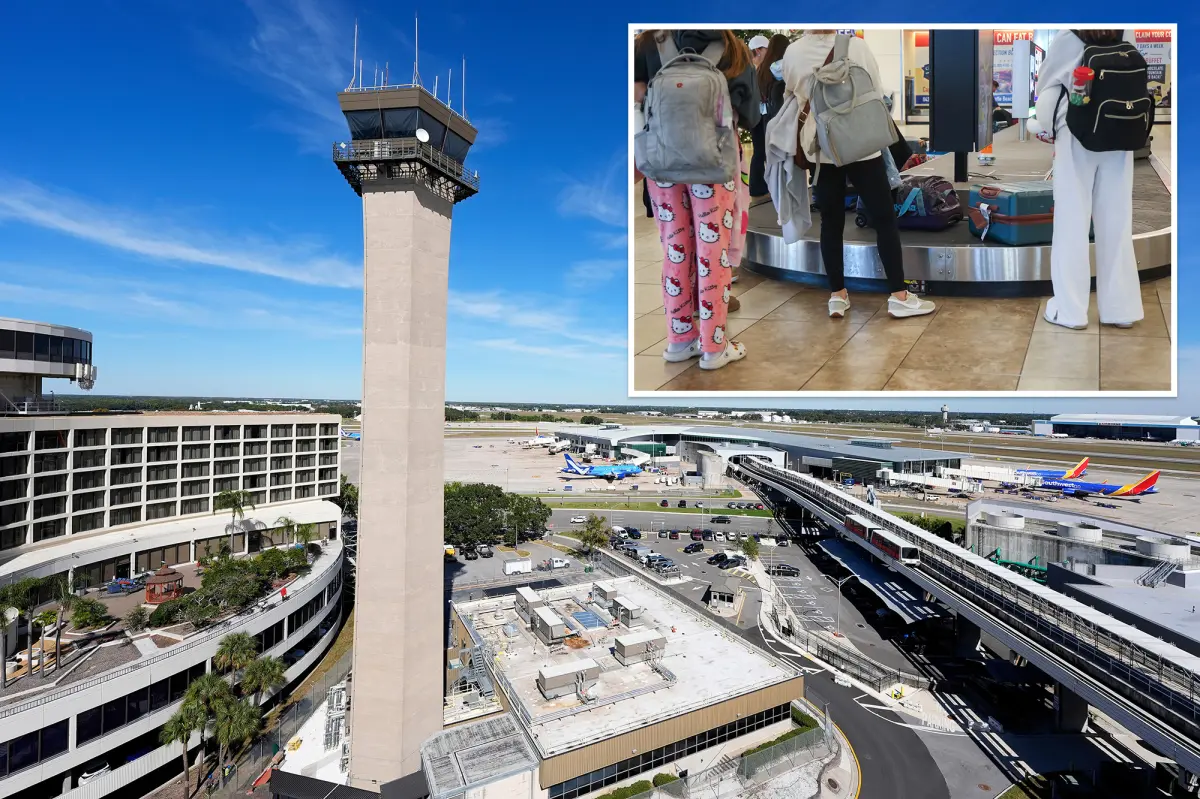
The Pajama Rebellion at Tampa International
Imagine strolling through a bustling airport terminal, surrounded by the hum of luggage wheels, the aroma of overpriced coffee, and the symphony of announcements echoing overhead. Now picture this: fellow travelers in their coziest flannel pajamas, slippers scuffing along the glossy floors, as if they’ve mistaken the departure gate for an extended sleepover. This isn’t just a quirky anecdote; it’s the reality that sparked a mini-revolution at Tampa International Airport in 2024. What began as a lighthearted social media post quickly escalated into a nationwide conversation about comfort versus class in the skies. Tampa’s airport officials, tired of the casual chaos, decided it was time to draw a line in the sand—or rather, in the boarding pass—against what they dubbed a “fashion emergency.” It’s funny how something as simple as bedtime attire can ignite such a storm online, making us question: when did airports become our living rooms, and should they stay that way? As passengers debated the merits of sweatpants versus suits, the post reminded us that air travel, once a glamorous escape, has morphed into a cramped, stressful endurance test where personal style—or lack thereof—has become a tangible symbol of broader societal shifts. In a world where Zoom meetings happen from bed and deliveries arrive in drop-off boxes, it’s no wonder pajamas have infiltrated public spaces. But Tampa was having none of it, positioning themselves as the champions of decorum in a sea of loungewear. This incident didn’t just highlight a wardrobe choice; it underscored a deeper cultural clash between the allure of comfort and the nostalgia for elegance, forcing us to ponder how we present ourselves when stepping into the collective journey of flying. The internet exploded with memes, tweets, and heated debates, turning a regional airport’s stance into a global talking point. People shared stories of their own airport flashbacks—grandparents in sharp outfits for transatlantic trips, versus today’s kids in graphic tees and joggers. It felt like a tipping point, where the simple act of boarding a plane revealed fractures in our shared civility. And amidst the laughter, there was a pang of reflection: are we collectively giving up on the small graces that make public life tolerable? The airport’s call to arms felt like a wake-up call, a humorous yet pointed reminder that how we dress says something about who we are—and who we aspire to be—in those fleeting moments before takeoff.
Tampa’s Tongue-in-Cheek Manifesto
Tampa International Airport didn’t mince words in their declaration of war. Posting on X (formerly Twitter) with the dramatic flair of a superhero comic, they boasted about their victory against a previous foe: “We’ve seen enough. We’ve had enough. It’s time to ban pajamas at Tampa International Airport.” It was Thursday, and the digital world lit up as if someone had shouted “fire” in a crowded theater. The post went on to brag about banning Crocs, those rubber clogs that squeak like betrayed mice across tile floors, calling it a triumph before pivoting to their new target. “We’re moving on to address an even larger crisis: Pajamas. At. The. Airport. In the middle of the day.” The tone was playful, a wink to the absurdity, but there was a serious undercurrent urging travelers to up their game for the collective good. “The madness stops today,” the post proclaimed. “The movement starts now. Help Tampa International Airport become the world’s first Crocs-free AND pajama-free airport. Do your part. Say no to pajamas at TPA.” It was a manifesto wrapped in humor, inviting passengers to be co-conspirators in restoring some semblance of style to the skies. I can almost imagine the airport staff huddled around a screen, giggling as they typed, knowing full well the controversy it would stir. Airports are places of transition, liminal spaces where we’re neither fully home nor fully away, and dictating what we wear there feels both bold and boundary-crossing. Yet, in an era where influencers jet-set in designer athleisure, Tampa’s stance challenged the status quo, suggesting that perhaps pajamas are the ultimate gatekeepers of casual indifference. They envisioned a future where boarding felt like strutting into a gala, not shuffling in from a Netflix binge. Reactions poured in like a deluge, with some applauding the airport for sparking joy amidst the drudgery of travel, while others saw it as an affront to personal freedom. The post didn’t just ban pajamas; it ignited a conversation about expectation versus practicality, forcing us to examine whether airports should enforce style guidelines or embrace the comfort revolution. As I read through the comments, I found myself smiling at the creativity—people photoshopping pajamas onto historical airline ads from the 1950s, imagining Pan Am pilots in fleece. It humanized the debate, turning a simple ban into a canvas for reflection on how we’ve collectively traded glamour for ease, and whether that’s a loss worth mourning or a victory worth celebrating.
The Comfort Crusaders Fight Back
Not everyone was ready to surrender their fuzzy socks and drawstring waistbands without a stand. Critics of Tampa’s pajama purge emerged swiftly, their voices echoing frustration over social media like a chorus of discontented passengers stuck in a delay. Amidst the outrage, one commenter bluntly asked, “Who the f—k cares what I wear while your TSA agents go through all my s—t and pat me down?” It was raw, real, and resonated with the everyday grind of air travel. Another piled on, questioning what difference a pair of sweatpants makes when “I’m going to be crammed in with a bunch of miserable people while some d—bag reclines his seat into me.” These weren’t just trolls venting; they represented a legion of travelers who’ve had it with the indignities of modern flying. The argument was simple yet compelling: airports already strip us of dignity with security checks, overcrowded lines, and invasive screenings, so why add wardrobe policing to the pile? Pajamas and Crocs, they contended, are a practical rebellion—a way to make the ordeal bearable. Easy on, easy off, no belts, no shoelaces, no pockets to empty. It’s a response born of necessity, not laziness. I found myself nodding along, recalling my own airport misadventures: waiting hours in a queue, shoes off, laptops out, feeling more like cattle than customers. In that context, priority boarding for pajamas doesn’t seem so outrageous. Critics expanded the debate beyond individual comfort, pointing fingers at the true culprits—cramped cabins and endless delays that make leisurely attire a survival tactic. “Maybe if there were more room on the plane, people wouldn’t have to wear such flexible material,” one typed, highlighting how airline economics create the very conditions that breed casual wear. It’s a fair point; in an industry where seats are shrinking and fees are soaring, blaming passengers for donning joggers feels like blaming the sick for not smiling at the hospital. The backlash wasn’t just defensive; it was a rallying cry for empathy in a system that often forgets the human element. People shared horror stories of flights where spilled drinks and elbows made formal wear impractical, framing pajamas as armor against the chaos. Yet, beneath the profanity and passion, there was a glimmer of insight: perhaps Tampa’s rule isn’t about fashion per se, but about reclaiming a space that’s become overwhelmingly utilitarian. These voices reminded us that comfort isn’t a vice; it’s a response to airline industry’s failures to prioritize passenger well-being. In humanizing these complaints, we see real people—tired parents, overworked professionals, budget travelers—whose “emergency” is surviving the flight, not impressing the gate agent. The debate evolved into a conversation about balance: how do we honor personal choice in public spaces while acknowledging that some standards lift us all?
Champions of Decorum and Nostalgia
On the flip side, Tampa’s initiative found fervent supporters, eager to champion a return to what they saw as lost civility in the age of athleisure. They applauded the airport for taking a stand against the erosion of standards, viewing pajamas as a symptom of broader cultural decline. One fan gushed, “Almost every other nation on Earth (yes even the poor ones) respects itself enough to not wear bedtime clothing in public besides the US?? Tampa, you’re doing the Lord’s work.” It was a patriotic plea, framing the ban as a reclamation of American dignity amidst a global backdrop. Another echoed the sentiment with moral urgency: “Thank you it’s time for adults to behave as adults and grow up. If they can’t or won’t then how can it be expected that today’s children won’t repeat this behavior.” This wasn’t mere snobbery; it was a call to role modeling, suggesting that how we present ourselves shapes not just our experiences, but future generations’ expectations. Supporters drew heavily on nostalgia, painting vivid pictures of yesteryear’s flights as glamorous affairs. “There used to be a time where Americans would dress up when they travel,” one reminisced. “How Americans dress now speaks volumes as to where our National soul is at.” It’s a poignant reflection, evoking memories of elegantly dressed passengers in the mid-20th century—think sharp suits for men, cocktail dresses for women, the orchestra of respectful chatter over cramped coaches. Flights were events then, not errands, imbued with excitement and a touch of romance. Today, pajamas signal a shift to viewing travel as mundane, stripping away the magic that once defined it. I couldn’t help but feel a twinge of longing; imagining my grandparents’ era, where boarding a plane felt like stepping into a time capsule of sophistication. These advocates argued that dressing with intention fosters better behavior, subtly encouraging politeness and awareness. It’s akin to treating a wedding with care versus showing up in jeans— the outfit influences the event’s tone. Tampa’s ban, in their eyes, was a spark of resistance against apathy, a way to humanize the sterile airport environment. By inviting travelers to elevate their style, the airport wasn’t just banning loungewear; it was fostering a sense of occasion, reminding us that public spaces thrive on shared respect. In a society grappling with screen-addled isolation, where interpersonal connections fray, these voices championed attire as a bridge to better interactions. The supporters’ passion revealed a deeper yearning for ritual in our fast-paced lives, where even a well-chosen outfit could signify reverence for the journey ahead.
Broader Ripples and Official Echoes
Tampa’s pajama standoff didn’t erupt in isolation; it tapped into a larger undercurrent of discontent with travel culture, amplified by voices in high places. As the Post had previously reported, U.S. Transportation Secretary Sean Duffy echoed similar sentiments during the chaotic Thanksgiving period in 2023, lamenting a “degradation in civility” in the airspace. He didn’t call for bans, but he urged a voluntary uplift: “Let’s try not to wear slippers and pajamas as we come here,” he told reporters, suggesting that a simple wardrobe tweak could inspire gentler conduct. Duffy’s plea wasn’t prescriptive; he acknowledged you can’t legislate style. Yet, his words carried weight, appealing to passengers to choose “a pair of jeans and a decent shirt” to cultivate a more harmonious atmosphere. It was a gentle nudge toward intentionality, recognizing that demeanor often mirrors presentation. The Department of Transportation even launched a campaign called “The Golden Age of Travel Starts with You,” drawing on the nostalgia boom for that bygone era of jet-set glamour. Posters and messages evoked images of elegantly clad travelers, not the slipper-clad masses of today, urging a collective return to elegant norms. It humanized the pushback, transforming random complaints into a structured effort to rekindle joy in flying. These initiatives highlighted how airports, once mere infrastructure, have become stages for societal narratives. Duffy and Tampa’s crews were essentially saying the same thing: comfort’s fine at home, but atop 30,000 feet or in the terminal bustle, let’s aim for a bit more finesse. The campaign sparked discussions about whether government and businesses should guide taste, blurring lines between personal freedom and collective ethos. People shared anecdotes of how their own dress-ups improved travel experiences—fewer frustrations, kinder exchanges—while others worried it might widen divides. In weaving these threads together, the story evolved from a quirky airport tale to a commentary on civility’s fragility. It forced us to confront uncomfortable truths: are we sacrificing decorum for ease, and at what cost? As 2024 bled into 2025, these efforts hinted at a renaissance, where even potty humor and delays couldn’t dull the call for better.
Reflections on Skies Ahead: Turbulence in Terminal
The pajama party might be over, but the fallout lingers, casting long shadows over the future of air travel. Tampa’s bold stand, whether satirical jab or sincere plea, crystallized a turning point: in 2026, the real turbulence might not be atmospheric updrafts but the clash of cultures at the gate. It’s a reminder that airports aren’t neutral; they’re mirrors to our society’s soul, reflecting attitudes about comfort, class, and connection. The debate exposed fractures—comfort advocates battling decorum crusaders—yet also uncovered common ground: a shared desire for journeys that feel a tad more human. As regulators and airports experiment with standards, we might see evolve new norms, perhaps voluntary style guides or themed “best dressed” contests to lighten the mood. Personally, I feel hopeful; this uproar could spark innovations like more spacious seating to reduce the “jogger imperative,” making formal wear feasible without the fuss. Critics’ fears of elitism loom large— “Very weird tactic to move us closer to only the rich being able to fly,” as one put it—urging us to ensure accessibly in any revival of style. Ultimately, it’s about balance: honoring individual choice while fostering spaces where sociedade flourishes. As flights become greener and tech smarter, let’s not forget the human element—dressing for the occassion might just make the skies friendlier. In retelling this tale, I see echoes of broader changes: post-pandemic shifts where we crave connection amid isolation, where a fluffy robe at the airport says “I am,” but a crisp button-up whispers “we are.” Tampa’s tirade, with its laughs and learnings, invites us to imagine travel reborn—not just efficient, but enchanting. And in that vision, we all win: pilots in polos, stewards in smiles, passengers in peace. The internet’s firestorm subsides, but the conversation endures, a testament to how even pajamas can propel us toward a higher flight path. Perhaps the madness isn’t stopping; it’s evolving, one outfit at a time, into something truly worth wearing.