



The Unwarranted Spotlight on a Teacher’s Life
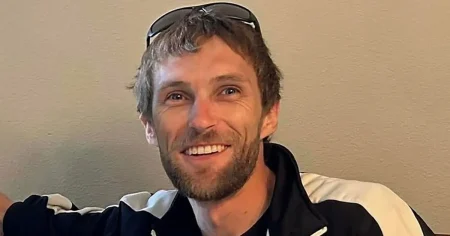
Imagine waking up one ordinary day to find your name plastered across social media, linked to a high-profile missing persons case, not because of any real evidence, but because of a vague resemblance in some grainy surveillance footage. That’s the reality Dominic Evans, a dedicated 5th grade teacher from Tucson, Arizona, faced in late February 2025. At 48, Dominic had built a quiet life around teaching young minds, playing music in a local band, and cherishing his family. But the FBI’s release of images from Nancy Guthrie’s home—showing a masked figure tampering with her doorbell camera—sparked an online frenzy that wrongly pointed fingers at him. In an emotional interview with The New York Times on February 25, Dominic shared how this nightmare unfolded. He recalled meeting 84-year-old Nancy only once back in 2011, a brief encounter that couldn’t possibly warrant such suspicion. Yet, armchair detectives online zoomed in on his facial features, comparing them to the shadowy figure in the photos. It was surreal, like being thrust into a reality TV drama without consent. “I feel like someone’s taken my name,” Dominic said, his voice breaking with frustration and hurt. He speculated it could be for clicks, money, or just to stir up excitement, but the damage was real—innocent people suffering for entertainment’s sake.
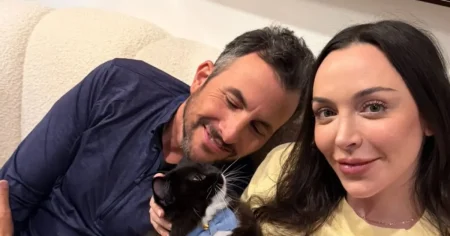
What made it even more personal was Dominic’s unlikely connection to the Guthrie family. Tommaso Cioni, Nancy’s son-in-law, is his bandmate. Tommaso, married to Savannah Guthrie’s sister Annie, ties Dominic to the wider public eye through Savannah, the famous Today show host. This tangential link fueled the accusations, turning Dominic into a suspect in the eyes of strangers. People dug up his past— a long-ago drunk-driving conviction and a 1999 bar theft arrest—as supposed “proof” of his character. Dominic, however, painted a picture of redemption. Raising two young children with his wife Andrea, he dedicated his life to education and music, far from the reckless days of his youth. The online mob didn’t see the man who greeted students every morning or the father who tucked his kids in at night. Instead, they saw a fabricated villain, their posts spiraling into a viral witch hunt. This human connection amplified the pain; it wasn’t just about Dominic— it was about tearing apart a family’s dignity for no reason.
The chaos escalated beyond screens when amateur sleuths descended on the Evans’ home like a scene from a thriller gone wrong. February 10 marked the day everything changed. Dominic and Andrea returned from picking up their older children to find their modest Tucson neighborhood overrun. Cars lined the streets, people lurking behind bushes, cameras flashing—all waiting for a glimpse of the “suspect.” The couple hid inside, too terrified to retrieve their two youngest from their grandmother’s house amid the commotion. Andrea described gripping fear that night: “It was all night looking through the window, trying not to let any light out of our home,” she recounted, her voice trembling with the memory. The constant buzzing of phones, the shadows outside—it felt like a siege. Their home, a sanctuary of laughter and family dinners, became a fortress. Days later, on February 13, the stakes rose. Local police and FBI executed a search warrant and traffic stop in relation to the investigation, leading to the detention of four unrelated individuals. But the news wave brought fresh waves of onlookers, turning their property into a public spectacle. “This one felt really, really, really scary,” Andrea said, “because it was like everyone was waiting for someone to come to our house.” For a mother of young children, the terror wasn’t just personal—it was a nightmare of protecting her kids from the madness.
Dominic and Andrea’s ordeal peeled back layers of vulnerability in an era where social media weaponizes rumors faster than truth can catch up. The family, once content in their quiet routine, now navigated a world of paranoia. Dominic juggled grading papers for his students while dodging death stares from neighbors who believed the hype. Andrea, handling the household and parenting duties, felt the emotional toll ripple through their marriage. Their children, innocently unaware of the full details, picked up on the tension—crying over the strangers at the door, questioning why Daddy was suddenly “famous” in a bad way. It humanized the story beyond headlines: here were real people, not characters in a plot, grappling with isolation and mistrust. The swarming wasn’t just invasive; it robbed them of their sense of security, forcing them to live like fugitives in their own home. The psychological weight was immense—sleep deprivation from nightlong vigils, anxiety attacks triggered by a doorbell ring. Yet, amidst the horror, their love for each other shone through, a beacon in the storm.
Pima County Sheriff Chris Nanos, leading the investigation with the FBI, expressed deep empathy for Dominic’s plight. In the Times interview, he called the teacher’s ordeal “horrible” and admitted feeling sorry for him. Dominic had cooperated once with authorities, speaking briefly before hearing nothing further, a sign he was not a priority. Nanos urged him to seek legal recourse: “He probably should be speaking with some attorneys and sue some of these people for libel.” The sheriff’s comments revealed a frustration with the broader culture of online accusation, where sensationalism trumps evidence. “I wish I could jump out and defend every single one of them that’s been falsely accused,” Nanos added, hinting at a larger pattern in high-profile cases like Nancy’s disappearance. This support from law enforcement added a layer of validation for Dominic, reminding him he wasn’t alone. But it also underscored the double-edged sword: while officials cleared him privately, the public circus raged on, undeterred by facts.
In a broader context, the investigation into Nancy Guthrie’s disappearance—nearing its fourth week—highlighted how scrutiny backfires on innocent bystanders. The sheriff’s department publicly cleared Nancy’s immediate family, including Tommaso, who had briefly faced unverified rumors. “The Guthrie family—to include all siblings and spouses—have been cleared as possible suspects,” Nanos stated on February 16, emphasizing their cooperation and victimization. “To suggest otherwise is not only wrong, it is cruel. The Guthrie family are victims, plain and simple.” This clearing didn’t quell the online noise surrounding Dominic, but it drew a line in the sand. On February 24, Savannah Guthrie and her siblings boosted the reward for Nancy’s safe return to $1 million, a desperate bid to reignite leads. But for Dominic, the story lingered as a cautionary tale about the fragility of reputation in a digital age. As the dust began to settle, he reflected on resilience—continuing to inspire his students, mending family bonds frayed by fear, and hoping for accountability from those who amplified baseless claims. His human story, one of unwarranted suffering amid a family’s loss, reminds us all that behind the headlines are lives forever altered.