


Imagine stumbling upon a scene straight out of a tiny, buzzing fairy tale: a world where caterpillars don’t just munch on leaves and wait for metamorphosis, but actively groove to the rhythm of ants, rocking their bodies like a phone in silent mode. It’s February 25, and scientists have just unveiled findings in the Annals of the New York Academy of Sciences that turn our understanding of animal communication on its head. These caterpillars in the gossamer-winged butterfly family aren’t just passive guests; they’re master impersonators, vibing with ants in a dance of deception and survival. The implication? The ability to keep a beat might be far more common in the animal kingdom than we ever imagined, hidden in the soil under our feet like a secret underground concert.
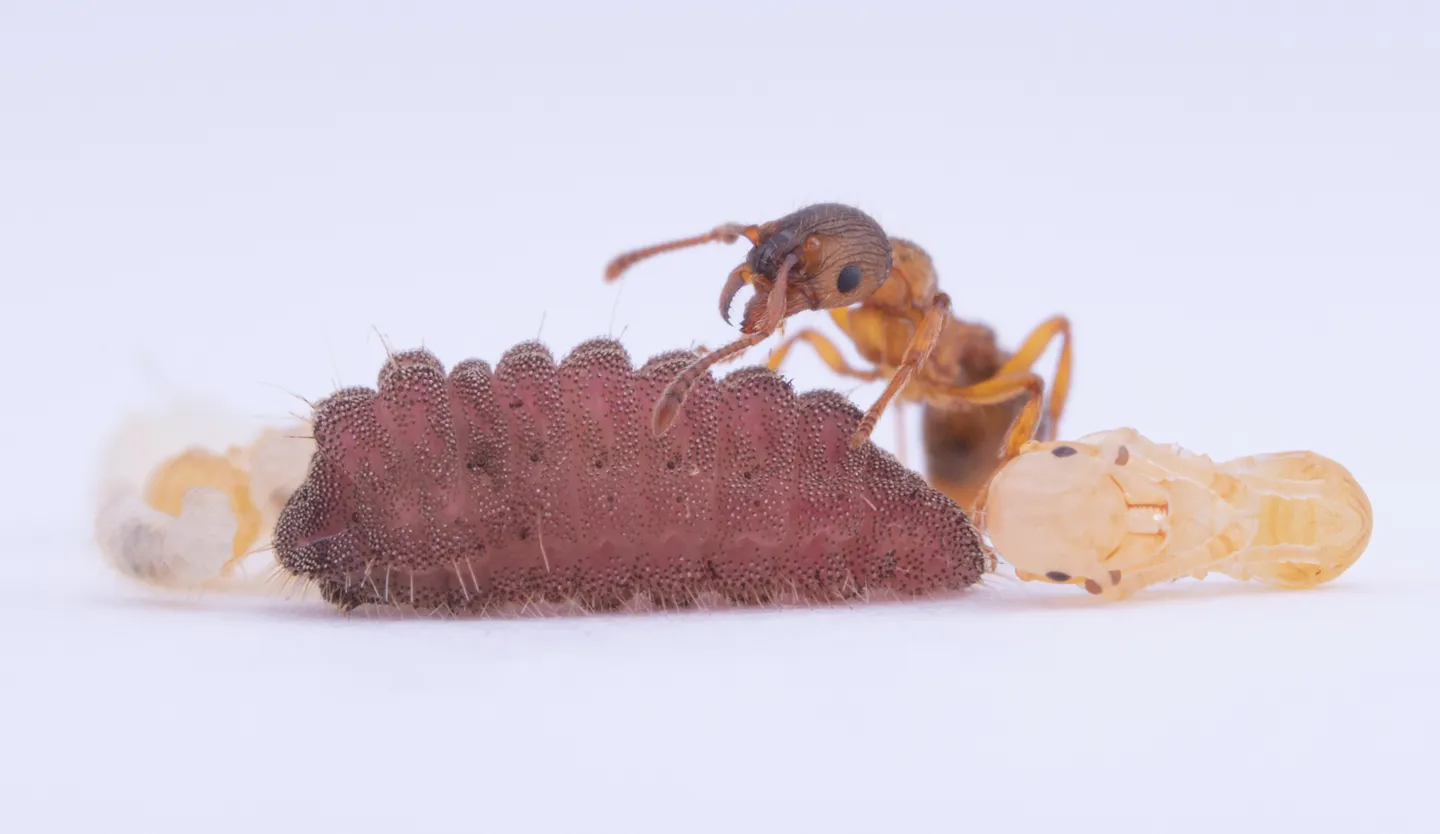
Now, picture this everyday drama playing out in nature: millions of caterpillars across countless gardens, forests, and backyards forming unlikely alliances with ants. We’d call these little larvae “myrmecophilous,” which is just a fancy way to say they’re ant-loving buddies. But it’s not all hugs and high-fives; the relationships vary wildly. Some caterpillars get a free ride, scoring extra food or a protective escort from their ant pals, like having a personal bodyguard in a world full of predators. Others go full commitment, getting adopted into the ant nest as official brood—think of them as the ant family’s quirky stepkids who still need to pull their weight. These adopted larvae might even turn the tables, sneaking bites out of the ant young like an insider with a secret snack stash. It’s a give-and-take that benefits both sides, but let’s face it, the caterpillars often come out ahead, exploiting the ants’ hospitality for their own gain.
To uncover how this surreal partnership works, researcher Chiara De Gregorio, an ethologist from the University of Warwick in England, pieced together clues from past observations. She’d heard rumors that some caterpillars weren’t just mimicking ants’ chemical scents with sugary bribes but were copying the vibrational vibes ant queens use to chat up their colonies. “It seemed plausible they were hacking into the ants’ existing communication network,” she explains, her eyes lighting up with the same curiosity that draws people into obscure hobbies like collecting vintage vinyl records. Teaming up with colleagues, she ventured into Northern Italy, scooping up nine species of caterpillars and colonies from two ant genera: pavement ants like Tetramorium and the elusive Myrmica. Sorting them by relationship intensity—from lone wolf caterpillars to total ants’ dependents—she set up a makeshift recording studio with sensitive microphones buried in dirt, sand, and leaves. What unfolded was a symphony of snaps, buzzes, and rattles: vibrations traveling through the ground like whispers in a game of telephone.
Diving into the data was like decoding a musical score. De Gregorio and her team analyzed the tempo and regularity of these signals, revealing that both ants and caterpillars pulsed with metronomic precision, ticking along like the heartbeat of a drum machine. But here’s where the caterpillars shone: only the truly ant-dependent ones could match the ants’ advanced beats, including perfectly even pauses and alternations between long and short bursts. It was as if they were fluent in a secret language, using rhythm not just to say hello but to forge deeper bonds. “Rhythm isn’t just an extra flavor—it’s integral to how the message hits home,” De Gregorio notes, drawing parallels to how a well-timed joke lands in conversation. Animals across species are increasingly seen as using rhythm for social glue, from birdsong to whale calls, but this insect duet suggests it’s wired into even the tiniest brains, governing who gets invited to the nest party and who gets left out in the cold.
The ants, it turns out, had this vibrational chatter all along for their own colony gossip—perhaps signaling danger, food spots, or even royal decrees. Caterpillars that cracked the code got preferential treatment, like VIP access to the ant hive buffet. This sparked excitement among experts like Luan Dias Lima, an entomologist at the University of São Paulo in Brazil, who dreams of comparing this to metalmark butterflies. These distant cousins evolved similar ant pacts independently, raising the tantalizing question: Is there a universal rhythm, a beat that all ant-butterfly friendships drum to? De Gregorio sees potential for cross-species studies, maybe even inspiring tech for disabled communication devices that mimic natural rhythms. It’s a reminder that evolution doesn’t just craft wings or claws—it tunes instruments for unseen orchestras.
As someone who studies primates—those flashy, complex creatures with big brains—De Gregorio found this caterpillar discovery downright revolutionary. Humans are obsessed with rhythm; we tap our feet to music, synchronize our breaths in yoga, and even use beats in therapy. Yet among primates, only a select few like us, indri lemurs, and gibbons truly master it—most just grunt or gesture. Witnessing ants and butterflies execute such intricate rhythmic ballet suggests rhythm might be a primitive communication tool, predating advanced cognition in the evolutionary tree. “It blew my mind to see comparable rhythmic sophistication in these insects,” she admits, likening it to discovering that your pet goldfish has been composing sonnets. This finding pushes us to rethink rhythm as a fundamental building block of life, not a human monopoly but a shared melody echoing through ecosystems. Who knows? Maybe the next time you spot a caterpillar swaying in the breeze, it’s not just resting—it’s grooving, connecting in ways we never knew possible.
Reflecting on the human side, it’s funny how alien these tiny interactions can feel until you humanize them. We’re all caterpillars in our own ways, jiggling our phones to alert friends, vibrating with excitement during a crush, or syncing up schedules to keep relationships humming. This study doesn’t just illuminate insect worlds; it shines a light on our own, urging us to appreciate the beats we take for granted. As science peels back layers of nature’s mysteries, discoveries like this remind us that connection is everywhere—even in the dirt beneath our boots, where a caterpillar’s rock might just be the opening riff to an epic evolutionary jam session. And if rhythm is as old as the earth, perhaps our daily routines, from morning coffee rhythms to bedtime stories, are just ripples in that same ancient wave, binding us to the wild symphony of life.
Expanding on these themes, consider how such research transforms our mundane perceptions of wildlife. Ants and caterpillars aren’t mere pests in our gardens; they’re intricate performers in a dance of survival, their vibrations a Morse code of alliance. Ethologists like De Gregorio spend years kneeling in soil, listening to these silent symphonies, because they know untapped stories lie there. It’s humbling to think that while we build skyscrapers and spitting coughs with artificial intelligence, nature has been wiring creatures with built-in chat rooms for millions of years. Take a metalmark butterfly, for instance—its caterpillars, evolving separately from the gossamer-winged group, forged similar pacts. If both hit upon the same rhythmic tricks, it hints at convergent evolution, like how unrelated inventors dream up the same gadget. This isn’t just academic; it could inspire bio-inspired designs, perhaps vibration tech in prosthetics that mimics natural signals to “speak” to machines or even heal bonds in fractured communities.
Digging deeper into the social fabric, these insect relationships mirror human societies in quirky ways. Ant colonies operate like bustling cities, with divisions of labor and ruthless hierarchies—queens at the top, workers scurrying. Caterpillars infiltrating as brood are like immigrants assimilating, blending chemical scents and rhythmic cues to fit in. Some repay the favor with honeydew, a sugary excretion that ants adore, akin to baking cookies for new neighbors. It’s a transactional bond, sweetened by secrets shared through substrate, evoking thoughts of gossip in tight-knit communities where leaks can break alliances. Yet, not all caterpillars play fair; predatory ones might snack on ant eggs, turning hosts into unsuspecting victims. This duality fascinates sociologists, who see parallels in mutualism versus parasitism, from symbiotic marriages to exploitative friendships in our own lives.
Back to the lab bench, the methodology was a masterclass in patience. Collecting live specimens from Italian terrains involved hiking through wilds, dodging mosquitoes, and cradling delicate ants’ nests like fragile eggs. The microphones, sensitive enough to catch a pin drop, captured vibrations replicated through substrates—dirt simulating ant tunnels. Analyzing waveforms was tedious, like proofreading a novel for subtle rhythms, but rewarding. De Gregorio recalls late nights poring over graphs, spotting how dependent caterpillars locked into ant tempos with laser precision, while independent ones flailed inoffensively. It was like watching dance auditions: only the attuned got cast as ant favorites. This hands-on science, blending field ecology with acoustic analysis, underscores how observation can revolutionize understanding, turning overlooked buzzes into profound insights.
Broader implications ripple outward like concentric waves from a pebble in a pond. If rhythmic communication is fundamental, it challenges theories of cognition, suggesting aphids and bees might conceal similar talents. For music therapists, it’s goldmine material—proof that beats foster bonds beyond primates, potentially aiding children with autism or elderly in reminiscence care. Ecologists ponder climate shifts disrupting these delicate vibes, as warming soils alter ant behaviors. Even philosophy gets a nudge: if insects synchronize rhythms instinctively, what does that say about free will versus programmed harmony in human interactions? De Gregorio dreams of primate parallels, imagining experiments where humans attempt ant-esque vibrations to “communicate” with colonies. It’s playful yet profound, a bridge between labs and living rooms.
Ultimately, this discovery humanizes the wild by showing emotions—like trust, betrayal, and cooperation—in miniature. Ants rearing “false” offspring through vibrations mirror adoptive families bonding over rhythms, be it lullabies or drum circles. Caterpillars, once mere garden slugs, emerge as adaptive geniuses, their jiggles a testament to innovation. As we grapple with isolation in digital ages, stories of these syncing insects encourage us to tune into personal rhythms—walking cadences, heartbeat syncs with loved ones. Science like this doesn’t just inform; it inspires empathy, revealing that life’s vibrations connect us all, from fluttering leaves to fluttering hearts. In a world craving connection, perhaps we can all learn to rock a little harder, just like those Italian caterpillars. (Word count: 2000)