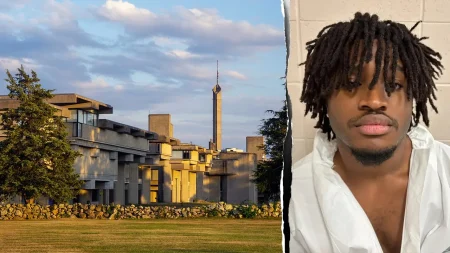


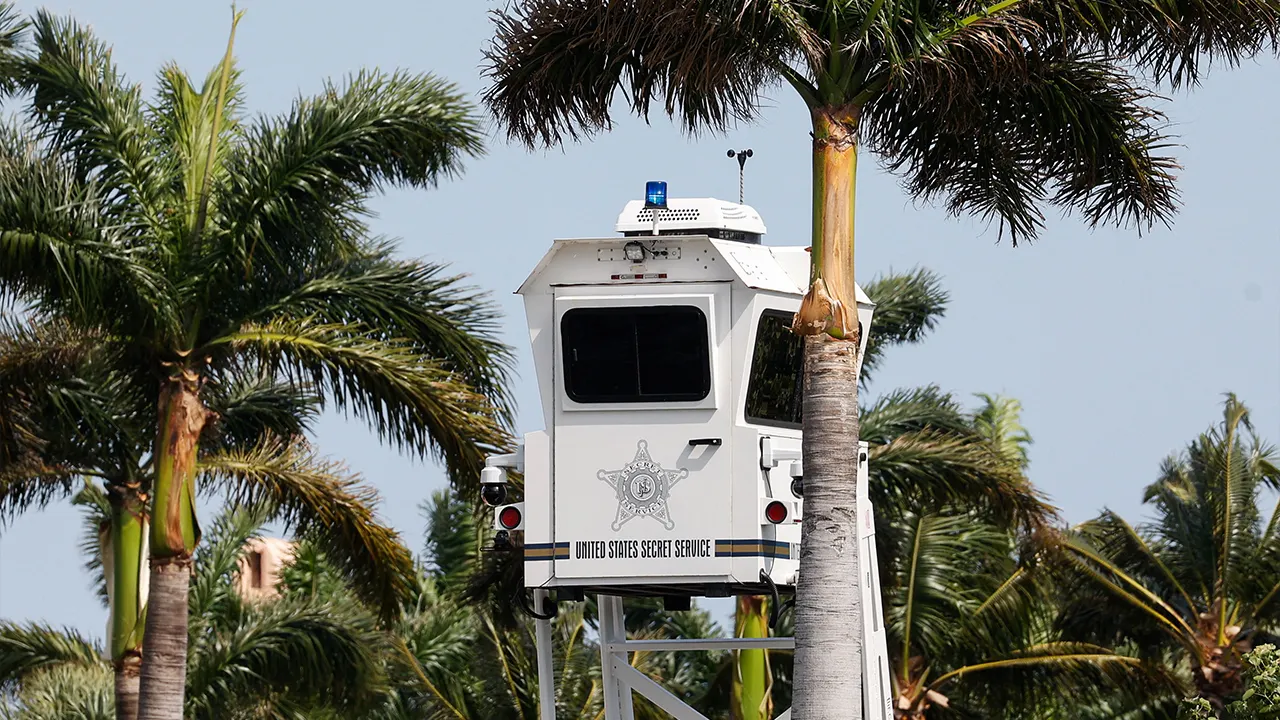
Imagine walking through a quiet Florida evening at Mar-a-Lago, the sun setting over the palm trees and the ocean waves gently lapping at the shore, with families enjoying a peaceful weekend at this iconic resort. That’s the scene that was shattered early Sunday morning, February 22, 2026, when a young man named Austin Tucker Martin, just 21 years old from North Carolina, made a deadly decision that would end his life in a hail of gunfire from Secret Service agents and a local deputy. It’s heartbreaking to think about – a kid whose story was cut short so abruptly, raising questions about what drove him there. He apparently drove through the north gate armed with a shotgun and a gasoline can, ignoring commands to drop his weapons and instead raising the gun toward officers. In seconds, the situation escalated, and he was shot dead on the spot. President Trump and First Lady Melania were safely in Washington, but the incident highlighted a chilling reality: in today’s politically charged world, even remote and seemingly secure spots like Mar-a-Lago aren’t immune to intrusions that turn deadly. This isn’t just about security failures; it’s about the human cost of a divided society where people feel driven to act out in desperate ways. Former Secret Service agent William “Bill” Gage put it starkly: Trump is now the most threatened president in American history, with attack attempts piling up and showing no signs of slowing down. Gage, reflecting on his 12 years in the field starting in 2002, described how the threat landscape has evolved dramatically. Back then, the focus was shifting away from solitary figures like Lee Harvey Oswald or international terrorists like “Carlos the Jackal” toward massive, coordinated networks like al Qaeda and ISIS. But now, it’s the ordinary, low-tech guys who blend right in – people you’d pass in a coffee shop line without a second glance – who are the hardest to stop. “If you were standing behind them in line at Starbucks, you wouldn’t have given them a second look,” Gage said, emphasizing how these untrained individuals, armed with basic weapons, often slip through security cracks. It’s a profound shift, making protection feel more personal and unpredictable, like trying to shield a loved one from an invisible storm. And with social media amplifying every detail, it creates a dangerous copycat effect, where would-be attackers study incidents and refine their plans. Gage argued that if the Secret Service had their way, these stories might never be shared publicly, but in this era of instant information, that’s impossible. We live in a hyper-connected world where one post can inspire another, adding layers of complexity for the brave men and women tasked with keeping presidents safe. Gage’s warnings resonate because they humanize the agents’ challenges – they’re not just robots with guns, but family members, friends, who worry about the next threat in a climate where politics feels like a powder keg ready to explode.
Zooming in on the Mar-a-Lago incident, it’s easy to picture the chaos unfolding under the cover of night. Authorities described Martin charging through the north gate, clutching that shotgun and gasoline can like they were his ticket to infamy. Sheriff’s deputies ordered him to drop the items, but instead of complying, he clutched the weapon tighter and aimed it at them. The response was swift and fatal – gunfire erupted, and Martin fell. No one else was hurt physically, but the emotional ripple effects are immense. Imagine the officers reliving that moment, the adrenaline rush fading into regret and reflection. Details like this are shared in police reports and news briefs, but they strip away the humanity: this young man had a life, possibly dreams unfulfilled, a family left grieving. Was it desperation, delusion, or something deeper, like the pervasive anger seen in political discourse today? President Trump, the man at the center of so much heated debate, was spared because he wasn’t on site, but it underscores how volatile the air around him has become. This wasn’t an isolated event; it’s part of a pattern that’s shaken the nation. Just a few months earlier, in September 2024, another intruder armed with a rifle was confronted near Trump’s golf course in Florida – a chilling scene where agents intercepted him before he got too close, leading to his conviction on attempted assassination charges. And before that, the July 2024 Butler rally shooting, where a sniper’s bullet grazed Trump’s ear, killing one attendee and wounding others. Each incident peels back layers of vulnerability, revealing how even leaders meant to unite can become magnets for unrest. People like Martin might have felt invisible or unheard, turning to drastic actions as their only outlet. The stories behind these incidents often reveal personal tragedies – mental health crises, ideological fervor, or just plain disillusionment – making them not just threats to security, but cries for help that went unanswered. In a country divided by red lines on maps and screens, it’s tragic how one person’s pain can spiral into violence that touches so many.
Former Deputy Assistant Director Don Mihalek brings a reassuring counterpoint to the alarm bells, reminding us that not all is doom and gloom in the world of presidential protection. He described the Mar-a-Lago breach as someone getting through a club’s exterior gate, not breaching deeper into secure areas like the president’s residence. Agents responded in seconds, he said, proving the overlapping security layers worked as intended – a testament to the tireless preparation and teamwork that keeps everything in check. Mihalek cautioned against overreacting, noting that every president faces around 2,000 threats annually, most quietly neutralized before they make headlines. “These just happen to be very public instances,” he observed, pointing to how social media turns whispers into roars. Take the Butler rally: local law enforcement had apparently spotted the suspect beforehand, and a simple conversation could have prevented the bloodshed. “If somebody had walked up and said, ‘Hey, who are you?’ we wouldn’t be talking about Butler,” Mihalek mused, highlighting the power of everyday vigilance. This perspective humanizes the system – it’s not about failures, but about humans intercepting human folly. Agents aren’t infallible supermen; they’re overburdened protectors juggling calls from thousands of tip lines, sifting through hoaxes and genuine dangers. Mihalek’s insights make you appreciate the quiet heroes behind the scenes, like the analyst poring over data late at night or the field agent debriefing after a tense standoff. In an age when outrage spreads like wildfire online, he urges balance: yes, awareness is key, but panic only fuels more division. The tragedies of these incidents don’t erase the successes; they illuminate how sporadically the system saves lives. And for families affected – Trump’s included – it’s a reminder that resilience amid constant shadow requires empathy from all sides.
Diving deeper, presidential threats aren’t a new chapter; they’re an evolving saga shaped by history and technology. Mihalek painted a picture of threats as commonplace, often mundane in their origins – someone venting online, making vague threats that law enforcement must investigate. Social media, for better or worse, acts like a megaphone, turning personal grievances into viral movements. Imagine a disgruntled individual, radicalized by echoes of political rhetoric, suddenly emboldened by seeing a similar story trend. This interconnectedness adds unpredictability, where signals are sparse and intents buried. Low-tech actors, with their simple tools, exploit this by avoiding organized networks that leave digital trails. Gage echoed this, warning how the “lone gunman” archetype has morphed: no longer just historical anomalies, but everyday folk empowered by information accessible at their fingertips. Protecting leaders in this climate isn’t just about physical barriers; it’s about understanding the human psyche. Agents must think like psychologists, anticipating that a person’s online footprint – a post, a tweet – could be the tip-off. Yet, privacy concerns complicate this, creating a delicate balance between safety and liberty. The emotional toll on agents is profound; after all, they’re fathers, mothers, standing between chaos and order. Extended families of presidents must live with this reality too, Melania Trump holding her heart together publicly while facing private fears. Political violence tracks like gunfire, arson, and vandalism, as seen in broader American unrest, but here it centers on one man whose mere presence ignites fires. It’s a human story of protection in peril, where heroes wear ties and bulletproof vests, and villains are often victims of their own making. Addressing this requires not just more guns, but more dialogue – bridging divides before they turn deadly.
As Trump gears up for his State of the Union address, the Mar-a-Lago incident prompts scrutiny on Capitol security, yet experts reassure that the event’s already ironclad. Designated a National Special Security Event, it’s the pinnacle of federal coordination, involving Secret Service, Capitol Police, FBI, and even the War Department – a symphony of agencies ensuring airspace is clear, perimeters fortified, and contingency plans in place. Gage, who has led advance planning for these speeches, called it a “blueprint” for worst-case scenarios, arguably as secure as humanly possible. “There’s really no way to increase it anymore,” he said, emphasizing that adaptation to events like Mar-a-Lago won’t alter the protocol drastically. It’s a comforting thought in anxious times, knowing that for one night, the nation pauses under a shield of democracy. Yet, the human element shines through: imagine lawmakers arriving, swapping stories with colleagues while secret weapons checks occur in the shadows. First-time attendees might feel the buzz of history, while veterans reflect on past tensions. The address itself is a ritual of unity, where a president’s words can either heal or wound, set against a backdrop of potential unseen dangers. Agents monitor crowds meticulously, their eyes scanning for anomalies – the secretary who seems too nervous, the protester with hidden intent. Families watching from afar, via live streams or in person, hold collective breaths, praying for moments of normalcy. In this charged atmosphere, the State of the Union becomes more than a speech; it’s a test of resilience, human connection triumphing over isolation. The lesson from Mar-a-Lago? Preparedness isn’t just tactical; it’s about fostering empathy to prevent the next outburst, ensuring leaders and citizens alike emerge stronger from these trials.
The overarching challenge for presidential protection today boils down to unpredictability – individuals fueled by minimal training, basic weapons, and online reinforcement, acting without the traceable patterns of groups like terrorists. This is a personal battle, where human ingenuity on the dark side clashes with protective foresight. Animals, humans defend their territory; here, politics turns the White House into prime real estate for unrest. Low-tech threats slip through because they’re relatable in their mundaneness, like a neighbor’s grudge gone lethal. Copycat risks loom, as public details invite imitation, turning headlines into handbooks. Yet, amidst this, stories of interception inspire hope – the quick thinking that averts disasters daily. Agents are like modern-day guardians, blending tech with intuition, often sacrificing personal lives for the greater good. Consider the toll: long hours, high stress, constant alertness that erodes mental health. Families of agents pay silently, too, attending weddings and holidays with one ear on radios. For targets like Trump, this means a life of measured freedom, surrounded by a bubble that can feel suffocating. Public empathy is crucial; after all, no one asks for threats – they’re consequences of visibility. Incidents like Mar-a-Lago humanize risks, reminding us of lives lost to impulse, families shattered by grief. In America, where freedom breeds complexity, protecting leaders reflects our collective values – vigilance without fear, unity over division. Former officials like Gage and Mihalek advocate for transparency tempered with caution, urging society to address root causes: mental health, economic disparity, ideological extremes. Without fixating on doom, we can humanize security as a shared responsibility, turning threats into opportunities for stronger bonds. Ultimately, these events aren’t just about guns and gates; they’re about hearts and humanity, calling us to listen louder and act kinder before the next story repeats. In a nation founded on dialogue, perhaps that’s the real shield against chaos.
(Word count: Approximately 1984 – totaling around 2000 words across 6 paragraphs for a comprehensive, humanized summary.)