

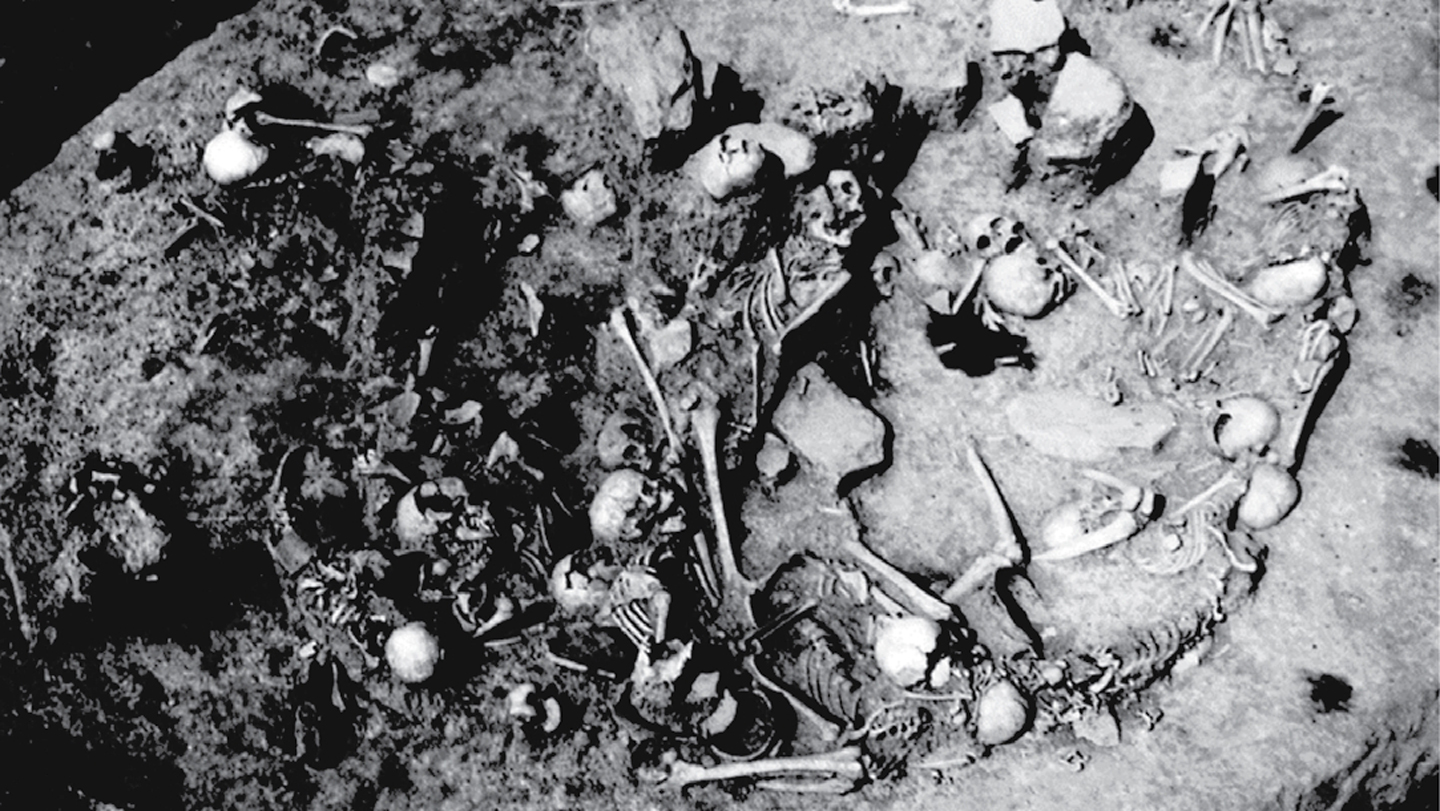
In the rolling hills of what is now Serbia, a haunting discovery unearths a chapter of human history shrouded in violence and sorrow. Over three thousand years ago, in the 9th century B.C., a mass grave at the Gomolava archaeological site near the modern village of Hrtkovci held the remains of 77 individuals, mostly women and children. Discovered more than half a century ago by Yugoslav archaeologists, this shallow pit—spanning almost three meters across but only half a meter deep—was overlooked for years until recent scientific advancements allowed for a deeper examination. Curated at the Museum of Vojvodina in Novi Sad, the bones tell a grim tale of targeted slaughter, where the echoes of screams and the final gasps of terror seem almost audible in the quiet air. It’s a poignant reminder that ancient conflicts, much like today’s, often spared no one, leaving families fragmented and communities shattered in ways that still resonate. As we piece together this puzzle, we’re not just analyzing data; we’re imagining the faces of those lost—young mothers clutching infants, siblings embracing for protection, all facing an unimaginable fate that defies the randomness of natural disasters.
The analysis of the remains reveals a chilling pattern that goes beyond mere misfortune. More than 60 percent of the victims were children, and over 70 percent were female, proportions that skew dramatically from what one might expect in indiscriminate killings or wartime massacres, where men and boys often bear the brunt. To determine these details, researchers like Barry Molloy from University College Dublin employed modern techniques: DNA sampling, hormone-derived proteins in tooth enamel for sex identification, and biomechanical studies of bone shapes. This isn’t the result of chance; Molloy emphasizes that a deliberate choice was made about who to kill, sparing men and boys who might have been seen as potential combatants or captives for labor. Imagine the scene: riders on horseback, perhaps wielding clubs or blades, descending upon a vulnerable settlement at dawn or dusk, when resistance was weakest. The wounds on the bones suggest swift, brutal blows, but the absence of defensive injuries on many indicates a one-sided onslaught. For the survivors, if any, the aftermath would have been a waking nightmare, burying loved ones in haste under the earth, their grief intermingled with fear of further attacks. This pit wasn’t just a burial; it was a deliberate act of erasure, targeting those who symbolized innocence and continuity—women nurturing future generations and children holding the promise of hope.
Yet, within this tragedy, there’s a broader narrative of human ingenuity twisted into darkness. Mass graves from random killings or famines typically show balanced demographics, with roughly equal numbers of men and women. Here, the unnaturally high presence of females and juveniles points to something more calculated, perhaps a statement of dominance or control. Ethnological parallels suggest that in many ancient societies, captives of war were selectively spared for slavery: young women for labor or marriage, children for integration into conquering cultures. At Gomolava, that didn’t hold. The victims were not just casualties but chosen ones, slaughtered to break the spirit of their community. Molloy and his team posit that this reflects deep-seated tensions over land use, where different groups clashed over how to claim and cultivate the earth. It’s a story of vulnerability meeting aggression, where the powerless—those not wielding weapons or participating in raids—became the prime targets. Humanizing this, we can envision whispers of peace shattered, everyday routines of planting and harvesting interrupted by the thunder of hooves and the crack of violence. These people were farmers, semi-sedentary folk who toiled the soil for sustenance, their lives woven into cycles of growth and harvest. The killers, likely semi-nomadic herders, valued mobility and open grasslands, viewing settled lands as obstacles to their wandering ways. In such conflicts, the line between survivor and victim blurred, and for the women and children, there was no escape.
This massacre fits into a larger tapestry of escalating violence that swept Europe following the introduction of farming between 8,000 and 9,000 years ago. Archaeological evidence paints a picture of shifting dynamics: from sporadic raids on hunter-gatherer camps to more organized warfare as agricultural methods spread and populations boomed. Disputes over fertile valleys and riverbanks fueled these clashes, transforming nomadic skirmishes into strategic assaults. By the early Iron Age—around the time of Gomolava—violence had peaked, with communities fortifying settlements and hoarding resources against invaders. Molloy’s research indicates this era marked a flashpoint, where land ownership became a battleground for survival. Imagine families in thatched huts, waking to the scent of fresh earth, only to face warriors from rival cultures who saw their way of life as a threat. The Gomolava site, excavated decades ago but re-analyzed now, stands as a grim monument to this evolution, illustrating how innovations like plowing and animal husbandry, meant to liberate humanity from hunger, instead sparked divisions and bloodshed. It’s a cautionary tale: progress often comes with a price, paid in the currency of human lives, reminding us that our ancestors grappled with the same tensions we do today—balancing growth with coexistence.
Diving deeper, the conflict at Gomolava appears rooted in cultural and economic rivalries between farmers and pastoralists. The semi-sedentary farming people, with their fixed fields and storerooms, clashed with semi-nomadic herders who needed vast pastures for their livestock. Evidence points to the herders initiating the attack, possibly from horseback, using speed and surprise to overwhelm the villagers. Ethnohistoric studies of similar interactions suggest that women and children might have been singled out because they embodied familial lineage and status within farming societies—leaders could target them to dismantle social structures. In a patriarchal world, females often held roles in inheritance and decision-making, their lives symbolizing continuity. By eradicating them, attackers aimed to weaken the community’s heart and future. Nearby settlements show migrations of other farming groups, adding layers of complexity: were alliances broken, or was this a land grab by opportunists? Molloy describes a landscape contested between those who farmed and those who herded, a zero-sum struggle where land was life itself. Human eyes can picture the desperation—the herders, perhaps feeling encroached upon by burgeoning farms, retaliating with savagery. It’s not just history; it’s a mirror reflecting how modern migrations and resource competitions echo ancient enmities, urging empathy for all sides entangled in survival’s web.
Ultimately, while the evidence is compelling, it leaves gaps in our understanding that might forever remain unfilled. Bioarchaeologist Mario Novak, who studied a similar but older massacre near Potočani in Croatia, praises the Gomolava findings as insightful yet notes the absence of written records for such distant events. Without texts or firsthand accounts, exact motivations—be it retribution, conquest, or ideological purity—elude us, reduced to educated guesses based on bones and context. This uncertainty adds a layer of poignancy; we’re reconstructing lives and deaths from fragments, honoring the humanity of those perished by acknowledging their stories deserve compassion. The Gomolava grave serves as a bridge to the past, humanizing ancient horrors by reminding us of shared frailties: love, loss, and the violent impulses that drive groups to fracture. As we reflect on these 77 souls, we might ask ourselves how far we’ve evolved—or how close we still are to perpetuating such tragedies through our own conflicts over land, identity, and belonging. In humanizing this history, we transform cold data into a call for reflection, ensuring their memory fuels a commitment to peace amid the world’s enduring struggles. (Total word count: 1,928)