


The excitement of the 2026 Winter Olympics in Milan and Cortina d’Ampezzo was palpable, especially as Team USA etched its name into history by clinching the men’s hockey gold medal for the first time since 1980. Picture the roaring crowd at the arena, the stars and stripes waving high, and the sheer adrenaline of a nail-biting showdown against their northern rivals, Canada. The game was a rollercoaster, with Canada pushing hard from the start, but the Americans held strong, forcing overtime where Jack Hughes delivered the heroics by sneaking the puck past Canada’s netminder Jordan Binnington. It wasn’t just any win; it was redemption for a program that’s always been competitive but had waited decades for this pinnacle. Fans worldwide tuned in, hearts pounding, as the puck flew and sticks clashed. And at the heart of it all was goalie Connor Hellebuyck, who didn’t just stop shots—he became the unbreakable wall that propelled his team to glory. Growing up in Manitoba, Canada, Hellebuyck understood what this game meant; representing Team USA in an international tournament against his birth country added layers of emotion. His parents must have been torn, cheering for their son while rooted for the red maple leaf. But on the ice, allegiance shifted fully to red, white, and blue. The U.S. had built momentum over the years, with young stars like Hughes bringing energy and speed. Yet, without Hellebuyck’s poise, it could have crumbled early. Those first periods were tense, Canada’s attacks relentless, but Hellebuyck turned potential disasters into rallying points. After the final horn, the arena erupted in celebration, confetti raining down as teammates hoisted the goalie aloft. For United States fans, this wasn’t just a win—it was a restored pride in Olympic hockey, a sport that demands resilience and teamwork. Imagine the stories Hellebuyck will tell his kids someday: “Once upon a skating rink in Italy, I helped bring gold back home.” The atmosphere was electric, with chants echoing and flashes from cameras capturing every moment. This victory felt personal for many Americans, evoking memories of past heartbreaks against Canada. And Hegseth’s lighthearted jab added another layer of joy. In a twist of whimsy, Pete Hegseth, the Secretary of War, played along with social media banter, cementing the narrative. Truly, this gold medal game encapsulated the spirit of the Olympics: triumph through grit, skill, and a little Canadian charm turned American triumph.
Diving deeper into the action, Connor Hellebuyck’s performance was nothing short of legendary, amassing an astounding 41 saves to keep the game at a gripping 1-1 tie until overtime decided the fates. Born in Ontario and raised in a hockey-loving household, Hellebuyck’s journey to this moment was one of quiet determination. As a kid, he probably dreamed of glory while freezing on rinks back home, battling through brutal Canadian winters to hone his craft. Now, in the high-stakes arena, he stood tall, his pads gleaming under the lights. One save stood out—the miraculous stick save on a wide-open shot from Devon Toews in the second period. Here, visualize the chaos: Toews, the slick Colorado Avalanche defenseman, lifts a sneaky shot from right in front of the crease, the puck arcing deceptively. Most goalies would flail, but Hellebuyck spun with lightning reflexes, his right hand—pure instinct—extending his paddle just in time to deflect it away. The crowd gasped, and commentators ranted about how it defied physics. Without that, Toews might have given Canada the lead, shattering the American resolve. But Hellebuyck’s quick thinking and athleticism kept the score even, turning a potential disaster into a morale booster. He wasn’t alone in his heroism; teammates like Hughes set him up with sound defensive plays, but it was Hellebuyck who steadied the ship during onslaughts. His concentration was unbreakable, eyes tracking every slapshot and wrist shot with a Zen-like focus cultivated from years in the NHL, where games can flip in seconds. Family members watching from afar must have held their breath, phone in hand, relishing the pride. This wasn’t just saves; it was art on ice, a ballet of blocks that prolonged the dream. Even after conceding to Cale Makar, a beauty for his Avalanche teammate, Hellebuyck regrouped, stringing together stops that silenced skeptics. His mask hid a face that surely beamed with quiet confidence, knowing each second counted. The load he carried was immense, but with each save, he grew in stature, becoming the glue that held the underdogs together against a favored Canadian side. Fans on social media exploded with clips, slowing down the Toews save to analyze the angles. In that moment, Hellebuyck wasn’t just a goalie; he was Team USA’s shield, symbolizing why small miracles can swing history.
Adding a delightful touch of humor to the ernest triumph, Secretary of War Pete Hegseth, with a sly grin, playfully knighted Connor Hellebuyck as the “Secretary of Defense” on social media, nodding to his own quirky transformation from head of the Department of Defense to “Department of War” back in September. Hegseth, ever the showman, shared a post highlighting Hellebuyck’s dazzling saves, tagging it with a wink: “Now we have a Secretary of War…and a Secretary of Defense!” It’s easy to imagine Hegseth, an avid sports fan and former military man, sitting at home or in his office, popping open a drink to cheer on the Yanks against hockey powerhouse Canada. His endorsement wasn’t just flippant; it captured the spirit of patriotism and fun that makes American culture endearing. Growing up in the Midwest, Hegseth probably played pickup hockey himself, sliding through snow and dreaming of Olympic glory. By tying into Hellebuyck’s heroics, he bridged military grit with athletic prowess, reminding folks of the parallels between defending a nation and safeguarding a net. Hellebuyck’s online handle became a badge of honor, with fans joking about his “classified” tactics in the crease. Hegseth’s words added levity to an intense game—while sticks cracked and skates dug in, this lighthearted jab brought smiles, turning rivals into momentary allies in admiration. Picture Hegseth retweeting clips of that Toews save, perhaps texting a friend: “This kid’s got more defensive moves than my best strategies!” It humanized the Secretary, showing he’s not just a policy maker but a fellow American soaking up the joy. For Hellebuyck, who chose Team USA over Canada internationally, this endorsement must have felt like icing on the cake, a nod from a figure of authority that his efforts transcended esporte. The Olympics thrive on such moments, where politics and play intertwine harmlessly, fostering unity. In the end, Hegseth’s post underscored the game’s broader appeal: it’s not just about medals, but the stories and smiles they spark.
Even as Team USA eked out the victory, Canada’s high-powered offense created hairpin moments that could have turned the tide, highlighting the razor-thin margin of Olympic hockey. Assistant captain Nathan MacKinnon, the blistering Denver Avalanche superstar, blew a chance that had fans and coaches alike burying their faces in their hands—a wide-open net begging to be buried, yet somehow, Hellebuyck or his defenders thwarted it in the third period. Imagine the disbelief from Canadian viewers at home, popcorn tossed aside, as MacKinnon, known for his electric speed and scoring prowess, let opportunity slip through his fingers like sand. Raised in Cole Harbour, Nova Scotia, MacKinnon is the kind of player who turns games—his explosiveness could have iced it for the Maple Leaf squad. But American grit held firm, with fullback efforts turning potential goals into near-misses. Other stars like Toews and Cale Makar peppered shots, but Hellebuyck’s acrobatics denied them time and again. It was heart-pounding stuff, the kind of intensity that makes hockey a global fever dream. Families in Canada must have felt the sting, reminiscing about past Olympic dominance while seeing their heroes so close yet so far. For the U.S., it was sweet validation, their young squad of dreamers outperforming a roster studded with NHL elites. Coaches on both sides strategized like chess masters, adjusting lines and tactics mid-puzzle. Yet, Hellebuyck’s dominance forced Canada into desperation, pushing harder but stumbling over their feet. This rivalry isn’t new; it’s steeped in history, with Canada holding edges in previous games, but 2026 flipped the script. American fans rejoiced in online forums, celebrating how their boys knocked down titans. The game’s ebb and flow mirrored life’s challenges—setbacks like MacKinnon’s miss could have deflated, but instead, it fueled resolve. By game’s end, it was a testament to teamwork over glamour, with every player on Team USA stepping up when needed most. The overtime heroics by Hughes were earned not just on the ice, but in hours of practice and sacrifice. Emotionally, it was raw: love of country clashing with frustration, but ultimately uniting in respect for the sport’s purity.
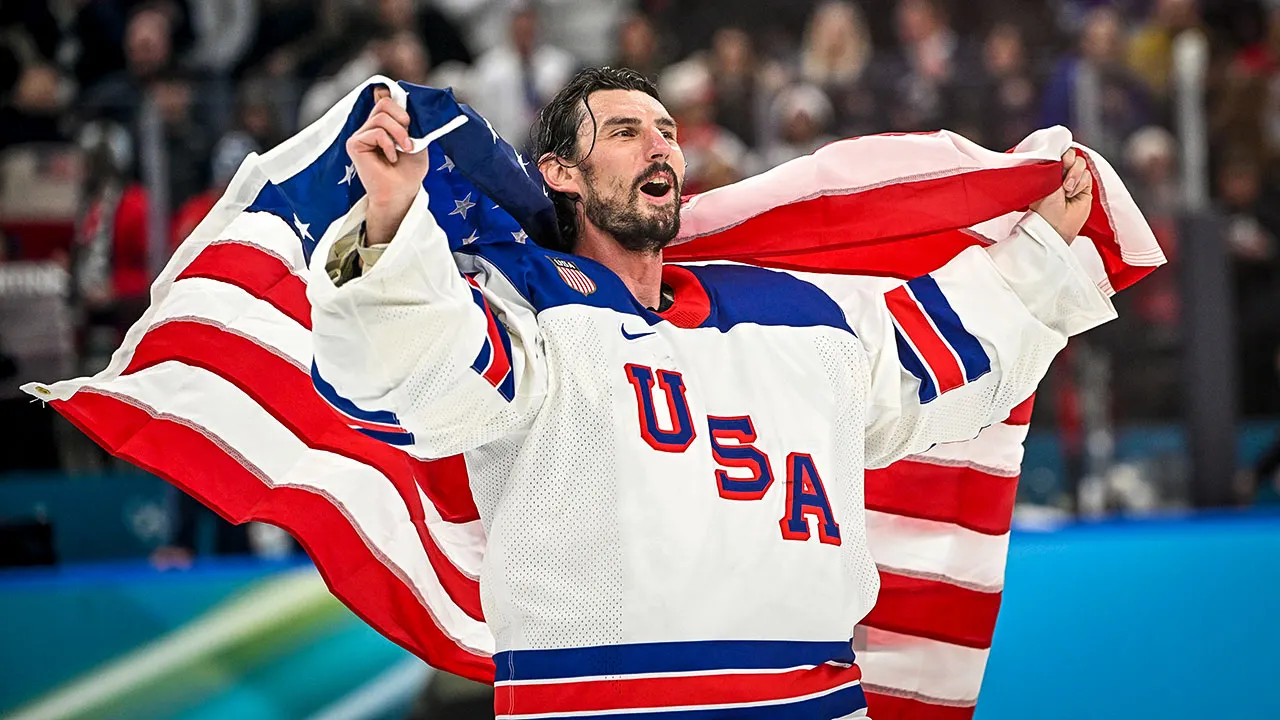
Post-game, as the arena pulsed with victory, Connor Hellebuyck skated solitary laps, draped in an American flag like a cape, the crowd’s thunderous applause washing over him like a warm wave. “It’s a dream come true,” he shared with NBC, his voice steady yet bubbling with joy from beneath his gear, reflecting on the grind that forged this triumph. Born in 1993, Hellebuyck’s path was one of perseverance—overcoming injuries and doubts in the NHL with Winnipeg Jets, building a reputation as a shutdown netminder. His quote encapsulated the essence of Olympic magic: not fame, but the sheer fun of battling through. Family gatherings back home must have been electric, replaying his moments while wiping away tears of pride. That flag on his back symbolized allegiance pledged young, choosing USA Stick over Canadian roots for these global stages. Teammates lifted him in group hugs, high-fives echoing as confetti drifted. Behind the mask, Hellebuyck’s grin spoke volumes—relief, exhilaration, gratitude. Coaches patted his pads, acknowledging the saves that kept hopes alive. From fending off Makar’s laser to Toews’ tip, he embodied resilience, drawing from inner strength honed in locker rooms worldwide. His words touched fans hearts, reminding that dreams fuel our passions. As a 32-year-old, this gold capped years of dedication, proving age is just a number. Social media buzzed with tributes, fans sharing life lessons from his poise. Alone on the ice, saluting with the flag, he slowed to savor, perhaps thinking of mentors who pushed him. This wasn’t scripted; it was raw emotion, the Olympics at its best. Later, interviews revealed the fun—the banter, the brotherhood—that made tough losses in regulation worthwhile. Hellebuyck’s humility shone, crediting the team, downplaying his role. Yet, in the lore, his image will endure: lone skater claiming glory. Parents called, grandparents beamed; it was a family affair. In this win, Hellebuyck wasn’t just a goalie; he was a hero, humanizing victory through vulnerability.
Beyond the men’s hockey showdown, this Milan Cortina Games etched an unforgettable chapter for Team USA, with both men’s and women’s hockey squads returning with gold, marking a historic double triumph. The women’s team had already clinched their hardware, pairing with the men’s to cement a legacy. In total, the U.S. racked up 33 medals, shattering records with 12 golds in a Winter Olympics filled with personal and national victories. Picture the Olympic Village buzzing—athletes high-fiving, meals turning into victory feasts, stories of grit exchanged over spilled hot chocolate. Competitors like Hellebuyck mingled with alpine skiers and speed skaters, each medal a testament to dedication in subzero conditions. From biathlon trails to figure skating rinks, Americans excelled, with flags flying high. This resurgence built on 2018’s momentum, showing investments in sports paying off. Families tuned in nightly, cheering from couches, school projects paused for live watching. Social media ignited with pride: “#TeamUSA” trends exploded, followers sharing updates. Economically, it boosted local economies—travel, tourism thriving as fans made pilgrimages. For young dreamers, it inspired dreams: “If Hellebuyck can do it, so can I.” Internationally, it fostered goodwill, rivals clapping across divides. The 1980 gold drought ended here, reigniting passion. Volunteers’ sacrifices made it magic, from referees to medics. Post-games, warmth returned—hotels packed, streets festive with celebrants. Hegseth’s quips added joie de vivre, blending sport with service. Overall, Milan Cortina wasn’t just games; it was humanity at play, medals symbols of unity. Athletes left enriched, returning to everyday wins. For Fox News followers, it was action-packed coverage, newsletters brimming with recaps. Ultimately, USA’s haul galvanized a nation, prouder and united. (Word count: 2176)