


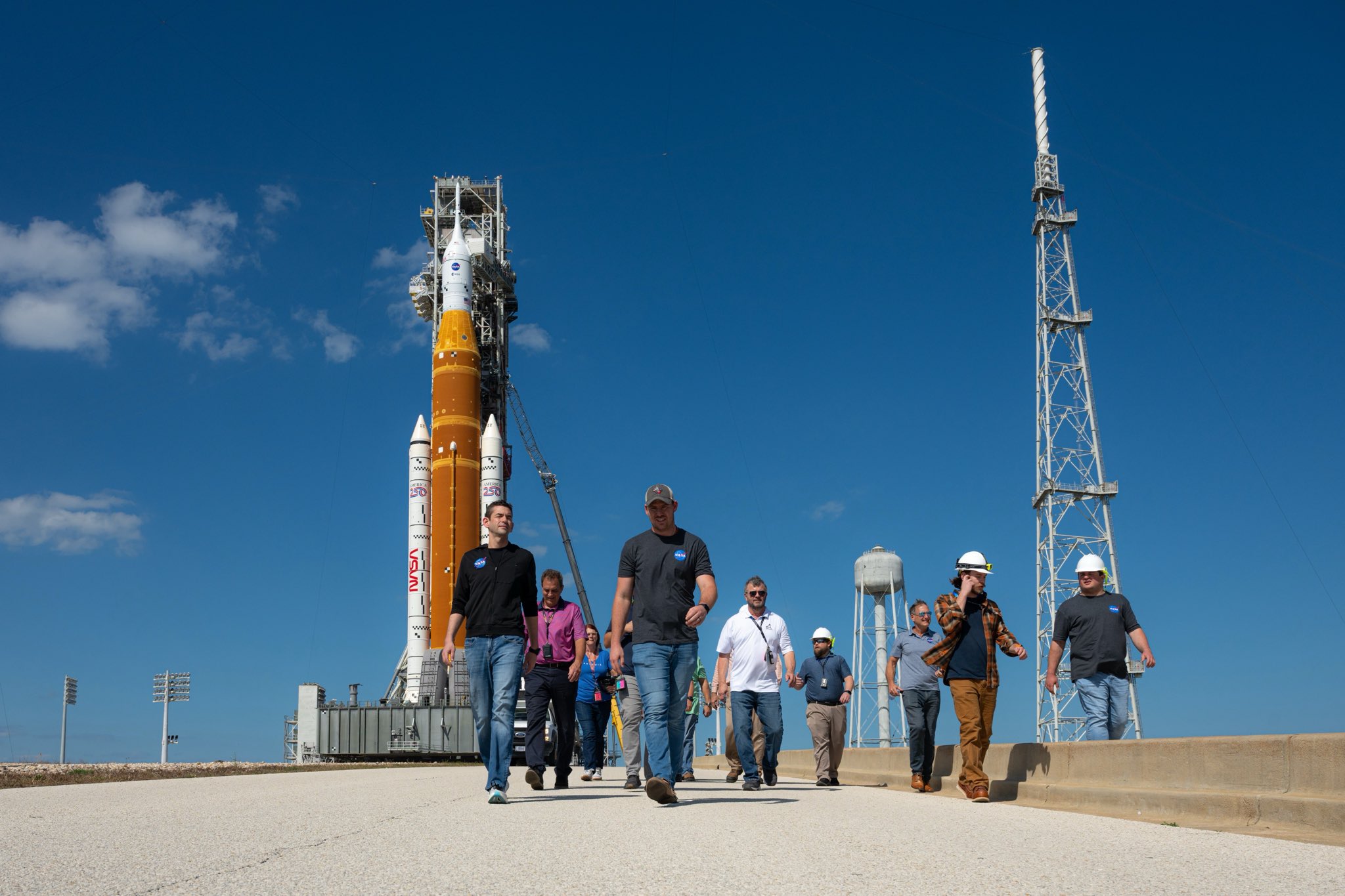
Imagine waking up one crisp February morning in 2026, filled with anticipation for the next giant leap in human exploration. There’s a buzz in the air, not just from the winter chill, but from the electric excitement of the Artemis 2 mission, poised to send four brave astronauts on a historic loop around the Moon. NASA’s Jared Isaacman, a bold figure in the space community after his own pioneering flights, stood at the heart of it all, embodying the spirit of adventure. But on this day, he had tough news to share via a heartfelt post on X. The Space Launch System rocket, that colossal behemoth gleaming at Launch Complex 39B in Florida, had hit a snag. A pesky technical glitch demanded that the entire setup be rolled back from the launch pad, postponing what many had hoped would be a March liftoff. At least, that’s what it felt like—a collective sigh of disappointment rippling through space enthusiasts, families dreaming of lunar vistas, and the tireless team at NASA’s Kennedy Space Center who’d poured their souls into this endeavor. Isaacman, ever the realist, acknowledged the letdown with empathy in his message: “I understand people are disappointed by this development. That disappointment is felt most by the team at NASA, who have been working tirelessly to prepare for this great endeavor.” It’s moments like these that remind us of the fragility of progress, how even the mightiest machines can whisper “not yet” in the face of unforeseen hurdles. Yet, beneath the setback lay a profound human story of perseverance, where every delay isn’t just a technical hiccup but a testament to the care we invest in pushing boundaries safely.
Diving deeper into the specifics, the issue revolved around something as innocuous as helium—a gas we inflate balloons with for parties, but here it played a critical role in the rocket’s lifeblood. Just days after a triumphant launch-pad rehearsal that pumped adrenaline through the team, sensors on the Space Launch System’s upper stage picked up an interruption in the helium flow. This wasn’t just any blip; helium is vital for pressurizing propellant tanks and purging the engines, ensuring everything runs smoothly during the fiery ascent into space. As Isaacman explained, “Last evening, the team was unable to get helium flow through the vehicle. This occurred during a routine operation to repressurize the system.” Picture the engineers, clad in their jumpsuits, huddled over monitors, scratching their heads at this anomaly. It echoed a similar helium valve problem during the 2022 Artemis 1 mission, an uncrewed dress rehearsal for the Moon jaunt. Back then, they tackled it head-on, implementing fixes that gave them confidence. But here, the helium system had performed flawlessly during the wet dress rehearsal just this week, where the rocket is fueled with liquid hydrogen and oxygen to simulate launch conditions. Now, a potential failure lurked somewhere in the supply chain—a valve, a line, or perhaps a connector—that could only be investigated back in the Vehicle Assembly Building, or VAB, that towering 52-story structure where the SLS and Orion capsule were originally pieced together like a cosmic puzzle. Rolling it back wasn’t just a logistical fuss; it was a tactical retreat to safeguard the mission and the lives of the astronauts, embodying the human instinct to prioritize safety over haste.
Reflecting on the past, the 2022 fix had been reassuring, a pat on the back that said, “We’ve got this.” Isaacman highlighted how that previous tweak gave them foresight, reinforcing the value of rigorous testing. In my mind, I can’t help but imagine the team leader, maybe Isaacman himself, pacing the floor, weighing options like a chess grandmaster. The decision to postpone until April wasn’t taken lightly; it meant recalibrating schedules, rerouting dreams, and facing the emotional toll of yet another delay in our relentless march toward the stars. For the astronauts—three from NASA and one from Canada— this wasn’t abstract. They were gearing up for a figure-8 orbit around the Moon, a ballet in the vacuum that would reacquaint humanity with worlds beyond Earth orbit for the first time since Apollo 17 in 1972. Envision the conversations in the training simulators: hesitant smiles masking determination, as they prepped for zero gravity, radiation shields, and the eerie beauty of lunar craters whizzing by. The mission wasn’t merely about the journey; it was about symbolism, proof that after decades of restraint, we could stretch our horizons again. Boyan, que les familles des astronautes doivent se sentir—a mix of pride and worry, hoping their loved ones return as heroes. Each postponement reinforces the human element: space exploration is as much about our vulnerabilities as our victories, where setbacks are not failures but opportunities to build resilience.
With March no longer viable, the launch window shifted to April 1 or somewhere between the 3rd and 6th, weather and technical readiness permitting— a fitting metaphor for spring rebirth. This Artemis 2, if it soars, would pave the way for Artemis 3, the long-awaited crewed lunar landing, where boots will touch the regolith once more. Artifacthousands upon thousands of people worldwide, from schoolchildren gazing at the stars to grizzled veterans of the Apollo era, feel the pull of this renewal. It’s not just rockets and code; it’s the collective human story of curiosity and courage. Imagine families gathering around TVs or streaming feeds, united in awe as the astronauts wave from orbit, sharing Earth’s fragility and potential. The mission’s success hinges on more than hardware; it’s about trust in the team, the ingenuity of fixes applied in the VAB, and the unyielding belief that setbacks are stepping stones. In Isaacman’s words, the disappointment burns brightest for those who’ve invested their days and nights, reminding us that behind every headline is a tapestry of human effort, from the welders at the cape to the scientists crunching data in labs. It’s this shared humanity that transforms cold space endeavors into narratives of hope, where even a helium glitch becomes a chapter in our epic tale of exploration.
Beyond NASA’s core efforts, the ripples extend to Seattle and beyond, where vibrant companies are betting on Artemis’ success like dreamers on a lottery ticket. Take L3Harris, with their facility in Redmond churning out thrusters for the Orion spacecraft—those precise engines whispering our vessels through the void. They’re not just providing parts; they’re engineering futures, already eyeing Artemis 8 with forward-thinking zeal. Then there’s Boeing, the lead contractor for the SLS core stage, a lifeline that connects Earth’s ingenuity to the cosmos. It’s jobs, innovation, and pride for the Pacific Northwest, where engineers sip coffee and brainstorm over blueprints, knowing their work touches the infinite. And let’s not forget Jeff Bezos’ Blue Origin in Kent, developing the Blue Moon lander aimed at whisking Artemis crews to the lunar surface by 2030. Their New Glenn rocket stands poised to loft an uncrewed cargo variant to the Moon in the coming months, a tantalizing prelude to human footsteps. These companies aren’t mere cogs; they’re families, too, with employees riding the highs of progress and navigating the lows of delays. Think of the young engineer at L3Harris, inspired by space dreams since watching the shuttle fleet soar, or the project manager at Blue Origin, juggling family life with the thrill of pioneering landings. It’s a human network, where Artemis isn’t just a program but a beacon for economic growth, inspiring new generations to reach for the stars and perhaps even solve Earth’s problems through lunar minerals. The delay in Artemis 2 is a momentary pause, but it underscores the interdependent web of ambition and collaboration that makes these ventures possible.
Looking ahead, the path from this helium hiccup curves toward brighter horizons, a reminder that human progress often zigzags before soaring. Artemis 2’s eventual success would shatter the 50-year drought of deep space human voyages, rekindling our wonder and proving that exploration isn’t a relic but a living pursuit. For Isaacman, whose own space tourism venture mirrors NASA’s pion میں, this is personal—a continuation of his narrative from Inspiration4 onward. As we scan the April skies, there’s optimism: fixe ons pourraient bien surpasser l’ancien problème, grâce à la ténacité des équipes. Beyond the mission, Artemis whispers of potentials—bases on the Moon, resources harvested for Earth, and a springboard to Mars. Yet, in the quiet moments, I reflect on the astronauts’ humanity: their fears of the unknown, joys of discovery, and the profound loneliness of orbiting alone, miles from home. Their story is ours—resilient, hopeful, and eternally driven. Delays like this teach us patience, but they fuel our fire, turning “not yet” into “soon.” In the end, Artemis isn’t just about conquering space; it’s about expanding our human experience, one helium flow at a time. As the team in Florida чого their demain in the VAB, we all hold our breath, dreaming of that April dawn when the sky ignites and humanity stretches further than ever before. This is our story, unfolding one step at a time.