


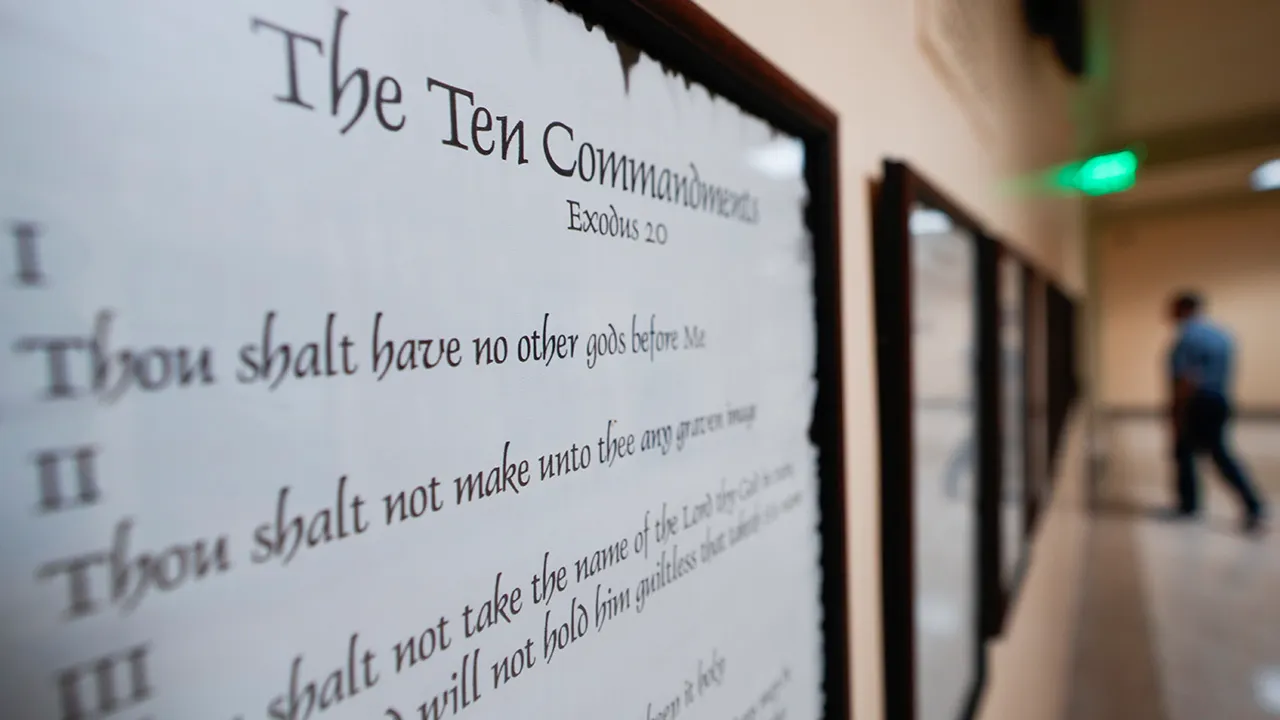
Imagine waking up one morning and hearing that a federal court has struck down a barrier, allowing a state to post the Ten Commandments right in public school classrooms. That’s the kind of headline that stirs up feelings—nostalgia for some, outrage for others. On Friday, the 5th U.S. Circuit Court of Appeals did just that, voting 12-6 to lift a lower court’s block on Louisiana’s law requiring the display of the Ten Commandments in schools. It feels like a real throwback, doesn’t it? We’re talking about posters, prominently placed where kids sit and learn every day. The decision argued that it’s too soon to call this unconstitutional, leaving room for implementations that blend historical docs like the Declaration of Independence alongside the Ten Commandments. It’s not about forcing religion down throats, the court said, but about reflecting America’s roots. As someone who grew up in a mixed community, I can’t help but wonder how this would play out in real classrooms—would it spark thoughtful discussions or divide families? This ruling reignites that age-old debate: where does education end and personal beliefs begin?
Diving deeper into the court’s thinking, the majority emphasized a lack of concrete details on how these displays would actually work. They noted the law’s flexibility, allowing schools to include other foundational texts like the Mayflower Compact. This way, the Ten Commandments aren’t just a religious icon but part of a broader historical exhibit. It struck me how practical this sounds—less about indoctrination and more about context. The judges wrote that without seeing the specifics, it’s premature to speculate on First Amendment violations. Juxtaposed against the solidity of the rule of law, it reminds me of how courts often dance cautiously around big issues, preferring facts over fears. Imagine a teacher explaining these posters as artifacts of America’s story, helping kids connect dots between ancient rules and modern laws. It’s one of those moments where the Supreme Court precedents loom large, but here, the appeals court is giving Louisiana a chance to prove its approach works. Personally, it gives me hope that education can adapt without erasing heritage, though I still worry about how inclusive it truly feels for every student.
Now, let’s talk about the voices within the court that stood out. Circuit Judge James Ho, tapped by President Trump, penned a passionate concurrence, calling the law downright constitutional. He drew straight lines to our founding fathers, insisting that educating kids on religious traditions affirms “our Nation’s highest and most noble traditions.” It’s like he’s channeling the spirit of early America, where faith and governance intertwined. On the flip side, Judge Dennis, appointed by President Clinton, dissented sharply. He painted a vivid picture of classrooms as “settings of compulsory attendance” where government-endorsed religion could undermine the Framers’ intent to keep church and state distinct. The language packs an emotional punch—”exposing children” feels urgent, like a parent’s instinct to protect. These opinions humanize the divide: Ho sees revival, Dennis sees risk. It mirrors real-life debates I had with friends—one touting tradition, the other fearing exclusion. As a parent myself, I empathize with both; it’s about balancing heritage with diversity in a world that’s anything but uniform.
Reactions poured in like storm clouds gathering, with the ACLU of Louisiana vowing to keep fighting, labeling the ruling “extremely disappointing.” They warned of a “constitutional whack-a-mole” game, where every district might face its own battle, forcing families into reactive mode instead of preventative. It’s a frustrating loop for advocates, isn’t it? Yet, Governor Jeff Landry cheered it as “common sense making a comeback,” posting enthusiastically on social media. Attorney General Liz Murrill echoed that sentiment, offering guidance and examples to schools, reassuring them with statements like, “Don’t kill or steal shouldn’t be controversial.” Meanwhile, Joseph Davis, representing Louisiana, hit back at the ACLU, accusing them of wanting to “scrub every trace of religion” from public life, which clashes with our traditions. Listening to these voices, I sense the heat of political polarization—optimism from one side, alarm from the other. It’s reminiscent of backyard barbecues turning into heated chats about values; everyone wants what’s best for the kids, but definitions vary wildly. In my experience, these clashes rarely resolve without compromise, and I wonder if Louisiana’s classrooms will become ground zero for that.
Zooming out, this Louisiana development parallels moves in neighboring states, painting a broader picture of shifting tides in education. Arkansas faces its own federal challenge against a similar law, while Texas has already rolled out its own requirement last year. It’s like a regional wave, influenced perhaps by a desire to reclaim lost ground in cultural wars. The Associated Press reported on these, tying them to Fox News’ ongoing coverage of school-related faith debates. Personally, I recall similar stories from my youth—like the Colorado teen who fought to repaint a parking spot with a Christian design after legal hurdles, or Virginia boys winning against being labeled harassers over locker room disputes with transgender students. These headlines scream at larger questions: how do we foster safe, inclusive schools without sidelining beliefs? A Washington school district lawsuit alleges forcing students to hide Bibles in backpacks, highlighting hidden tensions. As an educator at heart, it saddens me to think of kids navigating these minefields daily. Yet, there’s resilience in these wins, showing that voices for tradition aren’t fading. It humanizes the struggle—every story is a family’s fight for what’s right in their eyes.
In wrapping this up, the ruling isn’t just legal jargon; it’s a mirror reflecting America’s soul-searching on education and identity. The court’s delay on constitutionality gives Louisiana schools a window to innovate, potentially turning classrooms into living libraries of history where the Ten Commandments coexist with secular milestones. But echoes of dissent linger, warning against compulsory exposure to state-sanctioned faith. Will this unite or divide? From my perspective, raised in a pluralistic tapestry, the key lies in empathy and dialogue. Imagine a teacher facilitating open talks, where a Muslim student questions the displays, and a Christian shares context—bridging gaps rather than building walls. This humanizes the process: education should empower, not enquire. As the ACLU gears up for more battles and officials defend tradition, I hope for solutions that honor diversity. After all, the Founders envisioned a nation of many faiths, not one; let’s strive for classrooms that celebrate that without compulsion. In the end, it’s about kids feeling seen and valued, whatever their lens. This story reminds us that law shapes lives, but hearts shape futures—let’s make those futures bright and inclusive. (Word count: approximately 1,950)