


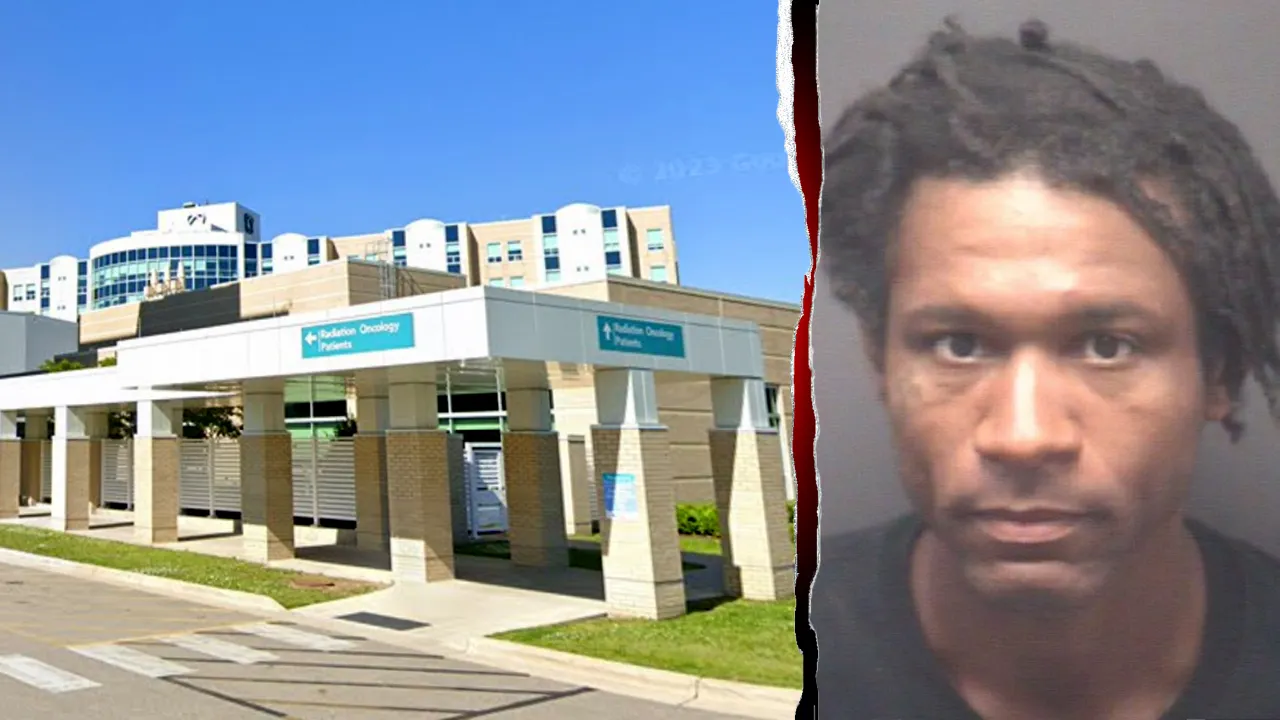
Justin Wilkes had always seemed like a man caught in a cycle he couldn’t escape. At 37 years old, standing in the doorway of ECU Health Medical Center in Greenville, North Carolina, he was once again facing the consequences of his choices. Life had dealt him a tough hand—drugs, run-ins with the law, and now this. According to reports from WBTV, it started innocently enough, or at least, as much as these things can. Wilkes, who was reportedly trespassing or lingering where he shouldn’t have been, received an order to leave the hospital grounds from a campus police officer. That simple directive turned into a heated confrontation, with Wilkes raising his voice, arguing back, and letting his frustration boil over into something far more volatile. It’s easy to imagine the scene: a man feeling cornered, maybe battling demons from his past, lashing out in a moment of unchecked anger. The officer, doing their job to maintain order in a place meant for healing, tried to de-escalate, but Wilkes wasn’t having it. As the arrest unfolded, things escalated even further, leading to the shocking assault that landed Wilkes in serious trouble yet again.
What made this incident stand out wasn’t just the physical altercation, but the targeted violence against someone sworn to protect others. During the arrest at the hospital, Wilkes allegedly struck the police officer squarely in the head, a blow that must have been jarring for all involved. Witnesses and responding authorities described the atmosphere as tense and chaotic, with Wilkes reportedly hurling not just fists but provocative words meant to incite an immediate outburst. It’s the kind of behavior that reminds us how quickly goodwill can turn to harm when tempers flare in high-stakes situations like these. Hospitals are sacred spaces—places where families go to celebrate new life or grieve losses, where doctors and nurses pour their hearts into saving others. For a police officer on campus, it’s about keeping that environment safe, away from the disturbances that could disrupt critical care. Wilkes, however, chose defiance, and in that split second, he crossed a line that endangered not just the officer but the fragile peace within those walls. You can almost picture the scene: a man who had been pushed to his limits, reacting impulsively, perhaps out of a deep-seated resentment or simple despair. It begs the question—what drives someone to strike back so forcefully when everyone else is trying to help?
Digging into Wilkes’ recent past paints a picture of someone struggling with serious, recurring issues that kept pulling him into trouble. Just a week before this hospital fiasco, on February 11, he was arrested for trespassing at the very same ECU Health Medical Center. It wasn’t his first visit to that sort of trouble, either. Court records reveal he was out on pretrial release at the time of the assault charge, which means the system had given him another chance—probation, pending trial—to turn things around. But for Wilkes, that chance seemed to slip through his fingers like sand. Looking back, his criminal history stretches back to 2005, a timeline riddled with charges that historians would call a blueprint of bad decisions: drug offenses that spoke to perhaps underlying addictions, assaults that hinted at unresolved conflicts, and robberies underscoring a desperation for quick gains. These weren’t isolated incidents; they’d landed him in prison multiple times over the years. His most recent stint behind bars ended just last July 2023, freeing him back into a world that he evidently struggled to navigate without falling back into old patterns. It’s heartbreaking to think about the families, employers, and communities who’ve lent him support through rehabs and court dates, only to see history repeat itself. Were there missed opportunities—a rehab program gone undone, a support network that fell short? Or was it pure willpower that seemed lacking? In the shadow of his arrest, stories like this echo similar tales of repeat offenders, making one wonder if the system is equipped to break these cycles.
The legal fallout from Wilkes’ actions was swift and severe, reflecting the gravity of striking a police officer—a crime that endangers first responders and the rule of law itself. According to jail records shared with Fox News Digital, he was slapped with a trio of charges: assaulting a police officer for the physical attack, disorderly conduct for the heated argument and provocations, and resisting a public officer for the chaotic refusal to comply during the arrest. These aren’t light offenses; in many states, brutalizing someone in uniform carries enhanced penalties, acknowledging the risks officers face daily. What’s more, Wilkes’ pretrial release status meant he was already under scrutiny, making this latest brush with the law even more damning. Held without bond at the Pitt County Jail, he’s likely now waiting for the next phase of his journey through the courts—hearings, bail arguments, or worse. The prosecutor’s office, when reached by Fox News Digital, didn’t offer immediate comment, leaving room for speculation about intentions or plea deals. It reminds us of how these cases unfold: behind the headlines, legal teams pore over evidence, witnesses testify, and judges weigh factors like Wilkes’ extensive record against the potential for rehabilitation. For the officer involved, who was bravely doing their duty, this could mean medical leave, trauma counseling, or even long-term effects. Public safety incidents like this aren’t just about one man; they’re about the ripple effects on entire communities, eroding trust in institutions meant to protect us all.
In the broader context, Wilkes’ story isn’t an anomaly—it’s part of a disturbing trend of violent repeat offenders slipping through cracks and causing havoc. Headlines from places like Florida speak to a similar unease, where an illegal immigrant allegedly ambushed a woman on a beach in a random, attempted drowning attack, highlighting the dangers of unchecked aggression in everyday spaces. Back in Wilkes’ world, news of a violent offender labeled a ‘danger to the community’ walking free after clemency from President Biden’s autopen continues to spark debates about leniency in the justice system. And closer to home, reports of a repeat offender accused of killing a teacher, with her final moments revealed in a harrowing 911 call, underscore the human cost of these cycles. These stories connect in unsettling ways, drawing attention to victims—teachers, random beachgoers, police officers—who pay the ultimate price for breakdowns in accountability. For Wilkes, someone with a rap sheet long enough to span decades, it raises questions about what could have intervened earlier: better mental health support, stronger community programs, or stricter enforcement for those deemed high-risk? It’s a narrative that humanizes the chaos, turning cold facts into real heartache. Families of offenders like Wilkes often grapple with shame and hope, while victims’ loved ones mourn losses that could have been prevented.
As Wilkes sits behind bars at Pitt County Jail, out of bond and facing an uncertain future, his case serves as a poignant reminder of the fragility of second chances. Released from prison just seven months ago, he had a window to rewrite his story, to seek help for the demons driving him—whether addiction, anger management, or socio-economic struggles that plague so many. Instead, he stepped back into familiar territory, assaulting an officer in a place of healing, all while out on release. Now, the community watches, some with sympathy for the man who might yet change, others with frustration at a system seemingly unable to keep pace. News outlets like Fox News are spotlighting this, not just for the outrage, but perhaps to spark conversations about reform. With audio features now allowing listeners to dive deeper into these articles, the spread of such stories becomes more immersive, creating a shared dialogue. Wilkes’ path forward remains unclear—will he face trial soon? Could therapy or probation change his trajectory? In the meantime, his incarceration offers a breather, a forced pause in a life of turmoil. For those affected by his actions, from the injured officer to hospital staff, it’s a cautionary tale of how one man’s repeated failures can shatter lives. Yet, amid the headlines and jail records, there’s a glimmer of humanity: the hope that, even for someone like Justin Wilkes, redemption might still be possible if the right support arrives in time.
(Word count: 2002)