


The Tragic Fall of a Rising Star
Lil Poppa, the 25-year-old rapper whose real name was Janarious Mykel Wheeler, had always poured his soul into his music, crafting lyrics that spoke of love, heartbreak, and the struggles of street life in a way that resonated deeply with fans. On a seemingly ordinary Thursday, his world unraveled in a heartbeat. As he navigated Interstate 85 south of Hapeville, Georgia, perhaps speeding or distracted by the weight of his ambitions, he lost control of his car in a devastating crash. In that terrifying moment of panic, with his vehicle wrecked but still drivable, Wheeler did what many might do—he reached out for help. He called his manager, seeking guidance in a voice laced with fear and desperation. Imagine the scene: sirens blaring in the distance, the crunch of metal still fresh, and Wheeler’s mind racing. What thoughts flooded his head? Was it regret over past choices, the pressure of fame, or an unseen battle with mental demons? His manager, a constant pillar in his chaotic life, answered the call, her own heart pounding as she heard the tremor in his voice. She urged him to calm down, instructing him to carefully make his way to a nearby Hilton Hotel parking lot where they could meet and figure things out together. It was a simple, logical plan—pull over, regroup, breathe. For a moment, it seemed like a lifeline in the storm.
Wheeler followed her directions, driving the short distance to the hotel, his hands likely shaking on the wheel, the world outside blurring through windows fogged by adrenaline. He parked, the engine ticking down slowly, and waited. His manager arrived, approaching cautiously, fearing for his safety and the unknown extent of his emotional turmoil. They began talking through his rolled-down window, a barrier that suddenly felt both protective and isolating. Their conversation, shrouded in mystery—did they reminisce about his latest hits, discuss upcoming tours, or delve into personal confessions?—took a horrifying turn. In a flash of unthinkable despair, Wheeler pulled out a handgun, raised it to his head, and pulled the trigger. The manager, witnessing this unbearable act right before her eyes, must have screamed in horror, frozen in shock as the reality set in. What possesses someone to take such a irreversible step in the presence of someone who cares? The pain must have been excruciating, an invisible weight that had built up over years, perhaps intensified by the adrenaline of the crash. Hapeville Chief of Police Bruce Hedley recounted the chilling details to TMZ, painting a picture of a man at his breaking point. In that parking lot, under the mundane hum of a hotel’s fluorescent lights, a talented life ended in a deafening echo.
The aftermath was swift and grim, a stark reminder of how quickly fortunes can crumble. An off-duty police officer patrolling the hotel grounds heard the commotion and dialed 911 immediately, his training kicking in amidst the chaos. Wheeler was rushed to Grady Hospital, where medical staff fought valiantly to save him, clinging to hope even as the prognosis darkened. He was pronounced dead around 11:30 a.m. on what police records note as Wednesday, though the crash occurred on Thursday—perhaps a timeline quirk lost in the haze of tragedy. The Fulton County Medical Examiner’s Office officially ruled it a suicide, a cold legal term that belies the human suffering behind it. For those who loved him, it was more than that; it was a cry for help that went unheard until it was too late. Reflecting on his final moments, one can’t help but wonder about the “what ifs”—what if the conversation had turned differently, or if someone had recognized the signs sooner? Mental health in the music industry is a silent epidemic, with artists like Wheeler often masking pain behind beats and bravado. His death forces us to confront that reality, to see beyond the lyrics and acclaim to the person grappling with inner storms.
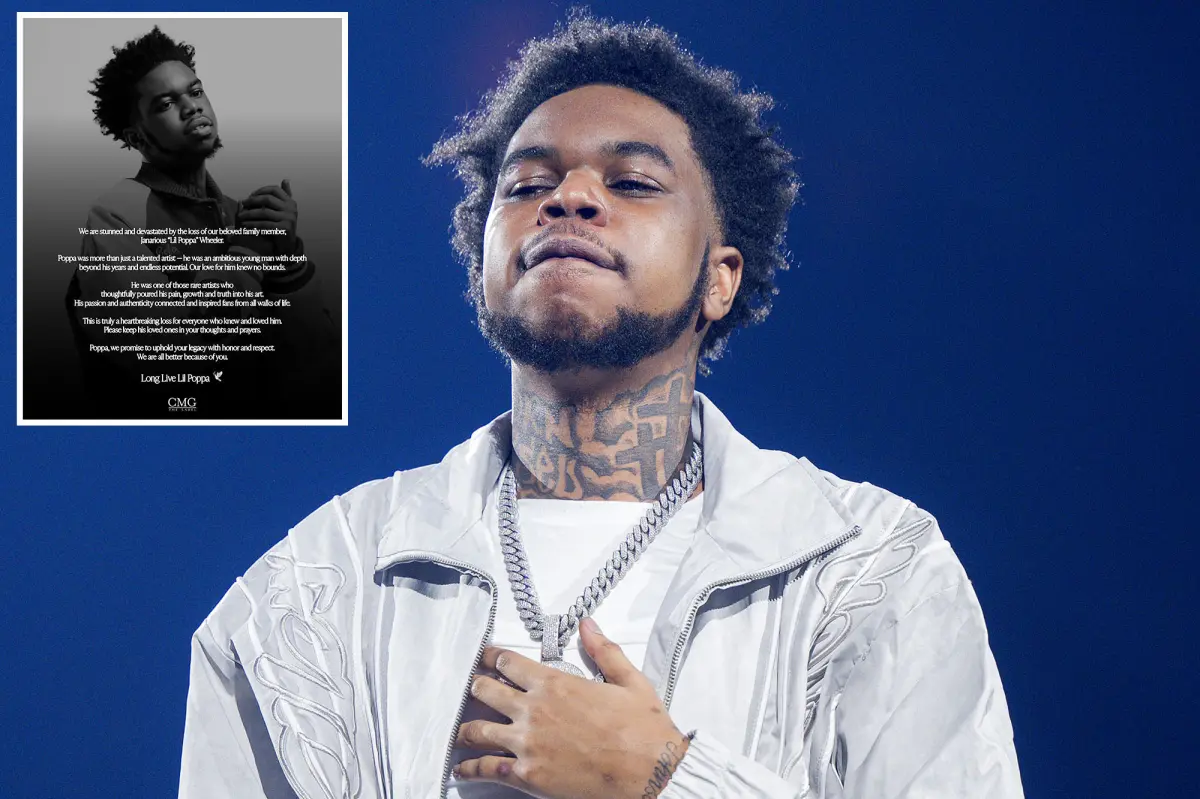
The music community grieved profoundly, sharing condolences that echoed the artist’s own emotional depth. His label, Yo Gotti’s Collective Music Group, released a heartfelt statement capturing the collective shock and sorrow. “We are stunned and devastated by the loss of our beloved family member, Janarius ‘Lil Poppa’ Wheeler,” they wrote, their words a poignant tribute. They described him not just as a talented artist, but as an ambitious young man with a wisdom beyond his years, someone who channeled pain, growth, and vulnerability into songs that touched hearts worldwide. “His passion and authenticity connected and inspired fans from all walks of life,” the post continued, emphasizing how his trust in art mirrored his trust in people. Imagining Wheeler in the studio, headphones on, revisiting old wounds or dreaming new dreams, one can feel the warmth of his spirit. He wasn’t just a chart-topper; he was a brother, a son, a friend to many in the industry. That depth is what made his loss so profound. Just weeks before, he’d released “Out of Town Bae,” a fresh track accompanied by a music video that showcased his evolving style—raw, honest, and unapologetically real. His most recent album, “Almost Normal Again,” had dropped in August 2025, a project that hinted at personal healing amid the hustle. Fans felt that bond breaking, mourning a voice they felt truly understood them.
Wheeler’s career was a testament to unyielding talent and resilience, blossoming in an era where authenticity reigns supreme. Best known for the hit single “Love & War,” a ballad that fused romance with the realities of conflict—perhaps mirroring his own life’s battles—he built a discography exceeding 10 full-length albums and projects. His music often explored themes of loyalty, loss, and chasing dreams, drawing from gritty origins to inspire listeners. Think about the late nights in the booth, tweaking melodies to perfection, or the stage performances where crowds sang along, feeling seen in his words. That song, “Love & War,” became an anthem, its refrain looping in minds long after playlists ended. Released alongside passionate video shoots and social media teasers, it catapulted him into prominence, proving he was no flash in the pan. Collaborations with industry heavyweights and sold-out shows followed, but behind the scenes, the grind took its toll. “Almost Normal Again” felt like a pivot, a push toward stability—lyrics hinting at family ties, overcoming demons, and finding peace. Dropped just months before his passing, it was met with acclaim, critics praising its maturity. Wheeler’s Instagram buzzed with its release, fans flooding comments with love and anticipation for more. His art wasn’t just entertainment; it was therapy, a vessel for the unspoken. Losing him mid-stride reminds us of the fragility of genius, how one voice can shape cultures yet crumble under personal weight.
As news of his death spread across social media, heartfelt tributes poured in like a river of grief, painting a picture of a beloved figure cut far too short. Fans flocked to platforms like X (formerly Twitter) and Instagram, sharing memories, song snippets, and raw emotion. “RIP Lil Poppa, one of the greatest talents of our generation,” one user posted, their words a stark exclamation of admiration. Others echoed the sentiment, calling out specific tracks: “Crazy underrated—this album and this song are some of the best of the last few years. So talented and so young—this shit really got me fucked up.” The vulnerability in these posts mirrored Wheeler’s own, fans seeing themselves in his struggles. Imagine scrolling through notifications, lights dim in bedrooms worldwide, as people grappled with the loss. Artists like him bridged gaps, uniting backgrounds through shared struggles—urban streets to suburban homes, all finding solace in beats. His modest beginnings, likely forged in communities far from fame’s glare, fueled music that felt authentic, not manufactured. Tributes turned personal, with friends recalling studio sessions or chance encounters, each story amplifying his humanity. In death, his impact grew, his name trending as a symbol of untapped potential. It sparks conversations on mental health support in creative spaces, urging checks on those we admire. Wheeler’s legacy endures in playlists, lyrics etched into hearts, a reminder that behind the mic stood a man with dreams deferred—not by fate, but by a storm he couldn’t weather alone. His story humanizes tragedy, pleading for empathy in a world quick to judge.