

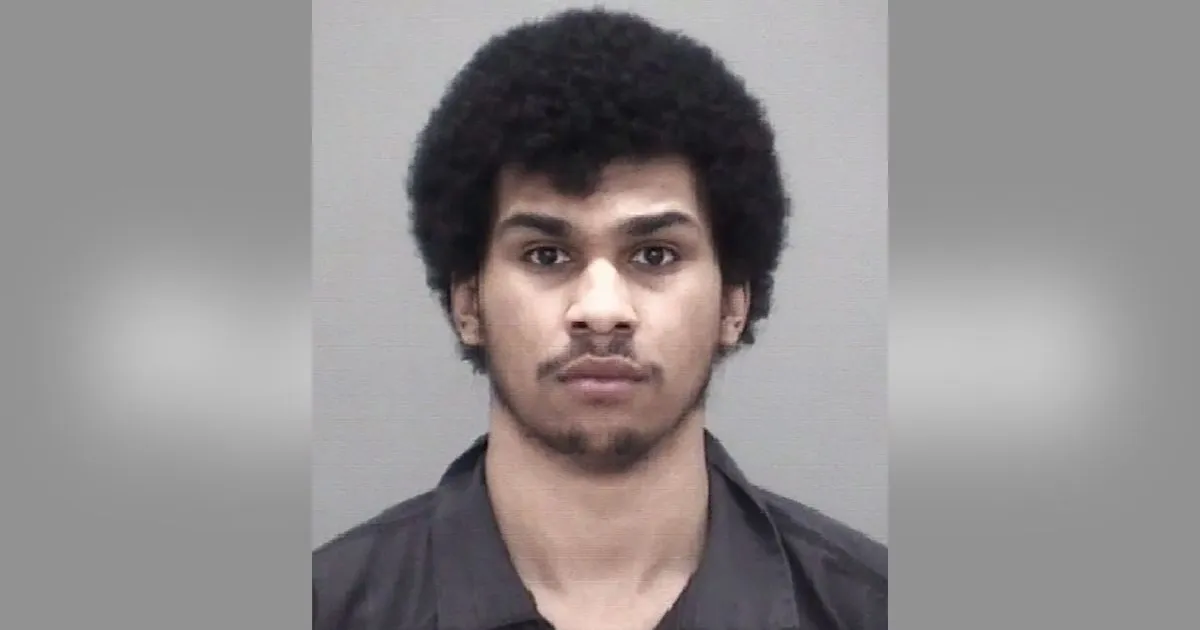
In the quiet, tree-lined streets of Delta Township, Michigan, a peaceful evening walk turned into a nightmare on February 13, when a young family found themselves in the crosshairs of senseless violence. A 21-year-old man, Alexander Lamar Banks Jr., allegedly drove his car into the trio as they strolled along the road, then exited the vehicle and opened fire. The victims—a 37-year-old man, a 33-year-old woman, and their precious 3-year-old daughter—were struck not just by the impact but by a hail of bullets that ripped through the air like thunderclaps. It was the kind of scene that freezes time, leaving bystanders paralyzed and families shattered. Imagine the father’s desperate urge to shield his loved ones, the mother’s heart pounding as she clutched her child, and the little girl’s innocent confusion in those final moments. Eaton County Sheriff’s deputies, arriving swiftly, discovered four victims crumpled on the ground and sprang into action, performing life-saving measures amidst the chaos. Officers described the grim reality: the child’s life ended tragically at the scene, her tiny body too frail to withstand such brutality. The adults, however, clung to hope in the hospital, their wounds a testament to survival’s fragile thread. This wasn’t just an accident; it was an orchestrated act of hatred that echoed through a community built on trust and goodwill. As news spread like wildfire, neighbors whispered prayers for the father and mother, hospitalized but stable, their paths forward bruised yet unbroken. The air hung heavy with the weight of what could have been—a simple family outing turned lethal—reminding everyone of how suddenly safety can vanish. In those initial hours, the shock reverberated through homes, where parents hugged their children tighter, and strangers exchanged worried glances at the grocery store. The sheriff’s office vowed justice, their press release a beacon in the darkness, detailing how they tracked the suspect with the help of Michigan State Police. Banks was apprehended, his face captured in the grainy photos of mugshots that plastered social media. But beyond the headlines, there was a deeper human cost: the father’s guilt over not being able to protect his daughter, the mother’s silent tears in the ICU, wondering if life would ever feel whole again. The community rallied, vigils springing up overnight, candles flickering in the cold night air as people grappled with the “why” of it all. A child’s life extinguished, dreams cut short before they could bloom, left a void that no words could fill. Yet, amidst the despair, stories of heroism began to emerge, like a single ray of light piercing the storm clouds, shifting the narrative from tragedy to triumph over evil.
The ripple effects of that fateful day extended far beyond the immediate family, touching a 72-year-old woman named Barb, a humble bystander whose courage painted her as an unsung hero in this dark tale. Hearing the commotion from across the street, Barb didn’t hesitate—she dashed outside, her heart driven by an instinctive call to aid the suffering, regardless of her own safety. In a world where many avert their gaze, Barb embodied the essence of compassion, rushing into the fray to distract the shooter and shield the family. But her selfless act came at a tremendous price: she was viciously attacked, suffering severe trauma to her head and face, including bleeding in her brain that compelled emergency lifesaving surgery. As she lay unconscious in critical condition, her friends and family whispered encouragements at her bedside, begging her to wake up and reclaim her place in their lives. Barb’s story wasn’t just about bravery; it was about the quiet strength woven into the fabric of everyday people. Picture her, a grandmotherly figure perhaps, baking cookies for neighbors or tending her garden in the afternoons, suddenly thrust into a moment of profound danger. Her actions saved lives, pulling the gunman’s attention away from the family and buying precious time for rescue. The 37-year-old father and 33-year-old mother, scarred but alive, owed their survival partly to Barb’s intervention—a debt they might never repay, but one that deepened their gratitude for humanity’s hidden protectors. In hospitals across the county, Barb’s plight mirrored the family’s: wires and monitors, beeps and sighs, as doctors fought to mend what violence had ravaged. Her unconscious state evoked empathy from a community in mourning, reminding everyone that heroism doesn’t wear a cape—it’s draped in everyday kindness. Friends described Barb as a beacon of warmth, her laughter echoing in church potlucks and holiday gatherings, now silenced but not forgotten. It was heartbreaking to think of the pain she endured, the fear she suppressed, all for strangers she didn’t know. And as she hovered between worlds, the family she aided thought of her as their guardian angel, a symbol of hope in the rubble of despair. Her ordeal highlighted the interconnectedness of lives in small towns, where one person’s bravery could uplift many, turning personal valor into communal healing.
Authorities wasted no time in netting the suspect, Alexander Lamar Banks Jr., a 21-year-old whose alleged rampage suggested a mind tormented by unseen demons. Apprehended shortly after the shootings through a coordinated effort between the Eaton County Sheriff’s Office and Michigan State Police, Banks was swiftly brought into custody, his defiant eyes meeting the justice system’s gaze. Charged with premeditated murder for the child’s death and three counts of assault with intent to commit murder for the injuries inflicted on the family and Barb, he faced a litany of firearms violations that underscored the premeditated nature of his acts. During his Tuesday, February 17, arraignment, Banks was denied bond, a decision reflective of the perceived risk he posed. Strikingly, he stood mute in court, opting for silence rather than plea, prompting his attorney, William Amadeo, to request a competency evaluation. Amadeo shared with reporters that their defense hinged on mental incompetence, a plea that stirred debates about accountability and rehabilitation. It was a stark reminder of the human psyche’s complexities—here was a young man, perhaps broken by his own inner turmoil, whose actions had irrevocably altered lives. Imagine Banks in a dimly lit interrogation room, chains rattling as he faced the weight of his choices, or reflecting on his life story that led him down this path. Was it undiagnosed mental illness, a trigger from past traumas, or a chilling indifference born of rage? The charges, if proven, carried the possibility of life imprisonment, a sentence that might seal his fate within cold prison walls for decades. Yet, the legal proceedings humanized the tragedy, shifting focus from faceless perpetrator to a person grappling with mental health crises. victim’s families watched courtrooms from afar, their grief compounded by the chance that incompetence might grant leniency. Public opinion swirled, with some decrying leniency for such monstrous acts, while others sympathized with pleas for understanding. In that courtroom drama, the full tapestry of humanity unfolded: victims’ tears, attorneys’ arguments, judges’ solemn rulings—all part of a system seeking balance amidst heartbreak. Banks’ competence evaluation became a pivotal plot point, delaying the trial and extending the agony for those impacted, as the community pondered if mercy could coexist with justice in this shattered narrative.
Delving deeper into Barb’s heroic narrative, one can’t help but marvel at the extraordinary fortitude she exhibited, transforming a neighborhood dispute into a saga of selfless intervention. As detailed in a heartfelt GoFundMe page set up by a close friend, Barb’s journey from bystander to rescuer began when she heard the cries and gunfire piercing the tranquil dusk. Without a second thought, she bolted from her home, driven by an inner moral compass that dismissed personal peril. The scene unfolding across the street was apocalyptic: a family under siege, bullets flying, terror in their eyes. Barb’s interference—likely a desperate plea or physical distraction—diverted the shooter’s fury, allowing the couple to survive what might have been fatal wounds. Her bravery wasn’t theatrical; it was raw, instinctive, the kind that defines true character. Severely beaten in the process, she suffered life-threatening injuries, her brain bleeding as medical teams rushed her to surgery. Consequently, she remained in critical condition, a vegetable state of unconsciousness that filled friends and loved ones with dread. Poring over family photos—Barb smiling at barbecues, holding neighbors’ babies, volunteering at community events—they imagined the vibrant woman she was, now fighting invisibly. Her warmth and kindness had touched countless souls, from the mechanic who mowed her lawn to the kids who knocked for trick-or-treats. Now, the fundraiser stood as a lifeline, urging donations not just for her recovery but also to support the grieving family. Any surplus funds would flow to them, creating a chain of care that honored Barb’s spirit. Contributors weren’t merely giving money; they were affirming community bonds, each dollar a prayer for her awakening. In whispers and tears, friends recounted Barb’s life: the widow who found solace in others’ joy, the friend who never turned anyone away. Her selflessness exemplified the pinnacle of human empathy, a story that, in the face of such evil, reminded us that goodness endures. Days turned into weeks as she lay there, machines breathing for her, hopes pinned on miracles. The physician’s updates, shared online, became communal laments, fostering a virtual support network that spanned miles. Barb’s ordeal was more than personal; it was a mirror reflecting society’s best and worst, inspiring reflections on how one woman’s courage could ripple through a town like drops in a pond.
The community’s response to this harrowing event blossomed into a powerful testament to collective resilience, weaving threads of support that began to mend the emotional wounds. Vigils popped up spontaneously, with candles towering like stars under starry skies, as neighbors gathered to share stories and sorrows. Social media buzzed with tributes to the fallen child—artworks of angels, memory pages brimming with “rest in peace”—and prayers for the injured. For Barb, whose anonymity had dissolved into legend, admirers donated generously to the GoFundMe, their messages poignant: “Thank you for your bravery; may God bless your recovery.” The fundraiser’s description painted Barb as a paragon of kindness, her life a tapestry of thoughtful deeds that now inspired emulation. Surplus proceeds benefiting the bereaved family emphasized interconnected fates, turning aid into a communal embrace. Schools hosted assemblies to discuss kindness and safety, while psychologists offered free counseling to traumatize families. The sheriff’s office updated the public diligently, maintaining transparency that built trust. Yet, the human toll lingered in subtle ways—the child’s schoolfriends’ confused questions, the parents’ sleepless nights haunted by “what if.” Art therapists in town invited creations from kids, channeling grief into drawings of light overcoming darkness. Churches held interfaith prayers, uniting believers in pleas for healing. Local businesses donated meals to the hospitals, nourishing bodies while spirits healed. This outpouring humanized the tragedy, transforming isolation into solidarity. Neighbors checked on one another, forging stronger ties amid fragility. The child’s memory lived on in fundraisers for playgrounds in her name, ensuring her playful spirit endured. For Barb’s kin, the support alleviated financial burdens, allowing focus on her care. In quiet moments, people reflected on life’s unpredictability, vowing to cherish connections. This communal pulsing wasn’t just response; it was rebirth, proving adversity could birth greater empathy and unity.
As the shadows of February 13 lingered, the tragedy in Delta Township underscored profound truths about humanity’s capacity for both cruelty and compassion, leaving an indelible mark on hearts across the nation. The 3-year-old’s death was a poignant reminder of innocence’s fragility, her parents’ enduring love a beacon in grief’s fog. Barb’s coma and the family’s wounds illustrated heroism’s painful price, yet also sparked inspirations for moral courage. Banks’ charges and competency plea raised ethical quandaries, prompting discussions on justice, mental health, and redemption. While awaiting trial, the legal process offered a semblance of order, though healing remained elusive. Community rallies and the fundraiser embodied hope’s power, channeling sorrow into action that honored the victims. In reflection, this incident urged introspection: how do we prevent such horror, support the vulnerable, and celebrate everyday heroes? It challenged us to view strangers as kin, violence as a shared enemy. Families clung to faith, drawing from B aas colleagues’ wisdom that kindness outlasts chaos. Doctors’ tireless efforts symbolized medicine’s miracles, while lawyers’ diligence upheld law’s integrity. Ultimately, the narrative evolved from shock to uplift, reminding all that even in darkness, human spirit’s light—embodied by Barb, the resilient parents, and a caring community—shines eternal, guiding futures toward brighter paths where love triumphs over loss. This tale, though scarred by death, celebrated life’s interconnected beauty, urging vigilance and empathy in every step. As spring approached, thawing the ground, so too did collective hearts begin to heal, fortified by the unbreakable threads of humanity that bound them together.