



Paul Allen’s legacy as a tech visionary and philanthropist is forever intertwined with the Seattle Seahawks, a franchise he rescued from the brink of relocation and turned into a powerhouse that captured the hearts of Pacific Northwest fans. In 1997, as a co-founder of Microsoft, Allen stepped in as an unlikely savior, purchasing the struggling NFL team from owner Ken Behring for roughly $200 million. Behring had threatened to move the Seahawks from Seattle to California, a prospect that would have devastated the city’s sports-loving community. Allen, with his characteristic boldness and deep pockets, kept the team rooted in Seattle, investing not just money but also his personal passion for football and civic pride. Imagine a billionaire diving headfirst into the chaos of a losing season, picturing tailgating under gray skies, the roar of the crowd at CenturyLink Field—now Lumen Field—echoing his own excitement. Allen wasn’t just a distant owner; he immersed himself in the nitty-gritty, firing coaches, overhauling strategies, and building dynasties, all while juggling his massive tech empire. For many fans, Allen became a hero not for his code-writing wizardry, but for giving them Sundays filled with hope, rivalries, and the thrill of improbable victories. His decision to buy the team wasn’t merely business; it was a love letter to Seattle, proving that a midwestern kid turned mogul could root himself in a city and its people.
Allen ran the Seahawks until his untimely death in October 2018 at age 65, battling a recurrence of non-Hodgkin’s lymphoma. The news hit fans hard, like losing a family member who always showed up for game day, even if he couldn’t tackle. During his tenure, he oversaw the team’s rise to glory, including that unforgettable Super Bowl XLVIII win against the Denver Broncos in 2014—yes, the one with the Beast Mode run in the slush. His estate, led by his sister Jody Allen, began the slow process of unwinding his vast holdings, directing profits toward philanthropy as Allen had wished. Selling off real estate, investments, and sports teams wasn’t easy; it meant parting with pieces of a life built through brilliance and heart. For Jody, it was personal—a way to honor her brother’s directive while navigating grief. Fans felt the weight too; Allen’s death left a void, not just in the owner’s box, but in locker rooms and living rooms across the region. Rumors swirled about the team’s future, but Jody assured everyone that changes would come per Paul’s wishes. This sale of the Seahawks is the next chapter, a bittersweet closure that promises to fuel good causes, much like how Allen’s charity work supported education and research during his life. It’s human in its melancholy, reminding us that even billionaires face mortality, and their legacies live on through what they leave behind.
Fast-forward to February 18, 2026, a crisp morning in Seattle where the air still buzzes from Super Bowl LX. Just a week after the Seahawks marched triumphantly through the city’s streets—think confetti raining down on fans wrapped in blue and green, high-fives with strangers, and the primal joy of victory—the Paul G. Allen Estate dropped a bombshell: the team was officially for sale. The announcement came via a somber statement, confirming whispers from ESPN and other outlets ahead of the big game on February 8, where Seattle thrashed the New England Patriots 29-13. Fans had barely come down from the high of the parade—families reuniting at Elliott Bay, neighbors clinking beers, the whole city feeling invincible—when reality set in. The estate had initially denied the sale rumors, saying it would happen “at some point per Paul’s wishes,” but the timing felt almost poetic. Winning the Super Bowl, a feat Allen would have reveled in, seemed like the perfect punctuation mark before letting go. Jody Allen, chairing the estate, must have felt a mix of pride and sorrow, honoring her brother while bidding farewell to his prized possession. For devoted supporters, it’s like saying goodbye to an old friend who’s moving away; the joy of the win mixes with the ache of change, knowing the Seahawks will carry on, but without the man who made them legendary.
Projecting forward, the Seahawks, a franchise founded in 1976 and reborn under Allen, could command up to $10 billion in today’s valuation, fueled by their recent championship sheen. That’s a staggering leap from the $200 million Allen paid, and even surpasses the $6.05 billion the Washington Commanders fetched in 2023. Experts cite the team’s beloved status, Seattle’s passionate fanbase, and the NFL’s explosive TV deals as key drivers. One can picture brokers at investment bank Allen & Company, named for family ties, poring over spreadsheets, balancing profit with preserving the team’s soul. Law firm Latham & Watkins will steward the legal maze, ensuring everything aligns with NFL approval, which requires owner ratification. Fans might imagine a new owner swooping in—an tech baron like Allen, perhaps, or a consortium of local heroes—keeping the traditions alive. Yet, beneath the dollars, it’s personal; Allen’s directive to sell and donate means every penny could fund cures for cancers like his, or educational initiatives that uplift the underserved. The sale process, slated through the 2026 off-season, invites storytelling: bidding wars, heartfelt pitches from potential owners, all culminating in a nod to the man who valued community over cash. It’s not just corporate; it’s a legacy pact, ensuring Allen’s philanthropy endures, touching lives in ways fans can rally behind.
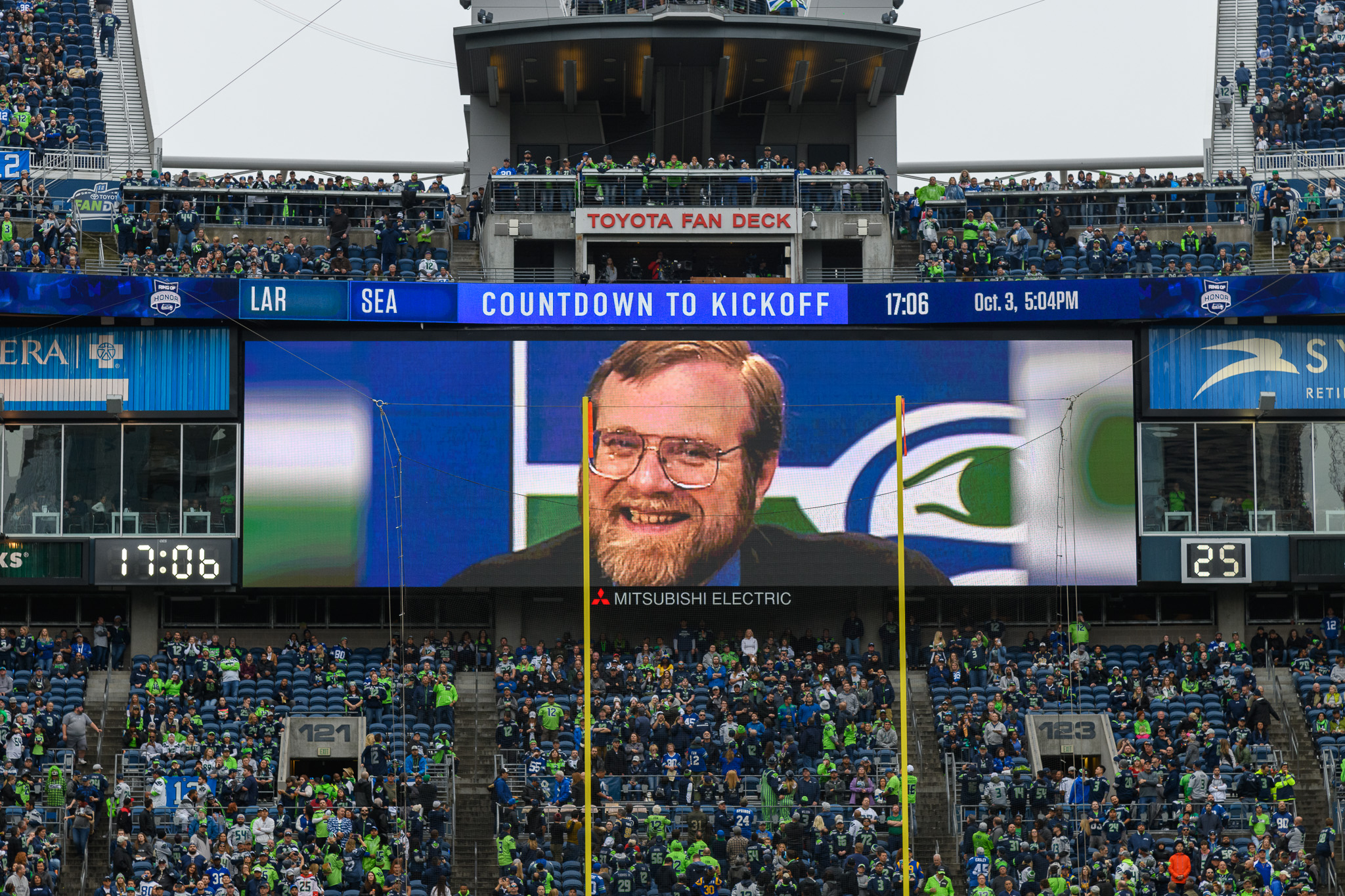
Allen’s imprint on the Seahawks extends far beyond the scoreboard—he was inducted into the team’s Ring of Honor on October 3, 2019, a year after his passing, joining luminaries like Steve Largent and Matt Hasselbeck. The ceremony at Lumen Field was emotional, a sea of blue jerseys saluting a man who embodied the 12th man—the rowdy fan spirit that rattles stadiums. Jody Allen, in a touching tribute, called him “the proudest 12 of all,” capturing his infectious enthusiasm during those halcyon days of bomb scares and comeback drives. For fans reliving memories, it’s like flipping through a scrapbook: Allen cheering from box seats, his philanthropy funding youth programs that introduced kids to the game, sparking dreams of one day running that field. His investments didn’t stop at playing fields; he built Lumen Field into a fortress of victory, and off the pitch, supported causes close to his heart, from preserving music history to advancing AI for good. Humanizing Allen means seeing him not as a titan, but as a guy who loved a good game, dealt with losses—on and off the field—and left a blueprint for giving back. The sale reconnects with that ethos, transforming a football team into a vessel for broader impact, much like Allen’s life story.
As the estate pushes forward with this divesture, it’s part of a broader narrative of letting go, mirroring the sale of the NBA’s Portland Trail Blazers, which Allen also owned and is now in motion. These steps honor his final wishes, funneling fortunes into philanthropy that combats inequality, disease, and environmental woes. For Seattleites, the potential farewell stirs nostalgia: the excitement of draft day picks, the agony of last-minute defeats, the unity in victory parades. Yet, it’s a reminder of football’s human side—teams as community anchors, evolving through eras. Jody’s role in this is poignant; as a sister watching over her brother’s dreams, she navigates tidal waves of emotion, ensuring the sale reflects Paul’s values. Interested buyers might include icons of industry, drawn by the emotional pull of owning history, but the process underscores NFL’s fraternity, where owners protect the league’s integrity. Ultimately, this isn’t just the end of an era; it’s a testament to Allen’s humanity, reminding us that great men leave echoes in the hearts they touched, and in the charities that will thrive. The Seahawks, once Paul Allen’s beacon in Seattle, now shine brighter as symbols of enduring philanthropy. (Word count: 1,987)