


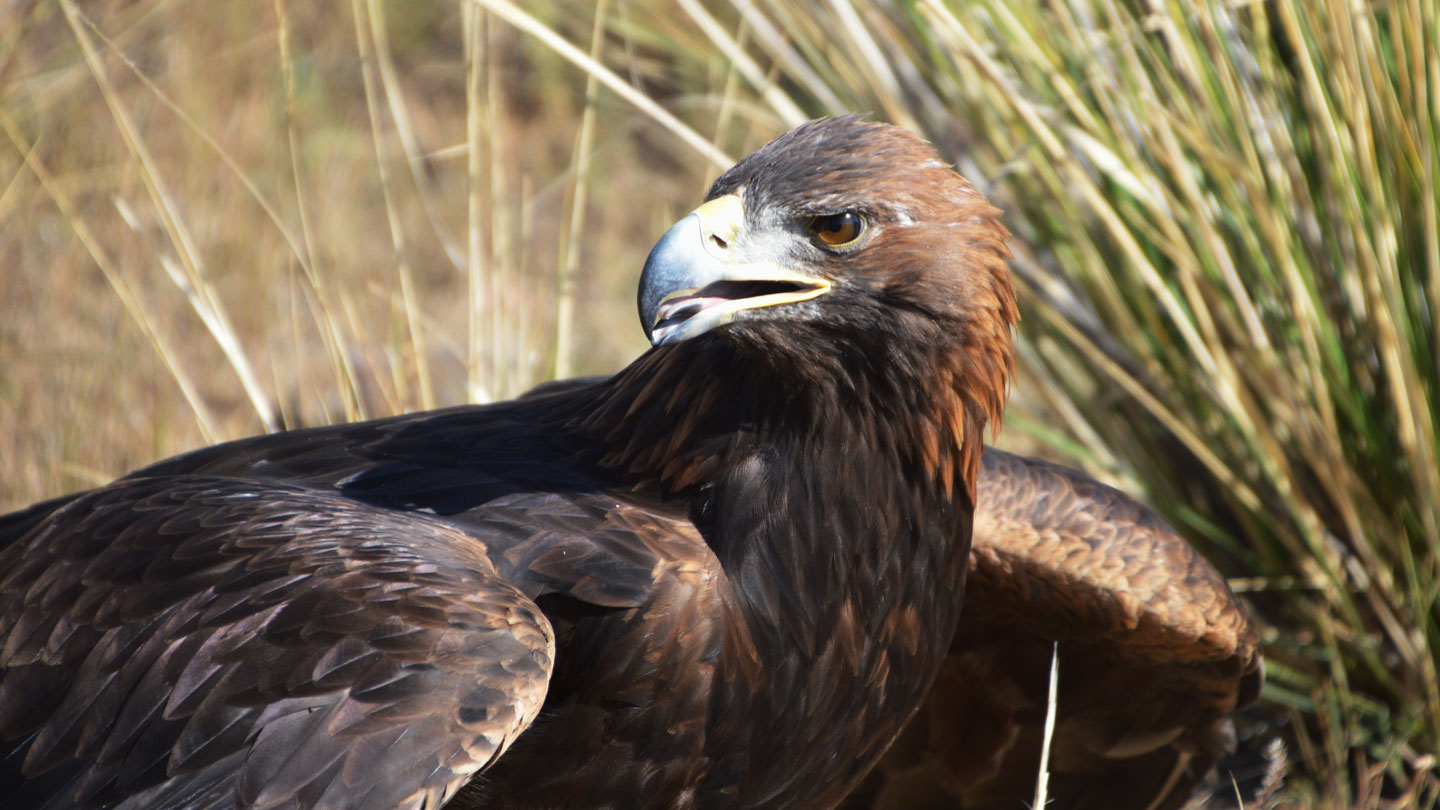
In the vast, sun-scorched expanse of Nevada’s Dry Lake Valley, north of the glittering sprawl of Las Vegas, a heartbreaking tragedy is unfolding among the golden eagles. Once a thriving haven for these magnificent birds of prey—the largest in North America—the valley has transformed into what experts call a “population sink,” a deadly vortex where eagles flock from afar, drawn by promises of territory and survival, only to meet untimely ends. Picture the landscape: a bone-white desert of parched earth, littered with the lifeless forms of these powerful creatures, their golden-brown plumage contrasting sharply against the arid soil. Joe Barnes, a Reno-based biologist with the U.S. Fish and Wildlife Service, describes how these highly territorial raptors arrive, thinking they’ve found a new home, but soon fall victim to unseen perils. It’s not just a few birds; from 2014 to now, the state’s golden eagle numbers have plummeted by about 10 percent, dropping from around 3,000 statewide in 2017 to an alarming decline that Barnes reckons is speeding up. Among human observers, there’s a growing sense of helplessness—witnessing nature’s majestic hunters, who soar for miles spotting prey with their sharp eyes, succumbing to forces we can’t fully control. Barnes puts the odds starkly: there’s only a 2 percent chance things are fine and dandy, but a 98 percent likelihood of a strong, ongoing decline that’s stealing these icons of the wild from our skies.
Life in Dry Lake Valley has shifted dramatically for golden eagles, turning a once-reproductive paradise into a perilous trap. These birds, with wingspans stretching up to eight feet, have historically nested and bred here, their piercing cries echoing across the cliffsides as they protected offspring and hunted jackrabbits below. But now, mortality rates soar, outpacing birth rates, leaving too few young to carry on their legacy. Barnes and his team have witnessed neighbors and friends in the raptor world express frustration and sorrow, much like how humans mourn lost family members. In ecological terms, it’s a sink—a place where arrivals dwindle fast, unable to sustain themselves before they perish. The valley’s charm, once a quiet refuge from the chaos of urban Nevada, now feels tainted, as if the land itself has betrayed the eagles that have called it home for generations. Visitors report a eerie quiet, with fewer majestic silhouettes wheeling overhead, replaced by an unsettling array of scattered carcasses. This isn’t just wildlife loss; it’s a reminder of how fragile our connections to the natural world are, and how one valley’s plight mirrors broader environmental cracks.
To unravel this mystery, Barnes and wildlife researchers like James Golden from Colorado State University embarked on daring, hands-on efforts to track the eagles, infusing their work with the grit and determination of adventurers-turned-scientists. Under the moonless cover of night, they snuck up on the wary birds—creatures with eyes so keen they can spot a mouse from two miles away—carefully capturing them without alerting their sharp senses. “You’ve got to do it all under the cover of darkness,” Barnes explains, his voice tinged with the thrill of covert operations, recalling how every piece of clothing and equipment had to be camouflaged to blend into the shadows. For the eaglets, the team rappelled down sheer cliff faces to the nests, hearts pounding as fierce winds threatened to blow the fledglings out of harm’s way. Golden remembers those tense moments vividly: “We get up this cliff, and the wind was just ripping… sitting there trying to figure out if it’s safe for the birds because they’re pretty young. And they’ll spread their wings as a defense to make themselves look big, and they’ll get blown right out of the nest.” Buckling tiny backpacks packed with transmitters onto the chicks and adults, they attached mini-devices that would beam data hourly—speed, location, altitude—transforming each eagle into a flying GPS beacon. In total, they tagged 43 adults across Nevada, a painstaking process that built camaraderie among the researchers, who shared laughs and near-misses over campfires. Thirty of those tagged birds have since died, mostly from human-related causes, weighing heavily on the team’s spirits as they bonded over the eagles’ individual stories.
From these transmitters, a clearer picture emerged—one that humanized the eagles’ lives and illuminated how Dry Lake Valley’s perceived stability was an illusion. The tracking revealed 18 distinct territories encircling the valley like a protective necklace, where each bird patrolled its domain fiercely, much like neighborhood watchdogs defending their turf. But when an eagle perished, another would swoop in from neighboring regions to claim the spot, maintaining the appearance of steady populations in surveys. “Without transmitters,” Barnes notes with a mix of awe and regret, “eagles are indistinguishable. When one bird dies and its territory is taken over by another, the new occupant can be mistaken for the old one, so the loss isn’t accounted for.” It was a lightbulb moment for him: “Holy cow, yes, they’re maintaining occupancy, but they’re obviously coming from somewhere else.” Researchers like ecologist Perry Williams at the University of Nevada, Reno, crunched the numbers, blending birth, death, and migration data into a compelling narrative of loss. For the team, it felt personal—these weren’t just data points but majestic beings with personalities: the bold territorial defender, the patient parent tending to chicks on windswept cliffs. This revelation deepened their commitment, turning abstract decline into a tale of hard-won truths, as if the eagles themselves were whispering their struggles through the technology.
The causes behind this haunting decline weave a tapestry of modern challenges that intersect with the eagles’ daily existence, embedding their lives within a broader human-nature conflict. Wildfires rage more frequently, scorching habitats and driving prey away; droughts parch the land, leaving vegetation brittle and water sources scarce; overhead powerlines become lethal guillotines for birds diving at high speeds; and lead from ammunition poisons them through contaminated carrion. In the last five years, a viral outbreak devastated rabbit populations—the golden eagles’ favorite meal—leading many to starve slowly, their once-muscular bodies wasting away. Barnes speculates this stress triggers profound changes in their lifecycles: “Eagles are unique in that they will take years off. So, if conditions are just awful… the female simply won’t lay eggs that year. And sometimes it’ll be multiple years, half a decade.” Imagine the heartbreak of watching a devoted eagle pair postpone parenthood not out of choice, but necessity, their sharp instincts signaling danger in every rustle of wind. Developers’ push for solar energy fields, like the proposed 104-square-kilometer installation in Dry Lake Valley, raises red flags, threatening to disrupt nesting sites and migration paths. Barnes warns, with genuine concern for future generations, “What scares me is that this type of land conversion, if you don’t do it wisely, can have really serious local impacts to wildlife and ecology.” For those who’ve studied the eagles up close, it’s like mourning a neighbor’s tragic fate—each loss a sting, reminding us of our shared planet’s vulnerabilities.
Despite these dire trends, there’s a flicker of hope and ongoing vigilance, as Barnes and his colleagues press on with fieldwork that feels like a heartfelt mission. Late January saw him back in Dry Lake Valley, braving the bitter cold to check nests, observe behaviors, and analyze diets—a routine that mirrors a family’s check-in on loved ones during tough times. “Very low jackrabbit numbers, poor vegetation growth, and extremely dry conditions,” he reports, yet the eagles endure, defying the odds with silent resilience, much like hardy pioneers clinging to dreams. He’s rooting for developers to build the solar project cautiously, ensuring eagles aren’t displaced when ground finally breaks. Amid newsletter sign-ups and sponsor messages promoting awareness, the community’s collective worry fuels action. Barnes’s dedication underscores a human element: not just studying birds, but safeguarding wild wonders for our children’s eyes to marvel at. As he continues to read the eagles’ silent stories from transmitters and cliffside vigils, one hopes for a turnaround, where Nevada’s skies once again echo with the triumphant cries of thriving golden eagles. In this vast valley, their survival hangs in the balance, a poignant reminder that every creature deserves a chance to soar unburdened.