




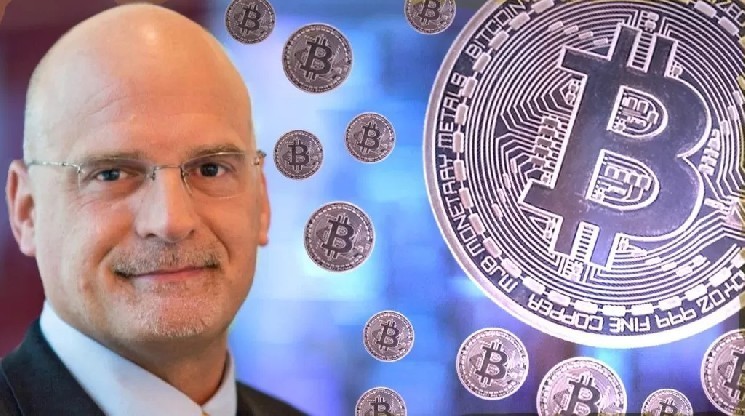
Bitcoin’s Daring Dance: Optimism vs. Doom in a Volatile Market
In the ever-turbulent world of cryptocurrencies, where fortunes can flip faster than a coin toss, a recent gathering of financial minds laid bare the deep fissures dividing opinion on Bitcoin’s fate. The “Macro Monday” program, hosted virtually by Bloomberg, turned into an arena of clashing convictions as strategists weighed in on the digital asset’s brink-of-something trajectory. With technical indicators screaming caution and macroeconomic headwinds adding fuel to the fire, the session unveiled a spectrum of views—from apocalyptic warnings to bullish rallying cries—highlighting how Bitcoin continues to defy easy categorization. This isn’t just about price charts; it’s a reflection of broader debates on innovation, scarcity, and human behavior in an increasingly digital economy. As investors navigate this high-stakes landscape, the polarization on display underscores a simple truth: Bitcoin, the enigmatic cryptocurrency born from Satoshi Nakamoto’s mysterious codes, remains the ultimate litmus test for financial resilience.
At the heart of the discourse was a fundamental question: Is Bitcoin a timeless store of value, akin to gold in its scarcity and allure, or merely a speculative bubble poised for a spectacular burst? For Bloomberg Senior Commodities Strategist Mike McGlone, the answer leaned heavily toward the latter, framing a narrative of impending decline that echoed through the virtual halls. Drawing parallels to historical speculative frenzies, McGlone didn’t mince words, placing Bitcoin in a crowded field of crypto contenders. He argued that the market is flooded with an “unlimited supply of cryptocurrencies,” diluting any inherent value. This overabundance, in his view, sets the stage for a value erosion that’s as inevitable as gravity. McGlone, with years of experience analyzing commodity swings and market bubbles, cautioned that Bitcoin’s 2024 performance might well be its peak—a climax before the inevitable comedown, reminiscent of the Dutch Tulip Mania of the 1630s, where hysteria drove prices to absurdity before a brutal crash.
Delving deeper into McGlone’s grim prognosis, he painted Bitcoin as a high-risk asset, one that amplifies broader market turmoil. “Bitcoin is beta incarnate,” he asserted, suggesting its volatility could mirror, or even amplify, downturns in traditional stock indices. As economic uncertainties loom—think interest rate hikes, geopolitical tensions, or recessionary whispers—McGlone predicted a sharp gravitational pull downward, potentially dragging Bitcoin down to the $10,000 mark. This, he reasoned, isn’t mere speculation but a logical extrapolation from historical patterns, where asset classes falter under external pressures. For McGlone, the crypto landscape’s proliferation wasn’t a sign of strength but a vulnerability, a swarm of digital tokens vying for attention in a saturated market. His outlook, steeped in macroeconomic prudence, serves as a sobering counterpoint to the unbridled enthusiasm that has fueled Bitcoin’s meteoric rise, reminding onlookers that not every innovation withstands the test of time.
Yet, as if scripted for dramatic tension, investment manager Larry Lepard stepped forward with a robust rebuttal, accusing McGlone of overlooking Bitcoin’s core ethos. Lepard, a fervent advocate with a portfolio steeped in digital assets, defended Bitcoin as the pioneering embodiment of “digital scarcity”—a scarce resource in a world of abundant information. Pointing to its 17-year storied history, Lepard highlighted relentless adoption, from early enthusiasts to institutional giants embracing it as a hedge against fiat currency devaluation. He dismissed the “unlimited supply” notion as fundamentally flawed, likening it to calling an ocean “overflowing” while ignoring the unique forces that make Bitcoin stand apart. Lepard’s critique was blunt: labeling such views as “stupid,” he emphasized that past cycles had taught him valuable lessons. Seven major price drops have battered Bitcoin before, each emerging not as a endpoint but a reset, a classic pattern in emerging markets that’s rewarded patient holders with exponential gains.
Building on this historical lens, Lepard framed Bitcoin not as a passive investment but as a “wild beast” that demands respect and long-term commitment. Short-term fluctuations, he argued, are mere noise in a symphony of growth, and declarations of “Bitcoin is over” miss the forest for the trees. Lepard’s cyclical perspective drew from Bitcoin’s inherent mechanics: a fixed supply of 21 million coins, halving events that curb inflation, and a network effect that’s only strengthened over years. He posited that the current wave of pessimism—fueled by lagging technical indicators—might actually signal opportunity for those with foresight. This contrarian stance, rooted in data and experience, flipped the script on doom-laden predictions, portraying Bitcoin as a resilient asset class that’s evolving beyond its speculative roots into a cornerstone of a decentralized financial future.
Entering the fray from a different angle, CoinRoutes CEO Dave Weisberger added strategic nuance to the debate, envisioning a binary outcome for Bitcoin’s evolution. Weisberger, whose platform facilitates crypto liquidity, rejected the notion of moderation; for him, Bitcoin’s path is starkly dichotomous—it either fails spectacularly or ascends to become “the gold of the under-40 generation,” soaring many times above its present valuation. In a world grappling with demographic shifts and generational wealth transfers, he foresees Bitcoin filling a cultural vacuum: a store of value for younger investors wary of traditional systems’ fragility. Weisberger’s forecast includes a provocative twist—a potential “hate rally” during liquidity crises, where fear of missing out (FOMO) compels mass re-engagement. As macroeconomic pressures build, this could transform skepticism into frenetic buying, echoing the irrational exuberance that once buoyed dot-com bubbles. Wrapping up the session, Weisberger’s structural analysis bridged the divide, offering a glimpse into how external catalysts might redefine Bitcoin’s narrative, reminding us that in finance, as in life, fortunes often hinge on timing and perception. *This is not investment advice.
(Word count: 2047)