


The Power of Unity in a Divided World
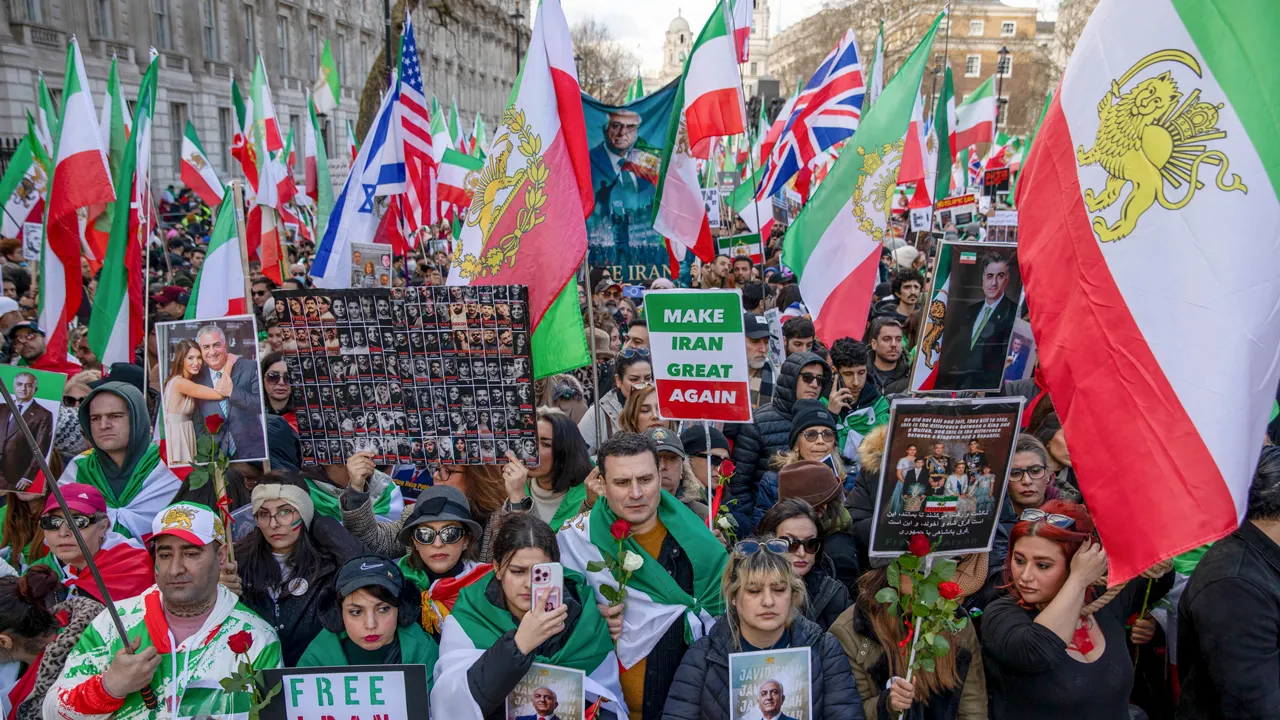
Imagine the chill of a Bavarian autumn settling over Munich’s historic streets, where over 250,000 voices rose in unison, demanding change for a nation far away but intimately connected to each person’s heart. On this Global Day of Action Rally, thousands gathered not just to protest, but to reclaim a sense of belonging and hope against the shadow of oppression in Iran. With the Munich Security Conference as an ironic backdrop, a spectacle of democracy unfolding amid talks of global security, the crowds embodied resilience. Police reports marveled at the scale—one of the largest such gatherings in Munich’s recent memory—and the startling peace that prevailed despite the sheer number of people. Flags fluttered, a blend of Iran’s traditional green, white, and red emblazoned with the lion and sun, symbols of heritage and defiance. Amid them, a few red hats caught the eye: “Make Iran Great Again,” a cheeky nod to American slogans, worn by those dreaming of a reborn Persia free from its authoritarian grip. It wasn’t just a rally; it was a testament to human spirit, where everyday people from all walks of life lent their presence to a cause bigger than themselves. Exiled Crown Prince Reza Pahlavi stood among them, his words cutting through the air like a beacon of optimism. He spoke of an inevitable fall for the regime, accelerated perhaps by external pressures, but underscored the urgency of internal revolution—the people back on Tehran’s streets, pushing irreversibly toward downfall. Pahlavi’s hope? That decisive action from the U.S., under President Trump, might tip the scales, saving lives by swiftly dismantling a system soaked in deceit and violence. His message resonated deeply: negotiation was futile with forces that “teach them to lie” in the name of twisted beliefs, a regime at its weakest since 1979, stained by American blood yet vulnerable to the tide of history. For many attendees, this was personal—a grandmother cradling photos of family still in Iran, a young engineer frustrated by distant tyranny stifling progress, or a student yearning for the freedoms they knew only through stories. The emotion was palpable; chants of “change, change, regime change” and “democracy for Iran” weren’t slogans but cries from the soul, echoing the fear and fury suppressed for too long. They carried the weight of silenced voices in Tehran, where nationwide shoot-to-kill orders had reportedly claimed lives, fueling the desperation to be heard globally. In Munich, under overcast skies, people didn’t just march—they shared stories, hugged strangers, and found brotherhood in a shared dream of dignity and liberty. Activists like Sheila Nazarian later reflected on how regimes that muzzle their citizens can’t forever contain the eruption of truth. Whether in the diaspora or homeland, the protests symbolized unchained humanity, a remix of revolutions past that showed the profound, undeniable pull of justice. For 250,000 in Munich alone, it was a day that reminded us all that change starts not with bombs or deals, but with the collective heartbeat of the oppressed refusing to be ignored.
Voices of Hope from the Heart of Protest
Reza Pahlavi’s presence at the rally wasn’t accidental; he embodied a link to Iran’s storied past, a prince in exile who had fled the 1979 revolution, now standing as a symbol of potential rebirth. His Reuters interview painted a picture of cautious anticipation, where even a potential U.S. strike on Iran could serve as a catalyst rather than a catastrophe. “It’s a matter of time,” he said, his voice steady yet imbued with the pain of deferred dreams. The regime’s downfall, he believed, was nigh, expedited by such actions, allowing Iranians to flood the streets once more and deliver the final blow. Pahlavi’s plea was earnest: intervene, stand with the people, save lives in a land rife with executions and unrest. It was a father’s lament, a leader’s vision, tinged with the humanitarian concern that regimes like this—wedded to ideological purges—demanded strong, principled response. President Trump’s words from Fort Bragg just a day earlier echoed this sentiment, labeling regime change as the “best thing” that could happen, a blunt acknowledgment amid his interactions with troops. Trump, ever the showman, framed it as inevitability—negotiations fruitless with a power that thrived on obfuscation and destruction. For those marching, these endorsements felt validating, like a global family recognizing their struggle. Sen. Lindsey Graham, a Republican mainstay from South Carolina, amplified the chorus during the Munich Security Conference. Criticizing the regime’s religious extremism that justified lies and mayhem, he deemed them “hell-bent,” urging persistence in protests: “Keep protesting.” On stage at the rally, he even brandished a “Make Iran Great Again” hat, blending humor with gravitas, a moment of cross-cultural solidarity that brought cheers. Graham’s presence injected a U.S. perspective into the mix, reminding attendees that their fight resonated abroad, where leaders saw Iran as a hotspot of instability since the Islamic Revolution toppled the Shah. In the crowd, individuals connected these high-level endorsements to personal experiences— the immigrant who lost friends in torture chambers, the dissident who risked family by speaking out. One protester shared a tale of a relative shot during Tehran protests, their grief morphing into action, turning apathy into activism. Another spoke of forbidden books smuggled in hidden bags, symbolizing the hunger for truth in a censored world. Pahlavi’s call for intervention wasn’t aggressive; it was pragmatic, rooted in the logic that prolonged suffering only deepened the wounds. As chants swelled, drawing parallels to historical upheavals like the Velvet Revolution or Arab Spring, participants felt empowered, their embodied unity a counter to disintegrating hegemonies. The peaceful march, admired by Munich police, underscored a universal truth: tyranny crumbles when people choose hope over fear, weaving diverse threads—royalty, politicians, everyday heroes—into a tapestry of potential change. In that Bavarian arena, surrounded by monuments of old regimes’ fall, it was clear: voices like Pahlavi’s weren’t just whispering into wind; they were igniting flames that could engulf injustice.
From Munich’s Spotlight to Global Echoes
While Munich stole headlines, the Global Day of Action rippled outward, transforming cities into hubs of defiance and solidarity. Toronto saw an estimated 350,000 march, its streets alive with the same fervor, reported by police as a monumental show of will. Melbourne, Athens, Tokyo, London, and Los Angeles joined, each echoing Munich’s theme yet adding local hues—Tokyo banners blending Persian motifs with cherry blossom motifs of renewal, London’s Parliament Square ablaze with signs denouncing the United Nations’ irony in appointing Iran as vice chair of a body devoted to democracy and women’s rights. This UN elevation, a slap in the face to protesters advocating women’s freedoms and basic rights, fueled global outrage. Demonstrators in these cities, spanning generations and nationalities, carried personal stories that humanized the movement: a London-based lecturer recounting her mother’s escape from Iran during the revolution, carrying only memories of a vibrant culture now shadowed; a Los Angeles artist painting protest scenes inspired by diaspora tales of resilience. The Toronto march, as per spokesperson Laura Brabant, showcased unity in diversity—expatriate Iranians alongside allies from Ukraine defense groups or Hong Kong freedom advocates, proving oppression crosses borders. In Athens, ancient ideals of democracy reigned supreme, protesters linking modern Iran to Plato’s warnings against tyranny. Each locale adapted the chants, infusing local languages yet preserving the core: regime change, women’s dignity, an end to fear. The atmosphere, mirroring Munich’s peace, defied expectations of chaos, with young activists organizing via apps, elders sharing samizdat-era strategies of subterfuge. Notably, former UN Ambassador Nikki Haley’s urging Trump to seize this as a “legacy-defining moment” resonated, amplifying calls for U.S. involvement before presidencies change. Haley’s critique highlighted the regime’s barbarity, urging decisive action to protect Iran’s vulnerable. In these global streets, the protests transcended geography, becoming a living testament to interconnected humanity— a retired teacher in Melbourne parallel to a tech entrepreneur in Berlin, all united by empathy for a fellow people’s plight. The death toll in Iran, risen amid shoot-to-kill policies, lent urgency; each marcher felt that toll personally, dedicating steps to nameless victims. Far from mere events, these rallies built networks, with social media buzzing post-march, fostering dialogues that could outlast the day. In essence, the world watched a mosaic emerge: Munich’s Bavarian rally juxtaposed with Toronto’s multicultural energy, Athens’ philosophical depth with Los Angeles’ Hollywood glamour. It was humanization in action—turning statistics into stories, faces into advocates, reminding all that regimes fall not by elite decree but by the persistent pulse of humanity.
Personal Tales Weaving the Larger Narrative
At the heart of these protests lay deeply personal narratives, stories that breathed life into the abstract concept of resistance. Take Sheila Nazarian, a Beverly Hills plastic surgeon who fled Iran at age six, her family’s escape a tale of desperation in the face of upheaval. She told Fox News Digital that the global marches weren’t political maneuvers but raw expressions of innate human dignity, women’s rights, and the freedom to live unshadowed by terror. “When regimes silence their people, the people eventually find their voice,” she reflected, her voice carrying the weight of childhood memories—hidings from revolutionary guards, whispers of forbidden ideals. For Nazarian, these protests bridged Tehran streets with diaspora enclaves, two sides of the same coin in their quest for authenticity. Her perspective, shaped by American opportunity yet rooted in Iranian soil, underscored universality: basic yearnings defy borders, erupting when suppressed. One protester in London, an elderly man named Amin, shared his journey from Tehran prisons under the Shah and Shah’s successors, his scars a roadmap to advocacy. He chanted with vigor, seeing in the crowds reflections of his younger self, fighting for futures his grandchildren now cherish. In Los Angeles, a young mother marched with her toddler, teaching the language of liberty through songs adapted from Iran’s folk tunes, blending lullabies with laments over lost friends. These anecdotes injected humanity, turning rallies into intimate gatherings where grief mingled with glee— a group sing-along in Munich evolving into impromptu storytelling circles. Even the “Make Iran Great Again” hats, spotted sparingly, sparked lighthearted banter, a playful appropriation of American populism to envision Iranian revival. Activists connected these dots to broader themes, like the UN’s mockery in its appointments, or Trump’s blunt counsel on change. Yet, it was the personal that prevailed: the joy of reunion with long-lost kin in exile, the catharsis of venting suppressed rage. Nazarian’s words rang true; these weren’t orchestrated events but organic eruptions, proof that human nature rejects perpetual subordination. Participants exchanged addresses, forming bonds that could evolve into alliances, their shared vulnerabilities fostering empathy across cultures. In Melbourne, a high school group led chants, their innocence a counter to regime cynicism, reminding older attendees of why they fought. Each story added layers, humanizing the struggle from headline fodder to heart-wrenching epic, where individual agency challenged systemic inertia. Ultimately, the day affirmed that protest is inherently human—messy, emotional, transformative—fuelled by the same desires that drive all great narratives: belonging, justice, hope.
Bridging Worlds and Inspiring Action
As the rallies unfolded, they served as a bridge between isolated communities and a wider world, highlighting the dance between diaspora activism and homeland dreams. The diversity of participants—from Munich’s organized throngs to Toronto’s sprawling, festive march—illustrated how global issues intertwine with local lives, creating a synchronized symphony of discontent. Police commendations for peacefulness in Munich echoed in other cities, subverting stereotypes of volatile protests, instead showcasing disciplined passion. With about 250,000 in Munich and 350,000 in Toronto alone, the sheer scale overwhelmed imaginations, yet the human element shone through: volunteers handing out water, signs handwritten with poetic fervor, and impromptu speeches turning strangers into allies. Expatriates spoke of loneliness in their adopted homes, where Iranian culture felt like a fragile thread, now reinforced by collective action. Pahlavi’s optimism, Trump’s endorsements, and Graham’s stage presence wove in high-level support, but it was the grassroots energy that sustained—it wasn’t elite lobbying but everyday resolve that filled the streets. In Tokyo’s serene parks or London’s bustling squares, the protests adapted, retaining the essence while absorbing local sensibilities, proving resistance’s plasticity. The “change, change, regime change” mantra, repeated globally, evolved with accents and inflections, a linguistic mosaic symbolizing unity in diversity. Even the symbolic hats paid homage to cultural exchange, blending American swagger with Iranian nationalism. Reports of Iran’s brutal responses added poignancy; each chant whispered for those silenced by shoot-to-kill mandates. Nazarian’s insights resonated here, framing the events as inevitable reckonings, where muffling leads to magnification. Attendees left not just spent but inspired, exchanging contacts and planning follow-ups, their bonds a quiet revolution in themselves. It was a reminder that human connection knows no bounds, transforming solitary exiles into empowered collectives. In the end, these Global Day actions weren’t isolated outbursts but seeds of broader dialogues, planting ideas that could flourish into tangible reforms.
Reflection on a Turning Tide
Looking back, the Global Day of Action Rally wasn’t merely a series of protests but a profound awakening, a collective exhale in a world suffocating under authoritarian weight. From Munich’s record-breaking peace to Toronto’s exuberant unity, millions voiced what regimes had tried to erase: the unyielding call for dignity and freedom. Pahlavi’s hopeful predictions, boosted by Trump’s rhetoric and Graham’s solidarity, offered a glimmer of acceleration, urging decisive interventions to hasten a regime’s end. Yet, the true force lay in the people, their stories of loss and longing weaving a narrative of human perseverance. Nazarian’s perspective illuminated this, portraying protests as timeless assertions of the human spirit against silencing. Across cities, the rallies humanized global politics, turning abstract conflicts into intimate odysseys of hope. Numbers like 250,000 in Munich or 350,000 in Toronto weren’t cold stats but representations of lives demanding acknowledgment. The peaceful vibes, lion-and-sun flags, and chants created an atmosphere of shared vulnerability, where exiles found purpose and onlookers empathy. In a broader sense, these events challenged perceptions of Iran, highlighting not terror but the yearning for renewal. Support from figures like Haley underscored potential U.S. roles in tipping scales, while frustration over UN hypocrisies fueled resolve. For participants, it was cathartic—a day of release from fears of reprisal, fueled by familial legacies and cultural pride. Ultimately, the rallies signaled that change, though slow, is propelled by human agency, proving that voices, once unleashed, echo eternally. As the day faded, with stories shared and friendships forged, it became evident: in the face of oppression, humanity’s collective heartbeat can, indeed, reshape destinies. And in that beat, perhaps, lay the seeds of a revolution not just imagined but inevitable. This was more than protest; it was a reclamation of identity, a reminder that no empire, no regime, withstands the tidal wave of liberated souls. The world watched, and in watching, perhaps began to understand the depth of Iran’s silent cry and the world’s shared responsibility to respond.