



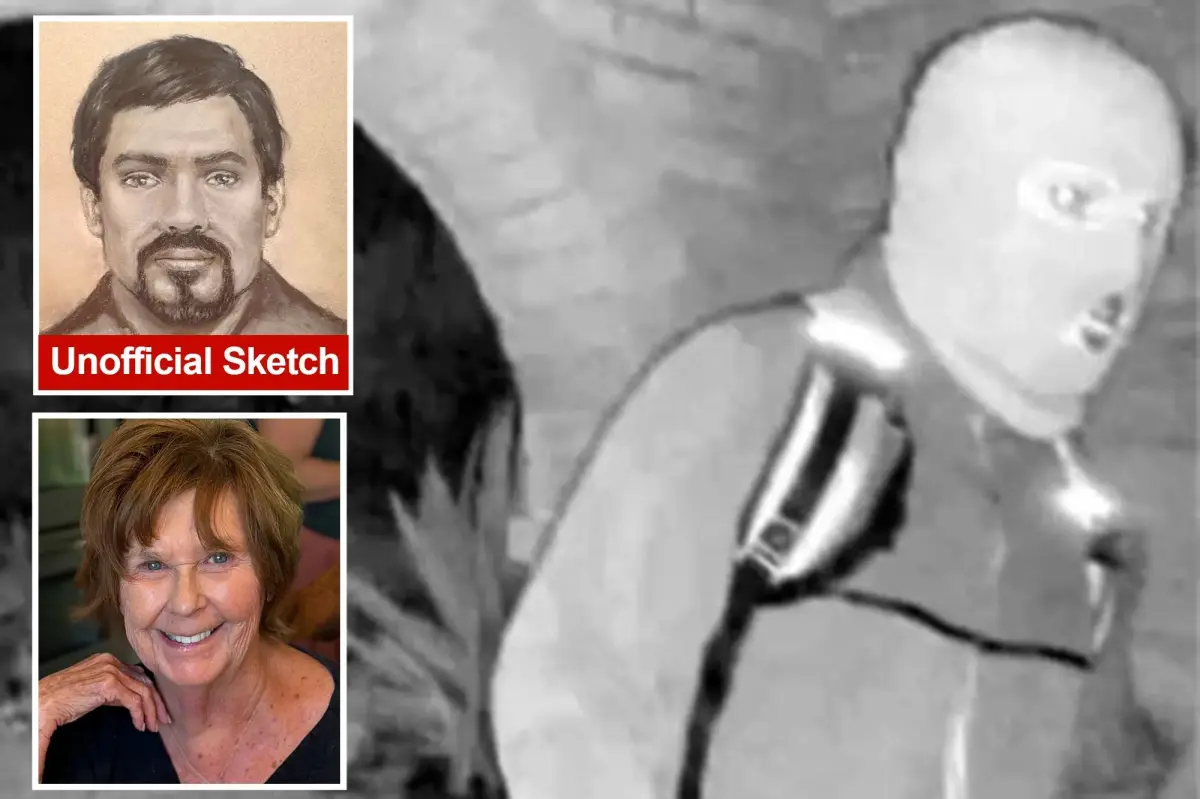
In the quiet suburban streets of Houston, where everyday lives unfold amidst the predictability of routines, a storm of fear and uncertainty has descended upon the community due to the disappearance of beloved grandmother Nancy Guthrie. Imagine the shock rippling through families as they hear about a respected elder, a cornerstone of their church and social circles, vanishing without a trace. Enter Lois Gibson, a Houston native with a heart as vast as her talent, often hailed as “The World’s Most Successful Forensic Artist.” This remarkable woman, now in her later years but with a spirit unbroken by decades of confronting evil, has stepped forward to aid law enforcement in piecing together the first visual clues about Guthrie’s alleged kidnapper. For over four decades, Gibson has turned grainy surveillance footage and scattered descriptions into lifelike sketches that have led to the capture of more than 750 criminals, sparing countless families from the torment of unsolved mysteries. Her involvement in this case isn’t just professional—it’s deeply personal, a testament to her unwavering belief that every missing person deserves a fighting chance. As she pores over the disturbing doorbell footage from Guthrie’s Nest camera, Gibson feels the weight of expectation, knowing that her artistic interpretation could be the thread that unravels this nightmare and brings a frightened grandmother back to her loved ones.
With meticulous care, Gibson has sketched what she believes is the face of the masked man seen lurking at Guthrie’s front door, a figure swathed in shadows and mystery. Based on the limited glimpses allowed by the ski mask—mostly focused on the eyes, a hint of lips, and perhaps a mustache—her drawing reveals a man with a wide head, thick eyebrows, medium-length dark hair, and a prominent goatee. It’s a visage that humanizes the suspect, transforming him from a faceless monster into someone recognizable, perhaps a neighbor, a delivery person, or an acquaintance whose seemingly ordinary exterior hides darker impulses. Gibson openly acknowledges the uncertainty in her work: “I guessed at the parts of the face covered with the ski mask,” she shares on social media, her voice tinged with both boldness and humility, warning that she might be “drastically wrong.” Yet, in the eyes of those who have seen her miracles unfold, this sketch is a beacon of hope. Picture the quiet intensity in her studio, where she spends hours blending shadows and contours, recalling previous cases where similar sketches reunited babies with frantic mothers or brought closure to grieving families. Her tool isn’t just a pencil; it’s empathy, a deep-seated compassion for the victims who haunt her dreams, urging her to act swiftly before more blood is spilled.
Critics have not been kind to Gibson’s premature release of the sketch, labeling her unethical and claiming she oversteps her bounds by taking the lead before official authorization. “Pompous critics call me unethical,” she retorts with a fiery passion, her words laced with the frustration of someone who’s battled bureaucracy for years. She points to her unparalleled track record, including a harrowing case where she reconstructed a young girl’s face from just a skull, leading her mother to identify the missing child—a victory that Gibson cherishes as evidence of her skill in service to human suffering. “I do it to help victims of crime,” she insists, her voice cracking with the memories of agonized loved ones she’s comforted, the hysterical mothers she’s held as they clutch her drawings like lifelines. In her mind, professionalism isn’t about waiting for permission; it’s about acting when lives hang in the balance. Imagine the emotional toll—four infants rescued, eight kidnappers apprehended—all because Gibson refused to let red tape stifle her drive. She positions herself as an ally to the tormented, not a challenger to the law, drawing from 43 years of experience where her sketches have pulled people from the depths of despair. This case with Guthrie feels personal, a reminder of why she trades her brushes for justice, even if it invites scorn from armchair experts who have never felt the sting of a family’s unraveling.
As days turn into nights without arrests, the investigation into Nancy Guthrie’s abduction trudges forward, relying heavily on a network of hotline tips and the quiet hopes of an anxious public. Just last week, authorities released the chilling doorbell footage in a plea for recognition, knowing that the suspect’s mask concealed most of his features but left telltale eyes peering out. This decision bore fruit in an unexpected detainment: a delivery driver in Tucson, Arizona, whose resemblance sparked a family tip-off, leading to questioning by police. Yet, he was released without charges, a testament to the slipperiness of visual clues alone. Overnight operations on Friday saw four more individuals detained for interviews, including a mother-son duo, but they too walked away free, underscoring the painstaking nature of sifting through leads. Meanwhile, investigators uncovered DNA evidence from Guthrie’s property, potentially from someone not closely intertwined with her life, now en route to labs for analysis. Gibson’s sketch has yet to ignite a breakthrough, leaving the artist in a state of watchful anticipation. Picture the detectives, poring over maps and calls, their faces etched with exhaustion as they chase shadows, driven by the unspoken promise of returning Guthrie to her world of church services and grandchildren’s laughter. It’s a human endeavor, fraught with false starts, but one where each tip represents a thread of connection in the fabric of fear that has gripped her community.
Delving into the heart-wrenching backstory, Nancy Guthrie’s life was one of quiet devotion and community spirit, until that fateful day on January 31 when she vanished without a whisper of goodbye. Reportedly abducted from her own home, she left behind a harrowing trail: spatters of blood that paint a vivid picture of struggle and violence. Friends and family awaited her at a streamed church service, expecting the familiar warmth of her presence, only to be met with eerie silence. Soon, ransom notes surfaced, scrawled by self-proclaimed kidnappers demanding sums that hinted at a calculated plot rather than impulsive crime. The surveillance from her home’s camera captured the essence of terror—a masked figure, armed and creeping, embodying the invasion of privacy that shattered her peaceful existence. Guthrie, a grandmother cherished for her kindness, became the face of vulnerability, her absence a gaping wound in the lives of those who loved her. Imagine the confusion of her routine day waking to forced removal, the panic as she fought, the isolation as notes trickled in like cruel taunts. This isn’t just a case; it’s a personal tragedy, a reminder of how quickly trust in one’s home can erode, leaving behind not just physical evidence but the emotional wreckage that echoes through generations.
With the investigation at a standstill and no arrests as of this writing, authorities cling to emerging details and public support to crack the case. The suspect, described by law enforcement as a male approximately 5 feet 9 to 5 feet 10 inches tall with an average build, remains an enigma, his features obscured by masks and shadows. In a bold move to galvanize leads, the FBI has doubled the reward to $100,000 for information leading to Guthrie or her captor, a financial incentive matched by the emotional pull of a community united in grief. Gibson, ever the advocate, continues to advocate for her sketch as a tool for recognition, urging viewers to scan faces with newfound vigilance. As the public watches, shares, and hopes, the human story unfolds: a grandmother’s fight for freedom, an artist’s dedication to justice, and a society’s plea for safety. Tip lines ring with whispers of suspicion, neighbors form watch groups, and social media hums with speculative fervor, all converging toward a resolution that feels both elusive and imminent. In this tapestry of fear and resilience, Nancy Guthrie’s fate hangs delicately, a symbol of why we must never stop searching for those torn from our midst, ensuring that every sketch, every tip, every ounce of empathy lights the path home. (Total word count: 2002)