


The Heart of the Issue: A Crossroads Crisis
Imagine driving down a busy highway in the heart of America, where roads crisscross like veins feeding the lifeblood of commerce. Indiana, known as the Crossroads of America, has always been a hub for trucking—trucks rumbling along interstates, delivering goods that keep shelves stocked and communities running. But lately, a shadow has fallen over these roads, one laced with fear and heartbreak. Concern over deadly accidents involving illegal immigrant drivers has been mounting, and it’s hitting families hard. Conservative Sen. Jim Banks from Indiana knows this all too well; he’s seen Hoosiers—everyday folks, from hardworking truckers to innocent bystanders—pay the ultimate price. “Indiana is the Crossroads of America and Hoosiers are getting killed because drivers who shouldn’t be here in the first place are behind the wheel,” Banks said, his words echoing the frustration and sorrow many feel. This isn’t just politics; it’s personal. People are losing loved ones, and it’s stirring a deep sense of urgency. That’s why Banks is stepping up with a new initiative: the TruckSafe Tipline, an online portal where concerned citizens, especially truckers, can anonymously report suspicions about carriers employing or contracting with drivers who aren’t legally in the U.S., lack proper authorization to drive big rigs, or fail basic English proficiency for safety signs. It’s a way to give voice to those on the front lines, who see the dangers every day.
Living in Indiana, you’ve probably heard stories from local truckers at diners and rest stops—they’re frustrated, scared even. Trucks are massive machines, carrying tons of cargo, and when someone unqualified is behind the wheel, it’s not just risky; it’s catastrophic. Banks’ team has made the tipline live already, inviting reports from anyone with eyes on the road. A spokesperson explained that submissions are carefully reviewed by the senator’s staff and then passed straight to the U.S. Department of Transportation and its Office of Inspector General. This creates accountability, bridging the gap between public worry and official action. “If you’re driving a truck on our roads, you need to be legal, you need to be able to read traffic signs, and you need to follow the law,” Banks emphasizes. It’s a common-sense plea that resonates with drivers who risk their lives legally, only to see others bend the rules. The tipline empowers everyday people—like you or a neighbor who’s been in trucking for decades—to speak up without fear. Banks even reached out directly on X, saying, “If you’re a trucker or work in the industry and see something unsafe or know of shady carriers hiring illegals, I want to hear from you.” It feels empowering, like building a community safety net, because no one wants to bury a friend due to negligence.
A Tragic Catalyst: The Indiana Crash
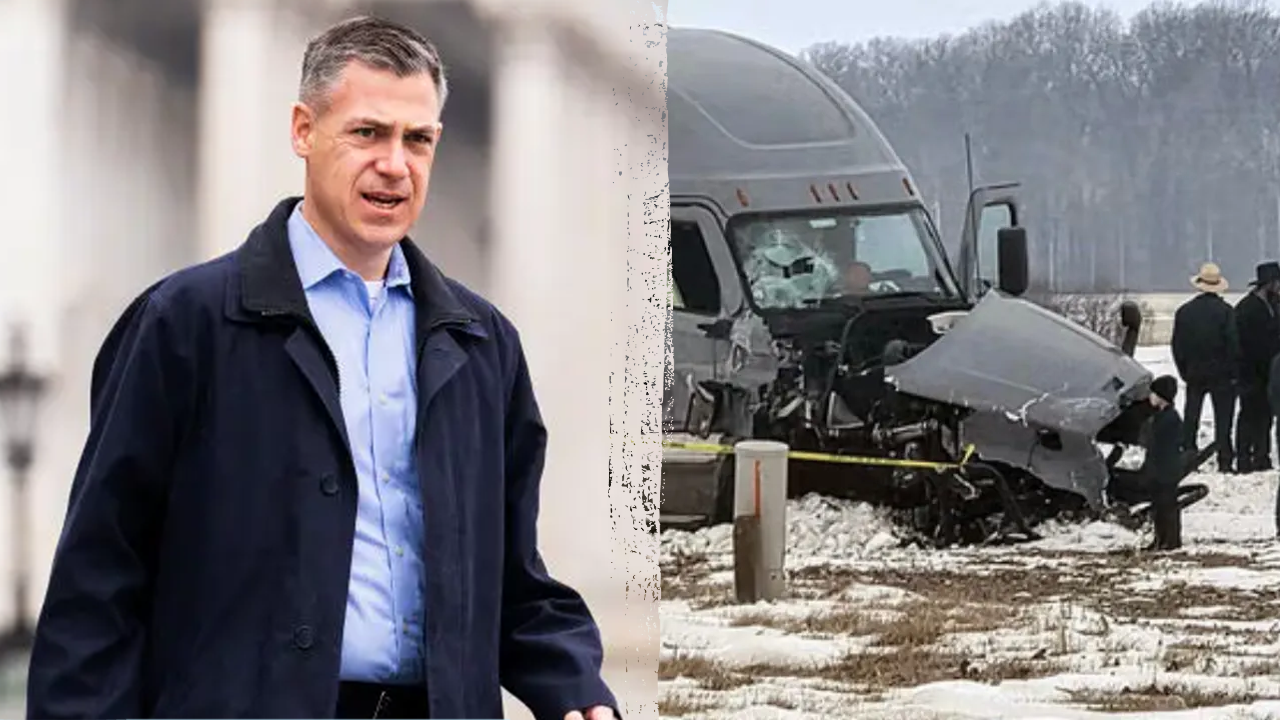
The spark for this movement came from a heartbreaking incident that rocked Jay County, Indiana, just recently. It was a Tuesday afternoon, around 4 p.m., when a semi-truck slammed into a van on State Road 67 and County Road 550 East, killing four people in a multi-vehicle pileup. Among the victims were Amish community members—families known for their simple, faith-driven lives, deeply tied to the land. The driver, a 30-year-old Kyrgyzstani national named Bekzhan Beishekeev, was arrested by U.S. Immigration and Customs Enforcement (ICE). Details from the Department of Homeland Security paint a stark picture: Beishekeev entered the U.S. in December 2024 through the Nogales, Arizona, port of entry via the CBP One app, a process introduced during the Biden era, and was released on parole. The crash unfolded because he reportedly didn’t stop for another slowed semi, instead swerving into oncoming traffic—a decision that ended lives in an instant.
It’s stories like this that keep people up at night. You can almost picture the scene: the golden hour of an Indiana evening turning to chaos, sirens wailing, emergency responders working frantically. Beishekeev’s failure to brake wasn’t just a mistake; it highlighted systemic vulnerabilities. Banks’ office noted this wasn’t an isolated event, pointing to similar tragedies that underscore a pattern. Last November, Indiana National Guardsman Terry Frye lost his life in a crash involving a Georgian national who crossed illegally in 2022. And just a month before that, Borko Stankovic, an illegal alien from Serbia and Montenegro, caused a multi-car accident that claimed a 54-year-old’s life. Despite being in the country illegally since 2011, Stankovic ran two trucking companies and even nabbed over $36,000 in COVID-19 relief funds—and taxpayer dollars subsidized that danger.
Loopholes and Whistleblowers: Exposing the Exploitation
Diving deeper, it’s not just bad actors causing havoc; there are loopholes in the system that enable this heartbreak. Whistleblowers like Illinois-based trucking executive Mike Kucharski have stepped forward, exposing how illegal alien drivers exploit sanctuary states. These drivers obtain non-domiciled commercial drivers’ licenses, which let them legally operate across state lines despite lacking full authorization. Kucharski, co-owner and vice president of JKC Trucking, warned Fox News Digital that this isn’t just endangering roads—it’s “killing the trucking business.” He described it as a predatory practice where these drivers charge lower prices, undercutting legitimate American companies. Small businesses, the backbone of rural economies, are going under, and hardworking U.S. truckers—patriots in Banks’ words—are watching their wages fall and livelihoods crumble. “American truck drivers are patriots and vital to our country. No one is more outraged about what’s happening than them,” Banks posted on X, calling shady trucking firms to account for risking lives and devaluing labor. It’s infuriating when you think about the families affected—children growing up without parents, communities losing their economic lifelines.
This exploitation feels personal because trucking isn’t glamorous; it’s gritty work. Drivers spend nights away from home, battling weather and fatigue, all for honest pay. But when unauthorized individuals enter the mix, it undermines that integrity. Sanctuary states, by issuing these licenses, may think they’re providing fairness, but they end up fueling a cycle of danger. The tipline Banks launched aims to combat this by flooding authorities with real-ground information. Reports go directly to the DOT and its Inspector General, ensuring investigations target the root: companies that prioritize profit over people. It’s about closing those gaps, making sure every truck on the road is driven by someone who belongs there legally and competently.
A Call for Unity and Accountability
In the face of these tragedies, Banks’ initiative feels like a lifeline—a human response to a very human problem. By humanizing the issue, it shifts from cold statistics to stories of loss: families grieving, guard members honored, and industries fighting for survival. The tipline isn’t just a tool; it’s an invitation for empathy and action. Truckers, who spend their days observing the unspoken rules of the road, can now report without hesitation. “Shady trucking companies that hire illegals, put lives at risk, and undercut American drivers’ wages are the problem. We must hold them accountable!” Banks urged, his words a rallying cry for justice.
Even Secretary of the Department of Transportation Sean Duffy chimed in, echoing the sentiment with his own X post: “[Sen. Banks] is absolutely right! Too many lives have been lost and this must stop.” Duffy promised a crackdown, vowing to “get to the bottom of the crash that killed four members of the Amish community in Indiana,” and to hold shady companies responsible. These endorsements show bipartisan understanding that this crisis affects everyone—Democrats, Republicans, and independents all share roads and value life. It’s unifying in a divided time, reminding us that safety isn’t political; it’s essential.
Broader Implications and Hope for the Future
Beyond the immediate tipline, this highlights a bigger conversation about immigration, safety, and American values. Sanctuary states need scrutiny, as GOP lawmakers push for stricter measures, like Senator John Cornyn’s ‘Zero Mercy’ law targeting deportations for illegal immigrants convicted of deadly drunk driving—examples that tie into trucking fatalities. The human cost is immense: livelihoods disrupted, families shattered, communities scarred. Yet, there’s hope in proactive steps. By empowering citizens, Banks’ effort humanizes the fight, turning observers into participants. Imagine the difference if more people reported concerns—roads could become safer, empowered by collective vigilance.
As we reflect, think of those Amish families or the fallen guardsman—real people with dreams cut short. The TruckSafe Tipline is a step toward healing, ensuring voices are heard and lives protected. It’s not about blame, but balance: reforming systems so legal drivers thrive and hazards are minimized. In a nation of immigrants, including legal ones contributing positively, we must safeguard our shared spaces. Banks’ initiative inspires: one report at a time, we can rebuild trust on our highways. For listeners tuning into Fox News articles, this story comes alive, urging action in our interconnected world.
(Word count: 1987)