

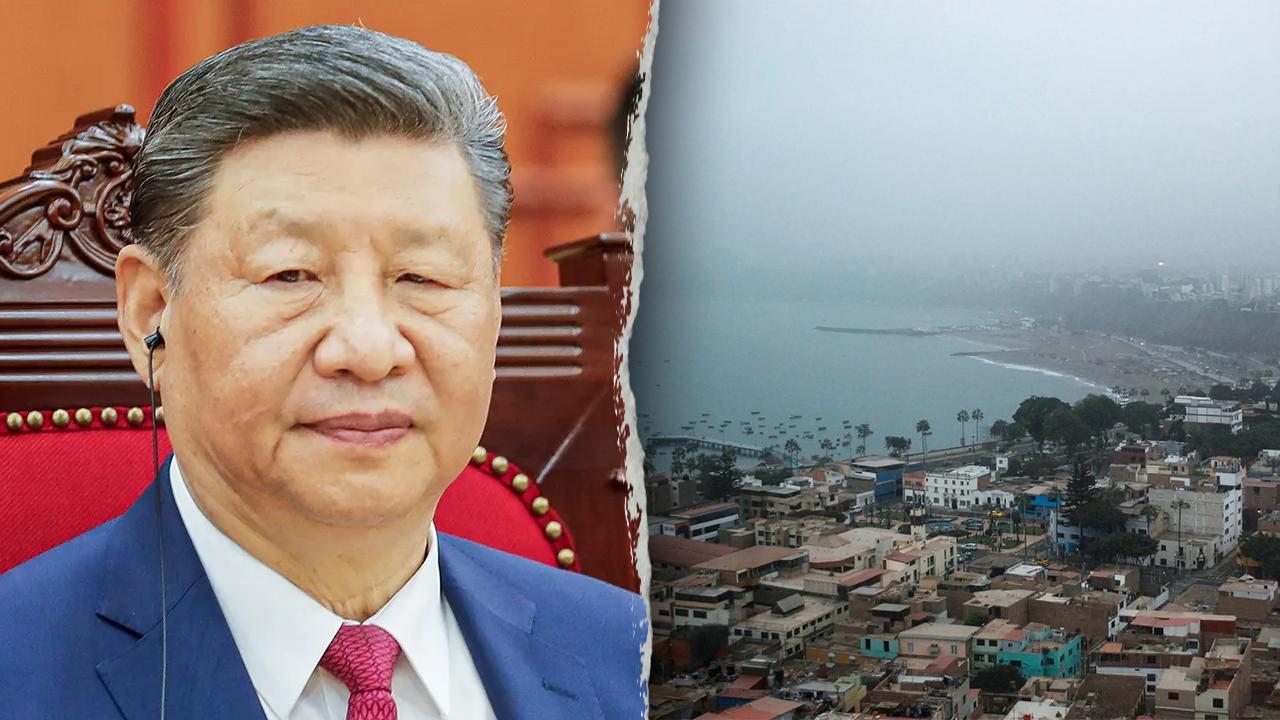
The sun sets over the rugged Andean foothills, casting a golden hue on the Pacific coastline where Chancay Bay meets the horizon. This picturesque spot, just north of Lima, Peru’s bustling capital, is home to a massive deep-water port—one that’s become a battleground in a global power struggle. In a world increasingly shaped by economic rivalries, the United States is raising alarms about China’s expanding influence here, warning that Beijing’s grip on this $1.3 billion infrastructure project could erode Peru’s sovereignty. It all started with a surprising court ruling that appears to hand significant control to the port’s Chinese operators, leaving the Peruvian government with fewer tools to regulate this vital gateway. Tensions are spiking, not just between nations, but in the hearts of those who live along the coast, wondering how a local port became the focal point of an international drama involving superpowers.
Picture this: Chancay isn’t just any port; it’s a colossal engineering feat, designed to handle the largest ships gliding across the ocean, channeling global trade through Peru’s doorstep. But in a twist that feels straight out of a geopolitical thriller, a lower Peruvian court recently ruled that this strategic asset—part-owned by China’s state-backed shipping giant, COSCO—might evade the usual regulatory oversight that governs other major facilities. This decision has U.S. officials scrambling, with the State Department’s Bureau of Western Hemisphere Affairs firing off warnings on social media, calling it a “cautionary tale” for nations everywhere. They argue that “cheap Chinese money costs sovereignty,” a phrase that’s echoed in diplomatic circles and local cafes alike. For everyday Peruvians, this means pondering what happens when foreign investments come with strings attached—ones that could redefine their country’s future, from economic opportunities to national security. The port, envisioned as a boon for jobs and trade, now symbolizes vulnerability, a reminder that in the race for influence, small nations can get caught in the crossfire.
Delving deeper into the U.S. perspective, it’s clear this isn’t just about a port; it’s a chess move in a larger conflict where ports are seen as dual-use assets—vital for commerce today, potential military leverage tomorrow. Congressman and Asia expert Gordon Chang lays it out bluntly: Chancay’s central location could redraw trade routes across the South Pacific, funneling goods in ways that favor China. He warns that in a crisis, Beijing wouldn’t hesitate to block American ships or those tied to U.S. interests, treating their holdings like strategic weapons. This isn’t hypothetical; Chang points to how China previously stymied a deal for BlackRock to acquire port operations near the Panama Canal, a choke point far from China’s shores but crucial to global trade. For Americans watching from afar, it evokes memories of past rivalries, like the Cold War, but updated with supply chains and technology. Imagine families in the U.S. relying on goods shipped through these waters, now potentially at risk—it’s a sobering thought that humanizes the stakes, turning abstract geopolitics into personal anxieties about stability and freedom.
On the other side of the Pacific, China’s foreign ministry is pushing back hard, dismissing the U.S. concerns as “rumor-mongering and smearing,” insisting that Peru still holds the reins over security, environment, and customs. COSCO, the project’s majority stakeholder, echoes this sentiment, stating that the court ruling doesn’t touch on sovereignty at all—it’s merely about operational independence. Yet, critics argue this hands-off approach could let slips go unnoticed, from environmental harm that poisons the bay to security gaps that invite unwanted actors. Peru’s own regulator, Ositran, plans to appeal, fighting for consistent oversight like any other major port. This tug-of-war isn’t just bureaucratic; it reflects cultural clashes, where China’s long-term investment model clashes with Western notions of democratic control. For Chinese officials, it’s about building bridges for mutual benefit, a narrative that’s persuasive in Beijing’s corridors of power, where stories of global connectivity fuel national pride.
Analysts like Jack Burnham from the Foundation for Defense of Democracies paint a vivid picture of Chancay as a “keystone” in China’s Latin American strategy—a colossal door to new markets, funneling exports that fuel Beijing’s economic engine. Burnham describes how such projects embed influence, giving China leverage over critical infrastructure that could dictate everything from trade agreements to political alignments. In truly human terms, think of the Léonce brothers, a Peruvian family of fishermen who’ve worked the Chancay waters for generations; they fear that unchecked corporate might could disrupt marine life, their livelihoods, and even broader ecosystems. холодиль This isn’t just about dollars and cents; it’s about a region’s soul, where China’s investments promise prosperity but at the cost of autonomy. South American leaders, including Peru’s president, are increasingly weighing these offers against historical ties to the U.S., defying calls like the Trump-era Monroe Doctrine that once warned against external interference. It’s a bold pivot, one that could reshape alliances, as nations seek economic lifelines in a post-pandemic world.
Looking at the bigger tapestry, this Chancay drama is a microcosm of the U.S.-China rivalry playing out across Latin America, where infrastructure loans and trade deals are weapons in a subtle war. China has poured billions into roads, railways, and ports, creating dependencies that Washington views as predatory. Yet, for many Latin Americans, these are lifelines—funding schools, hospitals, and jobs in regions long neglected. The irony is palpable: as the U.S. urges caution, it’s distancing itself, leaving voids that Beijing fills with charm offensive investments. Diplomats in Washington whisper of a “New Cold War,” but in Lima’s streets, it’s personal—parents worrying about their children’s futures, entrepreneurs eyeing opportunities, workers debating loyalties. Chile’s leader Pedro Pascal recently defied U.S. pressures by strengthening ties with Xi Jinping, highlighting a shift where pragmatism trumps ideology. As Peru navigates its appeal and the port’s fate hangs in the balance, the world watches, knowing that Chancay could set a precedent: a port symbolizing either shared prosperity or a loss of freedom. In the end, human stories—of ambition, fear, and hope—drive this narrative, reminding us that behind every headline lies the pulse of nations reshaping their destinies, one wave at a time.