



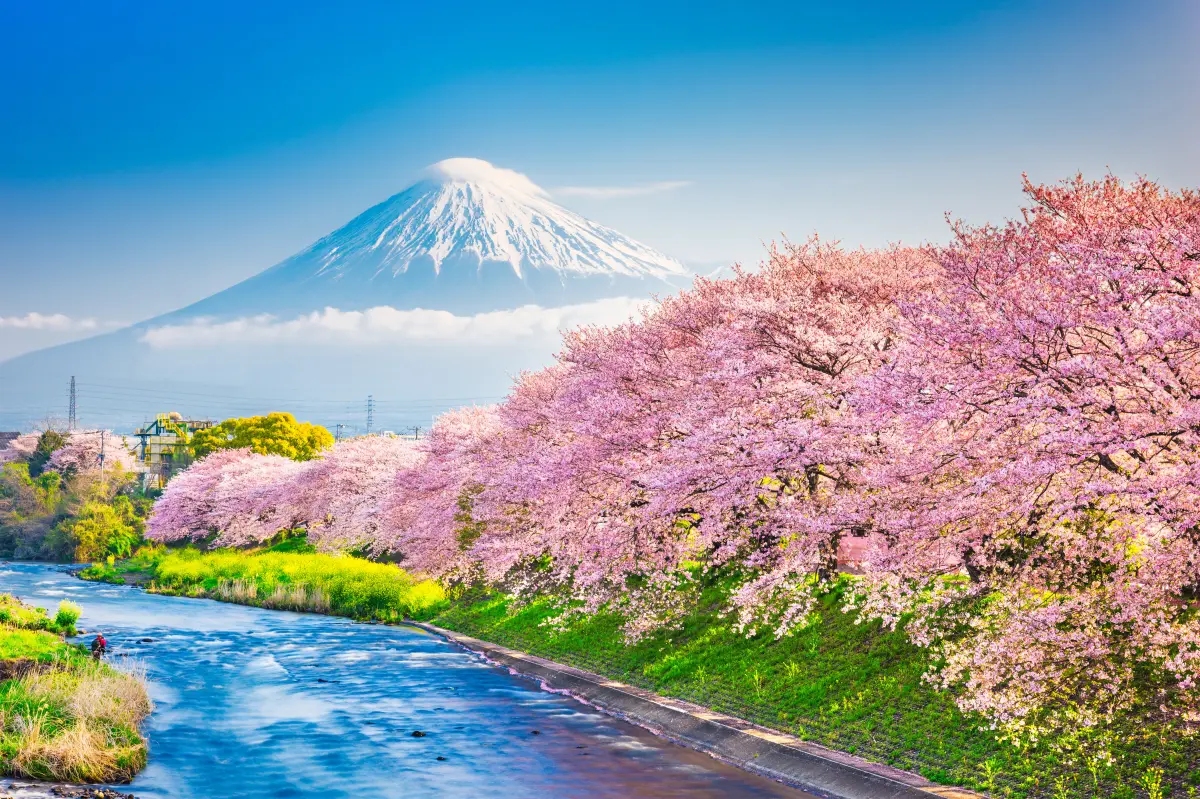
In the heart of Japan’s serene landscapes, where the majestic Mount Fuji stands as a timeless sentinel, the delicate dance of nature and human longing has hit a discordant note. Picture a quaint town called Fujiyoshida, nestled at the foot of this iconic volcano, where once tranquil streets were alive with the soft pink whispers of cherry blossoms in bloom. For a decade, the Arakurayama Sengen Park cherry blossom festival has been a cherished ritual, a celebration of fleeting beauty that drew families and friends together under a canopy of petals. But this year, something has shifted—a viral storm on social media has unleashed an unstoppable tide of visitors, turning what was meant to be a peaceful spectacle into a scene of chaos. Locals, who have long cherished their quiet lives amidst the natural splendor, are now grappling with an uncomfortable reality: the very beauty that draws people in is eroding the dignity of their daily existence. It’s like watching a beloved garden overrun by uninvited guests who stomp on the flowers without appreciating the roots that nourish them. Tourists arrive en masse, their excitement amplified by feeds filled with flawless photos, but they leave behind more than memories—they disrupt the fragile balance that makes places like Fujiyoshida feel like home. Residents whisper about sleepless nights from distant car horns, children peering curiously at strangers blocking their school paths, and elderly folks feeling like ghosts in their own neighborhoods. The mayor, Shigeru Horiuchi, captured this sentiment poignantly in his announcement, describing a profound sense of crisis behind the mountain’s picturesque facade. For many in the town, it’s not just a festival at stake; it’s the essence of their way of life being protected from a relentless wave of outsiders, fueled by digital dreams that ignore the human cost.
As the announcement echoed through the community on a quiet Tuesday, the cancellation of the festival stirred a mix of emotions among Fujiyoshida’s residents. Mayor Horiuchi, a man visibly weighed down by the weight of his decision, spoke earnestly about the threats to citizens’ quiet lives, emphasizing that the 10-year-old tradition must end to safeguard their dignity and living environment. Imagine the town’s elders, veterans of countless petal falls, recounting stories of how the park’s five-story pagoda once stood as a symbol of harmony with nature, not a crowded backdrop for selfie sticks. For them, the choice wasn’t easy—it meant disappointing eager visitors while confronting the uncomfortable truth that unchecked tourism has warped their paradise. One resident, a lifelong gardener tending her plot near the park, shared how she used to delight in sharing her knowledge of the cherry varieties with polite tourists, but now feels intruded upon when groups barge into her yard without a second thought. The mayor’s words, reported in The Japan Times, resonated deeply: “Behind [Mount Fuji’s] beautiful landscape is the reality that the quiet lives of citizens are threatened. We have a strong sense of crisis.” It’s a declaration that humanizes the crisis, turning statistics into personal stories of loss—of time, space, and the simple joys of communal living. Parents worry aloud in cafes about their kids’ safety on crowded sidewalks, while shop owners recount days when litter and noise chased away loyal customers. Yet, beneath the frustration lies a hope that canceling the festival could be a wake-up call, prompting a reflection on how to welcome guests without sacrificing the soul of the place. For many, this isn’t just policy; it’s a plea for empathy, a reminder that behind every tourist photo is a community yearning for respect.
Zooming out to the broader picture, Fujiyoshida’s plight is just one ripple in Japan’s post-pandemic tourism boom, where numbers tell a staggering tale of both triumph and trouble. In 2025 alone, approximately 42.7 million tourists flocked to the Land of the Rising Sun, shattering the previous record of nearly 37 million set in 2024—a surge driven by factors like a weaker yen making trips more affordable and the explosive spread of content on platforms like TikTok and Instagram. The festival itself, held in the weeks-long cherry blossom season, once attracted about 10,000 visitors daily, totaling around 200,000 annually, turning the park into a vibrant hub of shared wonder. But this influx has overwhelmed the town’s infrastructure, from winding roads clogged with rental cars to public spaces where the sheer volume of people dilutes the magic. Residents describe a pattern: mornings once greeted with birdcalls now begin with the rumble of buses, while afternoons see hoards descending on the pagoda for those viral shots, leaving little room for locals to enjoy their own backyard. Social media has played a cruel trick, painting idyllic scenes that lure masses without warning of the real-world strain—think families crammed into cramped buses, or young couples racing to capture “the perfect moment” only to disrupt someone else’s routine. For a nation still healing from isolation, these visits should have been a balm, a symbol of reopened doors. Instead, for places like Fujiyoshida, they evoke a bittersweet longing for the days when tourism felt like an honor, not an invasion. It’s a human story repeated across Japan’s rural gems, where the economic boost from visitors collides with the emotional toll on daily life, making one wonder how to balance global curiosity with local boundaries.
The complaints from residents paint a vivid, unsettling portrait of how disruptive behavior has escalated beyond mere annoyance to a genuine threat to community well-being. In Fujiyoshida, tales of tourists tossing cigarette butts into pristine gardens, trespassing onto private property for impromptu photos, and even worse—opening home doors unbidden to use restrooms or relieving themselves in yards—are shared with a mix of anger and disbelief. One elderly man, interviewed anonymously, recounted being shouted at when he politely asked visitors to respect his property, his voice trembling as he explained how “decades of quiet living vanished overnight.” Kyodo News reported parents’ growing fears for their children’s safety, with school routes turning hazardous as tourists flock the sidewalks, pushing kids aside in their haste for views of the blooming trees against Mount Fuji’s snow-capped peak. These incidents aren’t isolated; they’re part of a pattern exacerbated by the park’s allure as a must-see spot, where the weak yen and social media hype attract everyone from seasoned travelers to impromptu adventurers. For locals, who once viewed tourists as welcomed storytellers sharing cultures, the shift feels personal—an erosion of trust and tranquility. A mother described her distress when her toddler was nearly trampled by a group crowding a narrow path during petal peak, forcing her to rethink simple outings. It’s not just litter that piles up, but resentment, as communities question why their heritage is sacrificed for fleeting clout. Humanizing these grievances reveals the vulnerability beneath; these are people who cherish their traditions, from the annual hanami picnics to quiet evenings stargazing under the pagoda’s shadow, now overshadowed by a guest list that’s grown too unruly.
Delving deeper into the emotional impacts, the cancellation underscores how tourism’s dark side affects the most vulnerable—families and children whose routines are upended by this influx. Parents in Fujiyoshida have voiced heartfelt concerns about toddlers being jostled on walks or school commutes delayed by tour groups blocking routes, echoing reports from Kyodo News that highlight the physical and psychological toll. Imagine a young girl named Yuki, whose daily trek to school used to be a joyful ritual of sunshine and song, now fraught with strangers’ elbows and raised voices, making her anxious and hesitant to explore her own town. Her mother, a teacher, laments how what began as excitement for the festival has morphed into fear, with children mimicking rude behaviors they’ve seen or retreating from public spaces altogether. For elders, the disruption hits harder; one resident shared how her grandfather, a World War II veteran who planted the park’s first trees, weeps at the sight of disrespectful visitors, seeing it as a desecration of history. These stories humanize the data, turning abstract complaints into relatable heartaches—worlds where a simple request to respect boundaries turns into conflict, and the joy of spring’s renewal is tainted by exhaustion. Locals describe a sense of loss, like bidding farewell to a family heirloom handed down through generations, sacrificed on the altar of global trends. Even as they acknowledge that the park’s natural beauty—the interplay of Fuji, blossoms, and pagoda—remains irresistible, drawing crowds regardless of festival status, the depth of resentment stems from feeling invisible in their own home. It’s a call for mindfulness, urging tourists to empathize with hosts who long for a balance where awe doesn’t come at the expense of peace.
Looking ahead, Fujiyoshida officials are pivoting from despair to proactive solutions, aiming to reclaim control without fully closing their doors. While the festival may be gone, the park’s magnetic pull ensures spring visitors will likely still appear, prompting plans to bolster security, introduce temporary parking zones, and install portable toilets to mitigate the worst excesses. This shift reflects a broader national dialogue in Japan about sustainable tourism, where the all-time highs in arrivals—pushing past 40 million—signal economic gains but also necessitate boundaries to protect cultural integrity. Mayor Horiuchi’s team envisions a future where visitors can marvel at the cherry-tinged Fuji vistas without trampling on residents’ lives, perhaps through educational signs or guided tours that foster respect. For locals, these measures offer a sliver of hope, a chance to renegotiate their relationship with the outside world. One optimistic resident, a tour guide by trade, dreams of volunteering to educate guests about etiquette, transforming potential disruptors into appreciative allies. Yet, the road to recovery is steep, marked by lingering scars from uncivilized behaviors that have made trust harder to rebuild. As Japan grapples with its status as a top destination, stories like Fujiyoshida’s serve as poignant reminders that true beauty thrives when shared with empathy. Ultimately, the “Doom and bloom” of this situation isn’t an end, but an opportunity for harmony—a lesson in how to let petals fall gracefully without crushing the ground below. Cabdrivers and shopkeepers in the town whisper of experiments with visitor limits or off-peak access, blending innovation with tradition. Long-term, experts suggest collaborating with platforms like social media influencers to promote responsible travel, curbing the viral hype that has inadvertently sparked this crisis. Families like the one with young Yuki are now imagining futures where children grow up cherishing their heritage, unburdened by invasion. It’s a narrative of resilience, where a cancelled festival births a deeper commitment to coexistence, reminding us all that in the shadow of majestic peaks, the most enduring beauty lies in human connections forged with care, not conquest. As sunsets paint Fuji in gold, residents find solace in knowing their voices have been heard, paving the way for seasons when bloom and boom align, not collide. This episode, though painful, humanizes tourism’s complexities, urging a global rethink: travel as exchange, not extraction. From discarded cigarette butts to portable qualfixes, the changes signal progress, but the core plea endures—for travelers to see beyond the screen, to honor the “quiet lives” that make destinations alive. In Fujiyoshida’s wake, Japan might emerge stronger, its cherry blossoms blooming not just for eyes, but for hearts attuned to the rhythm of shared humanity.