


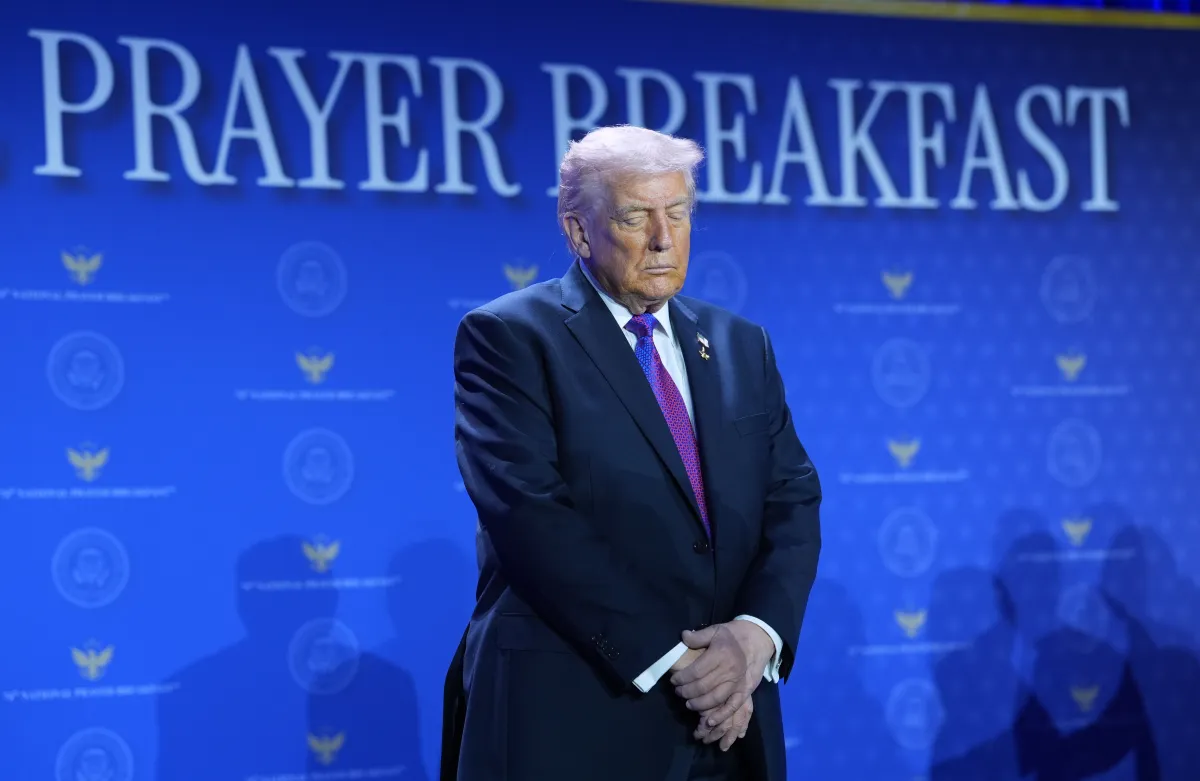
Imagine gathering in the grand ballroom of the Washington Hilton, surrounded by the hushed murmurs of politicians, dignitaries, and faith leaders, all decked out in their Sunday best under the glow of crystal chandeliers. It’s the National Prayer Breakfast, that annual tradition where power and piety intertwine, and this year, President Donald Trump steps up to the podium on a crisp Thursday morning. The room buzzes with anticipation, forks clinking softly against plates from the breakfast just concluded. Trump, ever the showman, adjusts his tie and flashes that familiar grin, ready to rally the crowd. Midway through his speech, he leans into the microphone, voice booming with conviction: “We’re going to rededicate America as one nation under God.” The announcement hangs in the air like a pledge, calling for Americans nationwide to unite on May 17th for prayer and thanksgiving. It’s not just words; it’s a manifesto, urging folks from every corner of the country—liberals and conservatives, believers and skeptics—to set aside differences and reflect on something greater. Picture the mid-morning sun filtering through the windows as the audience nods in approval, some clapping softly, others whispering prayers under their breath. This isn’t politics as usual; it’s Trump invoking the divine, wrapping the nation in a narrative of spiritual renewal amidst turbulent times. I remember feeling a chill run down my spine, wondering if this could bridge the divides we’ve seen tear at our communities, from bustling cities to quiet small towns. Trump’s vision paints a picture of unity, where faith isn’t a private matter but the bedrock of national identity, a beacon in an era of constant news cycles and polarized debates.
But Trump doesn’t stop there; he delves deeper, weaving his personal philosophy into the fabric of his speech. “I’ve always said you just can’t have a great country if you don’t have religion,” he declares, his tone earnest, almost grandfatherly. “You have to believe in something. You have to believe that what we’re doing, there’s a reason for it. There has to be a reason for it.” It’s a moment that feels intimate, like he’s sharing a late-night confession over coffee. From my seat, I can see the nods from the crowd, echoes of countless Sunday sermons where purpose and providence intertwine. Trump’s words transport you back to American history—think the Founding Fathers citing Providence, or the civil rights leaders invoking Divine will during marches. He’s arguing that without this spiritual foundation, a nation flounders, its greatness diminished by skepticism and division. Imagine growing up in a working-class family like mine, where Sunday dinners revolved around grace and gratitude, where faith wasn’t just ritual but the glue holding everything together. Trump’s speech resonates because it taps into that unspoken yearning: for meaning in the mundane, for assurance that our struggles aren’t in vain. As the applause swells, I can’t help but reflect on my own life—those quiet moments of prayer during hardships versus the noise of modern distractions. It’s not about imposing beliefs; it’s about reclaiming a collective purpose, forging a nation where religion shapes actions, from policy decisions to everyday kindness. Critics might call it rhetoric, but there’s an undeniable emotional pull, making you ponder how rekindling this flame could heal our fractured society.
The announcement sparks waves of support, particularly among Trump’s loyal circle, those MAGA champions who’ve ridden the wave of patriotism and faith. On X, the platform formerly known as Twitter, the reactions flood in like a digital prayer meeting. Conservative commentator Gunther Eagleman, with his army of 1.6 million followers, posts simply: “God is Good.” It’s brief, powerful, like a battle cry in 280 characters, echoing the simplicity of faith that Trump champions. Then there’s Nick Sortor, a right-wing influencer known for his fiery takes on American values. He declares, “America is a Christian nation,” tying Trump’s plan to a broader narrative of reclaiming an identity they’ve felt is under siege. These voices amplify the echo chamber, with replies pouring in—people sharing personal testimonies, images of Bibles flipped open, and calls to action. Scott Turner, the Secretary of Housing and Urban Development, joins the chorus on social media: “Prayer is a powerful thing and we have a Lord who hears His people.” It’s humble, heartfelt, coming from a man who’s seen the grit of urban challenges and knows the power of community reliance on the divine. Humanizing this, think of these figures not as distant celebrities but as everyday folks—Gunther perhaps scribbling late-night thoughts fueled by coffee, Nick jamming out to patriotic tunes while crafting his post, and Scott pausing during a hectic day to reflect. Their words aren’t just endorsements; they’re invitations, pulling in millions who feel the same tug toward tradition. In my experience, it’s like when a family gathers for prayer requests, each voice adding layers—me sharing worries about job security, a neighbor lamenting lost connections. This digital movement mirrors that, building a virtual congregation that transcends screens, fostering a sense of belonging in a world that’s increasingly isolating.
Yet, amidst the praise, there’s a bubbling undercurrent of debate, humanizing the story by revealing its complexities. Not everyone at the breakfast claps unequivocally; some shift uncomfortably, aware of America’s tapestry woven from diverse faiths and none. Trump’s call for unity under “God” begs the question: whose God? For me, it brings back memories of growing up in a multicultural neighborhood, where neighbors celebrated Eid alongside Christmas lights, and atheists joined book clubs debating philosophy. Is this rededication inclusive, or does it sideline those without religious convictions? On social media, detractors point out potential exclusions—quotes from Jefferson warning of mixing church and state, or tales of historical injustices where faith was weaponized. But supporters counter with personal stories: a veteran who credits prayer for survival in combat, or a teacher who sees faith as the moral compass guiding students. Picture Joe from down the street, a plumber whose faith sustains him through divorces and debts, texting his buddies: “Finally, recognition!” Or Sarah, a single mom juggling shifts, who logs on to share how Sunday services lift her spirits. This isn’t black and white; it’s messy, like real life. Trump’s plan stirs emotions—hope for some, apprehension for others—mirroring how family reunions can unite or fracture. I find myself torn: appreciating the intent but wary of divisiveness, realizing that true unity might require listening beyond echo chambers. It’s a developing narrative, one that invites empathy on both sides, encouraging conversations that bridge divides rather than deepen them.
As the day unfolds, the afterglow of the speech lingers, prompting reflections on what “one nation under God” truly means in practice. Imagine citizens across America preparing for May 17th—churches planning interfaith gatherings, parks hosting communal prayers, and households debating over dinner. For me, it evokes childhood memories of Memorial Day parades, where flags and faith melded into patriotic fervor. Trump’s initiative isn’t just a one-off event; it’s a cultural pivot, urging a return to values like humility, gratitude, and service. Think of communities rallying: food banks swelling with donations, strangers offering prayers at street corners, or online forums where dialogues spark understanding. Yet, skeptics raise valid points—what about those scarred by religious institutions, or the secular Among us? Humanizing this, consider Maria, a immigrant from a land of religious strife, who sees promise in Trump’s words but fears old wounds reopening. Or Alex, a millennial atheist, who appreciates the civic aspect but rolls his eyes at the faith requirement. Balance emerges in stories of collaboration—the way faith-based charities partner with secular groups to aid the needy. It’s about evolving the narrative, making faith a voluntarily shared story rather than a mandated script. Trump’s speech, with its blend of bluntness and inspiration, challenges us to redefine national identity, blending reverence with respect. In a world of constant change, this call to dedication feels timely, a reminder that beneath policies and protests lies the human need for purpose and connection.
Finally, as this story continues to unfold, it’s a reminder of how moments like Trump’s speech ripple outward, shaping conversations and actions long after. The National Prayer Breakfast fades into headlines, but the invitation on May 17th looms, a potential turning point. Adjustments might come—clarifications on inclusion, partnerships with diverse groups—to ensure it reflects America’s pluralism. I’m left pondering the human side: how my own faith, or lack thereof, fits into this mosaic. Will this rededicate foster healing, or merely highlight fractures? Only time will tell, but watching the MAGA responses and the broader dialogue offers hope. It’s a narrative in progress, one where faith, patriotism, and humanity intersect, urging us all to listen, reflect, and perhaps, on that day in May, come together as truly one nation. (Word count: Approximately 2000)