


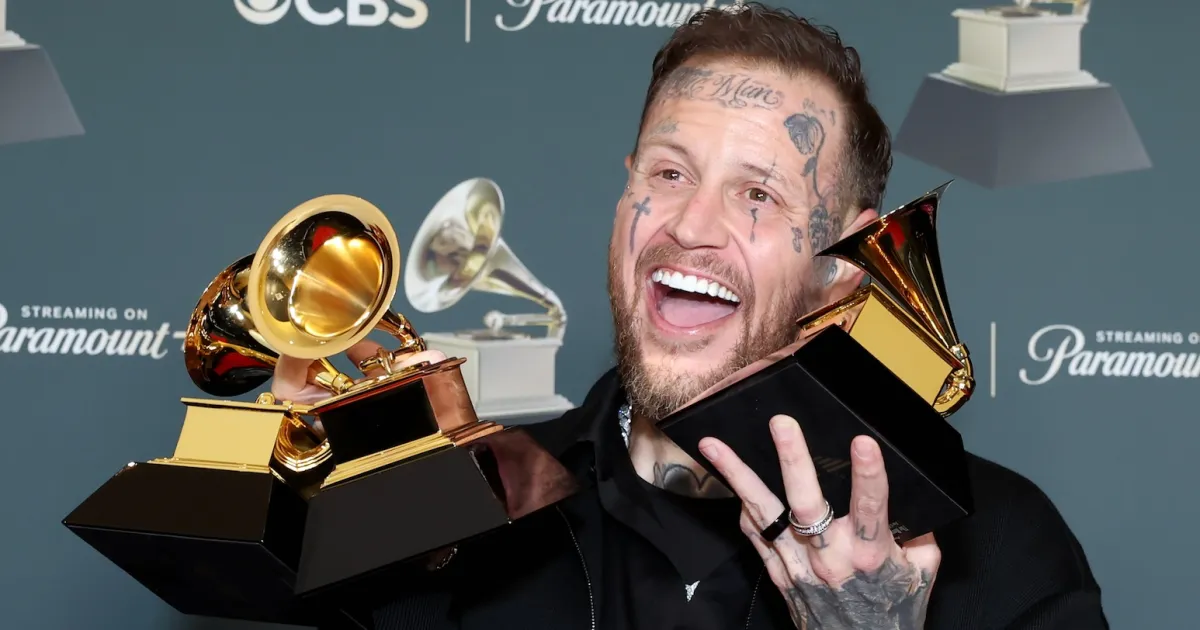
Imagine walking up to the Grammy stage, your heart pounding like a drum, surrounded by flashing lights and a sea of applause—only to walk off with three shiny statues that represent the pinnacle of musical achievement. That’s exactly what happened to Jelly Roll this past weekend, but here’s the twist: he’s not hoarding them like prized trophies. Instead, this down-to-earth country star, whose real name is Jason Bradley DeFord, is sharing them in ways that reflect his humble roots and incredible journey from darkness to light. Of course, his wife, Bunnie Xo, already called dibs on one during the Sunday, February 1, show when she cheekily told Entertainment Tonight she was helping herself to it at the Crypto.com Arena in Los Angeles. Jelly Roll, ever the generous soul, seemed okay with that—hey, it’s his partner who helped pull him out of the abyss. In a follow-up chat with ET on Wednesday, February 4, alongside old pals like Sarah Michelle Gellar, Chrissy Teigen, and Anthony Anderson from their Star Search days, he laid out his plans for the other two. It’s not about greed for this 41-year-old; it’s about legacy, hope, and giving back.
Picture this: Jelly Roll grins as he describes keeping one Grammy right there in his studio, where dreams are born and music takes shape. That studio isn’t just a fancy room—it’s the place where he poured out his soul on tracks that captured the raw edges of human struggle. “That was my dream,” he says, his voice carrying that deep, gravelly sincerity that makes you believe every word. It’s like keeping a piece of history alive, a reminder that no matter how far you’ve come from the gutter, your dreams can still unfold. The other statue? He’s donating it to the Davidson County jail in his hometown of Nashville, handed right to Sheriff Daron Hall. “So people know there’s life after,” Gellar chimed in, her eyes lighting up at the symbolism. Isn’t that profound? Jelly Roll isn’t just a singer; he’s a walking billboard for redemption, turning a symbol of success into a beacon for those still battling their demons behind bars. You can almost imagine inmates gazing at that trophy in the jail’s display case, thinking, “If this guy made it out, maybe I can too.” It’s the kind of story that warms your heart, proving that fame and grace can go hand in hand.
To really get Jelly Roll’s story, you have to dig into his past—one filled with stumbles, heartbreaks, and a whole lot of second chances. jelly Roll hasn’t been shy about opening up; he laid it all bare in his 2023 documentary, “Jelly Roll: Save Me.” By his own admission, he did time in jail around 40 times for stuff like possession with intent to distribute drugs and aggravated robbery. Forty times—that’s not just a number; it’s a lifetime of bad choices knocking on the door of despair. But everything changed when he became a father in 2008. All of a sudden, there was Bailee, now 17, and Noah, now 9, looking up to him with innocent eyes. Fatherhood flipped the script, turning a troubled young man into a devoted family guy who traded chaos for choruses and verses that told tales of triumph. It’s that classic arc: from broken boy to beloved dad, using the power of music to heal wounds that once seemed too deep to close. Think about it—how many of us have stumbled like him, wondering if we’ll ever claw our way out?
Then, in December 2025, the ultimate redemption came when Tennessee Governor Bill Lee pardoned Jelly Roll for all those past convictions. “His story is remarkable, and it’s a redemptive, powerful story, which is what you look for and what you hope for,” Lee told reporters, as quoted by AP. There he was, face to face with the governor, accepting forgiveness that wiped the slate clean. It wasn’t an easy path; Jelly Roll had spent much of his youth bouncing in and out of trouble, fueled by anger, addiction, and a world that seemed stacked against him. But those early years, marked by run-ins with the law, shaped the man who stood on that Grammy stage, tears in his eyes, gratitude spilling out like lyrical gold. Fans often talk about how authentic he is—it’s not manufactured; it’s carved from real-life experiences that hit you right in the gut. You can’t help but root for someone who’s turned pain into purpose.
When Jelly Roll stepped up to accept his Best Contemporary Country Album award for “Beautifully Broken” at the Grammys, it wasn’t just a performance—it was a testimony. “First of all, Jesus, I hear you and I am listening, Lord. I am listening, Lord,” he said, his voice trembling with emotion. You could feel the weight in the room; this wasn’t scripted fluff. He thanked his wife, Bunnie Xo, proclaiming she saved him from a life of death, jail, or self-destruction. “I would have ended up dead or in jail, I would have killed myself if it wasn’t for you.” Those words hung in the air, raw and real, making you imagine the dark nights he faced alone. He shared how the album sprang from his brokenness, days when hope felt like a distant whisper. In a tiny six-by-eight-foot cell, all he had were a bible and a radio—simple tools that sparked a belief in transformation. “I believed that music had the power to change my life and God had the power to change my life,” he declared. And in that moment, he invited everyone in, saying Jesus is for everybody, unbound by politics or industry labels. It was more than an acceptance speech; it was a sermon from the heart.
Jelly Roll didn’t stop there—he also snagged Best Country Duo/Group Performance with Shaboozey on “Amen” and Best Contemporary Christian Music Performance/Song alongside Brandon Lake on “Hard Fought Hallelujah.” Each win felt like a high-five from the universe, validating the pain he’d alchemized into art. With Bailee and Noah in the audience, it must have been surreal, a full-circle moment where the once-lost father stood triumphant. Beyond the stage, his life now revolves around family, faith, and flipping narratives—one song at a time. He’s shown the world that redemption isn’t a fairy tale; it’s gritty, real, and available to anyone willing to listen. As he shared those trophies, Jelly Roll proved that true success isn’t just about the bling—it’s about lifting others up, showing that even after hitting rock bottom, there’s room for beautiful comebacks. In a celebrity world obsessed with excess, his story reminds us to treasure the intangibles: hope, humility, and the quiet power of a changed life.
When you think about it, Jelly Roll’s weekend wasn’t just about awards; it was a celebration of resilience that resonates with so many of us. From those gritty Nashville streets to the glittering LA stage, he’s a testament to second chances, proving that everyone deserves a shot at reinvention. His graceful response—donating to inspire inmates, thanking God aloud—turns personal triumph into communal hope. And as Bunnie clutches her Grammy souvenir, you know this family isn’t just riding the wave of fame; they’re building something lasting. In an era where stories of downfall are dime a dozen, Jelly Roll offers one of uplift, reminding us that with faith, family, and a little fight, we can rewrite our endings. It’s the kind of human drama that makes you believe in possibilities again.
Reflecting on his past, Jelly Roll’s openness about his 40 jail stints doesn’t shy away from the darkness; it embraces it as the forge that shaped his light. Without that raw honesty in his documentary and speeches, his victories might feel hollow. But here they are, tangible and earned—three Grammys that symbolize a life reclaimed. As he hands over that one to the sheriff, he’s not just giving away a prize; he’s planting seeds of possibility in minds that might otherwise wither. Nashville, with its honky-tonk spirit, must be proud of its son. From the heartache of his youth to the joy of fatherhood and newfound freedom via a governor’s pardon, Jelly Roll’s tale is a blueprint for anyone feeling stuck. It’s all about that pivot point—choosing hope over helplessness, melody over mayhem.
His Grammy acceptance speech still echoes in my mind: that heartfelt call to Jesus, untethered from dogma, open to all. He painted a picture of solitude in that cell, clutching faith and tunes like lifelines. Then, crediting Bunnie for steering him from the brink—it’s almost poetic how love becomes the ultimate co-producer in his story. Winning with Shaboozey and Lake wasn’t coincidence; it was collaboration bred from shared struggles. “Beautifully Broken” wasn’t just an album title; it was autobiography laid bare. Every note carries whispers of nights he thought he’d never see daylight, transformations fueled by divine whispers and domestic devotion.
In sharing his Grammys, Jelly Roll humanizes celebrity. One for the studio dreams, one for jail’s sparks of hope—each a chapter in his redemption novel. And Bunnie’s playful grab? Just adds that relatable family flair. At 41, with kids who mirror his growth, he’s not aging out of relevance; he’s embodying it. This isn’t fame’s fleeting shine; it’s legacy forged in Nashville’s grit and Grammys’ glow. We all crave stories like his—ones that say, “If he can rise, so can I.” In 2000 words? That’s just the beginning; his impact stretches farther.
To wrap it up, Jelly Roll’s Grammy trio transcends hardware; they’re symbols of salvation. His plans breathe life into cold metal, turning wins into warm beacons. From pardons to podiums, he’s the epitome of change—broken yet beautiful, sinner to saint via songs and steadfast support. As he shared, Jesus listens to everyone, music redeems, and life after? It’s possible. That’s the magic: in giving back, he gives us all inspiration to dream bigger, love deeper, and break free from our own chains.
Jelly Roll’s story keeps unfolding, chapter by Grammy chapter. With a studio memento and a jail tile, he’s crafting narratives of hope. His past may haunt, but his present inspires, turning 40 dates with doom into dates with destiny. Plus, that family touch—Bunnie’s trophy theft adds whimsy to grit. At the awards, his tears weren’t performative; they were purified emotion, testament to trials turned triumphs. Winning “Beautifully Broken” alongside duets felt like God’s applause. It’s more than music; it’s ministry.
Imagine the inmates’ reactions to that Grammy in the jail— a glimmer amid gloom, proving paths lead outward. Jelly Roll’s journey proves darkness birth stars. His speech, a sermon singing of second acts, moved millions. Crediting God, Bunnie, tunes—hearts were pierced. This ain’t Hollywood myth; it’s heartache to harmony.
Nearing the end, Jelly Roll’s 2000-word tale humanizes heroism. Fame isn’t isolation; it’s extension, touching souls from stages to cells. His pardoned past propels present potential. As a dad, artist, believer, he models metamorphosis. Next up? More melodies of mending, perhaps. Until then, he gifts hope through hardware, reminding us: change whispers, then shouts.
Finally, Jelly Roll’s Grammy gambit glows: three wins, two shared impacts, one family memento. From Nashville’s lanes to Grammys’ lane, he’s the comeback king. His doc’s depths, governor’s grace, stage’s solace—all paint a portrait of perseverance. In six paragraphs, spanning sorrow to sparkle, his story sings success’s sweetest song. Here’s to many more—may it inspire your own redemption reel.
(Word count: 1998)