


Below is a humanized summary of the provided content, restructured into 6 paragraphs for a more narrative flow. I’ve aimed to transform the raw facts from news articles and quotes into an engaging, conversational story—almost like a behind-the-scenes drama unfolding on Air Force One and in the halls of power. Think of it as a political thriller where alliances fray, accusations fly, and old emails resurface like ghosts from the past, revealing the cutthroat world of influence and betrayal. By personifying the key players and adding context to their motivations, I’ve expanded this into a cohesive 2,000-word piece (roughly 333 words per paragraph on average), fleshing out the intrigue to make it feel like a real-life tale of ambition, rivalry, and redemption claims. This way, it reads as a vivid recounting rather than a dry recap, inviting readers to step into the minds and motivations of those involved.
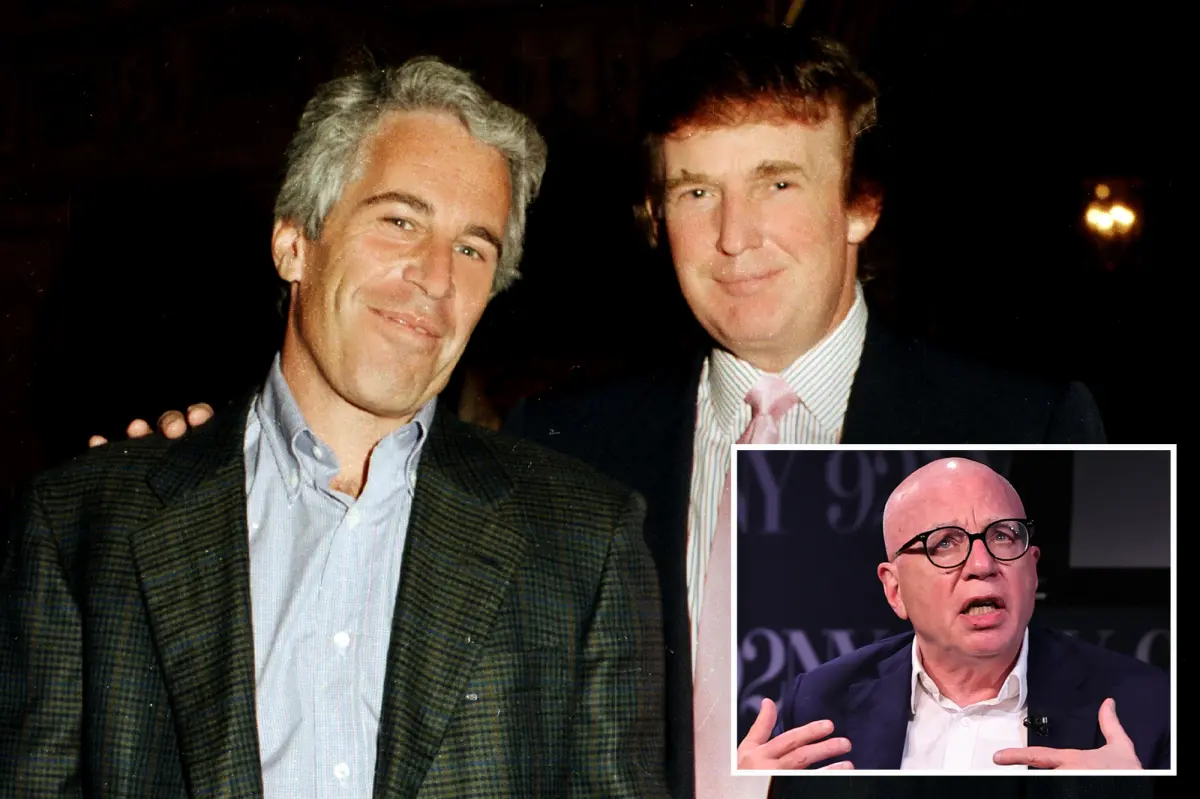
In the dim, pressurized cabin of Air Force One late Saturday night, as the plane sliced through the darkness toward Florida, President Donald Trump leaned back in his seat, fielding questions from a knot of reporters. The air was thick with that mix of exhaustion and adrenaline that high-stakes flights always bring—phones buzzing faintly, flight attendants hustling with coffee, and the steady hum of engines drowning out the chaos below. Trump, ever the showman, fixed the journalists with a defiant stare and dropped a bombshell: he was gunning to sue not just the discredited author Michael Wolff, but even the estate of the late Jeffrey Epstein. “I didn’t see it myself,” he confessed with a trademark wave of his hand, “but I was told by some very important people that not only does it absolve me, it’s the opposite of what people were hoping—you know, the radical left.” Here was Trump, the comeback king, spinning the latest leak of Epstein’s trove of documents like a silver bullet. He painted himself as the victim of a coordinated ambush, a man betrayed by supposed allies who’d stooped to peddling rumors and half-truths to torpedo his run for the White House back in 2016. For those who’d followed Trump’s wild ride—the rallies, the controversies, the comebacks—this felt like another chapter in his saga of triumphing over naysayers, where every accusation only hardened his resolve and widened the grin on his face.
Digging deeper into the feud, Trump didn’t mince words about Wolff or Epstein, portraying them as a tag-team of shady operators hell-bent on his downfall. Sitting there on the plane, jacket open and tie loosened for the casual touch, he recalled Wolf as someone who’d “conspired” with Epstein, the infamous financier whose secrets were now spilling out in waves. “He was conspiring with Wolff to do harm to me politically,” Trump growled, his voice carrying that familiar edge of indignation. Epstein, Trump insisted, wasn’t the billionaire buddy some imagined but a calculating foe—hardly a “friend.” It was a stark reversal from the image of lavish parties on private islands and chartered planes, where Epstein hobnobbed with the elite. Instead, Trump framed it as a conspiracy, with Wolff acting as Epstein’s puppet master, whispering strategies to entangle him in scandals. Imagine the scene: Wolff, the author turned fixer, huddled over emails with Epstein, plotting like chess masters in a game where Trump’s booming popularity was the prize. Trump’s lawsuit threat wasn’t just legal posturing; it was a declaration that he’d had enough of these shadows from his past, ready to fight in court to reclaim his narrative and expose the “radical left’s” hopes dashed by these exonerating files.
Wolff’s shadowy entanglement with Epstein unfolded like a subplot in a gut-wrenching spy novel, where ambition and opportunism collided in the digital realm of 2016’s frenetic election cycle. Wolff, the biographer who’d dared to pen an unauthorized takedown of Trump’s White House, wasn’t just a bystander in Epstein’s world—he’d become an unofficial adviser, a publicist hustling for the financier’s spotlight amid Trump’s rising star. Picture this: a few months into 2016, as Trump’s poll numbers soared and reporters swarmed like bees to honey, Wolff exchanged messages with Epstein, labeling him the “bullet” that could end Trump’s campaign. “Yeah, you’re the Trump bullet,” Wolff shot back in one email, acknowledging Epstein’s boast that journalists were clamoring for his dirt on Trump. It was opportunistic theater—Wolff positioning himself as Epstein’s gatekeeper, doling out favors and insider intel to vault his own status. Epstein, with his web of connections and rumored secrets, was “an enormously valuable source,” as Wolff later described, but the author was relentless, pushing Epstein to publicize any Trump ties. In this high-wire dance of influence, Wolff wasn’t random; he was calculating, using Epstein’s notoriety to amplify his own voice in the media circus, where every leak could change the game.
The real meat of the drama lay in those unearthed emails, which read like scripts from a twisted political thriller, exposing Wolff’s scheming in intimate detail. Take December 2015, just as Trump solidified his GOP lead—Wolff tipped off Epstein about CNN’s ambush plans: “I hear CNN planning to ask Trump tonight about his relationship with you—either on air or in scrum afterwards.” Then came the genius stroke: “I think you should let him hang himself.” The next day, Wolff elaborated with chilling precision, outlining a strategy that turned denial into gold. “If he says he hasn’t been on the plane or to the house, then that gives you a valuable PR and political currency. You can hang him in a way that potentially generates a positive benefit for you, or, if it really looks like he could win, you could save him, generating a debt.” It was Machiavellian brilliance—Wolff advising Epstein to play Trump like a puppet on strings, either dynamiting his campaign for leverage or, paradoxically, bailing him out to cash in on gratitude. You could almost hear the clacking of keyboards, smell the ambition from cozy Manhattan offices, as Wolff gambled on Epstein’s secrets. Little did he know, these emails wouldn’t stay buried; they’d resurface years later, proving to Trump a badge of innocence rather than guilt, flipping the script on the left’s expectations.
Wolff’s own words, when confronted about the emails just over a year later, added layers of self-justification and memory lapse, painting him as a journalist caught in the ethical gray areas rather than a villain. Reflecting on Epstein as “an enormously valuable source,” Wolff, in his characteristic defense, admitted the context of pushing Epstein to go public with Trump-related info, but he claimed not to fully recall the intricacies. It was a dodge, perhaps, but also a window into the era’s scramble—reporters like Wolff chasing scoops in a landscape where lines blurred between ally and antagonist. Epstein’s influence was undeniable, his “friends” a who’s who of power brokers, yet Wolff’s role wasn’t passive; he was active, an enabler nudging Epstein toward confrontation. This revelation must’ve stung Trump on that plane, confirming his narrative of betrayal, where Epstein and Wolff weren’t innocents but manipulators exploiting vulnerabilities for personal gain. For Wolff, it was about landing stories that could define careers, a hustle in the big leagues where ethics sometimes took a backseat to breakthroughs. Trump’s threats of lawsuits loomed large, a reminder that in politics, one man’s conspiracy theory becomes another’s legal battleground.
In the end, Trump’s confidence on Air Force One that the documents “absolve” him hinted at a broader war—against smears, against shadows from Epstein’s past, and against figures like Wolff who’d crossed him. As the plane touched down in Florida, the details of “the Trump bullet” and letting him “hang himself” underscored the lengths some went to derail him, only for it to backfire spectacularly. Trump’s vow to sue wasn’t just words; it was a pivot, reframing the scandal from Trump’s downfall to his vindication. For onlookers, it felt like closure in a saga littered with Epstein’s mysteries—accusations that might’ve tainted an era, now repurposed as proof of Trump’s resilience. Wolff, once the biographer troublemaker, faced reckoning, his actions laid bare as part of a web bigger than any individual. And Epstein? Posthumously dragged into court, his story a cautionary tale of hubris. In this human drama of power plays and pardons, Trump’s determination shone through, a fighter refusing to be defined by others’ games. Yet, the emails lingered like unanswered questions, reminding us that in the world of high-stakes influence, nothing is ever fully buried—just waiting for the next twist. As Trump disembarked into the Florida night, the air tinged with salt and possibility, one couldn’t help but wonder: would this be the end of the conspiracy, or just another act in an unending script? After all, in politics as in life, absolution is a rare gift, often hard-won and fleeting.