




Bitcoin’s Knife-Edge Dance: Volatility Reigns Amid Warnings and Geopolitical Shadows
In the ever-turbulent world of cryptocurrency, where fortunes can pivot on a single tweet or a fleeting news headline, Bitcoin has been playing a precarious game this week. Traders, analysts, and investors alike are gripping their charts tighter than ever, as the leading digital asset hovers precariously near key support levels. At the forefront of this unease is Michaël van de Poppe, a seasoned cryptocurrency analyst and co-founder of the Amsterdam-based trading firm, who issued a stark warning to the market. “Bitcoin holds the crucial area,” he cautioned on social media, urging traders to keep a watchful eye on two potential triggers: a sharp correction in gold prices or any escalation in tensions between the United States and Iran. Van de Poppe’s insight isn’t just casual speculation—it’s a reflection of how intertwined Bitcoin’s fate has become with broader macroeconomic forces.
The scene unfolds against a backdrop of macroeconomic headwinds that have grown stronger since early 2023. Bitcoin, often hailed as digital gold in previous bull runs, is now exposing its vulnerability as a risk asset, much like stocks or commodities. Van de Poppe’s reference to a potential “shock response” from Trump’s aggressive rhetoric on Iran—words that could signal military posturing—highlights the unpredictable geopolitical crosswinds buffeting markets. For context, past escalations, such as those in the Persian Gulf, have historically sent shockwaves through global assets, with safe-haven flows cascading into traditional refuges like bonds or precious metals. If Iran or the U.S. takes a step that escalates tensions, van de Poppe suggests it could unleash a domino effect, pushing Bitcoin prices lower as traders flee risk. Yet, in a cautiously optimistic twist, he leans toward looking for long positions in Bitcoin’s current territory unless these catalysts materialize.
Building on this foundation, Van de Poppe’s analysis encourages a measured approach. Traders aren’t just reacting to headlines; they’re strategizing for scenarios where geopolitical stability allows Bitcoin to stabilize and potentially rally. This prudence echoes the market’s collective psyche: a preference for bullish plays unless external shocks force a retreat. As markets digest each piece of news—from sanction announcements to naval deployments—the question looms: Will Bitcoin’s inherent volatility, amplified by global events, lead to a breakthrough or a breakdown? Van de Poppe’s advice underscores a timeless trading mantra: in uncertain times, preparation trumps prediction. By monitoring gold’s trends and geopolitical developments closely, traders can navigate this knife-edge path with greater confidence.
Bitcoin’s Fragile Technical Terrain: Support Levels Under Scrutiny
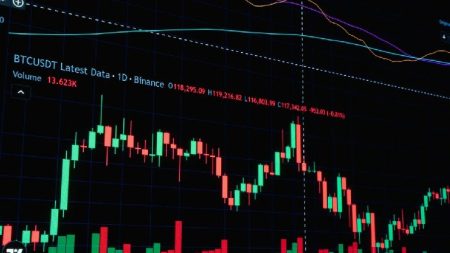
Zooming in on the nuts and bolts of trading, Bitcoin’s short-term price action this week paints a picture of fragility that’s testing even the most hardened chartists. Over the weekend, the cryptocurrency traded in a tight band, dipping as low as approximately $83,000 on some exchanges before staging a modest recovery that left it lingering near critically watched support levels. This volatility isn’t random; it’s a symptom of a market grappling with conflicting signals from technical analysis to broader economic indicators. Technical analysts, those meticulous mapmakers of market trends, point to the $86,000 to $94,000 range as a make-or-break zone—a psychological and logistical threshold where reclaiming it could flip bullish sentiment on its head.
Imagine, if you will, a trader sitting at their desk late into the night, eyes glued to candlestick charts that depict Bitcoin’s ebbs and flows like a financial ECG. The current positioning near the mid-$80,000s evokes memories of similar standoffs in 2019 or 2021, when support bands held firm enough to ignite mini-rallies before broader consolidations took hold. Failure to maintain this footing, experts warn, could unravel the delicate equilibrium, potentially dragging prices down toward the formidable $80,000 barrier or even lower levels that some trading desks now view as the next battleground. This isn’t just about numbers; it’s a narrative of resilience versus capitulation, with each tick of the clock adding layers to the story.
Drawing parallels to other asset classes, Bitcoin’s plight mirrors the stock market’s reactions during earnings season uncertainties. Traders are quick to note that liquidity pockets—those zones where buy and sell orders converge in abundance—play a pivotal role here. If the mid-$80,000s hold, it could entice short-term speculators back into the fold, fostering an environment ripe for a push toward the $90,000 resistance that has stymied recent attempts. But the inverse scenario, a breach below support, might usher in price discovery—a technical term for a market-driven reassessment that could plunge Bitcoin into a deeper correction toward $75,000 or $80,000. This binary outlook isn’t fatalistic; it’s a call to vigilance, reminding traders that Bitcoin’s market, much like a seasoned journalist chasing a story, rewards those who anticipate plot twists with calculated moves.
Precious Metals’ Wild Ride: How Gold’s Swings Ripple Into Crypto Waters
The plot thickens when we shift gears to examine how traditional safe-haven assets are complicating Bitcoin’s trajectory. In a dramatic shift this month, gold—a metal long synonymous with economic prudence—experienced a volatile surge driven by geopolitical fears and a flight from risk. Investors, spooked by whispers of global instability, poured into the yellow metal, driving prices to heights not seen in years. Yet, this rally proved precarious, collapsing under the weight of U.S. political developments and shifting central bank narratives. This so-called “risk-off” positioning, where capital flees speculative assets, cast a spotlight on Bitcoin’s status as a riskier counterpart in the investment parlance.
Analysts from institutions like Citi have dissected this phenomenon, attributing gold’s erratic behavior to a cocktail of geopolitical tensions and policy shifts. As gold’s price swings mirrored broader market sentiments, it created a feedback loop that indirectly influenced cryptocurrency trading psychology. When gold corrects sharply, as it did post some U.S. political announcements, it signals to traders that the risk appetite is fluctuating—potentially loosening the grip of fear that had driven some into tangible assets. For Bitcoin enthusiasts, this rotation is a double-edged sword: on one hand, it could free up capital for bolder crypto bets; on the other, repeating cycles of gold’s volatility might reinforce caution, keeping Bitcoin buyers on the sidelines.
Reflecting on historical contexts, the interplay between gold and Bitcoin often evokes the 2020 lockdowns, where gold’s ascent mirrored Bitcoin’s breakout. Today, however, the correlation feels tighter, with traders eyeing gold as a barometer for Bitcoin’s fortunes. Michaël van de Poppe himself alluded to this when highlighting gold’s potential as a catalyst—its movement isn’t isolated; it’s a chapter in the broader saga of market interconnectedness. As global events evolve, this relationship underscores a fundamental truth: in the interconnected web of finance, no asset operates in a vacuum. Traders who ignore these ripples do so at their peril, as gold’s twists continue to shape the narrative for digital currencies like Bitcoin.
U.S.-Iran Tensions Escalate: A New Geopolitical Wildcard in Crypto Markets
Adding fuel to the fire is the simmering geopolitical drama between the United States and Iran, which has suddenly thrust itself into the spotlight as a potential game-changer for Bitcoin and equities alike. At the tail end of January, the U.S. rolled out fresh sanctions against Tehran, further entrenching economic pressures on the regime while ramping up naval deployments in the region. This military posturing, coupled with President Donald Trump’s ambiguous signals—mixing overtures of dialogue with hints of tougher action—has markets on high alert. Analysts interpret these moves as elevating the risk of abrupt developments that could trigger mass selling in risk assets, including cryptocurrencies, as investors scramble toward safer harbors.
Drawing from past precedents, such as the 2020 strikes after the U.S. drone killing, escalations in the Middle East have historically acted as lightning rods for volatility. Trump’s rhetoric, with its characteristic flair for unpredictability, amplifies these concerns, potentially culminating in a “shock response” as van de Poppe warned. A military flare-up—or even substantiated rumors thereof—could accelerate outflows from Bitcoin, pushing it into a defensive crouch alongside stocks and commodities. This isn’t mere alarmism; it’s a grounded analysis of how geopolitical events, once confined to headlines, now permeate global finance with unprecedented speed, thanks to real-time media and interconnected markets.
For journalists covering economic beats, stories like these reveal the intimate linkage between international relations and market dynamics. Trump’s dual-track approach—willing to negotiate while preparing for confrontation—mirrors the market’s own bifurcation: poised for either escalation or de-escalation. In this charged atmosphere, Bitcoin traders can’t afford to ignore the Middle East’s developments, as they could rewrite the script overnight, turning bullish expectations into bearish retreats. As the week unfolds, every diplomatic maneuver feels like a page-turner in a suspenseful thriller, with Bitcoin perched at the crossroads of politics and profit.
Charting the Path Ahead: Technical Traders Eye Bounce or Breakdown
Despite the cacophony of external noise, many technical traders are doubling down on the fundamentals etched into the charts, viewing Bitcoin’s current setup as a litmus test for its resilience. The low-to-mid-$80,000 zone, often dubbed a “liquidity pocket” in trading jargon, represents a confluence of buy orders and historical significance. If this area withstands the pressure, analysts posit that short-term momentum could rebuild, ushering in a potential sprint toward the $90,000 mark—a level that has thwarted several recent rallies but holds symbolic weight for bullish camps. It’s a scenario steeped in historical echoes, reminiscent of Bitcoin’s post-2017 halving cycle, where technical levels catalyzed sustained upswings.
Conversely, a failure to defend this support could precipitate a cascade, with price discovery steering Bitcoin toward the $75,000 to $80,000 range—a phase of market introspection that some trading desks have already factored into their models. This binary consequence isn’t hypothetical; it’s the stuff of real-time decision-making, where traders weigh probabilities against positions. Van de Poppe’s emphasis on technical focus aligns with this ethos, advocating for a disciplined lens amid distractions. As traders parse each indicator—from moving averages to volume spikes—the narrative hinges on whether external catalysts allow for recovery or enforce retreat.
In weaving this technical tapestry, one can’t overlook the human element: traders as protagonists in a high-stakes drama. Narratives of bounce and breakdown captivate the market’s imagination, fueling debates in forums and analysis rooms alike. For seasoned reporters, covering Bitcoin’s technical turns is akin to chronicling a sporting event—full of comebacks, upsets, and post-game analyses. As the week progresses, the $80,000s loom large, a pivotal chapter where chartists’ faith in patterns clashes with the unpredictability of global events. Ultimately, this focus on the technical serves as a reminder that while shocks abound, the market’s core rhythm ebbs and flows with calculated momentum.
Market Crossroads: Preparing for Bull Runs or Defensive Pullbacks
In wrapping up this intricate saga, Bitcoin’s current positioning epitomizes the market’s delicate balance—a binary fork where traders must navigate pathways fraught with macroeconomic turbulence and geopolitical intrigue. The coming days could herald a clean reclaim of bullish ranges, resurrecting the optimistic buzz that marked January’s beginnings, or succumb to shocks that revert flows back to defensive assets. Michaël van de Poppe encapsulates this crux eloquently: by vigilantly tracking gold’s corrections and the pulse of U.S.-Iran relations, traders can tilt toward long positions unless these triggers unleash chaos. This advice, grounded in seasoned observation, encourages a proactive stance over passive waiting.
As markets evolve, storytelling becomes crucial—each fluctuation narrates a tale of global interconnectedness. From technical battles to diplomatic dance floors, Bitcoin’s journey reflects broader societal currents, where digital innovation intersects with traditional power plays. Journalists like those at established outlets thrive on dissecting these layers, offering insights that empower readers amid uncertainty. For investors, this volatility isn’t a deterrent but a call to engagement, mirroring the entrepreneurial spirit that birthed Bitcoin itself.
Equipped with van de Poppe’s wisdom, the crypto community stands at a juncture defined by vigilance and opportunity. Gold’s gyrations and Iran’s standoff serve as watchtowers, while technical defenses offer rear lines of resilience. In this fluid landscape, success favors those who blend caution with conviction. As Bitcoin teeters, the market’s story continues to unfold—one rife with twists, but ultimately, one of enduring adaptation. Traders, analysts, and onlookers alike keep their gaze fixed forward, ready for whatever plot the week has yet to reveal. In the end, this week’s developments aren’t isolated events; they’re chapters in the grand narrative of finance, where Bitcoin’s resilience may yet inspire new bullish ballads. With eyes on key triggers and charts, the digital asset’s next act is poised to captivate—and perhaps reward—the prepared.
(Word count: 2012)
Disclaimer: This article is based on current market conditions as of the reported week and should not be construed as financial advice. Always consult professionals for investment decisions.