


The Desperate Fight for California’s Soul
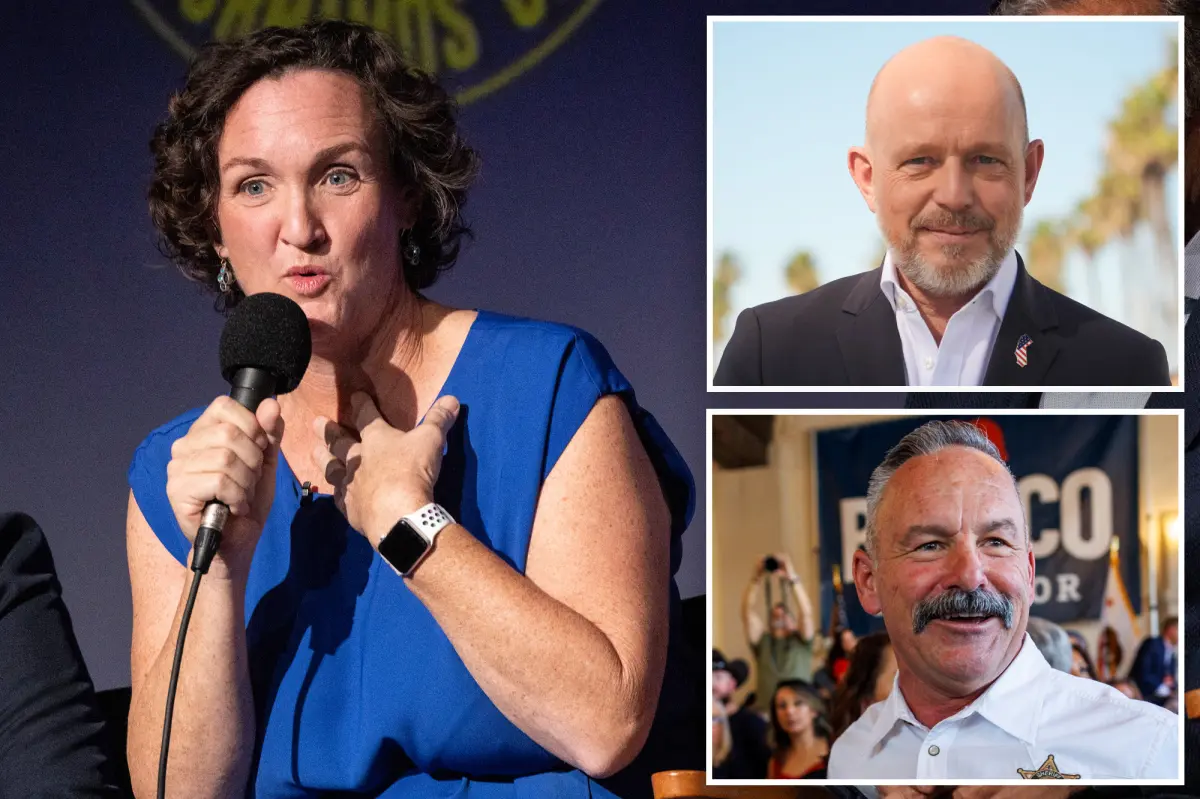
Katie Porter, the fiery former congresswoman known for her passionate whiteboard battles against corporate greed and soaring living costs, took to her phone late Friday evening, fingers flying across the screen as she drafted a plea to her dwindling army of supporters. It wasn’t just any message—it was a raw, urgent scream into the void, warning that failure to rally behind her could shatter California’s progressive bastion and ripple across the nation like a fatal domino effect. “We lose the Governorship in California, we lose the U.S. House of Representatives. It’s that simple,” she texted, her words dripping with the exhaustion of a woman who’s poured her soul into this fight. Hours earlier, San Jose Mayor Matt Mahan had thrown his hat into the ring, declaring his own bid for the governor’s seat and instantly shifting the winds in what was shaping up to be a brutal Democratic primary. For Porter, a one-time frontrunner who had dazzled crowds with her analytical prowess and unyielding advocacy for the little guy, this wasn’t politics as usual—it felt personal, like a betrayal from the state she loved. She imagined the faces of everyday Californians—single mothers scraping by, families hit by wildfires and wildfires of economic inequality—losing their protector against a looming storm from Washington. Governors, she believed, were the unsung heroes standing guard against overreaching federal powers, and without one in her mold, California’s vibrant democracy could crumble under external pressures. This race wasn’t about ego; it was about survival, a line in the sand drawn with hope and fear. As the sun set over the Golden State, Porter stared at her phone, waiting for replies, knowing that every dollar, every volunteer, every voice mattered in this high-stakes gamble. The jungle primary in June loomed large, a wild system where parties didn’t matter, and if Democrats splintered too much, Republicans could sneak through, potentially locking out progressives altogether. Porter saw parallels to her own Congressional races, where bold stands against big pharma and unfair monopoly power had turned her into a star—relatable, relentless, and undeniably human in her quest for justice. But now, with her edges softened by controversy, she felt the chill of irrelevance creeping in, urging supporters to remember why they fell in love with her firebrand style: the whiteboard sessions that demystified complex crises, making affordability not just a policy but a moral imperative. She thought of her young daughter, wondering if this path of public service, marked by triumphs and tribulations, was still worth the toll. Donors flooded in sporadically, each contribution a lifeline, but Porter knew it wasn’t enough; she needed a tsunami to reclaim her momentum. The evening wore on as calls buzzed and texts pinged, a chorus of voices echoing her plea: Stand up, California. Don’t let this slip away. In that moment, Katie Porter wasn’t just a candidate; she was a fighter, bruised but unbroken, fighting for a legacy that could define a generation.
A Shifting Landscape of Hope and Uncertainty
As Katie Porter grappled with the weight of her plea, the stark realities of public opinion reinforced her fears, painting a picture of a race on the brink of chaos. Polling from just this month, before Mahan’s entrance, revealed a fractured Democratic field where dreams were plenty but consensus was scarce. Among 800 voters surveyed, Republicans Chad Bianco and Steve Hilton hovered at the top, their leads a jarring reminder of the jungle primary’s unforgiving rules. Bianco, with his businessman charm and promises of fiscal discipline, appealed to those yearning for stability, while Hilton, the outspoken commentator turned politician, stirred excitement with his bracing rhetoric against bureaucracy. Yet, the real wild card was the undecided majority—a sea of Californians still searching for a compass in turbulent times. Democrats, meanwhile, splintered like shards of broken glass, each voice clamoring for attention. Porter still held appeal for progressives enamored with her anti-corporate crusade, but she languished behind Eric Swalwell, the charismatic East Bay representative whose boyish energy and tech-savvy edge played well on social media. Then there was Tom Steyer, the billionaire climate activist pouring millions into green dreams, and Antonio Villaraigosa, the seasoned former mayor boasting urban renewal victories. Voters, juggling everything from economic anxieties to environmental dread, found themselves paralyzed by choice, their loyalties fluid as tides. Betting markets, those shadowy barometers of political fate, told an even grimmer tale after Mahan’s announcement. Porter, once the darling with odds favoring her victory, saw her position evaporate like morning mist. Mahan, the pragmatic mayor from San Jose, surged ahead, his steady demeanor and tangible accomplishments resonating in a way Porter’s intellectual fireworks no longer did. It wasn’t that she lacked heart; it was the public’s heart that wandered, drawn to fresh faces promising tangible change. For Porter, these numbers weren’t abstract—they represented people, families she wanted to uplift through policies like universal childcare and corporate accountability reforms. She recalled rallies where strangers wept at her stories of working mothers forced into impossible choices, fueled by skyrocketing rents exacerbated by her opponent’s criticisms. The splintering felt like a mirror to society’s divisions, where ideological purity often trumped unity. As whispers of Friday’s poll swirled online, supporters debated in coffee shops and living rooms: Could Porter rebound? Would a unified left emerge, or would egos sink the ship? In this environment of uncertainty, Porter’s plea became a rallying cry, a reminder that democracy thrives on engagement, not detachment. She urged her base to ignore the naysayers, to visualize a California where progressive values triumphed against odds, transforming personal ambitions into collective power.
The Rise and the Fallout of a Progressive Icon
To understand Katie Porter’s passionate stand, one must rewind to her dazzling ascent from underdog to darling of the left, a journey that reads like a triumph of intellect over establishment complacency. Elected to Congress in 2018 on a wave of grassroots fury against unfair practices, Porter quickly became the woman with the board and the marker, dismantling complex issues like student debt and healthcare pricing with clarity that made Wall Street executives squirm. Her fame exploded through viral clips: standing in grocery aisles to explain inflated food costs, or grilling CEOs with forensic precision, all while embodying the everyday struggles of Americans—raising a daughter solo, juggling careers and convictions. She was the anti-politician, unafraid to call out hypocrisy, and progressives adored her for it. Yet, as her stature grew, so did the scrutiny, unraveling threads of vulnerability that hinted at the toll of relentless activism. Unflattering footage surfaced recently, capturing Porter in moments of meltdown—a heated berating of a staffer, a televised interview where composure cracked under pressure—portraying her not as the unflappable hero, but as a human besieged by the grind. Critics pounced, questioning her temperament for the top job, where poise under fire is paramount. Porter, grappling with public outcry, reflected on these lows, attributing them to the burnout of a system rigged against change; the hours spent attacking problem loans or advocating for widows betrayed by insurance scams had drained her reservoir of patience. She wasn’t perfect, she admitted to confidants, but perfection wasn’t the point—resilience was. Her fading frontrunner status stung, evoking memories of inspirational figures like Elizabeth Warren, another whiteboard warrior who navigated storms of doubt. Supporters, many of whom were young professionals inspired by her example, rallied with anecdotes: how Porter’s policies mirrored their battles with predatory lending or inadequate maternity leave. But detractors saw an opportunist, warned off by what they called “progressive purity tests” that alienated moderates. In her plea, Porter humanized this narrative, urging donors to look beyond clips to the core commitment—the unyielding fight for affordability that had defined her career. She imagined a governorship where her voice amplified California’s chorus against inequality, where every backlash only strengthened resolve. Fundraising texts weren’t just asks; they were confessions of a fighter who, despite slips, believed in redemption’s power. As debates raged and memes multiplied, Porter’s story underscored politics’ humanity: triumphs built on faults, hopes tempered by realities, and the enduring pull of a cause greater than one’s reputation.
Guardians of the State Against National Shadows
Delving deeper into Porter’s plea reveals a profound conviction that this gubernatorial race transcends California, embodying a national crucible of democracy’s fragility. Governors, she posited in her urgent text, serve as the frontline bulwark against federal encroachment, particularly in an era shadowed by the Trump administration’s resurgence. With threats to California’s abortion rights, climate funding, and immigrant protections looming, a governor’s role isn’t symbolic—it’s existential. Losing control could mean odometers turning backward on environmental progress, healthcare access eroding for millions. Porter, with her legislative scars from battling GOP extremism in Congress, saw governors as uniquely positioned to shield states from Washington overreach, funding programs and policies that federals can’t touch. She lamented how a Republican victory could dismantle these defenses, echoing struggles of past administrations where state-led initiatives thwarted national agendas. Her plea wasn’t alarmist; it was pragmatic, drawing from historical echoes like governors resisting Medicare rollbacks or safeguarding voting rights amid federal challenges. For supporters, this resonated on a visceral level—many recalled the COVID-19 pandemics where states navigated crises despite red tape from above, filling gaps with bold actions. Porter humanized this by framing it through everyday stories: a nurse preserving jobs through state safeguards, a farmer keeping land via environmental protections. The jungle primary amplified the stakes, a system she once championed as inclusive, now a peril where splintered votes could crown moderates like Bianco, opening doors to extremism. Polling underscored the peril, with undecided voters potentially swayed by fear-mongering over crime or economy, tactics honed by national figures. Porter urged mobilization not as elites versus masses, but as citizens reclaiming power, volunteering not just for her, but for the collective good. She envisioned fundraisers evolving into conversations, donors sharing tales of personal stakes—children with asthma facing cleaner air battles, seniors fearing Medicare cuts. In this narrative, the race became a mirror for societal resilience, where engagement fends off apathy. As texts lit up phones across the state, Porter’s message ignited a spark, transforming political participation from duty into personal mission, reinforcing that in California’s heartland, the fight for gubernatorial influence is the fight for America’s soul.
The New Challenger from San Jose
Amid Katie Porter’s fervor, Matt Mahan emerged as the galvanizing force, his entry injecting fresh energy into a stagnant race and challenging the status quo with a blend of pragmatism and vision. As San Jose’s mayor, the progressive Democrat amassed a resume boasting real-world impact, reducing homelessness through targeted housing initiatives and bolstering public safety with community policing that lowered crime without alienating civil liberties advocates. On a recent CNN appearance, he spoke with measured passion, outlining his blueprint for California—not grand utopian schemes, but incremental victories building on his San Jose successes. “To follow through in the mission I’ve begun in San Jose, we need more help from state government—we need our state to be as focused and accountable as we’ve been at the local level,” Mahan declared to host Elex Michaelson, his words carrying the weight of empathy for urban struggles. He diplomatically acknowledged Governor Gavin Newsom’s defenses against Trump-era threats, praising the pragmatic shield against federal assaults on abortion and emissions standards, yet subtly critiqued disparities in crime and addiction policies. “We’re both Democrats, we’re both pragmatic… but we have differences of opinion,” Mahan noted, humanizing his stance as collaborative rather than combative, urging Newsom to bridge city-state gaps with greater sensitivity to local needs. His approach resonated with urban dwellers weary of one-size-fits-all mandates, envisioning a legislature more attuned to core challenges like infrastructure decay and educational equity. Mahan’s leap in betting odds post-announcement signaled public hunger for authenticity, his bio reflecting everyday roots—a firefighter’s son turned public servant, blending personal losses (including his own experiences with mental health advocacy) into policy wins. Supporters, including tech leaders in Silicon Valley, rallied with stories of Mahan’s homelessness task forces turning lives around, citing reduced encampments as proofs of promise. He wasn’t just another name; he embodied hope for unity, addressing divisions without divisive rhetoric. Fundraising remained undisclosed, but Mahan’s grassroots momentum hinted at a war chest fueled by small donors captivated by his narrative of redemption and results. In debates, he contrasted with Porter’s whiteboard wizardry, offering street-level anecdotes that made governance feel tangible—residents reunited with homes, communities safer through dialogue. As his campaign slogan echoed “Accountable Leadership,” Mahan positioned himself not as opposition, but evolution, inviting debates that stretched imaginations toward a California where progress emerges from collective effort.
Numbers and Narratives: The Path Ahead
As the dust settles on these developments, fundraising figures illuminate the pragmatic heart of this contest, where dollars measure dedication in a system demanding unyielding resolve. Katie Porter’s campaign has secured $3.6 million thus far, a testament to her ardent base drawn by her fierce advocacy for economic justice and consumer protection, investments echoing the stories of donors who’ve felt personally empowered by her stances. Eric Swalwell trails at $2.6 million, his funds skewed toward innovative campaigns leveraging social media to connect with younger voters craving visionary change. Matt Mahan, still nascent in revelations, hasn’t disclosed totals, but his rapid rise suggests a groundswell of local allegiance, with whispers of Silicon Valley elites pledging support appreciative of his San Jose miracles—think philanthropy morphing into political patronage. These numbers aren’t mere metrics; they reflect hopes and hesitations, with Porter’s haul buoyed by pleas that tug at purse strings, promising a governor as guardian. Critics decry the race’s fragmentation, viewing it as a symptom of ideological silos where personal ambitions eclipse shared goals, potentially splintering votes to Republicans’ advantage. Yet, humanizing the data reveals donors as everyday heroes—teachers contributing to educate futures, retirees safeguarding pensions—each donation a vote of confidence in progress. Polling’s undecided masses add intrigue, their choices hinging on narratives that humanize policies: a parent’s relief from affordable housing, a worker’s stability amid job shifts. Porter’s plea, in context, urges bridging divides, transforming competition into collaboration. The coming months promise evolution, with primaries reshaping landscapes and personalities revealing depths. For Californians, this isn’t just a race—it’s a reflection of resilience, where voices like Porter’s and Mahan’s weave a tapestry of ambition and empathy. As bets shift and funds flow, the question lingers: Who will emerge to humanize governance, turning crises into triumphs for all? In the end, democracy’s heartbeat pulses not through polls, but through stories of perseverance, inviting everyone to join the narrative. With unity’s possibility on the horizon, California’s story unfolds as one of ongoing renewal, where every plea, every contribution, inches us toward a brighter collective dawn.