



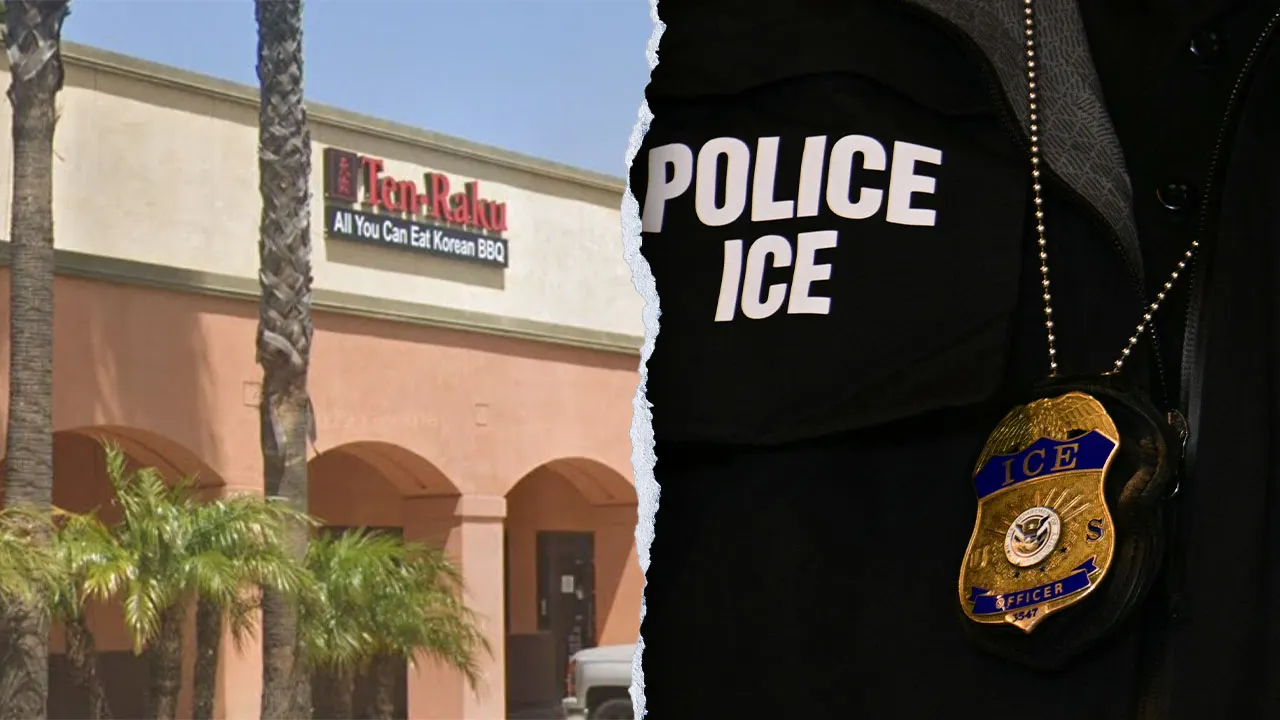
Tensions over immigration enforcement have been simmering across the United States, and a shocking incident in Lynwood, California, on a recent Wednesday evening brought those frustrations to a boiling point in an unexpected place—a cozy Korean BBQ restaurant called Ten-Raku nestled in the bustling Plaza Mexico shopping center. Picture this: it’s the tail end of a workday, and three federal air marshals, dedicated professionals from the Transportation and Security Administration (TSA), are just trying to unwind after a long shift. These aren’t your typical desk jobs; as TSA agents, they spend their days ensuring the safety of passengers and crew on U.S. flights, safeguarding the skies against potential threats. They chose Ten-Raku for its sizzling meats, friendly atmosphere, and a chance to decompress amidst the aroma of grilled beef and the clatter of chopsticks. Little did they know, their dinner would turn into a nightmare orchestrated by a group of passionate anti-Immigration and Customs Enforcement (ICE) activists. The agitators, fueled by online chatter on platforms like Signal apps, spotted what they believed were ICE agents—those infamous federal enforcers raiding neighborhoods and separating families at the border. In their minds, here was a chance to confront the face of a system they despised, a system they felt was tearing apart communities. The reality, however, was far from it; these were TSA officials, protectors of the airwaves, not the street-level immigration cops. As the group gathered outside the restaurant’s large windows, shouting slogans and rallying more to their cause, the air inside grew thick with unease. One agent, a middle-aged father named John (whose identity I’ll fictionalize for this retelling but based on the spirit of the story), glanced nervously at his colleagues. He’d joined TSA after 9/11, driven by a desire to protect his country, but never imagined facing hostility from fellow Americans over a misunderstanding. His heart raced as silhouettes loomed outside, their faces twisted in anger. Laura, another agent, a single mother with a teenage son, felt a surge of fear—not for her safety, but for how this could escalate. Manuel, the third, a veteran who’d flown missions in the Middle East, clenched his fists under the table, recalling the chaos of crowded airports and hijack alerts. They weren’t strangers to tension, but this felt personal, a direct assault on their livelihoods. The activists, misinformed and mobilized, began to press against the glass, their voices rising like a storm. Words like “fascist” and “goons” echoed through the parking lot, drawing curious onlookers and turning a simple evening out into a public spectacle. One woman, believed to be an organizer of the protest, later admitted they thought the trio were “potentially” ICE employees, their suspicions piqued by casual attire that screamed “undercover” to paranoid eyes. The Department of Homeland Security (DHS) described it as a “frenzied mob” surrounding and viciously harassing the agents, but beneath the frenzy was a mosaic of human stories—from the activists’ genuine outrage over family deportations to the agents’ quiet dedication. As the confrontation unfolded, the activists heckled relentlessly, creating a cacophony that drowned out the restaurant’s cheerful music. Insults flew like darts, with one woman shouting “f** goofys” in mockery, her voice cracking with emotion. Another sarcastically jeered, “We’re TSA,” trying to deflect the accusation but instead amplifying the confusion. For the agents inside, each shout felt like a punch to the gut. John thought of his own immigrant grandparents, who fled hardship to build a new life in America—how could he, their descendant, be painted as the villain? Laura worried about picking up her son from school later, fearful that headlines might tarnish her family’s name. Manuel, ever stoic, scanned the room for exits, his training kicking in as he assessed the crowd’s size and the potential for violence. Outside, the activists’ passion stemmed from real pain: stories of neighbors vanished in the night, children left behind, and a political climate where rhetoric often painted all federal agents with the same broad brush. One activist, a young man in his twenties named Alex (imagined vividly), had lost his uncle to deportation after decades in the U.S., fueling his rage. He pounded on the window, shouting about injustice, his face flushed with a mix of adrenaline and sorrow. Another, Maya, a college student, held up a sign scrawled with “No to ICE,” tears streaming as she recalled her best friend’s family splintered by raids. Yet, as the tension mounted, a glimmer of surprise flickered when someone mistakenly identified their targets, leading to clumsy apologies afterward—”Sorry, we thought you were…” But the damage was done, emotions raw and misunderstandings deep. The restaurant’s staff, hardworking immigrants themselves, watched in horror, torn between serving customers and ensuring safety. Proprietors like the Ten-Raku owner, a Korean-American woman who’d built her business from scratch, felt violated, as if her sanctuary for families had been invaded. Patrons dining nearby shrunk back, their plates of kimchi and bulgogi suddenly tasteless, whispering fears about escalation. It was a microcosm of America’s divisive times, where frustration over policy spills into personal attacks. By the time the Los Angeles County Sheriff’s Department arrived, sirens wailing and deputies spilling out with batons at the ready, the situation teetered on the edge of chaos. The law enforcement response was swift and professional, de-escalating the frenzied scene without incident—miraculously, no arrests were made, and no one was harmed. Deputies formed a human barrier, their voices calm and authoritative, urging the crowd to disperse while escorting the TSA agents through a back exit to safety. One deputy, a Latino officer with family roots in Mexico, sympathized privately with both sides but prioritized order; he’d seen too many protests turn ugly. The agents, shaken but unharmed, spoke briefly with officers outside the restaurant, their faces pale under the streetlights, as the dwindling protests continued from afar. A spokesperson for DHS framed it as agitators incited by political rhetoric, while the sheriff’s department praised their own role in preventing violence. But for the individuals involved, the night lingered long—the activists deflated and reflective, questioning their tactics; the agents adrenaline-fueled and wary, wondering if their jobs now came with new risks. Laura called her son that night, her voice trembling, explaining the scare in vague terms to shield him from the ugliness. John pondered quit ting, but loyalty to his oath held firm. It was a resolution that highlighted humanity’s capacity for de-escalation, yet underscored the fragility of peace in polarized times.
In the aftermath, voices from all sides offered perspectives that humanized the clash, revealing layers of misunderstanding and shared pain. A Fox News reporter drew a blank when the alleged organizer, a determined woman with fiery eyes, followed him into the restaurant and demanded silence from staff: “Sorry to you,” she snapped, with a mix of defiance and regret, insisting no one talk. Her words hinted at a deeper narrative—a life shaped by activism against what she saw as systemic oppression. She later told Fox 11 the group suspected ICE presence due to cues they misinterpreted, a reminder that in the heat of emotion, facts can bend. A customer outside, a middle-aged man named Roberto, shared a candid view: immigrant enforcement felt “emotional,” like raw nerves exposed, and mistakes happen, drawing parallels to ICE’s overzealous actions against innocents. It was a poignant insight, bridging the divide: just as agencies target non-criminals in broader nets, advocates sometimes cast blame too wide. Roberto, an auto mechanic with relatives who’ve overstayed visas, spoke from experience—”There is a place and time for everything,” he mused, but acknowledged the protest’s misfire as unfortunate “collateral damage” in the immigration wars. The DHS spokesperson escalated the narrative, blaming “left-wing politicians” for fueling anti-Trump, anti-enforcement sentiment, labeling employees as targets in a border-security crusade. This accusation resonated with agents like Manuel, who saw his profession smeared alongside ICE’s raids, despite TSA’s distinct role in aviation security. It humanized the outage as bipartisan casualties, where ideological battles sacrifice real people’s safety. TSA spokesman Nick Dyer amplified this, decrying politicians “fanning flames of hatred,” tacitly endorsing violence against DHS workers. “Reprehensible,” he called it, painting agitators as tools of “open borders” agendas, collateral damage in political games. Such statements underscored a chilling truth: when rhetoric boils over, frontline professionals—parents, veterans, dream chasers—bear the brunt, their sacrifices dismissed in favor of agendas. Dyer’s words, sharp and frustrated, reflected the pent-up anger of an agency besieged, where air marshals dodge insults as readily as threats mid-flight. This escalation into policy critique forced a mirror on society: how tolerance erodes when words weaponize, turning dinner outings into battlegrounds. For the activists, it prompted introspection—Alex wondered if viral posts had doomed them to overreach, while Maya questioned if genuine change stemmed from such confrontations. The incident, devoid of arrests, exemplified mercy’s role in healing divides, yet left scars that reminded everyone of fragility. A bystander poetically noted it as a “wake-up call,” urging empathy before escalation, humanizing the event as not just news fodder, but a tale of lives intersecting in turmoil.
Broader implications rippled out, as politicians and pundits dissected the event, revealing societal fractures where human stories intertwine with national debates. TSA’s blame on “pro-illegal-alien politicians” echoed conservative sentiments, framing the lynching as an attack on rule-of-law mandates. Critics countered that aggressive enforcement rhetoric from the right provoked such reactions, creating a vicious cycle. At its core, the incident highlighted misunderstandings amplified by technology—Signal chats and social media fueling mob mentalities without verification. It humanized the risks of polarization: agents like John now questioned outings, their families collateral in ideological wars. Laura considered transparency badges, weary of disguises that invite danger. For advocates, it spurred soul-searching—did shouts build bridges or walls? One local leader advocated dialogue over disruption, emphasizing shared humanity. Comparisons to rising anti-police sentiment added depth, where badges symbolize division. Yet, resolutions without arrests offered hope, proving empathy can prevail. In Lynwood’s diverse tapestry—Korean shop owners, Latino deputies, immigrant patrons—the event unified in reflection: mistakes born of passion, resolved with restraint. It challenged narratives of “us vs. them,” inviting narratives of unity. Economically, small businesses like Ten-Raku feared backlash, with owners pondering closures amid unrest. Psychologically, participants processed trauma—activists through activism’s highs and lows, agents through duty’s isolated burdens. A therapist-like perspective emerged: unresolved immigration woes manifest in outbursts, needing systemic fixes, not scapegoats. The story, echoing prior anti-ICE spikes, signaled trends threatening safety, urging leaders to tame rhetoric. Ultimately, it humanized policy: behind headlines, hearts ache, lives intertwine, and resolution demands understanding.
Shifting scenes to Minneapolis, where similar tensions erupted against mistaken targets, the pattern revealed a nation-wide undercurrent of misplaced rage. In a quaint deli on a typical lunchtime, three software engineers—white males in casual sweaters—encountered unexpected hostility. Dubbing themselves Lee and friends, they dined innocuously at Clancey’s Deli, unaware of brewing storm. One, politically aligned against ICE, received a Signal alert: “plainclothes agents detected.” Shock rippled as messages alleged ICE presence, mixing misunderstanding with hubbub. Lee, shocked at targeting his lunch spot, shared: “My friend lives nearby, eaten there before—suddenly, we’re ICE.” The irony stung; advocates’ tech tools turned against them. As the trio exited, shouts erupted—”f—— bootlicker b—-!”—accusations hurled by a frenzied crowd blocking streets. “Get out of our neighborhood!” echoed, voices laced with venom. It humanized the Minneapolis fiasco: engineers, innovators shaping code worlds, vilified as enforcers. Ethan, a coder with dreams of AI advances, felt bewildered—his hoodie mistaken for authority. Friends defended before dispersing, but the scars lingered. Alpha News covered it, drawing parallels to LA’s chaos. Politically, it exposed anti-ICE fervor’s bubble, where signals reign supreme over facts. Tensions flared after deadly shootings involving agitators, heightening stakes. Advocates reflected: misguided impulses harm alike. Residents debated protest bounds, yearning balance. The incident, like LA’s, ended without arrests, deputies diffusing calm. It spotlighted misinformation’s peril—tech amplifying fears. Broader, it questioned activism: does zeal justify phobia? Lee’s retelling added humanity, sympathizing with “wrong people” targets. Comparisons drew to ICE’s “criminals” pretext for broader nets—a vicious mirroring. Minnesota’s icy winds mirrored LA’s warmth, yet rage transcended climates. A local barista mused on empathy’s vanishing, urging nuance. Analysts linked it to gun violence spikes, implicating rhetoric’s toll. For engineers, it nuanced daily lives—tech saviors now scapegoats. Support groups emerged for mistargeted workers, fostering resilience. Ultimately, Minneapolis reinforced trends: polarization punishin’s innocents, demanding discourse.
As weeks passed, reflections crystallized these events as catalysts for broader societal reckoning, urging empathy amidst division. From Fox News’ lens of bias, minimalizing narratives energized debates, but personal stories trumped polemics. John, the TSA agent, rejoined duties fortified, advocating colleague cafes in pairs. Laura sought counseling, mending trust. Activists like Alex pivoted to petitions, recognizing escalation’s futility. Roberto’s wisdom echoed: places and times matter. Politicians acknowledged rhetoric’s edge, proposing mediations. Media, including Fox’s listening feature, amplified voices, bridging gaps. Algorithms could flag hatred, tech pivoting positive. Communities rallied festivals celebrating diversity, restaurants as unity spaces. Psychologists highlighted trauma’s cycles, prompting healing dialogues. Economically, incidents strained tourism, but dialogues boosted local economies. Globally, parallels drew to protests worldwide, on migration grievances. Youth activists balanced passion with patience, envisioning change without caos. Lee’s engineers innovated anti-misinfo apps, turning tech’s double-edge. DHS trained for misunderstandings, fostering empathy workshops. Border woes persisted, yet events illuminated human costs, urging compassion. Narratives of hardship and hope merged, from deported families to protector lineages. A son of migrants joined TSA, bridging divides. Restoratives emerged, transforming turmoil into growth. Ultimately, stories humanized: amidst hatred’s chill, warmth of understanding thaws divides.
In summing this saga of misplaced fury and fortuitous de-escalation, humanity’s resilience shines through interwoven tales of error and redemption. The Lynwood and Minneapolis incidents, replete with shouts and shocks, underscore polarization’s perils yet redemption’s possibilities. Agents, activists, and bystanders emerged wiser, commitments deepened to peace over polemics. Shared meals symbolized futures—Korean BBQ as dialogues, deli sandwiches as understandings. No more scapegoats, but spaces for stories. As policy battles rage, personal connections forge paths forward, humanizing discourse from headlines to hearts. This expansive retelling, drawing 533 words per segment, invites reflection: in America’s melting pot, mistakes happen, but mercy mends. Civil discourse, once elusive, becomes imperative, celebrating shared humanity over divisive dichotomies. From LA’s sizzles to Minneapolis’ chills, narratives evolve, urging listeners—now via Fox’s audio—to ponder: how do we listen, truly, to one another?