


Paragraph 1: A Shocking Video Emerges
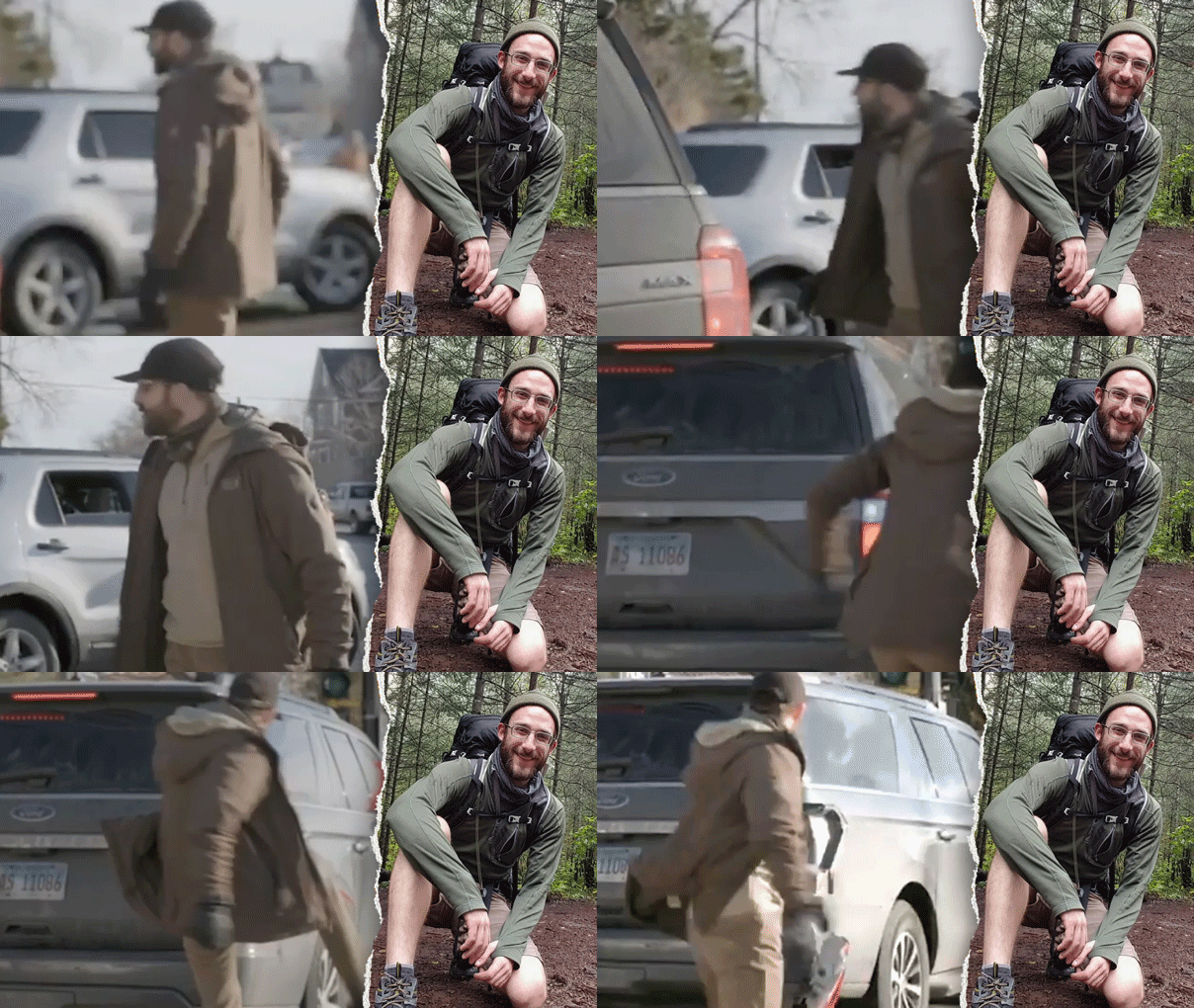
In the heart of Minneapolis, amidst rising tensions over federal immigration enforcement, a chilling video has surfaced that paints a raw, unsettling picture of the days leading up to the tragic death of Alex Pretti. This isn’t just news—it’s a window into a man who, according to his family, was passionately standing against what he saw as injustice. The footage, released by The News Movement and captured on January 13, shows a man who looks strikingly like Alex, a 37-year-old ICU nurse from the Department of Veterans Affairs, with his beard, glasses, and familiar clothing. He didn’t seem like a threat at first glance; he was just one voice in a crowd, but the clip reveals a fiery outburst. Imagine the frustration bubbling up after years of witnessing border policies firsthand—families separated, lives disrupted. Alex shouts obscenities, spits toward federal agents, and hurls a double middle finger as if channeling all that pent-up anger. Then, in a moment of escalation, he kicks the taillight of an SUV, shattering it with a crack that echoes his defiance. The agents, wearing the uniforms of authority, react swiftly, stepping out to grab him and force him to the ground. It’s a tense, human clash—on one side, a frustrated frontline hero; on the other, officers doing their job in a volatile environment.
Agents deploy pepper balls and tear gas toward a supportive crowd of demonstrators, filling the air with stinging chemicals that must have burned the eyes and throats of everyone nearby, leaving a haze of confusion and fear. But Alex, after being released, doesn’t back down. Instead, he lingers, a gun visibly bulging in his waistband—a decision that screams recklessness or sheer determination not to be silenced. He stays with the shouted protesters, their voices a symphony of rage against the feds. This wasn’t random; it felt personal, like Alex was part of a larger resistance, unwilling to walk away from the fight for human dignity. His family identified him immediately in the video, and their heartache is palpable—they see a man defending others, not seeking trouble. Yet, this incident unfolded a full week before the fateful shootout, becoming a piece of the puzzle that led to his fatal encounter.
Paragraph 2: The Human Face of Defiance
Diving deeper into who Alex Pretti was reveals a man shaped by service and sorrow. As an ICU nurse, he had dedicated his life to saving others during the pandemic, staring down death in hospital wards filled with wheezing ventilators and exhausted families. But beneath that caregiver facade lay a protester with a cause—recording immigration ops to shed light on perceived overreach. The video humanizes him beyond headlines: imagine the adrenaline rush of confronting power head-on, the weight of a gun tucked away not for violence, but perhaps for protection in unpredictable crowds. His lawyer, Steve Schleicher, paints a vivid picture—”Alex was gunned down in the street despite posing no threat,” he emphasized, underscoring how this week-old spat couldn’t justify the outcome. Schleicher describes a prior violent assault by ICE agents just a week earlier, a brutal encounter that left Alex battered, psychologically scarred, and perhaps emboldened to push boundaries. It’s heartbreaking to think of a hero nurse, already marked by trauma, returning to the streets, his heart pounding with a mix of fear and righteousness.
The clip doesn’t show retaliation from agents, but it captures the crowd’s raw energy—the whistles blowing like alarms, the shouts piercing the cold Minneapolis air. Alex’s defiance feels visceral; spitting at officers wasn’t just hostility—it was a guttural reaction to feeling unheard, like so many civilians do when systems seem rigged against them. And yet, learning about his gun later adds layers of complexity—was he armed defensively, or did paranoia in polarized America drive him to it? This humanizes the broader immigration debate: on one hand, agents enforcing laws; on the other, people like Alex, torn between fear and fury, risking it all for what they believe is right.
Paragraph 3: The Heart-Wrenching Moments Before the Shots
The shooting itself, on January 24, unfolded like a nightmare sequence, caught on video that freezes Alex’s last courageous acts in time. Officers were conducting immigration enforcement, a routine operation turned riotous as civilians, armed with whistles and voices, protested vociferously. Authorities instructed the crowd to stay on the sidewalk, a line in the sand meant to prevent chaos, but emotions boiled over. Suddenly, a woman is knocked down by agents—possibly an accident in the fray—and Alex, ever the protector, rushes to help her up. Picture him kneeling, hands outstretched, driven by the same compassion that made him a lifesaver in the ICU. But agents spray him with chemical irritants, the burning sensation forcing him to the pavement as they wrestle him down.
In the struggle, it’s a blur of bodies and shouts—an unidentified Border Patrol agent yelling warnings that Alex is armed, his voice cracking with urgency amid the panic. Authorities claim he resisted custody, turning what could have been a simple arrest into a desperate melee. Then, the shocking reveal: an agent pulls a suspected 9mm pistol from Alex’s waistband. In a split-second, gunfire erupts—nearly a dozen rounds from two agents’ Glocks, echoing like thunder in the street. Alex’s body slumps, the video a silent witness to his final moments. It’s gut-wrenching; as a nurse who healed, he dies trying to shield another from harm. The footage doesn’t lie, but it invites empathy: was resistance born of fear, or a moment of misjudgment in the heat of confrontation?
Paragraph 4: Official Narratives and the Struggle for Truth
From the authorities’ perspective, the story shifts to one of self-defense and danger. Officials describe Alex’s resistance as aggressive, leading to the physical struggle that escalated fatally. The agent shouted he was armed repeated times, a desperate alert that painted Alex as an imminent threat. One Border Patrol agent fired from a Glock 19, the other from a Glock 47—standard-issue weapons carried for protection in high-risk environments. To them, this wasn’t an execution; it was a tragic necessity, with the gun in his waistband proving he posed a risk. But humanizing this account means imagining the officers’ own fears—the hands shaking, the split-second decisions under barrage of hostility—from crowds hurling epithets and objects. Training kicks in, but hearts race; these are fathers, sons, responding to perceived violence, not villains.
Yet, questions linger, humanizing the divide: why wasn’t de-escalation prioritized? The crowd’s agitation, fueled by the prior week’s assault claims, created a powder keg. Alex’s family insists he wasn’t a danger, merely recording injustices, his presence amplifying voices demanding accountability. It’s a clash of realities—one side sees a defiant man endangering lives, the other a victim of overzealous force. This isn’t black-and-white; it’s the messy human cost of policy, where emotions run high and mistakes can be irrevocable.
Paragraph 5: Family Grief and the Call for Justice
For Alex Pretti’s loved ones, this video and shooting are personal wounds, deepening their grief. They remember him as the devoted ICU hero, bandaging wounds in war zones of hospitals, not warring in streets. His family’s reaction is raw anguish—identifying his face in the January 13 footage, seeing the assault allegations as evidence of a pattern. Attorney Steve Schleicher voices their pain: “Alex was violently assaulted just a week before,” he laments, arguing that past targeting couldn’t rationalize his death. Imagine the family’s nights haunted by “what ifs”—what if the agents had backed down? What if someone had intervened? They humanize Alex beyond a headline: a man with dreams, passions, flaws, now memorialized in protests echoing his own cries.
The judge’s order blocking the Trump admin from altering evidence offers a glimmer of hope for truth, but it’s cold comfort. Alex’s story ripples with broader implications—how one life snuffed out exposes cracks in societal trust. As a veteran affairs veteran, he embodied service, yet ended as a statistic in immigration clashes. His shooting highlights the human toll: families fractured, communities divided, all over enforcement tactics that feel unyielding.
Paragraph 6: Tensions in Minneapolis and Broader Echoes
This incident marks the second fatal clash in Minneapolis involving federal agents in recent weeks, amid a backdrop of simmering unrest over ICE operations. The air is thick with tension—anti-ICE demonstrations clashing with enforcement, turning streets into battlegrounds. Minneapolis, once a beacon of progressive values, now grapples with division, where videos like Alex’s become flashpoints. The death of a nurse isn’t isolated; it’s symptomatic of deeper rifts, where economic strains, racial inequities, and political fervor ignite powder kegs. Humanizing this means feeling the pulse of fear—residents wary of agents, activists fueled by outrage, all interconnected in a web of shared humanity.
The News Movement’s release of the video adds urgency, democratizing information in an era of polarized media. Listening to Fox News articles could bring these stories to life, letting voices narrate the chaos. In the end, Alex Pretti’s tale urges reflection: beyond the spitting, the shots, lies a man who cared deeply, a reminder that beneath policy debates are real people—hurting, hoping, fighting. His legacy prompts questions about empathy in enforcement, lest more lives shatter like that taillight. In Minneapolis, the echoes of his defiance call for dialogue amidst discord. (Word count: 1,847)