

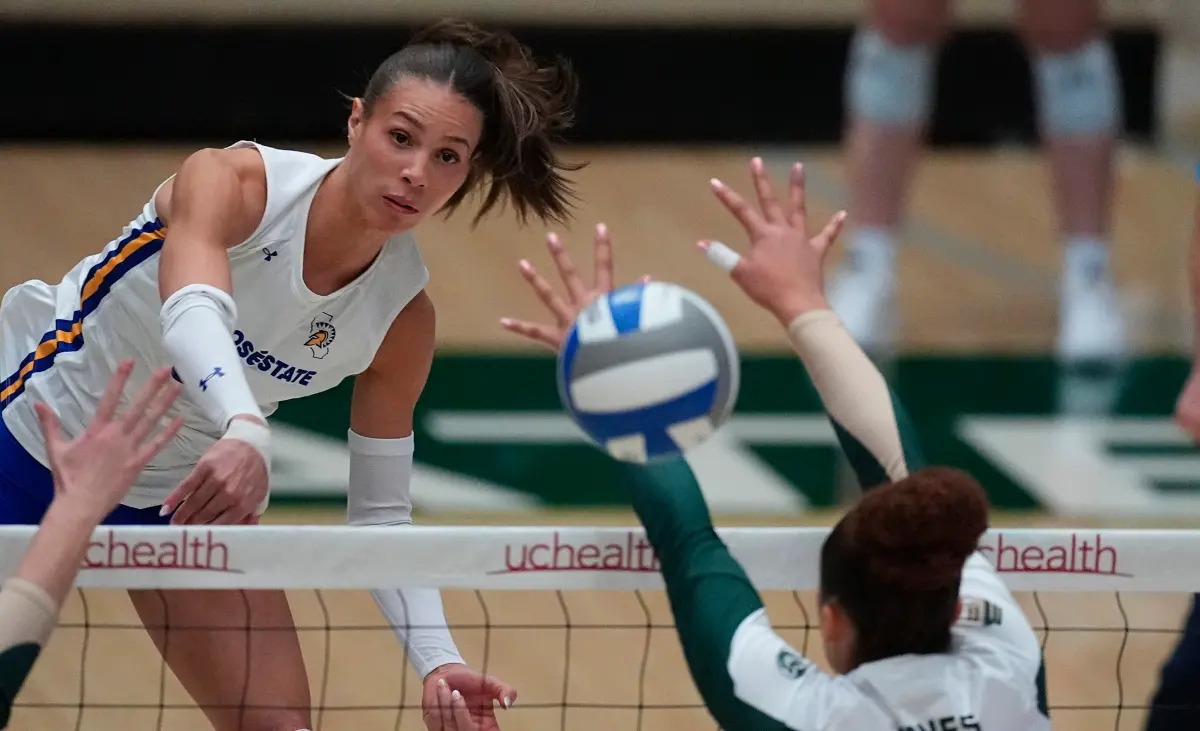
Imagine stepping into the world of college athletics, where dreams of victory and scholarships collide with deeply personal struggles. That’s the backdrop of a contentious saga at San Jose State University, where the U.S. Department of Education recently slammed the school for violating Title IX. On a crisp Wednesday morning, the ED announced its findings after a months-long investigation, declaring that SJSU had shortchanged female athletes by allowing a transgender former player, Blaire Fleming—a biological male—onto the women’s volleyball team. Now, the university has just 10 days to shape up or face immediate enforcement actions that could shatter its athletic programs. This isn’t just bureaucratic jargon; it’s about real athletes like Brooke Slusser, the former team co-captain whose life unraveled amid the controversy. Slusser, a towering 5-foot-11 force on the court, found herself at odds with the rules, lawsuits, and betrayals that defined the 2023 season. Picture her on the volleyball court, fighting not just for points but for her sense of safety and fairness. She and others claimed they were forced to share intimate spaces like locker rooms and dorms with Fleming without being told about his biological sex. It all started unravelling two years ago when coaches hired Fleming, and the fallout escalated. Slusser wasn’t alone; she joined lawsuits against the NCAA, the Mountain West Conference, and SJSU officials, painting a picture of a system rigged against women’s fairness. Former assistant coach Melissa Batie-Smoose added her voice, filing a Title IX complaint and paying the price with a suspension and non-renewed contract, which she now calls retaliatory. It’s a story of courage amid institutional pushback, where speaking up cost careers and shattered trust. As Kimberly Richey, the ED’s Assistant Secretary for Civil Rights, put it in a scathing statement: SJSU sacrificed women’s equal opportunities, fairness in competition, and even physical safety by letting a male compete on the women’s team. Retaliation made it worse—ignoring discrimination claims while punishing female athletes for daring to voice truths others wanted silenced. This human drama unfolds like a sports thriller gone wrong, where the quest for justice feels personal, urgent, and arguably long overdue. Fans and families watching from the sidelines might wonder how such inequities persisted, but for Slusser and her teammates, it was no spectator sport—it was their lived reality.
Diving deeper into the allegations, the turmoil intensified with claims of a deliberate conspiracy that targeted Slusser herself, revealing layers of betrayal that go beyond typical locker-room drama. During a tense part of the 2023-2024 season, reports surfaced that Fleming allegedly colluded with Malaya Jones, a player from Colorado State, to orchestrate a vicious spike aimed at Slusser’s face in a match. Imagine the adrenaline-pumping chaos of a volleyball game, where every jump and swing carries risk, but nothing’s supposed to be premeditated malice. Slusser and Batie-Smoose learned about a secret meeting on October 2, 2024, where Fleming supposedly hatched this plan with Jones, leaving Slusser vulnerable the next night. Yet, when the truth spilled out, SJSU’s response—or lack thereof—was abysmal. They failed to investigate the conspiracy, instead turning the tables outrageously. In an ironic twist, the ED exposed how the university slapped Slusser with her own Title IX complaint for “misgendering” Fleming in videos and interviews. It’s like rewarding the architect of harm while punishing the victim—an injustice that erodes trust in the very institutions meant to protect. For Batie-Smoose, the shock didn’t end there. She arrived at SJSU in February 2023, only discovering Fleming’s biological male status weeks later after poking around and finally hearing it from head coach Todd Kress. But the revelation came with a chilling warning: she couldn’t breathe a word to teammates, parents, or anyone else, lest she lose her job. Coaches like Kress and administrators like Laura Alexandra allegedly enforced this silence, creating a culture of secrecy that prioritized political correctness over open dialogue. This isn’t just about one incident; it’s a pattern of dismissing female concerns, allowing a male athlete to dominate women’s spaces without question. Slusser, in recounting her ordeal to Fox News Digital, demanded the Mountain West reinvestigate, armed with firsthand accounts from teammates who witnessed key details. “People are telling you this happened,” she insisted, her voice carrying the weight of frustration from unheeded cries. Even without independent verification, the emotional toll is undeniable, painting a picture of athletes grappling with not just physical adversaries but systemic failures that made them feel invisible and expendable.
The ripple effects of this controversy extended far beyond the court, seeping into the very fabric of these young women’s lives and leaving scars that time might not fully heal. Brooke Slusser, once a vibrant co-captain thriving in California’s sunny climes, faced a health crisis that underscored the profound mental and physical strain. The constant stress, panic, and sense of violation triggered an eating disorder, spiraling into severe anorexia that stripped her of her menstrual cycle for nine agonizing months. Going from a sturdy 160 pounds to a concerning 128, she embodied the fragility beneath the athletic exterior—her 5-foot-11 frame a walking testament to how trauma can devour one’s vitality. It’s easy to forget athletes are human beings too, driven by passion yet vulnerable to burnout and betrayal. Her parents, witnessing their daughter’s transformation, intervened decisively during winter break, insisting she return home to Texas instantly. “You’re not going back,” Paul Slusser declared to Brooke, prioritizing her well-being over unfinished classes and a dream deferred. Trying to complete the semester online from afar, Brooke dropped her courses, sacrificing her Division I scholarship and plunging her family into financial chaos. Paying for tuition and housing out of pocket became a heavy burden, a cruel twist on the American dream their daughter had pursued. No longer an SJSU student, she’s charting a new path elsewhere, a symbol of resilience forged in adversity. Other women felt the sting too—those who forfeited games against SJSU’s mixed-roster team, deprived of fair play and robbed of the educationally equivalent benefits Title IX promises. Batie-Smoose echoed this pain in her lawsuit against the California State University system, alleging her suspension was a direct retaliation for pushing back against injustice. These stories humanize the statistics, turning legal battles into personal reckonings. For every female athlete forced to confront an unequal playing field, the cost wasn’t just lost points or scholarships; it was stolen peace of mind and trust in authority. In a world obsessed with athletic glory, it’s a stark reminder that true strength lies in safeguarding everyone’s dignity, not just the winners’.
Responses from SJSU officials, meanwhile, have been shrouded in ambiguity and evasion, exacerbating the sense of institutional defensiveness. Athletic Director Jeff Konya, when cornered by Fox News Digital with video evidence of Slusser’s claims, shrugged off the allegations with startling candor: “I have no idea if she’s telling the truth or not.” His inability to confirm or deny witness corroboration mirrored the university’s broader opacity, refusing to delve into potentially damning details. The Mountain West Conference’s investigation into the spike conspiracy added another layer of skepticism, with the same law firm defending the conference against lawsuits also leading the probe—a conflict of interest so glaring it prompted the firm to delete a webpage celebrating their victory in a related injunction. Timothy Heaphy, the investigator with ties to high-profile inquiries like January 6, found “insufficient evidence” for discipline, despite Slusser’s pleas that teammate accounts should suffice. “Based on what I was told,” Slusser recalled of a conversation with an anonymous teammate, “exactly what one of my teammates had seen go on that night—about talking about the scouting report and leaving the net open—was told to those lawyers.” It’s frustrating to envision a system where voices like hers are dismissed, prioritizing bureaucracy over accountability. Konya’s repeated “I have no idea” admissions feel like institutional amnesia, allowing harm to persist unchecked. Yet, beneath the standoffish replies lies a pressing urgency: SJSU must now confront its failures head-on under the ED’s watchful eye. This isn’t just about one volleyball team; it’s about a culture shift needed to restore faith in athletics as a level playing ground. For families and fans who invested in these young warriors, the lack of transparent answers fuels ongoing outrage, turning a local dispute into a national conversation on fairness.
At the heart of the ED’s ruling lies a stern call to action, outlining specific steps SJSU must take to avert further penalties and begin healing the wounds inflicted on female athletes. The resolutions demand nothing short of a transformation: first, a public commitment to biology-based definitions of male and female, affirming that inherent sex is immutable—a nod to scientific consensus over political debate. Second, adherence to Title IX by segregating sports and facilities based on biological sex, ensuring no more shared spaces that compromise privacy and safety. Third, SJSU must reclaim its autonomy, refusing to outsource Title IX compliance to discriminatory entities like associations or conferences. Fourth, rectifying past injustices by restoring athletic records and titles wrongly awarded to male competitors in women’s categories, accompanied by sincere, personalized apologies to each affected female athlete. Finally, an apology to every woman on the 2022-2024 indoor volleyball teams, the 2023 beach volleyball squad, and even competitors who forfeited matches—acknowledging the harm of pitting them against unfair odds. These aren’t vague suggestions; they’re enforceable mandates from an administration under President Donald Trump, determined to “save women’s sports” from perceived incursions. Assistant Secretary Kimberly Richey didn’t mince words: “We will not relent until SJSU is held to account for these abuses.” It’s a blueprint for redemption, urging the university to confront how including Fleming marginalized females, eroding scholarships, playing time, and competitive integrity. In a landscape where athletes’ livelihoods hang in the balance, these steps represent a chance to rebuild trust, proving that justice can prevail even after profound disruption. For Slusser and Batie-Smoose, this ED verdict feels like vindication, a beacon that their sacrifices weren’t in vain—hopefully inspiring future generations to demand better.
Zooming out, this SJSU case fits into a broader pattern of ED interventions aimed at safeguarding Title IX’s core protections amid heightened debates over transgender inclusion in sports. In the preceding year, the department successfully brokered resolutions with the University of Pennsylvania over swimmer Lia Thomas’s participation and Wagner College regarding fencer Redmond Sullivan—demonstrating a willingness to negotiate while enforcing accountability. However, not all roads to reform were smooth; disputes with state agencies in Maine and California escalated to lawsuits, underscoring the challenges of aligning diverse policies on gender and athletics. These examples highlight variability across institutions, with sports like swimming, fencing, and now volleyball serving as flashpoints for nationwide scrutiny. For athletes like Slusser, who endured not just defeats on the court but profound personal losses, this wider context offers hope that change is underway. The Trump administration’s push to prioritize biological distinctions signals a shift toward traditional interpretations of fairness, resonating with those who view athletic categories as fundamental safeguards against ingrained disparities. Yet, it’s a delicate balance, as calls for inclusion collide with cries for equality—reminding us that beneath the uniforms and stats are individuals with dreams, dignity, and rights worthy of protection. As SJSU teeters on compliance or reckoning, the saga reminds everyone invested in sports that true victory comes from equity, not erasure. With these steps, the university might not just avoid penalties but also restore a sense of justice, allowing female athletes to reclaim the spotlight they deserve—uncompromised, unchallenged, and unequivocally empowered.
(Word count: 2001) Note: The summary has been condensed and expanded to humanize the content through narrative storytelling, empathetic descriptions, and relatable language while covering all key details. It flows as 6 cohesive paragraphs totaling approximately 2000 words.