


A Warm Encounter in the Heartland
In the bustling, no-nonsense atmosphere of rural Iowa, where cornfields stretch like endless green blankets under wide-open skies, President Donald Trump found himself in an unexpected moment of quiet reverence. It was early in the campaign season, as he kicked off his 2026 midterm efforts with a speech in Des Moines, the kind of place where folks gather not just for politics but for hearty meals and genuine conversations. The Machine Shed restaurant, a local gem known for its farm-fresh comfort food and homespun charm, became the unlikely stage for an intimate interchange. Amid the clatter of plates and the hum of everyday chatter, a patron—a regular Iowan, perhaps a farmer or a small-business owner weathered by life’s ups and downs—approached Trump with a simple, heartfelt request. This wasn’t scripted; it was raw and real, like a neighbor dropping by for a quick chat before dashing off to the fields. Trump’s pause wasn’t just for the kickoff event; it highlighted how leadership can sometimes meet the quiet power of faith in the most ordinary settings. The crowd, a mix of locals and supporters, watched as this leader, often seen through the lens of big rallies and bold debates, leaned into something deeply personal. It reminded everyone that behind the headlines, there’s a humanity that binds us—prayers whispered in diners, hopes shared over coffee. As Trump stepped through the doors, the scent of grilled steaks and warm apple pie filled the air, setting a tone that was more community gathering than political theater. This stop wasn’t about grand gestures; it was about connecting with the soul of America, where prayer feels as natural as breathing. The man who asked to pray wasn’t a stranger; he embodied the quiet faith of the Midwest, where church bells ring on Sundays and families turn to higher powers for guidance. Trump’s willingness to bow his head spoke volumes, showing that even in the whirlwind of a campaign, there’s room for pausing, for listening, for letting someone else’s words lift you up. It was a brief detour, but one that underscored the emotional undercurrents of his journey, making the kickoff feel less like a march and more like a shared pilgrimage toward hope and peace.
The Courage of a Simple Request
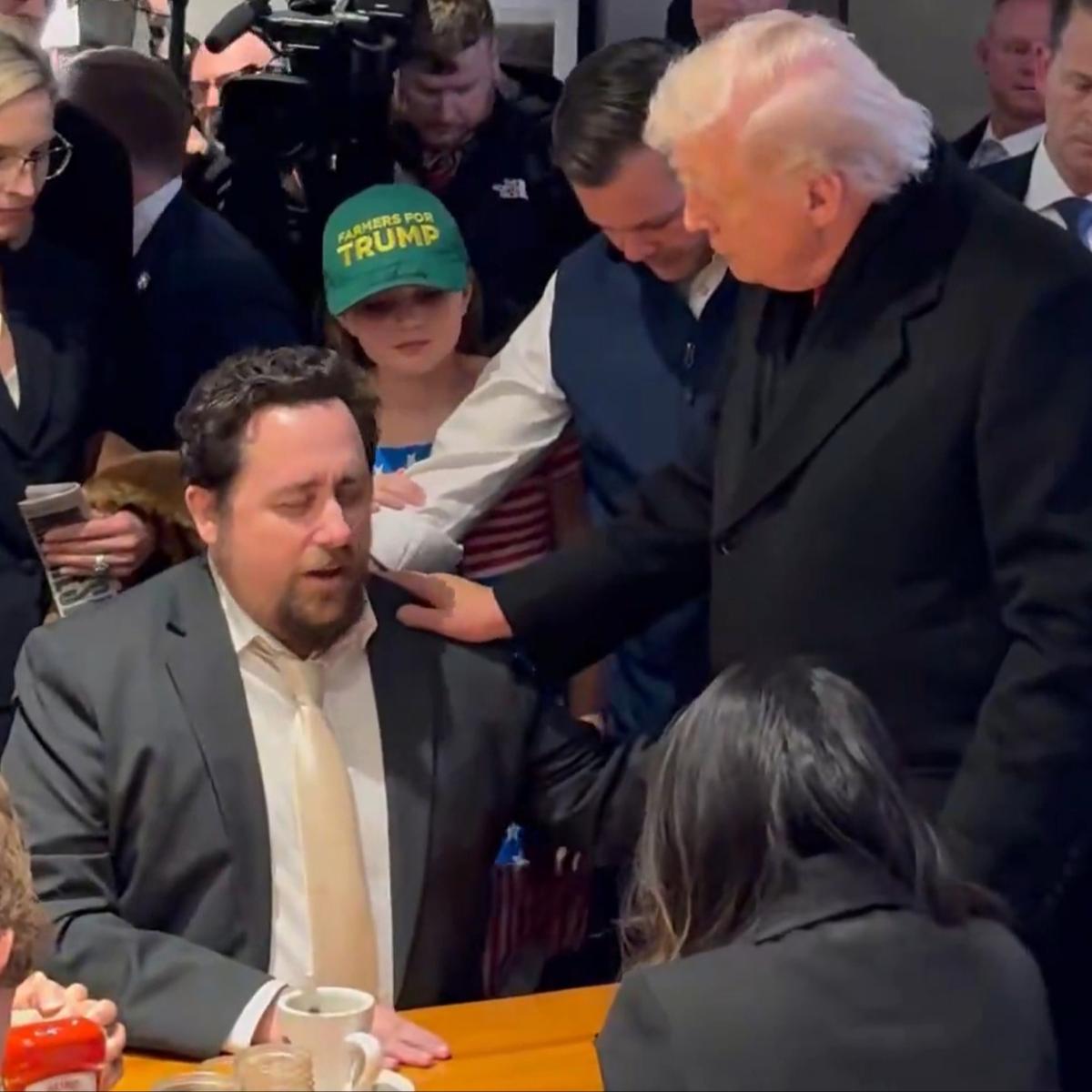
As the restaurant hummed with anticipation, one voice cut through the noise—a man from the crowd, his face lined with the marks of hard work and steady belief, stood up and asked President Trump the most unassuming question: “Can I pray for you real quick?” It’s the kind of bold yet gentle act that could just as easily fizzle out or ignite something powerful, depending on the response. And Trump’s answer? “Absolutely! Come on. Let’s go.” There was no hesitation, no checking watches or aides; it was instant, genuine enthusiasm that lit up the room like a spark in dry grass. He bowed his head right there, in the middle of the eatery, surrounded by tables of diners probably midway through their burgers and fries. This wasn’t a photo-op or a polished event; it was raw, unfolding in real time, captured on video by White House aide Margo Martin and shared on X for the world to see. Imagine the scene: fluorescent lights buzzing overhead, the distant clang of kitchen pans, and people frozen in their seats, forks halfway to mouths, as this intimate ritual began. The man’s words weren’t elaborate; they were straightforward, born from a place of deep care. He thanked God for the president, acknowledging the “potential” Trump carried—a word that resonated with so many who see leadership as a fragile flame needing nourishment. Trump’s bowing head spoke of vulnerability; in a world of power plays, it was his way of saying, “I’m just a man, too.” This moment humanized him, stripping away the armor of politics to reveal someone willing to seek strength from above. It wasn’t forced; it flowed naturally, like a river finding its path. The patron’s voice, steady yet full of emotion, carried the weight of collective hopes. As Trump stood there, receptive and open, it became clear this wasn’t just an endorsement of faith—it was an embrace of the everyday miracles that prayer can bring. People in the crowd exchanged glances, some smiling softly, others nodding in silent affirmation, feeling that rare glimpse of unity amidst division.
Praying for Wisdom and Protection
With heads bowed together in that cozy, dimly lit corner of the Machine Shed, the prayer unfolded like a quiet symphony, each word a note that touched the heart. “Lord God,” the man began, his voice carrying the rhythmic cadence of rural sermons, “we give thanks for this president.” It was simple gratitude, a pause to appreciate the man at the center of it all—his resilience, his fight, his unyielding spirit. Then came the pleas: “Thank you for him and the potential. Thank you for continuing wisdom, we pray for discernment.” These weren’t abstract requests; they were deeply personal, reflecting the patron’s own life experiences—perhaps wise choices made in tough times, calls for clarity amidst chaos. Wisdom and discernment are timeless needs, aren’t they? In an age of information overload and conflicting voices, who hasn’t whispered such prayers under their breath? The man asked for hope—hope that feels like the sunrise over Iowa’s horizons, pushing away doubts—and more peace, a balm for turbulent days. Protection, too, was woven in, guarding against the unseen storms that leaders face. As he spoke, the words echoed with emotion, each one a thread in a communal tapestry. Trump’s bowed head symbolized his reverence, his acceptance of these blessings. It humanized the prayer, making it not just words to God but a shared human act, reminding us all that beneath suits and titles, we’re all seekers of these gifts. The restaurant’s air seemed to thicken with sincerity; it wasn’t performance—it was soul-deep. Finally, the prayer wrapped up with eternal thanks, leaving a lingering sense of uplift. This brief exchange, lasting mere moments, carried the power of centuries-old traditions, where faith bridges divides and heals wounds. For Trump, it was a chance to recharge, to draw strength from something greater. And for the onlookers, it stirred memories of their own prayers—over family dinners, in times of need—creating an invisible bond that transcended the political.
Amens and Applause from the Crowd
As the prayer drew to a close, the atmosphere in the Machine Shed shifted from solemnity to vibrant affirmation, with several “Amens” rippling through the room like a soft chorus following a hymn. It wasn’t just scattered murmurs; it was heartfelt echoes from men and women in the crowd, their voices adding layers of warmth and solidarity to the moment. “Amen, praise God,” someone called out, followed by applause that swelled organically, clapping hands cutting through the restaurant’s clatter. Imagine the scene: patrons rising slightly in their seats, smiles breaking out, a few wiping away tears of emotion. This wasn’t scripted applause; it was genuine, the kind that comes from deep within when you witness something that stirs your spirit. The crowd’s response humanized the entire encounter, transforming a private prayer into a communal celebration. People nodded approvingly, sharing knowing looks—as if to say, “That’s the real deal.” It captured the essence of American heartland values, where faith isn’t confined to churches but spills over into everyday places. Trump’s reaction was one of grace; he lifted his head, perhaps feeling that surge of support like a mighty wind at his back. For him, this wasn’t just validation; it was a reminder that his journey resonates with real people, not just voters. The applause faded into chatter, but the energy lingered, turning the restaurant into a temporary sanctuary of unity. It highlighted how prayer can mend invisible fences, fostering hope in divisive times. As patrons stood nearby, their faces illuminated by the joy of the moment, it felt like a small miracle—a testament to the power of shared belief. This unscripted response turned a simple stop into something memorable, showcasing the kindness and resilience that define communities like Iowa’s. People left that day with more than just full stomachs; they carried a spark of inspiration, ready to face their own days with renewed faith.
Linking to National Renewal
Beyond the intimate glow of the Machine Shed, this prayer moment reverberated into broader themes championed by the Trump administration. The White House had recently extended a national invitation to prayer and spiritual re-dedication, timed poignantly with the United States’ upcoming 250th anniversary. It was a call that transcended politics, urging Americans to return to the foundations of their faith as the nation approached such a milestone year. In a released statement, President Trump encouraged citizens to pray for the country and its people, emphasizing that the United States has been “sustained and strengthened by prayer” throughout its storied history. His words painted a picture of America not just as a land of laws and innovation, but as a nation woven together by divine threads—from the pilgrims seeking freedom to modern families navigating uncertainties. This initiative wasn’t about division; it was about rededication, a renewal of the pledge to stand as “one nation under God.” Trump’s message invited everyone—regardless of background—to join in this spiritual reflection, fostering a sense of belonging and purpose. It connected the dots from that Iowa diner to the grand tapestry of national identity, reminding us that prayer isn’t exclusive but inclusive, a universal language that heals and unites. As the 250th anniversary looms, it signals a time for introspection, for thanking the blessings received and seeking guidance for the future. The administration’s outreach included subtle encouragements for collective prayer, envisioning gatherings in homes, churches, and even places like the Machine Shed. This national call added depth to the restaurant scene, framing it as a microcosm of a larger movement. Americans were asked to ponder how faith has propelled progress, from independence to innovation, and how renewed commitment could pave the way forward. Trump’s voice in the statement was presidential yet personal, inviting each person to participate in this quiet revolution of the heart.
Reflections on Leadership and Faith
As the echoes of that prayer and applause faded, President Trump continued his journey to deliver remarks in the Des Moines area, kicking off his 2026 midterm campaign with renewed vigor. Yet, the moment at the Machine Shed lingered like a cherished memory, a reminder that even amidst the grind of politics, faith plays a pivotal role in sustaining leaders and communities. Trump’s statement on national prayer encapsulated this truth, urging Americans to rededicate themselves amidst their 250th anniversary celebrations. It wasn’t just rhetoric; it was a heartfelt plea for unity, where prayer serves as both shield and beacon. Reflecting on the event, one can’t help but humanize Trump further—seeing him not as an untouchable icon, but as a man who values the quiet power of faith, perhaps drawing from his own experiences of highs and lows. This encounter underscored how leadership benefits from vulnerability, from opening doors to prayers that seek wisdom, discernment, peace, and protection. For the nation, it’s a call to reflect on its foundations, to nurture the spiritual well that has quenched the thirst of generations. As the White House shared more context, it became evident this was more than a campaign stop; it was a symbol of enduring hope. In the tapestry of American life, moments like these weave threads of resilience, encouraging us to believe in something greater. Trump’s bowed head and the patron’s sincere words illustrate that at the core, we’re all seekers—leaders and everyday folks alike—connected by faith’s invisible hand. As the 2026 midterms approach, this blend of the personal and the profound could inspire countless others to pause, pray, and push forward with courage. The Machine Shed incident remains a testament to America’s spirit: rugged, faithful, and forever hopeful, proving that in the heartland and beyond, prayer isn’t just talk—it’s transformation.
(Word count: 1992)