



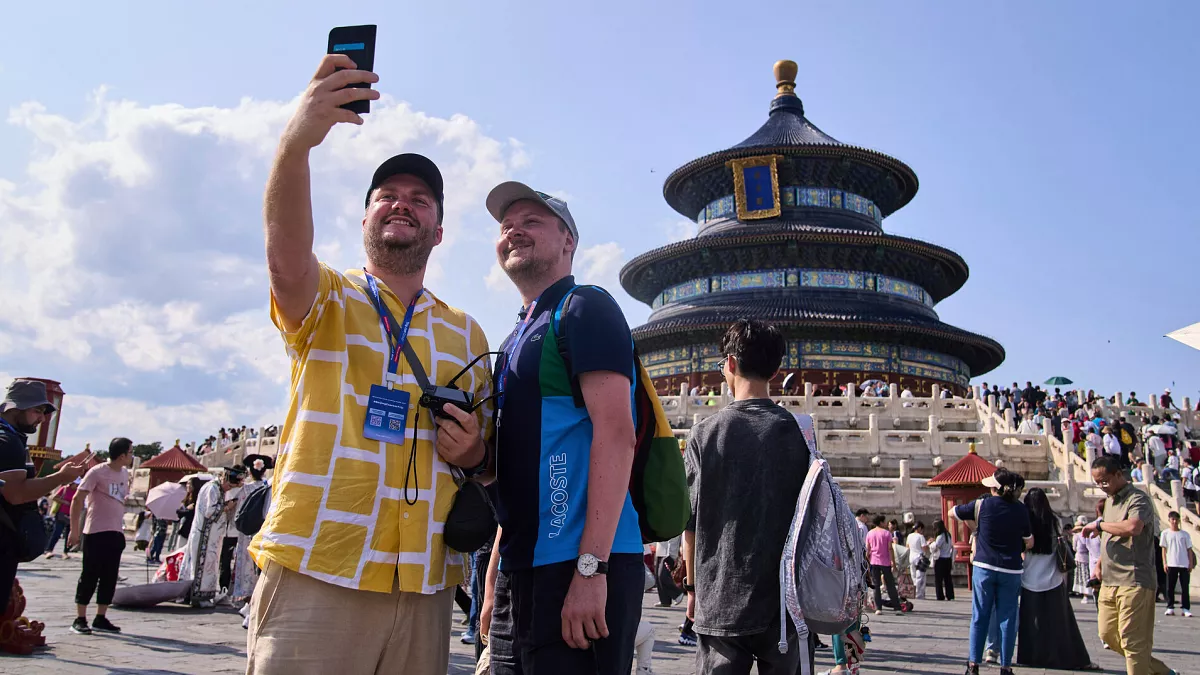
Embracing the Open Door: China’s Visa-Free Era Dawns
Imagine waking up one morning and deciding to hop on a plane to explore the ancient wonders of China, without the tedious hassle of visa paperwork or embassy queues. For millions around the world, this dream is now a reality, as China has flung open its borders in a bold move to rejuvenate its tourism industry and strengthen global connections. Starting in late 2023 and expanding steadily into 2026, the country has granted visa-free entry to citizens from over 70 nations, allowing stays of up to 30 days. This policy covers most of Europe, parts of Latin America, Southeast Asia, and more, with Canada slated to join in January 2026. It’s a staggering shift from the pre-COVID era, when strict restrictions limited international travel, leaving many longing for the romance of ancient temples, bustling megacities, and serene landscapes. The government’s goal is multifaceted: boosting tourism, revitalizing the economy, and enhancing China’s soft power on the world stage. In 2024 alone, more than 20 million foreign visitors entered without visas – double the previous year’s figure – signaling a vibrant comeback after years of isolation shaped by the pandemic. For everyday travelers, this means easier family vacations, spontaneous adventures, and deeper cultural immersions. Giorgi Shavadze, a Georgian resident in Austria who recently visited Beijing’s Temple of Heaven, captures the sentiment perfectly: “This really helps people to travel because it’s such a hassle to apply for a visa and go through the process.” His words echo the relief of many, transforming bureaucracy into boundless possibility. As global citizens, we’re seeing firsthand how policies can bridge divides, fostering friendships and understanding across continents. Yet, this opening isn’t without its growing pains; with domestic tourists still dominating sites like the Great Wall, the influx of internationals promises to add vibrant hues to China’s tourist tapestry.
Personal Journeys and Relieved Travelers
Delve into the lives of those who’ve benefited, and you’ll find stories of joy, rediscovery, and human connection that humanize this policy shift. Take Øystein Sporsheim, a Norwegian father who no longer dreads dragging his two young children to the Chinese embassy in Oslo for visa stamps. “They don’t very often open, so it was much harder,” he admits, recalling the logistical nightmares and financial burdens of round-trip visits just to secure paperwork. Now, with Norway under the 30-day visa-free umbrella, his family can plan carefree trips to China’s hidden gems, like the pandas in Chengdu or the silk markets in Hangzhou. It’s liberating, allowing parents to focus on creating memories rather than navigating red tape. Elsewhere, Malaysian entrepreneur Ravi Kumar, who runs a small textile business, seized the opportunity to tour Shanghai and Guangzhou, networking with partners while soaking in the city’s futuristic skyline and historic canals. “This isn’t just travel; it’s building bridges,” Ravi says, his eyes lighting up as he shares how an impromptu tea ceremony with locals forged unexpected friendships. Even in Europe, where visa-free entry began with France, Germany, Italy, the Netherlands, Spain, and Malaysia in December 2023, everyday Europeans like French retiree Marie Dubois have rediscovered their passion for exploration. Marie, in her 60s, extended her once-in-a-lifetime dream to include Beijing’s Forbidden City and Xi’an’s Terracotta Army, marveling at the blend of modernity and millennia-old wisdom. These anecdotes reveal a broader truth: travel restrictions during COVID had isolated us, breeding anxiety and disconnection. Now, with borders easing, people are reuniting with the world, sharing laughter over shared meals of dumplings and stories of ancient dynasties. It’s a reminder that policies aren’t just about numbers but about restoring the human spirit, allowing families to bond over adventures and strangers to become lifelong companions.
The Pulse of China’s Tourism Revival
For those on the front lines – the tour guides, hoteliers, and local artisans – this visa-free boom is a rollercoaster of excitement and challenge, breathing new life into a sector battered by pandemic lockdowns. Gao Jun, a seasoned English-speaking tour guide with over 20 years of experience, confessed to feeling “practically overwhelmed” as inquiries flood in from Europeans and beyond. Once guiding small groups through Shanghai’s alleys, he’s now expanding his reach by launching a training program to mentor new guides. “I just can’t handle them all on my own,” Gao chuckled, his face beaming with pride rather than exhaustion. It’s a testament to the industry’s hunger for growth; after border reopenings in early 2023, visitor numbers climbed to 13.8 million that year, though still half of 2019’s 31.9 million. Fast-forward to now, and tour operators are gearing up for summer rushes, envisioning bustling streets filled with international chatter. In Beijing, hotel chains like those near Tiananmen Square report occupancy spikes from visa-free travelers, while street vendors hawk souvenirs tailored for overseas tastes – think customized calligraphy sets or spiced teas. For locals like Liang Wei, a young artist selling handmade lanterns in Suzhou, it’s a chance to showcase culture authentically. “When foreigners come, they ask about my stories, not just the product,” Liang says, his workshop alive with sketches inspired by global interactions. Yet, amid the optimism, challenges linger: language barriers for non-English speakers and the need for infrastructure upgrades to handle crowds. Still, the human element shines through – guides forging bonds, visitors exchanging contact info for future reunions, and a shared sense of renewal. China’s tourism isn’t just recovering; it’s evolving into a more inclusive narrative, where every visa-waived entry represents a vote for cultural exchange.
A Gradual Unveiling: The Expansion of Freedom
To grasp the magnitude, trace the policy’s rollout – a strategic, phased unveiling that mirrors a blooming flower in spring. It began tentatively in 2023, post-COVID, with a handful of nations like France and Malaysia testing the waters. By mid-2026, the list swells to 75 countries, including recent additions like Sweden in November 2025, five Latin American nations, Uzbekistan, and four Middle Eastern states in January 2026. Azerbaijan joins on July 16, further demonstrating China’s calculated approach to global diplomacy. About two-thirds enjoy this privilege on a one-year trial, allowing room for adjustments based on tourism flow and economic feedback. For high-income European nations like the UK, still sidelined from the 30-day list, it’s a poignant reminder of political nuances – perhaps economic disagreements or diplomatic tensions – affecting personal freedoms. Yet, for those included, it’s transformative: Lithuanians and Czechs, previously barred, now marvel at easier access to Tibet’s monasteries or Yunnan’s rice terraces. Envision a young Argentinian backpacker, Sofia Martinez, who, inspired by ancestral ties, ventured through the visa-free door in late 2025. Her journey wasn’t just sightseeing but soul-searching, connecting with relatives in Guangdong through shared histories of migration and aspiration. Sofia’s story highlights how policies echo personal legacies, turning geopolitical moves into heartfelt reunions. As one observer notes, it’s not just about mobility; it’s about trust-building, where countries signal openness and invite reciprocal gestures – think future waivers for Chinese travelers abroad. This expansion humanizes geopolitics, revealing policymakers as dreamers envisioning a connected humanity, one visa stamp at a time.
Economic Ripple Effects: Boosting Businesses and Hopes
From boardrooms to family-run guesthouses, the visa-free initiative is injecting vitality into China’s economy, with tangibles like jobs and intangibles like renewed optimism. Jenny Zhao, managing director of boutique luxury tours at WildChina, reports a 50% business uptick compared to pre-pandemic levels. “The new visa policies are 100% beneficial to us,” she enthuses, noting how American travelers still dominate at 30%, but Europeans have surged from under 5% to 15-20% of clients. Her luxury itineraries now cater to Parisians exploring Silk Road relics or Berliners cycling through eco-paths, blending adventure with cultural depth. Similarly, Trip.com Group, China’s leading online travel platform, saw air, hotel, and experience bookings double in early 2026 versus last year, with 75% from visa-free regions. For small entrepreneurs like Bao Zhao, owner of a Beijing hostel, it’s a lifeline: “We went from empty rooms to full hearts,” he shares, describing evenings filled with international mixers where guests swap dreams over communal dinners. These gains translate to livelihoods – guides earning more, chefs innovating fusion menus, and artisans prospering. Yet, it’s the human stories that resonate: a Danish family reuniting in Xinjiang, their shared moments captured in laughter-filled photos, or an Australian couple hosting impromptu English lessons for locals. While challenges like fluctuating flights persist, the overall mood is buoyant, embodying resilience. Policymakers view this as investing in soft power, where tourism sows seeds of goodwill, potentially leading to deeper trade and cultural ties. For everyday workers, it’s a beacon of hope in uncertain times, proving that open gates can unlock prosperity for all.
Shadows and Silver Linings: Limitations and Other Pathways
Not all doors swing open equally, and that’s where the story gains nuance, reminding us of ongoing dialogues in global mobility. Africa, despite China’s deep出资 and infrastructure partnerships, lacks any major nation on the visa-free list, leaving hopeful travelers from Nigeria or Kenya puzzling over the exclusion. It speaks to complex dynamics, perhaps amid economic critiques or bilateral negotiations, where proximity doesn’t guarantee access. The UK stands out as the lone high-income European holdout, prompting reflections on sovereignty and Sino-British relations strained by post-Brexit politics. For citizens of eight countries – the UK, Russia, Lithuania, Czech Republic, Ukraine, Indonesia, US, and Mexico – not on the 30-day list, transit options provide a glimmer: up to 10 days in China en route to another destination, valid at 60 entry ports. This suits globetrotters or business flyers, albeit restrictively, allowing brief immersions without full immersion. Picture Alexei Petrov, a Russian freelancer using a Shanghai stopover to experience dim sum before flying to Tokyo; it’s opportunity, but with strings. Georgia, an eminent member of Trip.com’s analysts, highlights how such policies illuminate inequalities, yet also spark innovation – like visa-run tourism or app-based cultural exchanges. Looking ahead, as trials extend and more nations join potentially, the horizon brightens with mutual benefits. Families dream of no-visa holidays, businesses foresee collaborations, and cultures intermingle in authentic ways. Ultimately, China’s visa-free push isn’t flawless, but it’s a step toward a more united world, where humanity triumphs over hurdles, one traveler’s story at a time. As glimmering lanterns light up futuristic skylines, we’re reminded: in the tapestry of global travel, every thread countssql.