


A Personal Journey Through Topical Steroid Withdrawal: Jia Patrick’s Story
Jia Patrick’s struggle with eczema began at just two years old when doctors first prescribed steroid creams to treat her condition. For over 16 years, these topical steroids became a constant presence in her life, offering temporary relief but ultimately creating a vicious cycle. Each time the 23-year-old British woman finished a course of treatment, her eczema would return “with a vengeance,” becoming itchier, flakier, and more painful than before. This pattern continued until 2019, when as a teenager with a better understanding of her own body, Patrick began questioning the creams’ effectiveness. She noticed a burning sensation with each application and started researching, eventually discovering an infographic about something called “topical steroid withdrawal” (TSW) – a term she had never encountered before. Concerned about potential health implications, Patrick made the decision to stop using all steroid creams, not realizing that this abrupt cessation would trigger a painful journey that would dramatically transform her life for years to come.
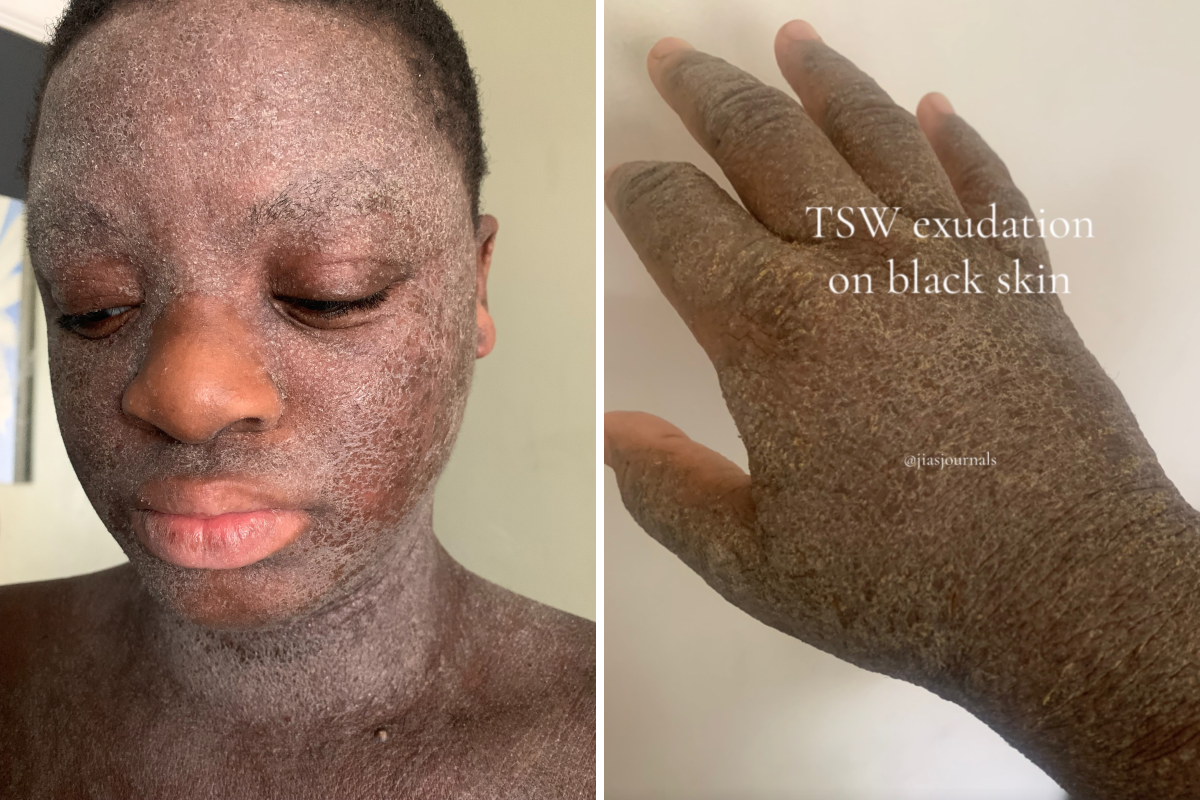
Just one week after quitting steroid creams, Patrick began experiencing the early signs of TSW. Her face reddened, and dark, thick patches developed and rapidly spread from the inner folds of her arms to eventually cover her entire body – including areas where she had never experienced eczema or applied steroids. This unexpected development highlights one of the most troubling aspects of TSW: it isn’t limited to treated areas but can affect the entire body. Topical steroids work by reducing inflammation and accelerating healing when applied directly to the skin, providing relief from itching and soreness, but they aren’t a cure for eczema. When someone stops using these steroids, TSW can occur, bringing symptoms including burning sensations, flaking, shedding, peeling skin, swelling, redness, thinning skin, hair loss, shivering, fatigue, and depression. Though the condition appears more common in adult women who use mid- to high-potency corticosteroids for extended periods, there is still no official clinical diagnosis for TSW. The standard approach, according to the National Eczema Society, is simply to stop using steroids and allow the skin to heal naturally – a process that can be excruciatingly painful and prolonged.
The physical symptoms of Patrick’s TSW journey proved debilitating. “I experienced incessant peeling of the skin on my face, a truly harrowing experience,” she explained. The condition became so severe that basic daily activities became impossible: “There were periods when I was unable to bathe, take myself to the loo and even struggled to eat or blink. The pain that accompanies the physical symptoms is excruciating.” Adding to this physical suffering was the frustration of seeking medical help only to be “met with invalidation.” Doctors repeatedly diagnosed her with severe eczema rather than acknowledging TSW as the underlying issue. This dismissal of her condition represents a significant problem within the healthcare system – a lack of awareness or recognition of TSW despite its devastating effects on patients’ lives. Patrick tried various treatments, including phototherapy, which showed no improvement. The only approach that seemed to help was ultra-cold atmospheric plasma therapy, which uses ionized gas to deliver energy to the skin. Beyond medical interventions, Patrick has focused on holistic healing through proper nutrition, hydration, and stress management techniques to support her body’s recovery from within.
The psychological toll of TSW has been as severe as the physical symptoms for Patrick. As days of suffering turned into months and then years with no end in sight, she experienced profound feelings of frustration, hopelessness, and isolation. The condition’s unpredictable nature added another layer of psychological distress – just when Patrick thought she was improving in early 2025, she experienced “the worst flare-up I have ever had that left me bedbound for weeks.” This rollercoaster of hope and disappointment is common among TSW sufferers, who often report significant impacts on their mental health. The condition forces patients to confront not only the physical limitations and pain but also the uncertainty of recovery and the struggle to be believed by medical professionals. While Patrick’s friends and family provided constant support, she recognized the need to connect with others who truly understood her experience, leading her to share her journey on social media under the handle @jiasjournals on TikTok.
Patrick’s decision to document her TSW experience online served multiple purposes: creating a visual record of her condition, connecting with fellow sufferers, and raising awareness about a debilitating condition that remains poorly understood in mainstream medicine. Her TikTok posts have gone viral, amplifying her important message to both patients and healthcare providers. Through her platform, Patrick offers support to others going through TSW while also expressing justified frustration with the healthcare system: “I, and so many others, have been victims of NHS systemic negligence. I wasn’t born with TSW, and people must be held accountable for what they continue to do to patients.” Her advice to others facing TSW reflects both compassion and realism: “Do whatever you have to do to keep your sanity. TSW will be one of the most-testing things you go through, and you will certainly have low moments.” By sharing her story so openly, Patrick has transformed her personal suffering into a powerful advocacy tool, helping to validate the experiences of countless others whose TSW symptoms have been dismissed or misdiagnosed.
Patrick’s journey illustrates a troubling gap in our healthcare system – the potential for treatments to cause harm when prescribed without adequate understanding of long-term consequences. Her experience raises important questions about the routine prescription of topical steroids for chronic skin conditions, especially in young children who may use these medications for decades. While steroids remain an important tool for managing eczema and other inflammatory skin conditions, Patrick’s story suggests the need for more research into TSW, better monitoring of patients on long-term steroid therapy, and greater awareness among healthcare providers about recognizing and treating withdrawal symptoms. Perhaps most importantly, her story highlights the necessity of listening to patients when they report unexpected or severe reactions to treatments or their cessation. As Patrick continues her healing journey and advocacy work, her courage in documenting both the physical and emotional realities of TSW provides an invaluable resource for patients, doctors, and researchers seeking to better understand this challenging condition and develop more effective approaches to treatment.