


American Tennis Stars Show Patriotism at Australian Open
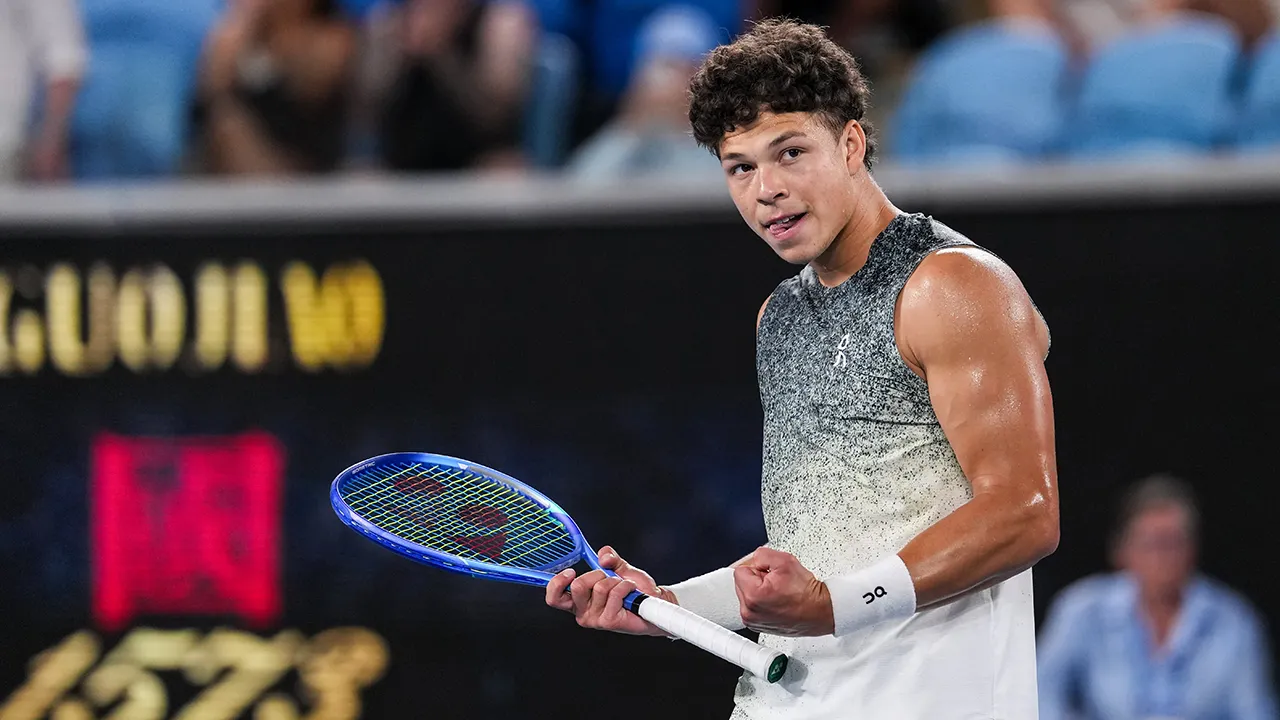
In a powerful display of patriotic sentiment, American tennis player Ben Shelton made headlines at the Australian Open with a bold statement of national pride. After defeating Valentin Vacherot in the third round, Shelton participated in the traditional camera signing with a message that spoke volumes: “USA ’til it’s backwards.” This clever play on modern slang conveyed his unwavering support for his country, essentially saying he stands firmly behind the United States no matter what. The gesture came amid what appears to be a pattern of politically charged questioning directed at American players during the tournament, raising eyebrows throughout the tennis community about the appropriateness of such inquiries in a sporting context.
Several American players including Taylor Fritz, Coco Gauff, Madison Keys, Amanda Anisimova, and Naomi Osaka have reportedly faced similar questions from a particular reporter at the Australian Open. The questioning seemed designed to probe their feelings about representing the United States given the current political climate. The situation reached a breaking point when Amanda Anisimova was directly asked if she had complicated feelings about playing for America “in the context of the last year of everything that’s been happening in the U.S.” Anisimova’s response was direct and dismissive: “I don’t think that’s relevant.” Her refusal to engage with the politically-charged question resonated with many who believe sports competitions should remain separate from political discourse, particularly when players are simply trying to focus on their athletic performance.
The controversial line of questioning prompted swift backlash from other American tennis figures. John Isner took to social media platform X (formerly Twitter) to express his frustration, writing: “Popular opinion: Let’s ask tennis questions to the players at a tennis tournament. This is so lame.” Fellow tennis player Tennys Sandgren added his criticism, calling the reporter a “bug reporter” and suggesting they should “write for the Economist if you have the chops. If not ask her how her backhand felt and move on.” These responses highlight the tension between sports journalism that focuses on the game itself versus attempts to draw athletes into broader social and political commentary. Many in the tennis community clearly felt this reporter had crossed a line by repeatedly pressing American players on politically sensitive topics during what is essentially their workplace.
Despite the controversy, some players like Coco Gauff chose to engage thoughtfully with the questions. When asked about her thoughts on the “state of the U.S.” one year into a new presidential term, Gauff expressed hope for greater peace and kindness in American discourse. “I hope forward that we can have a lot more peace in our country and more kindness in the way we speak to each other about different topics,” she remarked. However, Gauff also acknowledged the emotional toll of repeatedly addressing such issues, particularly as a Black woman in America. She noted, “At this point, I feel a bit fatigued talking about it just because of the fact that it is hard also being a Black woman in this country and having to experience things, even online, and seeing marginalized communities being affected.” Her response balanced personal conviction with a weariness that many athletes feel when repeatedly asked to comment on issues beyond their sport.
The Australian Open incident speaks to a broader debate about the role of athletes as cultural figures and whether they should be expected to speak on political matters. On one hand, many athletes use their platforms to advocate for causes they believe in and feel a responsibility to speak out on important issues. On the other hand, there’s growing recognition that athletes shouldn’t be pressured to comment on every societal issue, especially during competitions when their focus should be on their performance. Ben Shelton’s camera signature can be seen as both a personal expression of patriotism and perhaps a subtle pushback against the politicization of the tournament. Rather than being drawn into a nuanced political discussion, he chose to make a straightforward statement of national pride that transcended partisan politics.
The situation at the Australian Open ultimately reflects the complex position of American athletes on the global stage during politically divisive times. While representing their country in international competition, they must navigate expectations from journalists, fans, and even fellow players about how they should feel about that representation. Shelton’s “USA ’til it’s backwards” message cut through this complexity with a simple affirmation of national identity that resonated with many fans. As the tournament continues, the incident serves as a reminder that while sports and politics often intersect in today’s world, athletes deserve the right to choose when and how they engage with issues beyond their athletic performance. For some, like Shelton, a straightforward expression of national pride may say everything they wish to communicate; for others, like Gauff, thoughtful engagement with difficult questions remains an important part of their public identity. In either case, their primary focus remains competing at the highest level of their sport on one of tennis’s biggest stages.