



Spacecoin Launches SPACE Token, Advancing Vision for Decentralized Satellite Internet Access
Revolutionary DePIN Project Takes Major Step Forward in Digital Infrastructure Development
In a significant development for decentralized technological infrastructure, Spacecoin has officially launched its SPACE token, representing a crucial milestone in the company’s ambitious roadmap toward creating a globally accessible, decentralized satellite internet network. This strategic token release comes just days after Spacecoin announced its partnership with World Liberty Finance, a decentralized finance project with reported connections to the Trump family, indicating accelerating momentum for the innovative tech venture.
The SPACE token made its debut across multiple prominent trading platforms on Thursday, establishing immediate market presence through simultaneous listings on major centralized exchanges including Binance, Kraken, and OKX. Decentralized exchange availability was similarly prioritized, with the token available for trading on popular platforms like PancakeSwap and Uniswap, providing varied access points for potential investors and ecosystem participants.
Market response to the token launch has been mixed in its early hours, with CoinMarketCap data revealing an approximately 12.2% price decline since its initial listing. Despite this typical early volatility, the token maintains a fully diluted valuation of approximately $357 million at the time of publication, suggesting substantial market interest in Spacecoin’s technological vision and roadmap implementation.
Strategic Partnership Creates New Possibilities for Global Connectivity
The token launch strategically follows Spacecoin’s recently formed partnership with World Liberty Financial, a collaboration that extends beyond simple alignment to include a substantial token swap agreement and joint development initiatives. This partnership aims to connect World Liberty Financial’s $3.2 billion USD1 stablecoin ecosystem with Spacecoin’s developing satellite infrastructure network, creating potentially transformative synergies between decentralized financial systems and global connectivity solutions.
“This convergence of decentralized finance and physical infrastructure represents a new frontier in blockchain utility,” said a spokesperson familiar with both projects. “The vision here isn’t just about creating another token—it’s about fundamentally reconstructing how people access both the internet and financial services in underserved regions worldwide.”
The collaborative vision centers on bringing decentralized internet access and financial services to populations typically overlooked by traditional infrastructure development, particularly in regions where geographical challenges, economic limitations, or political instability have prevented adequate connectivity deployment. By combining satellite-based internet access with blockchain-powered financial tools, the partnership potentially offers a comprehensive solution to digital exclusion that affects billions globally.
SPACE Token: Powering the Decentralized Connectivity Revolution
At its core, the SPACE token has been designed as both a utility and governance mechanism within Spacecoin’s expanding ecosystem. According to project documentation, the token will serve multiple functions: providing funding for continued satellite deployment, incentivizing network participation, enabling governance voting on system parameters and upgrades, and facilitating payment for connectivity services within the network.
This multi-functional approach positions SPACE as the connective tissue between the physical infrastructure components—satellites, ground stations, and user terminals—and the decentralized coordination mechanisms needed to operate such a complex system without centralized control. For regions with inadequate or nonexistent broadband coverage, this represents a potential paradigm shift in how connectivity is delivered, maintained, and governed.
“What makes this approach revolutionary is the removal of traditional gatekeepers,” explained an industry analyst who specializes in decentralized infrastructure projects. “When you can access the internet through a network owned by its users rather than telecom giants or government entities, you fundamentally change the power dynamics around who controls information flow.”
Technological Achievements Demonstrate Proof of Concept
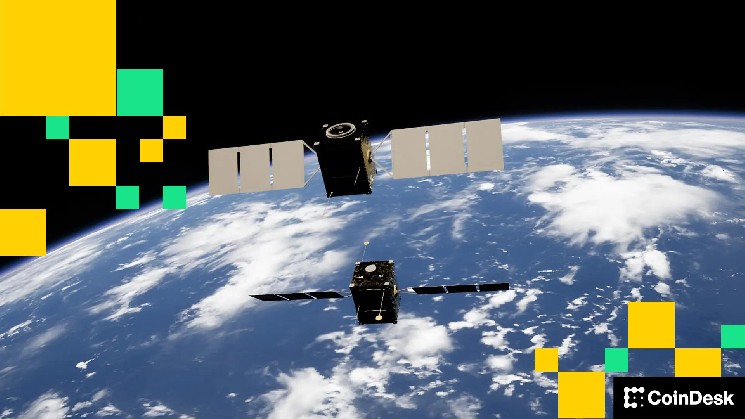
Spacecoin has already demonstrated significant technological progress beyond conceptual planning. The company reports that its first satellite deployments, designated CTC-0 and CTC-1, have successfully completed blockchain-based communications testing from orbit, providing critical validation of the project’s core technological premises. These achievements represent concrete steps toward the company’s vision of a fully operational, blockchain-coordinated satellite network.
These early orbital successes establish important precedent in the emerging space of blockchain-satellite integration, proving that distributed ledger technology can effectively coordinate and authenticate communications through space-based infrastructure. This fusion of blockchain and aerospace technologies creates new possibilities for resilient, censorship-resistant global communications networks that operate independently of terrestrial infrastructure limitations.
The addition of the SPACE token to this technological foundation introduces crucial economic and governance layers to the ecosystem. Token holders gain the ability to participate in network governance decisions, stake tokens to earn rewards while supporting network security, and trade their holdings as the project develops. For early supporters, Spacecoin has initiated an airdrop claim process for those who qualified during previous promotional campaigns, further distributing token ownership across the community.
Market Implications and Future Outlook
The launch of SPACE token represents more than just another entry in the increasingly crowded cryptocurrency landscape—it signals growing market interest in DePIN (Decentralized Physical Infrastructure Network) projects that bridge digital and physical worlds. Unlike purely digital cryptocurrencies, tokens like SPACE are directly tied to the development and operation of tangible infrastructure with real-world utility, potentially offering different value propositions to investors and users alike.
Industry observers note that while early price volatility is common in new token launches, the long-term value proposition for projects like Spacecoin depends on successful execution of their technical roadmaps and actual deployment of functioning infrastructure. The partnership with World Liberty Financial adds an interesting dimension, potentially accelerating adoption through integration with an established stablecoin ecosystem.
“What we’re witnessing is the early stages of infrastructure decentralization that could fundamentally reshape how critical services are delivered globally,” commented a blockchain industry researcher. “The success of projects like Spacecoin will ultimately be measured not by initial token performance but by their ability to deliver functioning alternatives to centralized infrastructure systems.”
As Spacecoin continues development of its satellite network and ecosystem, market participants will be closely monitoring both technical milestones and adoption metrics. With internet access still unavailable to approximately one-third of the global population, the potential market for alternative connectivity solutions remains substantial, particularly if those solutions can be deployed without the massive capital investments traditionally required for telecommunications infrastructure.
For a project aiming to bridge the digital divide through orbital technology and blockchain coordination, the launch of the SPACE token represents not just a financial instrument but the fuel for a potentially transformative global infrastructure initiative. Whether this ambitious vision materializes into functional reality remains to be seen, but the fusion of space technology with blockchain economics continues to attract significant attention from investors, technologists, and those concerned with global digital equality alike.