

Navigating Politics in International Sport: Discussions of World Cup Boycotts
In a climate where sports and politics increasingly intersect, the question of boycotting major sporting events has resurfaced with significant intensity. A prominent figure in German soccer, Oke Göttlich, who serves as president of Bundesliga club St. Pauli and holds one of ten vice-presidential positions in the German soccer federation, has recently sparked controversy by suggesting that Germany should consider boycotting the upcoming FIFA World Cup. In an interview with the Hamburger Morgenpost, Göttlich emphasized that “the time has come” to “seriously consider and discuss” such a measure in response to recent actions by President Donald Trump. Drawing parallels to the 1980 Moscow Olympics boycott led by the United States in protest of the Soviet Union’s invasion of Afghanistan, Göttlich questioned whether today’s geopolitical tensions might warrant similar action, stating, “By my reckoning, the potential threat is greater now than it was then.”
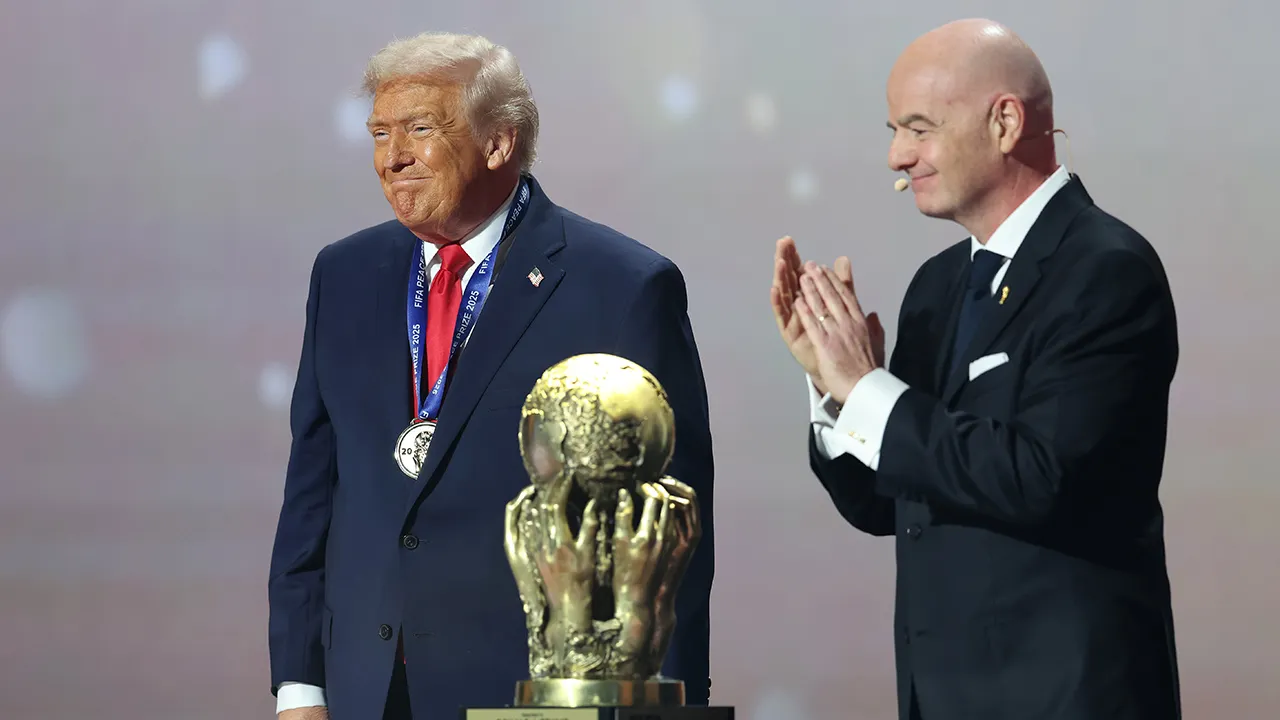
Göttlich’s comments highlight what he perceives as inconsistency in how the sporting world approaches politics. He pointed to the extensive political conversations surrounding the 2022 World Cup in Qatar, questioning why that tournament was deemed “too political for everyone” while now there seems to be a tendency to remain “completely apolitical.” This apparent contradiction “really, really, really bothers” Göttlich, who criticized organizations and society for “forgetting how to set taboos and boundaries and how to defend values.” He directly challenged FIFA President Gianni Infantino, known to be a close ally of Trump, as well as German soccer leadership, asking when they believe taboos are crossed – “when someone threatens? When someone attacks? When people die?” His provocative questions aimed to establish where these leaders draw their ethical lines.
When confronted with concerns that a potential boycott might negatively impact St. Pauli’s national team players from Australia and Japan, Göttlich dismissed such considerations with a striking moral judgment. “The life of a professional player is not worth more than the lives of countless people in various regions who are being directly or indirectly attacked or threatened by the World Cup host,” he declared, placing human rights and geopolitical concerns above sporting achievements. This perspective frames boycotts not merely as political statements but as moral imperatives when certain lines are crossed, suggesting that the integrity of sport itself depends on maintaining ethical boundaries that transcend the games themselves.
The debate has extended beyond Germany, with French officials also addressing questions about potentially boycotting the 2026 FIFA World Cup, which will take place in North America. France’s Minister of Sports, Youth and Community Life, Marina Ferrari, took a more measured stance, stating that the country currently has “no desire” to skip the competition. “As it stands now, there is no desire from the ministry for a boycott of this great competition,” Ferrari explained, while cautiously adding that she “will not anticipate what could happen.” Her position reflects a traditional view that sport should remain separate from politics, describing the World Cup as “an extremely important moment for those who love sport.” This stands in contrast to voices from the French political left, such as Éric Coquerel, who has called for more dramatic action, questioning whether France should participate in a tournament hosted by a country that allegedly “attacks its ‘neighbours,’ threatens to invade Greenland and rides roughshod over international law.”
At the heart of these discussions lies a recent announcement by Trump regarding a “framework for a deal” for the United States to gain control of parts of Greenland. In a post on Truth Social, Trump described having a “very productive meeting” with NATO Secretary General Mark Rutte, resulting in “the framework of a future deal with respect to Greenland and, in fact, the entire Arctic Region.” He characterized the potential agreement as “a great one for the United States of America, and all NATO Nations,” and indicated that planned tariffs would not be imposed as a result. This announcement, along with U.S. intervention in Venezuela, has prompted calls for sports-related sanctions against the United States, though major sports bodies have thus far declined to take such action.
The International Olympic Committee (IOC) has explicitly ruled out penalizing the United States or excluding its athletes from upcoming competitions. In a statement provided to Fox News Digital, the IOC explained its position: “As a global organization, the IOC has to manage a complex reality… The ability to bring athletes together, no matter where they come from, is fundamental to the future of values-based, truly global sport, which can give hope to the world.” The committee asserted that it “cannot involve itself directly in political matters or conflicts between countries, as these fall outside our remit,” maintaining that such issues belong in “the realm of politics.” This stance reflects the perennial challenge faced by international sporting bodies: how to uphold universal values and promote peace through sport while navigating an increasingly complex geopolitical landscape where the line between sports and politics grows ever more blurred. As preparations continue for upcoming global sporting events, these tensions between athletic competition and political expression will likely remain at the forefront of international discourse.