


The Clash Between Protests and Religious Freedom: Understanding the Minnesota Church Incident
In a recent development that has sparked nationwide debate about the boundaries between protest rights and religious freedoms, three individuals—including the wife of community activist Marques Armstrong—were arrested following what authorities described as a disruption at Cities Church in St. Paul, Minnesota. The incident, which occurred during an anti-Immigration and Customs Enforcement (ICE) protest, has become a focal point in discussions about civic activism and sacred spaces in America.
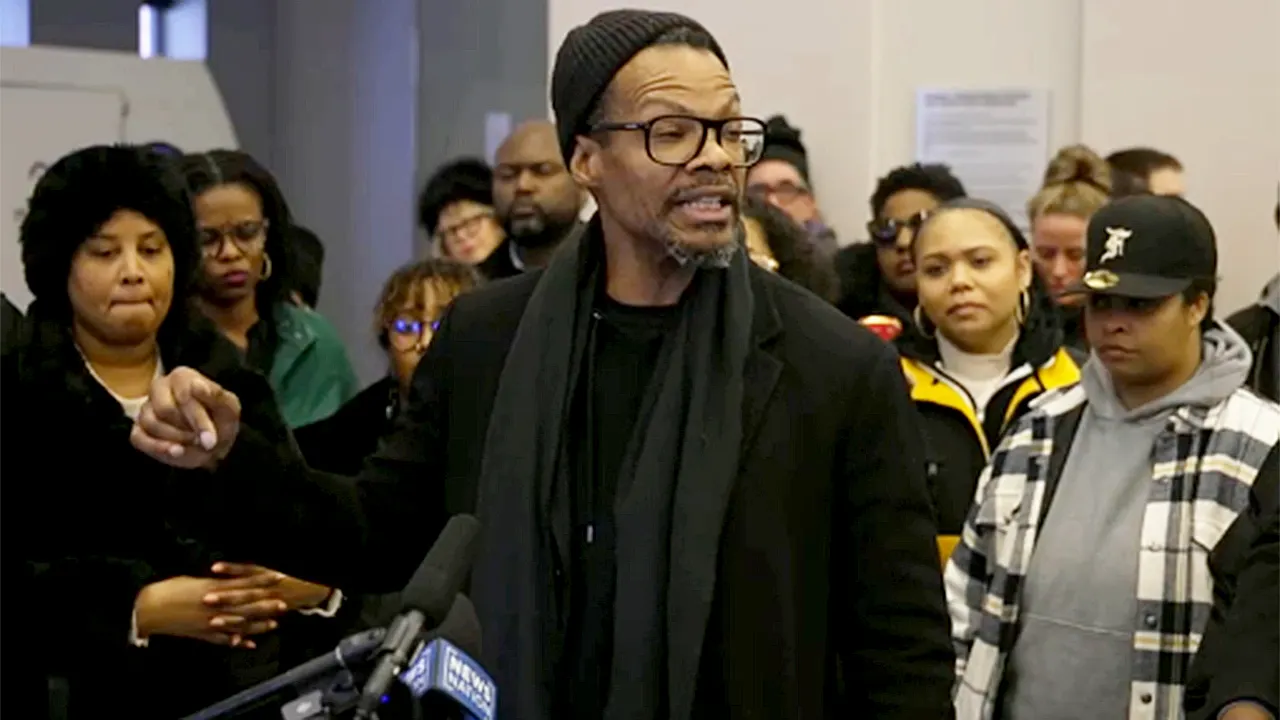
Marques Armstrong spoke passionately in defense of his wife, Nekima Levy Armstrong, and fellow arrestees Chauntyll Louisa Allen and William Kelly, characterizing the prosecution as misguided and politically motivated. “Continue to pray for us. Understand that this is not our first rodeo,” Armstrong stated during a Thursday press conference, revealing that their activism has previously resulted in threats to their safety. He urged supporters to maintain peaceful protests and warned against being “provoked into violence,” suggesting such actions would give the administration “the green light to unleash more hell upon our state.” His colorful description of the prosecution as a “Beavis and Butt-Head show” reflected his view that the legal proceedings lacked seriousness and legitimate grounds.
The arrests stemmed from what Attorney General Pam Bondi described as a “coordinated attack” on the church, with FBI Director Kash Patel specifically citing alleged violations of the Freedom of Access to Clinic Entrances (FACE) Act, which prohibits interfering with religious services. According to Bondi, Nekima Levy Armstrong “played a key role in organizing” the incident. Video evidence apparently shows William Kelly entering the church service and confronting congregants, while Allen, a St. Paul School Board member, reportedly helped organize the protest. The Attorney General’s office emphasized their position through Bondi’s statement on social media: “Listen loud and clear: WE DO NOT TOLERATE ATTACKS ON PLACES OF WORSHIP.”
Marques Armstrong’s defense portrayed a significantly different version of events, claiming his wife “wasn’t taken” but rather “gave herself up, tall, no crime.” He characterized her as “fierce, strong, and powerful,” and asserted they had video evidence that would “dispel the lies and the twisting of the truth that this administration constantly does.” Armstrong maintained that the actions of the protesters were “not criminal, violent, or destructive,” emphasizing that they “did not harm any person or animal, damage property, or incite chaos.” Instead, he framed their conduct as “nonviolent, verbal, restrained,” and motivated by “consciousness” rather than “lawlessness.”
The incident highlights the increasingly complex tension between protest movements and religious institutions in America. Some observers, including former Democratic presidential candidate Tulsi Gabbard, have criticized what they perceive as growing “hostility towards God” within certain activist movements. The controversy raises fundamental questions about where the legal and ethical boundaries lie when political protests intersect with religious services, and how society should balance the constitutional protections for both free speech and religious practice.
As this case moves through the legal system, it will likely serve as a significant test of how courts interpret the FACE Act in relation to political demonstrations that enter religious spaces. The Justice Department has not provided additional comments on the case, but the prosecutions will undoubtedly be watched closely by civil liberties organizations, religious groups, and immigration activists alike. The outcome may establish important precedents about the legal protections afforded to both protesters and worshippers when their rights appear to come into conflict in an increasingly polarized America.