



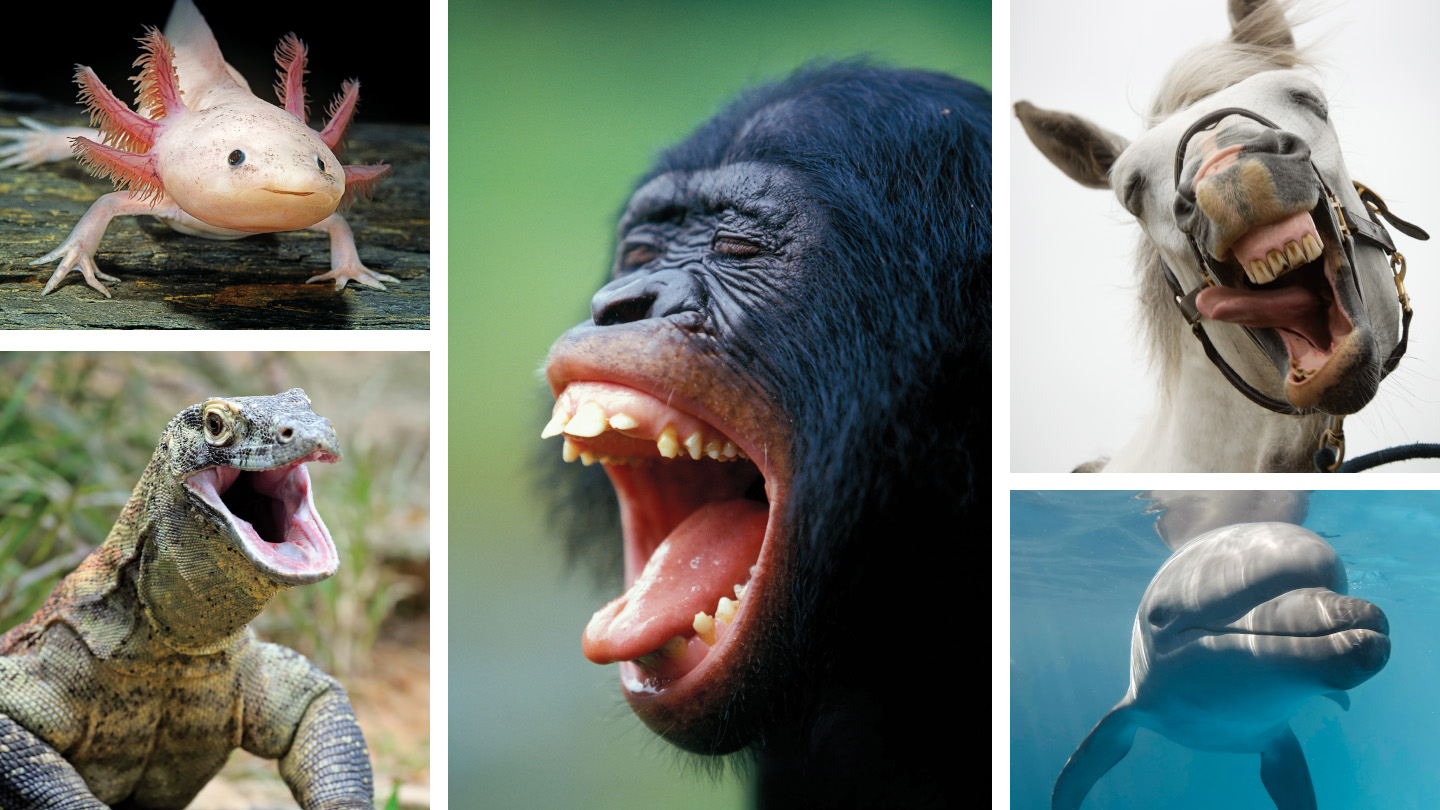
The Joy of Animals: Understanding Emotions Beyond Human Experience
In a groundbreaking study published in June 2025, researchers led by S.L. Winkler discovered that bonobos tend to display optimistic behaviors after hearing laughter. This fascinating finding adds to a growing body of research suggesting that many animals experience positive emotional states analogous to human joy and happiness. The study observed bonobos making more positive choices in cognitive bias tests following exposure to recordings of bonobo laughter, indicating that positive emotional states can be both experienced and transmitted between individuals of this species. This research continues a trajectory of scientific inquiry that has increasingly recognized the emotional depth present in non-human animals, challenging our traditional understanding of animal consciousness and raising important questions about how we consider animal welfare and rights. The recognition that animals may experience positive emotions such as joy represents a significant shift in scientific thinking, moving away from a purely mechanistic view of animal behavior to one that acknowledges their complex emotional lives.
The scientific exploration of animal emotions has evolved considerably over recent decades, with researchers developing innovative approaches to investigate joy and happiness in various species. In a 2023 comprehensive review, Nelson and colleagues outlined methodologies for studying positive emotions in non-human animals, highlighting that joy-like states appear to be widespread throughout the animal kingdom. These positive emotional states aren’t merely anthropomorphic projections but represent genuine adaptive responses that likely evolved to promote beneficial activities such as play, social bonding, and exploration. The study of cognitive bias has been particularly revealing, as demonstrated by Košťál and colleagues’ 2020 research on poultry welfare, which showed that birds in positive emotional states tend to interpret ambiguous stimuli more optimistically. These cognitive bias tests have become valuable tools for assessing animal welfare across species, allowing researchers to access the subjective experiences of animals that cannot verbally report their feelings. By measuring how animals judge ambiguous situations, scientists can infer their underlying emotional states with greater confidence than traditional behavioral observations alone.
The capacity for playfulness may be one of the most visible expressions of joy-like states in animals. A remarkable 2019 study by Reinhold and colleagues revealed that rats engage in sophisticated hide-and-seek games with human experimenters, displaying behaviors that suggest they find the activity intrinsically rewarding. The rats emitted ultrasonic vocalizations associated with positive emotional states, especially when successfully finding their human playmate. Similarly, dolphins are well-known for their playful nature, with Janik’s 2015 research documenting their elaborate play behaviors, including creating and manipulating bubble rings, carrying objects, and engaging in complex social play with conspecifics. These play behaviors aren’t simply practice for survival skills but appear to be engaged in for their intrinsic pleasure value. The fact that many species devote considerable energy to play, even when it offers no immediate survival advantage, suggests that the positive emotions associated with play provide important evolutionary benefits, potentially including cognitive development, stress reduction, and social cohesion.
The communication of positive emotions between animals represents another fascinating dimension of animal joy. Schwing and colleagues’ 2017 research on New Zealand kea parrots demonstrated that hearing playback of “play calls” triggered increased play behavior in other parrots, suggesting a form of positive emotional contagion similar to how human laughter can spread through a group. This research indicates that positive emotional states can be socially transmitted among animals, creating a collective experience of joy. In dolphins, Dibble, Van Alstyne, and Ridgway identified specific “victory squeals” that dolphins produce after successfully completing tasks, vocalizations associated with reward anticipation and pleasure. Ridgway’s 2014 research further connected these vocalizations to dopamine release in the brain, suggesting neurological mechanisms for pleasure and reward that are remarkably similar to those in humans. These findings support the idea that the neurobiological foundations of joy may be evolutionary ancient and conserved across many species, with similar brain circuits mediating pleasure and reward across the mammalian lineage and potentially beyond.
The study of laughter-like vocalizations in animals has provided particularly compelling evidence for positive emotional states. Burgdorf and Panksepp’s groundbreaking 2001 research found that rats emit specific ultrasonic vocalizations when tickled by human experimenters, and these rats would actively seek out further tickling interactions, suggesting they found the experience pleasurable. Building on this work, Rygula, Pluta, and Popik demonstrated in 2012 that rats that “laugh” more frequently when tickled also display more optimistic cognitive biases, directly connecting these vocalizations to positive emotional states. This research suggests that laughter-like vocalizations may serve similar functions across species – signaling playful intent, building social bonds, and expressing positive emotional states. The evolutionary conservation of such responses hints at their ancient origins and fundamental importance in social species. The ability to express and recognize joy may have provided significant adaptive advantages throughout evolutionary history, facilitating cooperation, strengthening social bonds, and promoting behaviors that enhance survival and reproduction.
The growing scientific recognition of animal joy has profound ethical implications for how we treat other species. Harding, Paul, and Mendl’s pioneering 2004 study on cognitive bias in animals established that an animal’s emotional state affects its cognitive processing, providing a window into their subjective experiences. This recognition that animals have rich emotional lives challenges us to reconsider practices that may cause suffering or deprive animals of opportunities for positive experiences. As our understanding of animal emotions deepens, we face important questions about our moral responsibilities toward other species. If animals experience joy, pleasure, and optimism, then promoting positive welfare means not merely preventing suffering but actively creating conditions where animals can thrive emotionally. From wildlife conservation to agricultural practices, pet keeping to zoo management, this evolving understanding of animal emotions calls for approaches that respect and nurture the capacity for positive experiences across the animal kingdom. By recognizing and valuing the joy of animals, we may develop a more compassionate and scientifically informed relationship with the diverse beings with whom we share our planet.