


When AI Meets Agriculture: Washington’s Bold Initiative to Transform Farming
In a groundbreaking move that could reshape the future of agriculture, Washington state has launched an ambitious initiative called “Growing with AI” that aims to unite the region’s technological prowess with its diverse farming community. This partnership comes at a critical time as farmers nationwide face unprecedented challenges from extreme weather patterns, persistent supply chain disruptions, and worsening labor shortages. What makes Washington uniquely positioned to lead this agricultural revolution is its distinctive geography – housing both a robust agricultural economy with hundreds of high-value crop varieties in the eastern part of the state and world-class tech companies pioneering artificial intelligence in the west. This natural marriage of farming know-how and technological innovation creates fertile ground for developing solutions that could eventually benefit agricultural communities across America and beyond.
The initiative, spearheaded by the publicly funded Washington State Academy of Sciences, represents an unprecedented effort to bridge the literal and figurative divide between the state’s tech and agricultural sectors. “Our farmers are dealing with so many different external forces, mostly beyond their control,” explains Melanie Roberts, executive director of the Academy. “So what if Washington can get ahead of this and be intentional about how we use AI in agriculture?” This proactive approach kicked off earlier this month with the first of six free informational webinars designed to bring stakeholders together, culminate in an invitation-only workshop in April where participants will develop concrete action plans. The Academy’s involvement marks the first time the organization has created a focused series around a single issue with a specific call to action, underscoring the urgency and importance they place on this initiative.
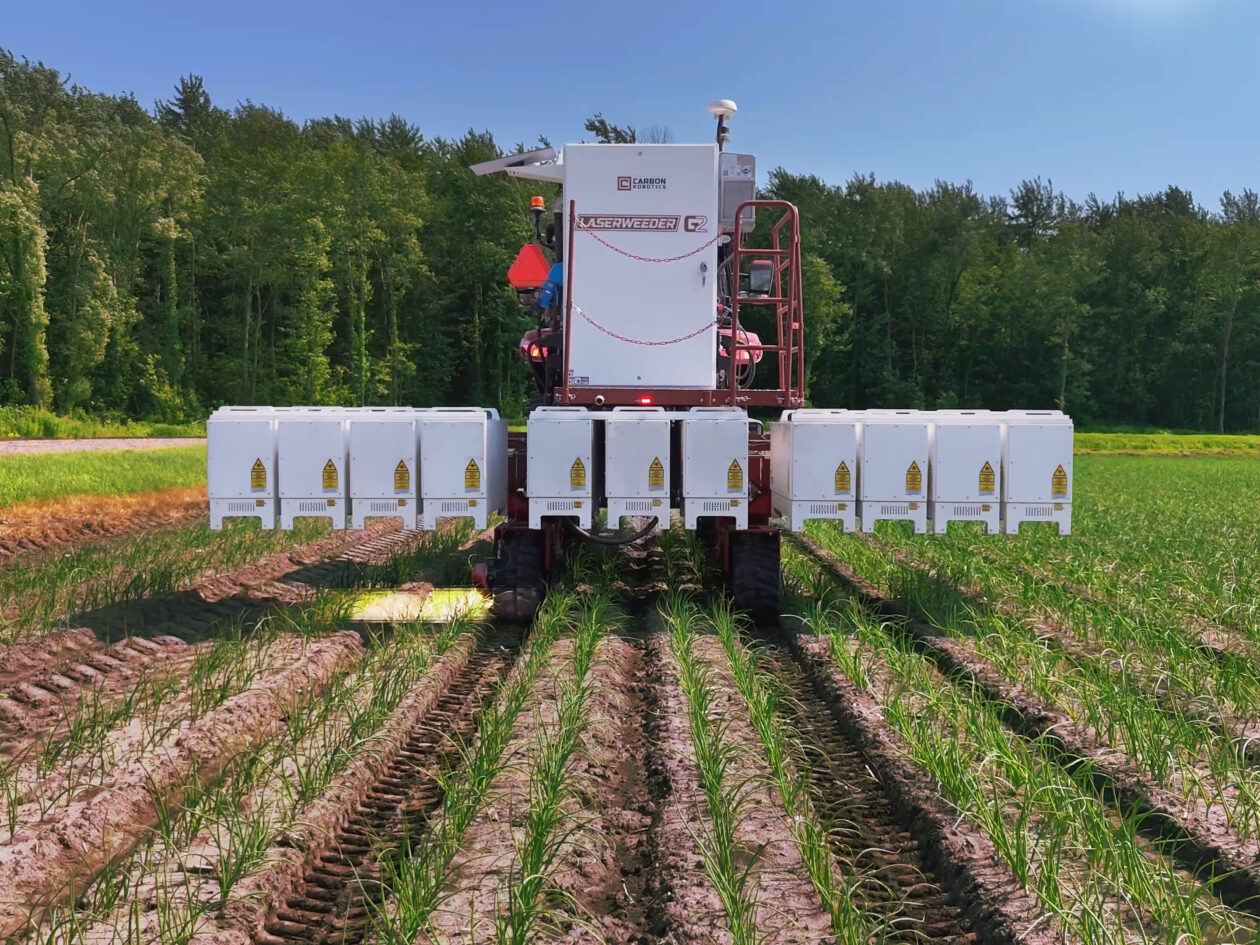
Already, several AI-driven agricultural technology companies have established themselves in Washington, demonstrating the potential of this intersection. One standout example is Carbon Robotics, which manufactures autonomous farming machines that use laser technology to eliminate weeds with remarkable precision. Based in Seattle but with manufacturing operations in Richland in eastern Washington, the company physically spans the state’s tech-agriculture divide. Paul Mikesell, Carbon’s CEO and founder, notes that despite geographical separation, farmers and technologists share similar problem-solving mindsets: “Farmers and technologists see the world in similar ways. We can get things done. We tackle problems head on, put in a lot of hard work…. So in a lot of ways, farmers act a lot like engineers because they’re trying to design solutions.” Mikesell emphasizes that successful agricultural technology must be developed through genuine partnerships with farmers, learning their specific challenges rather than imposing predetermined solutions, and testing technologies in actual field conditions.
The potential applications of AI in agriculture span virtually every aspect of farming operations, according to Ananth Kalyanaraman, a computer science professor at Washington State University specializing in agricultural technology. These applications include sophisticated analysis and modeling of weather and climate data to guide planting and harvesting schedules and crop selection; precision insights for irrigation, fertilization, and pest control timing and amounts; robotic assistance for labor-intensive tasks like tree pruning and harvesting; and automated weed and pest management systems. Each of these applications addresses critical pain points for farmers, potentially increasing yields, reducing input costs, minimizing environmental impacts, and helping farms remain viable despite labor shortages. The breadth of these applications reflects the transformative potential AI holds for modernizing agricultural practices while preserving the essential knowledge and judgment that experienced farmers bring to their operations.
Federal support for AI applications in agriculture has been surprisingly limited, especially given the critical importance of developing more resilient food supply systems. This gap in national prioritization creates both a challenge and an opportunity for Washington state to demonstrate leadership. “We should be able to provide an exemplar to the rest of the nation,” Kalyanaraman notes, “in terms of how to most effectively and responsibly embrace AI into a complex, decision-driven system like agriculture.” This responsible approach is crucial, as agricultural AI applications must balance technological innovation with practical usability, affordability for diverse farm operations, and sensitivity to the unique challenges faced by different agricultural sectors. The initiative recognizes that solutions must work for small family farms as well as large agricultural enterprises, and for specialty crop growers as well as commodity producers.
The Growing with AI initiative represents more than just a technological upgrade for farming; it embodies a forward-thinking approach to securing food production systems against mounting global challenges. By intentionally bringing together farmers who understand the day-to-day realities of agricultural production with technologists who can envision and create AI-powered solutions, Washington is creating a collaborative ecosystem that could serve as a model nationwide. This east-west partnership within the state mirrors the broader need to bridge divides between traditional agricultural knowledge and cutting-edge technology innovation. As climate uncertainty, economic pressures, and workforce challenges continue to intensify for farmers everywhere, initiatives like Growing with AI offer hope that thoughtfully applied technology can help preserve and strengthen the agricultural systems we all depend upon. Washington’s experiment in agricultural AI collaboration may well seed innovations that grow far beyond the state’s borders.