


A Heated Exchange at the Australian Open: Osaka’s Victory and Cirstea’s Frustration
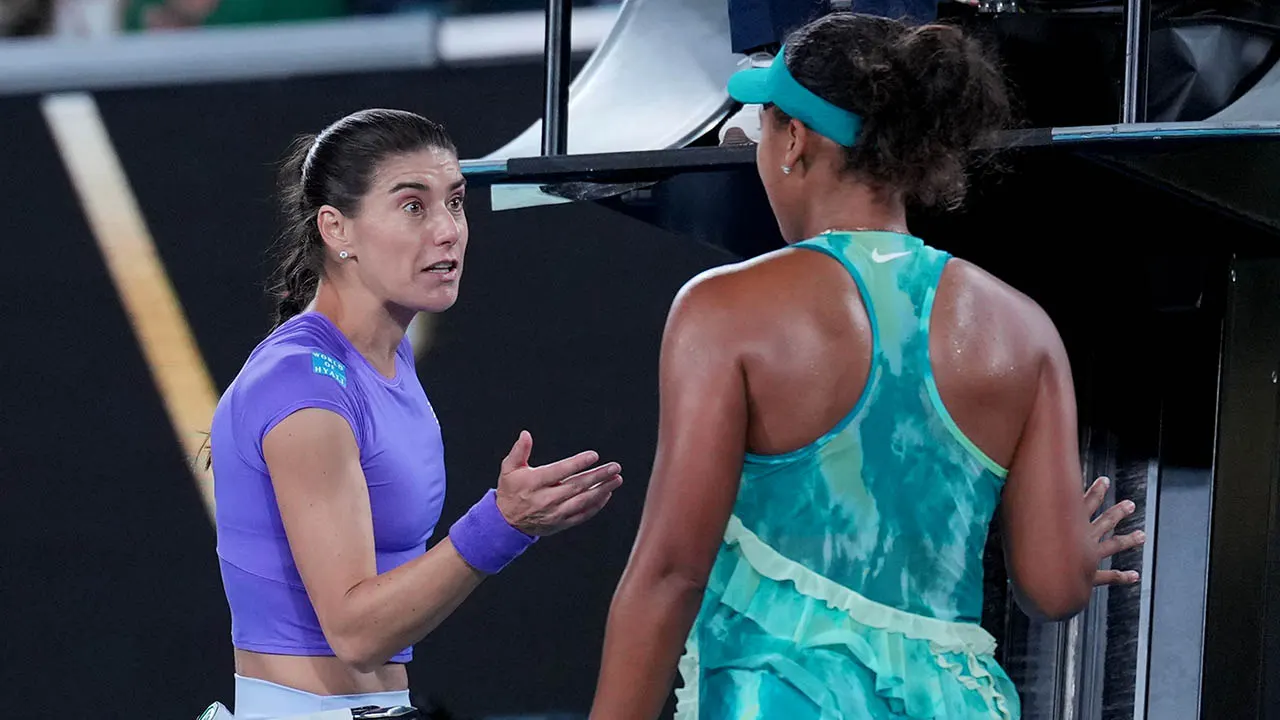
In a tense conclusion to their Australian Open match on Thursday, tennis stars Naomi Osaka and Sorana Cirstea found themselves in an unexpected confrontation that highlighted the emotional undercurrents of competitive sports. The match ended with Osaka defeating Cirstea 6-3, 4-6, 6-2, but the victory was overshadowed by what happened at the net afterward. As the players approached for the customary post-match handshake, Cirstea abruptly slapped Osaka’s hand and marched toward the umpire, prompting a confused Osaka to call after her, “What was that for?” The exchange revealed the raw emotions that often simmer beneath the surface of professional tennis, where years of dedication and sacrifice can culminate in moments of triumph for one player and disappointment for another.
The source of Cirstea’s frustration appeared to be Osaka’s vocal self-encouragement during the match. In her post-match interview, Osaka explained, “Apparently a lot of ‘C’mons’ that she was angry about but whatever. I mean, I tried to play well, I tried my best.” Osaka’s remarks reflected both her commitment to her own performance and a certain bewilderment at Cirstea’s reaction. She acknowledged her opponent’s accomplishments, noting, “She’s a great player — I think this was her last Australian Open so, OK, sorry she was mad about it.” Osaka also pointed out that Cirstea could have simply asked her to tone down her on-court enthusiasm if it was bothersome, suggesting that communication might have prevented the awkward confrontation.
The match carried different stakes for each player, which may have contributed to the emotional tension. For Osaka, the No. 16 seed and a two-time Australian Open champion, this victory represented another step in her continuing journey at a tournament where she has experienced significant success. However, she hasn’t advanced beyond the third round since 2021, making this year’s tournament an important opportunity to reclaim her standing among the sport’s elite. With her win over Cirstea, Osaka secured a third-round matchup against Maddison Inglis scheduled for Friday, keeping alive her hopes for a deeper run in this year’s tournament. For Osaka, who has experienced both tremendous success and well-documented struggles with the mental aspects of professional tennis, each victory carries particular significance.
For Cirstea, the match carried a poignant weight beyond the immediate competition. The Romanian player had announced in December that the 2026 season would be her final one in professional tennis, making this Australian Open one of her last appearances at the prestigious tournament. Throughout her career, Cirstea has achieved three singles titles but has never claimed a Grand Slam championship. Her best showing at the Australian Open was reaching the fourth round, and this year’s tournament offered one of her diminishing opportunities to improve upon that record. The match against Osaka wasn’t just another competition—it represented one of her final chances to make a deeper run at a tournament that has been a regular part of her professional life for years.
The incident highlights the complex psychology of professional tennis, where players must balance competitive intensity with sportsmanship. On-court behaviors like Osaka’s verbal self-encouragement are common tactics that help players maintain focus and momentum, but they can sometimes be perceived as disrespectful by opponents. The post-match handshake, traditionally a moment of mutual respect regardless of the outcome, transformed in this case into a brief but telling expression of frustration. For spectators, these moments provide a glimpse into the immense pressure elite athletes face and the different ways they cope with the emotional demands of high-stakes competition. The exchange between Osaka and Cirstea reminds us that behind the polished performances lies the very human struggle with disappointment, pride, and the weight of personal expectations.
As the tournament progresses, both players will carry this moment forward in different ways. For Osaka, the incident becomes a minor footnote in her continuing Australian Open campaign, perhaps a reminder of the varied challenges—both on-court and interpersonal—that come with professional tennis. For Cirstea, it marks an unfortunate final note in her Australian Open history, though her career continues for now. The brief tension between these accomplished athletes reminds us that tennis, like all sports, is not just a test of physical skill but also of emotional resilience. As fans follow the remaining matches of the tournament, this moment stands as a reminder of the personal investments and human emotions that make sports compelling beyond the simple tallying of winners and losers.