


Tragedy Unfolds as Firefighter Accused in Wife’s Death After Discovering Infidelity
In a heart-wrenching turn of events that has shocked both the Los Angeles first responder community and residents alike, Andrew Jimenez, a 45-year-old Glendale firefighter, stands accused of a horrific act of violence against his wife, Mayra Lopez Jimenez. The incident, which occurred in their North Hollywood apartment on Wednesday, has left family members, colleagues, and neighbors grappling with questions about how a seemingly normal marriage could end in such tragedy. According to attorney Jose Romero, who was retained by Jimenez’s family, the firefighter allegedly discovered evidence of his wife’s infidelity “moments” before the brutal attack. Romero stated that a diary belonging to Mayra, which Andrew apparently read just before the homicide, “verified infidelity by the decedent.” This revelation provides a glimpse into what may have triggered the violent outburst, though it certainly cannot justify the alleged actions that followed. The suddenness of the discovery and the extreme emotional response it provoked highlight the volatile nature of human relationships and the devastating consequences when anger and betrayal overtake reason.
The gruesome details of the case paint a picture of overwhelming violence. Law enforcement believes that Mayra, 46, was killed after being repeatedly struck with an axe in the couple’s Satsuma Avenue apartment. What makes the case even more disturbing is Jimenez’s actions following the alleged murder – he reportedly flagged down Los Angeles Police Department officers himself, requesting that they conduct a welfare check on his wife. When police arrived at the residence, they discovered Mayra’s body in what was described as a bloody crime scene. This sequence of events has left investigators and the public struggling to understand the mindset of someone who could allegedly commit such a violent act and then seemingly seek intervention from authorities, perhaps indicating a state of shock or remorse following the incident. The contradiction between Jimenez’s career dedicated to saving lives and the taking of his wife’s life represents a painful irony that has not gone unnoticed by those following the case.
The couple’s history together adds another layer of poignancy to the tragedy. Social media posts show Andrew and Mayra married in November 2014, with photographs capturing moments of happiness and affection between the then-newlyweds. Friends and family had celebrated their union, with images showing the couple embracing, seemingly in love and looking forward to building a life together. Mayra, who worked as an ordained minister for a wedding company called “territiestheknotweddings.com,” had made a career out of helping others celebrate their love and commitment – making her violent death at the hands of her own husband all the more devastating. Their relationship, like many others, likely had its challenges and private struggles, but few could have predicted such a catastrophic end to what began as a hopeful partnership.
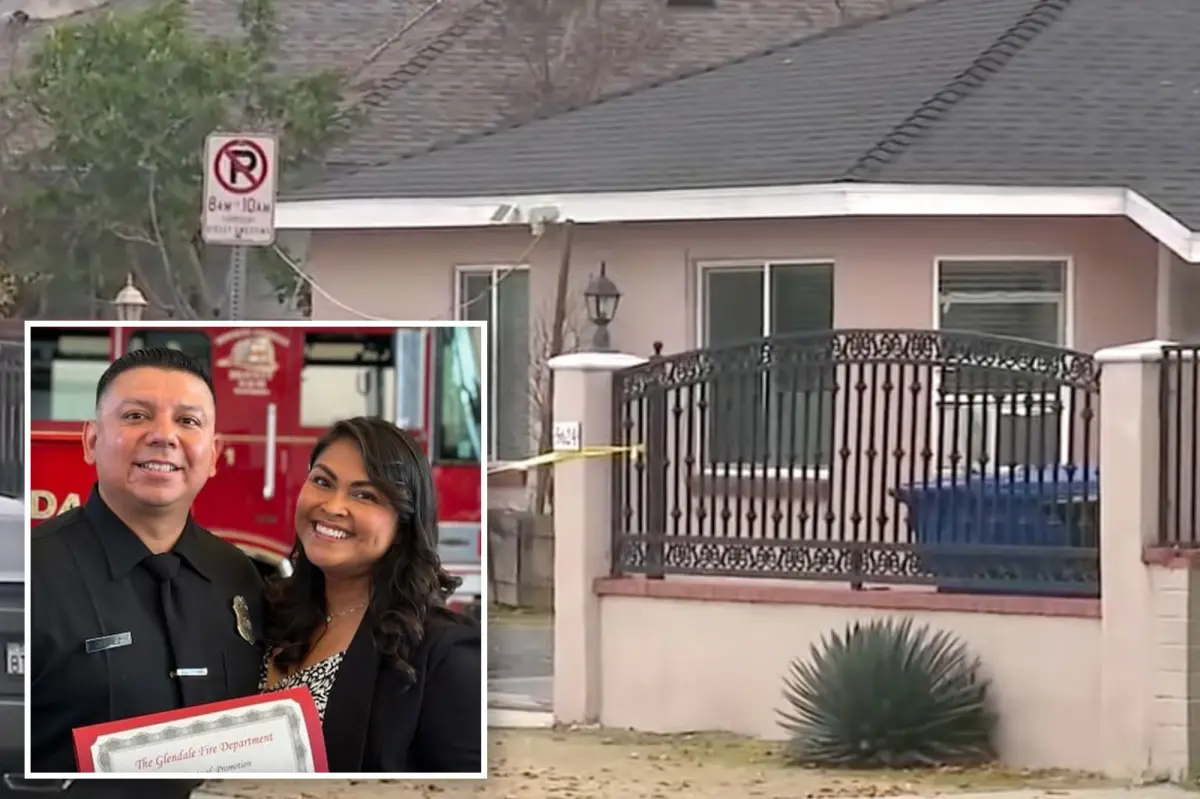
Andrew Jimenez’s professional life presents an equally stark contrast to the allegations he now faces. Just months before the incident, in June 2024, Jimenez was promoted from paramedic to firefighter by the Glendale Fire Department – a career advancement that was celebrated proudly by his family. His aunt had shared her pride on social media, posting, “May God watch over him and guide him as he continues to serve the people and the community,” alongside images of a smiling Jimenez holding his diploma in front of a fire truck. The firefighting profession is one built on protection, service, and saving lives – values that stand in direct opposition to the violence Jimenez is now accused of perpetrating. His colleagues in the Glendale Fire Department are undoubtedly processing their own complex emotions about working alongside someone capable of such an act, while also grieving for Mayra and supporting those affected by her death.
The discovery of infidelity, which Jimenez’s attorney suggests precipitated the violent incident, touches on deeply human themes of trust, betrayal, and emotional regulation. While infidelity causes profound pain in relationships, the overwhelming majority of people who discover a partner’s unfaithfulness do not respond with violence. Mental health experts often point to underlying issues such as undiagnosed mental illness, previous trauma, or poor impulse control as factors that can contribute to violent responses to relationship problems. Without excusing the alleged actions, understanding the psychological components at play may help society better recognize warning signs and provide intervention before tragedy strikes. The case raises important questions about the resources available to first responders experiencing personal crises, given the high-stress nature of their work and the potential for job-related trauma to affect their personal lives and emotional stability.
As the legal process moves forward, both families now face a long and painful journey. Mayra’s loved ones must cope not only with her sudden and violent loss but also with the public nature of the case and the gruesome details emerging in media reports. Andrew’s family, who retained attorney Romero, finds themselves in the difficult position of supporting a family member accused of a heinous crime while also likely grieving for Mayra, whom they had welcomed into their family a decade earlier. The ripple effects of domestic homicide extend far beyond the immediate parties involved, touching friends, colleagues, and community members who knew the couple. As details continue to emerge and the case proceeds through the justice system, the North Hollywood community and the first responder family will be left to reflect on how interpersonal violence can erupt even in relationships and lives that, from the outside, may have appeared stable and fulfilling. This tragedy serves as a sobering reminder of the complexity of human relationships and the devastating consequences when emotions spiral into violence.